Skin Tag Removal: 5 Effective Methods And Prevention Tips
Comprehensive guide to skin tags (acrochordons): causes, diagnosis, treatment, and prevention of these common benign skin growths.
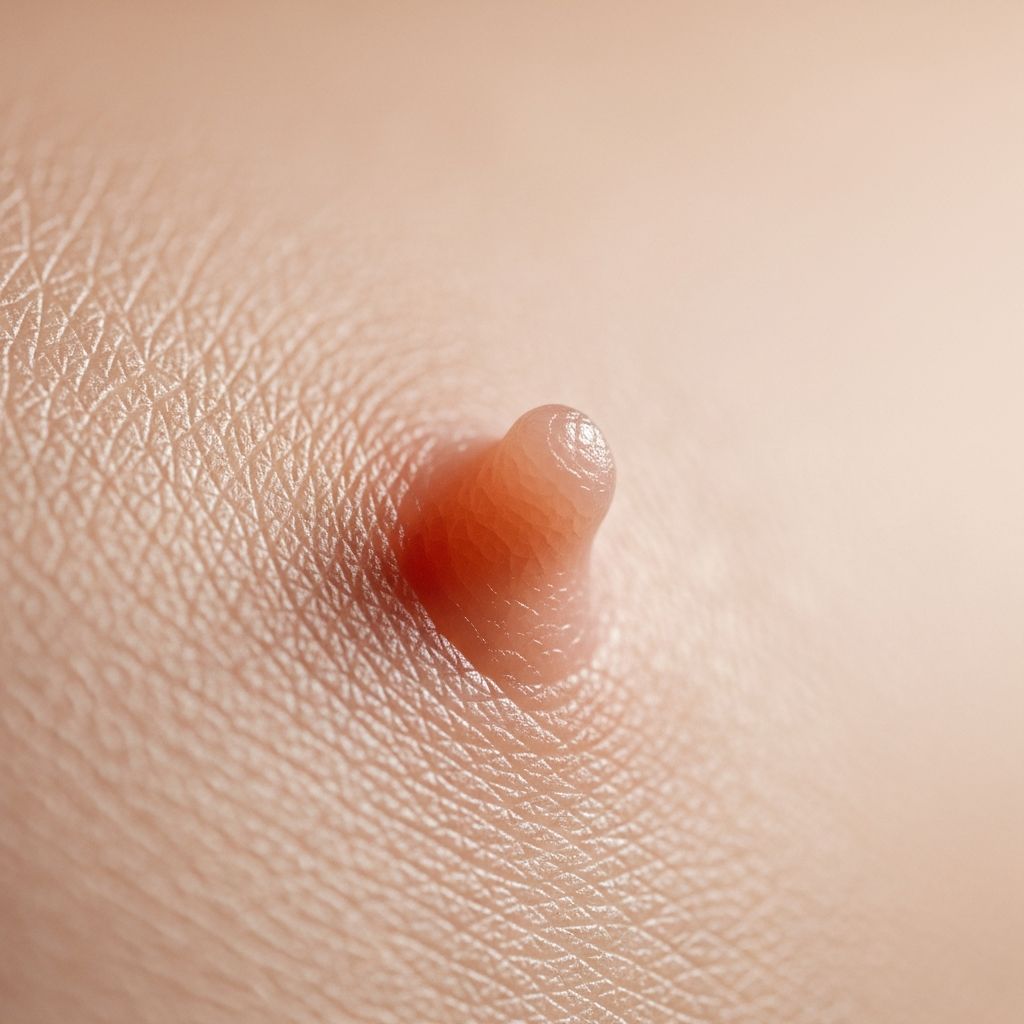
A
skin tag
is a common, soft, benign (harmless) skin growth that hangs off the skin, often described as resembling a small flap or piece of skin on a stalk. Also known asacrochordon
,papilloma
,fibroepithelial polyp
, orsoft fibroma
, these lesions are extremely prevalent and typically asymptomatic.What is a skin tag?
Skin tags are small, soft, benign outgrowths of skin that develop in areas where skin rubs against itself or clothing. They consist of loosely arranged
collagen fibres
and blood vessels surrounded by a thickened or thinned epidermis (outer skin layer). Collagen, a key structural protein in the dermis (middle skin layer), gives them their fibrous texture.These growths are pedunculated (on a stalk) or sessile (broad-based) and range from 1 mm to 5 cm in size, though most are 2–5 mm. They are usually skin-coloured or slightly darker (brownish), matching the individual’s skin tone.
Who gets skin tags?
Skin tags affect up to 50% of the adult population, with prevalence increasing with age. They occur equally in men and women but are more numerous in certain groups:
- People with
obesity
(due to increased skin folds and friction) - Individuals with
type 2 diabetes mellitus
orinsulin resistance
- Pregnant women (due to hormonal changes and skin stretching)
- Those with
metabolic syndrome
, high lipid levels, or cardiovascular risk factors - Patients with
polycystic ovary syndrome (PCOS)
or hormone imbalances - Families with genetic predisposition
Rarely, multiple skin tags signal syndromes like
Birt-Hogg-Dubé syndrome
(autosomal dominant, with fibrofolliculomas) orGoldenhar syndrome
(preauricular tags).What causes skin tags?
The exact cause is unknown, but contributing factors include:
- Friction and irritation: Skin-on-skin rubbing in folds (neck, armpits, groin) or against clothing/jewelry.
- Obesity: Increases skin folds and metabolic factors.
- Insulin resistance/diabetes: Elevated growth factors like IGF-1 promote tag formation.
- Hormonal changes: Pregnancy, acromegaly, gigantism.
- Genetics: Familial clustering observed.
- HPV infection: Possible role in some cases.
- Aging: Loss of skin elasticity.
Skin tags are not cancerous and have no malignant potential.
What do skin tags look like?
Skin tags typically appear as:
- Soft, fleshy, oval or thread-like projections
- Hanging from a thin stalk (pedunculated) or flat-based (sessile)
- Skin-coloured, tan, or darker
- 1 mm–5 cm in size, often in clusters
Common locations:
- Neck** (especially collar area)
- **Axillae (armpits)
- **Groin and inframammary folds
- **Eyelids and upper face
- **Under breasts or abdomen in obese individuals
They are usually painless but may itch, bleed, or become irritated if twisted, snagged, or infected. On darker skin, infection may show as hyperpigmentation.
How are skin tags diagnosed?
Diagnosis is clinical, based on characteristic appearance and location. No biopsy is needed for typical cases. Dermatologists may perform dermoscopy or histopathology if atypical.
Associated tests for high-risk patients:
| Test | Purpose |
|---|---|
| A1c or fasting glucose | Screen for diabetes |
| Lipid profile | Assess metabolic syndrome |
| BMI calculation | Evaluate obesity |
.
Differential diagnosis
Skin tags must be distinguished from:
Related Stories



- Seborrhoeic keratoses: Waxy, stuck-on appearance, broader base.
- Viral warts: Rough, hyperkeratotic.
- Molluscum contagiosum: Umbilicated pearly papules.
- Neurofibromas: Softer, buttonhole sign.
- Benign melanocytic naevi: Pigmented moles.
- Basal cell carcinoma (BCC): Pearly, telangiectatic (rare mimic).
See a doctor if growths change in size, colour, bleed, or cause pain.
Management and removal
Skin tags require no treatment unless symptomatic (irritated, painful, cosmetic concern). Removal is elective and not covered by public health in many regions.
Removal methods:
- Snip excision: Scissors cut base under local anesthesia (small tags).
- Cryotherapy: Liquid nitrogen freezing.
- Electrosurgery/cautery: Heat ablation.
- Ligation: Tie off stalk with suture/thread until it necroses and falls off.
- Shave excision: For larger tags.
Home remedies (e.g., tying string, tea tree oil) risk infection/scarring—avoid. Seek professional care. Post-removal: Minimal scarring, rare recurrence.
Prevention
While not fully preventable:
- Maintain healthy weight to reduce friction.
- Wear loose clothing, avoid irritating jewelry.
- Manage diabetes/metabolic conditions.
- Gently cleanse skin folds.
Frequently Asked Questions (FAQs)
Are skin tags cancerous?
No, skin tags are benign and never turn cancerous.
Do skin tags mean diabetes?
Multiple tags correlate with insulin resistance/diabetes, but not diagnostic alone—check blood sugar.
Can I cut off a skin tag myself?
Not recommended; risks bleeding, infection, scarring. See a doctor.
Why do I have so many skin tags?
Obesity, diabetes, friction, genetics. Weight loss may reduce new ones.
Do skin tags grow back after removal?
Rarely, if underlying factors persist.
References
- Cancerous skin tags: Pictures, removal, and more — Medical News Today. 2023-10-15. https://www.medicalnewstoday.com/articles/cancerous-skin-tags
- Skin tags. Acrochordons — DermNet NZ (Waikato Hospital, Dr Amanda Oakley). 2004 (updated). https://dermnetnz.org/topics/skin-tag
- Skin tag images — DermNet NZ. 2011. https://dermnetnz.org/topics/skin-tag-images
- Skin tag — DFTB Skin Deep. Recent. https://dftbskindeep.com/all-diagnoses/skin-tag/
- Skin Tags: Causes and Treatment — Patient.info (Dr Toni Hazell, MRCGP). 2022-12-15. https://patient.info/doctor/dermatology/skin-tags
Similar Articles








Read full bio of medha deb