Skin Tags (Acrochordons): Causes, Symptoms & Removal
Comprehensive guide to understanding skin tags, their causes, and safe removal options from healthcare professionals.
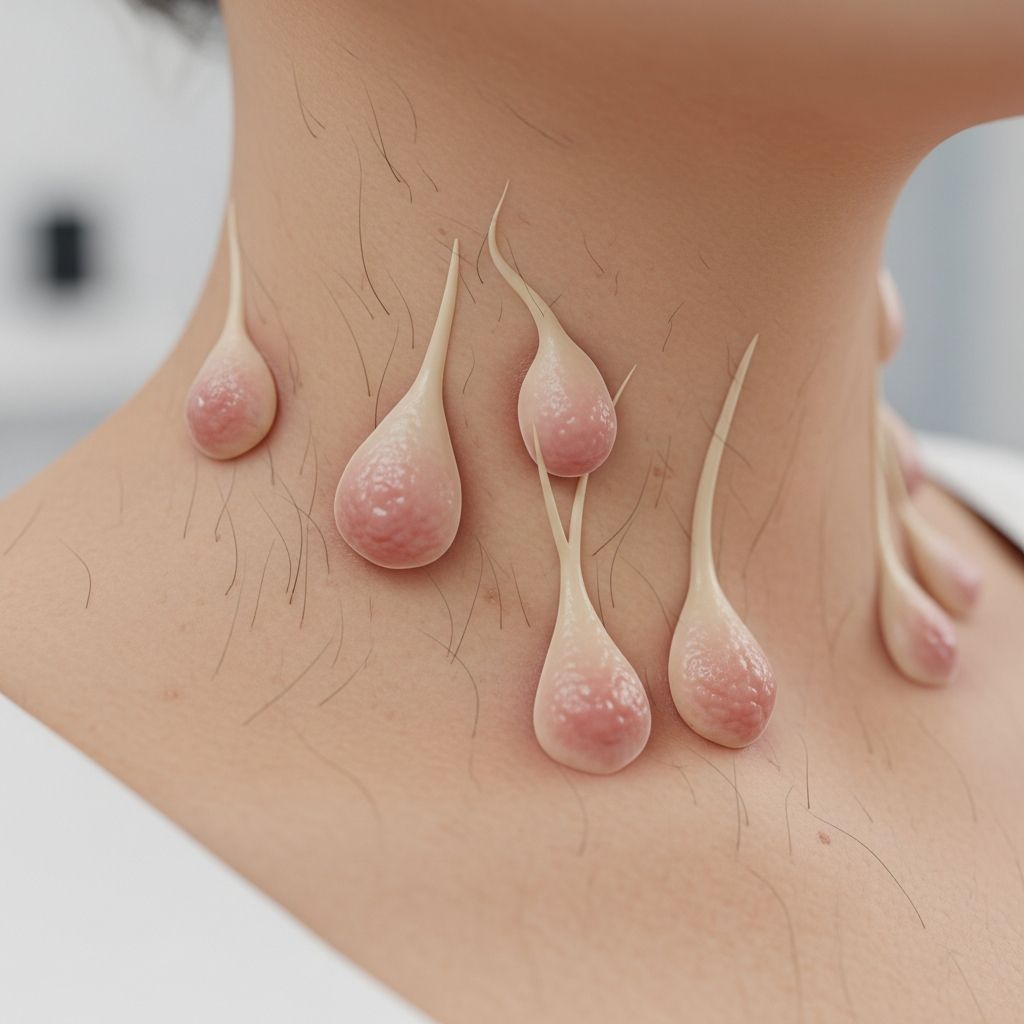
What Are Skin Tags?
Skin tags, medically known as acrochordons, are small, noncancerous growths that form when the skin rubs against itself. These common skin conditions are characterized by soft clusters of skin tissue extending from a tiny stem, often appearing the same color as your skin. They typically look like small, raised growths, though they may sometimes appear darker and resemble a mole.
Most skin tags measure between 1 to 5 millimeters, though some can grow as large as a few centimeters. These benign growths are extremely common—researchers estimate that approximately 50 to 60 percent of adults will develop at least one skin tag during their lifetime. The likelihood of developing skin tags increases significantly with age, particularly after the fourth decade of life.
How Common Are Skin Tags?
Skin tags represent one of the most prevalent skin conditions in adults. With nearly half of the adult population experiencing at least one skin tag in their lifetime, they are considered a normal part of aging for many people. While they can appear as early as the teenage years, their incidence increases substantially with advancing age. Interestingly, recent studies have noted an increase in skin tags among children and adolescents, which researchers correlate with rising childhood obesity rates.
What Causes Skin Tags to Develop?
Skin tags develop when the body produces extra cells in the skin’s top layers. They tend to form in skin folds and areas where natural movement causes the skin to rub against itself. The primary mechanism involves repeated friction between skin surfaces, which creates an environment conducive to abnormal growth.
Several factors contribute to skin tag formation:
- Skin friction from natural body movement and folding
- Age-related changes and loss of skin elasticity
- Obesity and weight-related skin irritation
- Hormonal imbalances, including elevated estrogen and progesterone levels
- Family history and genetic predisposition
- Metabolic conditions, including type 2 diabetes
- Elevated growth hormone levels in conditions like acromegaly
Where Do Skin Tags Typically Appear?
Skin tags typically develop in areas where skin naturally folds and experiences friction. Common locations include:
- Neck and armpits (axillae)
- Eyelids and around the eyes
- Upper chest and torso
- Groin area
- Underneath the arms
- Skin folds in overweight individuals
The neck and armpits are particularly susceptible to skin tag development due to constant movement and friction in these areas.
Risk Factors for Developing Skin Tags
Certain conditions and characteristics increase your likelihood of developing skin tags. Advanced age is the most significant risk factor, with skin tags becoming increasingly common as you get older. Obesity substantially increases your risk due to increased skin friction in body folds.
Related Stories



Genetic factors play an important role—if family members have skin tags, you’re more likely to develop them as well. Hormonal changes during pregnancy, particularly due to elevated estrogen and progesterone levels, can trigger skin tag formation. Additionally, individuals with polycystic ovarian syndrome (PCOS) often experience skin tag development.
Metabolic disorders, including type 2 diabetes and metabolic syndrome, show strong associations with skin tag development. Certain genetic disorders, such as Birt-Hogg-Dube (BHD) syndrome and tuberous sclerosis, can cause multiple skin tags to develop, sometimes forming distinctive patterns around the neck.
Symptoms and Complications
Skin tags typically do not cause symptoms. However, they can occasionally become problematic when they’re located in areas subject to friction. When a skin tag rubs against clothing, jewelry, or skin surfaces, it may cause discomfort or minor bleeding. Some people experience itching when skin tags are irritated by constant rubbing or catching on jewelry.
The primary concern for most individuals is the cosmetic appearance of skin tags, particularly when they appear on visible areas like the face, neck, or décolletage. While skin tags do not affect your overall health or increase your disease risk, they can impact self-confidence and appearance.
Diagnosis of Skin Tags
Healthcare providers diagnose skin tags through a brief evaluation and visual examination. Your healthcare provider will review your medical history, paying particular attention to conditions that raise your risk for skin tags, such as diabetes, obesity, or hormonal imbalances.
A quick physical exam helps distinguish skin tags from other growths that may appear similar, such as warts, skin diseases, or skin cancer. In most cases, no tests are necessary to confirm a skin tag diagnosis. However, if your healthcare provider suspects the growth may be something other than a skin tag, they may perform a biopsy and send the sample to a laboratory for testing.
It’s important to have a dermatologist or experienced healthcare provider examine any new skin growth, as growths that resemble skin tags may sometimes be warts, moles, or other skin conditions requiring different treatment approaches.
Do You Need Treatment for Skin Tags?
Most skin tags do not require treatment. If the growth doesn’t bother you cosmetically and it doesn’t cause discomfort, your skin tag may not need any intervention. Some skin tags naturally fall off on their own over time without any treatment.
You may wish to discuss skin tag removal with your healthcare provider if:
- The appearance bothers you or affects your self-confidence
- The skin tag is located on visible areas like your face or neck
- The growth catches on clothing, jewelry, or skin regularly
- Friction from the skin tag causes bleeding or irritation
- The skin tag is in a location where it interferes with personal care or grooming
Why Avoid At-Home Skin Tag Removal
Many over-the-counter skin tag removal products are available, but healthcare professionals strongly advise against at-home treatments. At-home removal methods carry significant risks and complications, including:
- Infection of the treated area
- Excessive bleeding and difficulty controlling hemorrhage
- Permanent scarring
- Skin irritation and inflammation
- Skin ulcers and tissue damage
- Improper removal leaving root tissue behind
- Misdiagnosis of the growth as something other than a skin tag
Professional removal ensures proper diagnosis and minimizes the risk of complications. Healthcare providers have the expertise to identify whether the growth is truly a skin tag or requires different treatment.
Professional Skin Tag Removal Methods
Dermatologists are the most qualified professionals to remove skin tags. They possess the skills and training to treat delicate areas, such as skin tags on eyelids, and excel at minimizing scarring, particularly important for visible areas like the neck.
Treatment usually takes place during an in-office procedure and may include several methods:
- Cryotherapy: Freezing the skin tag with liquid nitrogen to destroy the tissue
- Cauterization: Using heat to burn off the skin tag
- Ligation: Tying off the skin tag’s blood supply with a special thread to cut off circulation
- Surgical excision: Carefully cutting away the skin tag with a scalpel or scissors
- Laser removal: Using targeted laser energy to remove the growth
What to Expect During and After Removal
Skin tag removal procedures can cause mild discomfort. Healthcare providers administer medication to help you remain as comfortable as possible during the procedure. The treatment area will likely scab over in the days following the removal procedure.
After the scab falls off, you may notice slight imperfections in the skin. However, these imperfections will be hardly noticeable to others, especially when performed by an experienced dermatologist skilled in minimizing scarring.
If your healthcare provider removes the entire skin tag, it’s unlikely to grow back in the same location. However, it’s possible to develop new skin tags in other areas, particularly if you have risk factors like obesity or hormonal imbalances that contributed to the original growth.
Preventing Future Skin Tags
While you cannot completely prevent skin tags, particularly if you have genetic predisposition, several steps can reduce your risk of developing new growths:
- Maintain a healthy weight to reduce skin friction in body folds
- Keep skin folds clean and dry to minimize irritation
- Wear loose-fitting clothing to reduce friction in areas prone to skin tags
- Manage underlying metabolic conditions like diabetes
- Maintain hormonal balance through appropriate medical management
- Avoid irritating the skin in high-friction areas
Health Implications of Skin Tags
Skin tags are noncancerous and do not raise your risk of other health issues. They are benign growths that, while sometimes cosmetically bothersome, pose no threat to your overall health or longevity. Living with skin tags is typically no different from living without them, as most don’t require treatment and don’t affect your health status.
When to See a Dermatologist
You should consult a dermatologist if a growth that looks like a skin tag doesn’t match the typical appearance or behaves unusually. On some occasions, a growth that looks like a skin tag may be something else, like a wart, skin disease, or skin cancer. A dermatologist can provide an accurate diagnosis and appropriate treatment recommendations.Additionally, if you’re interested in having skin tags removed, a dermatologist offers the safest and most effective removal options with minimal risk of complications and scarring.
Frequently Asked Questions
Q: Are skin tags dangerous?
A: No, skin tags are noncancerous and benign growths that do not pose any health risk. They do not increase your risk of skin cancer or other health conditions.
Q: Can skin tags be contagious?
A: No, skin tags are not contagious. They cannot spread from person to person through contact or any other means.
Q: Will a skin tag grow back after removal?
A: If your healthcare provider removes the entire skin tag, it’s unlikely to grow back in the same spot. However, you may develop new skin tags in other areas of your body, especially if you have risk factors like obesity.
Q: Can I remove a skin tag myself?
A: At-home removal is not recommended. Over-the-counter products and DIY methods carry risks of infection, scarring, excessive bleeding, and skin damage. Professional removal by a dermatologist is much safer.
Q: Do skin tags hurt?
A: Skin tags typically don’t cause pain. However, if they catch on clothing or jewelry, they may become irritated, bleed, or cause discomfort.
Q: Are skin tags more common in men or women?
A: Skin tags occur equally in both men and women. However, hormonal fluctuations in women, particularly during pregnancy and with conditions like PCOS, may increase development rates.
References
- Skin Tags (Acrochordons) — Cleveland Clinic. 2024. https://my.clevelandclinic.org/health/diseases/21528-skin-tags-acrochordons
- Skin Tags — StatPearls, National Center for Biotechnology Information (NCBI) Bookshelf. 2024. https://www.ncbi.nlm.nih.gov/books/NBK547724/
- Skin Tag Removal: Why You Shouldn’t DIY — Cleveland Clinic Health. 2024. https://health.clevelandclinic.org/skin-tag-removal
- Skin Tag Causes, Pictures, Symptoms, Cream, Removal Cost — MedicineNet. 2024. https://www.medicinenet.com/skin_tag/article.htm
- Skin-colored papules on the cheeks, acrochordons on the axillae — Cleveland Clinic Journal of Medicine. 2022. https://www.ccjm.org/content/89/6/297
Similar Articles








Read full bio of medha deb