Skin Tags: Causes, Identification, and Treatment
Complete guide to understanding, identifying, and safely removing skin tags.
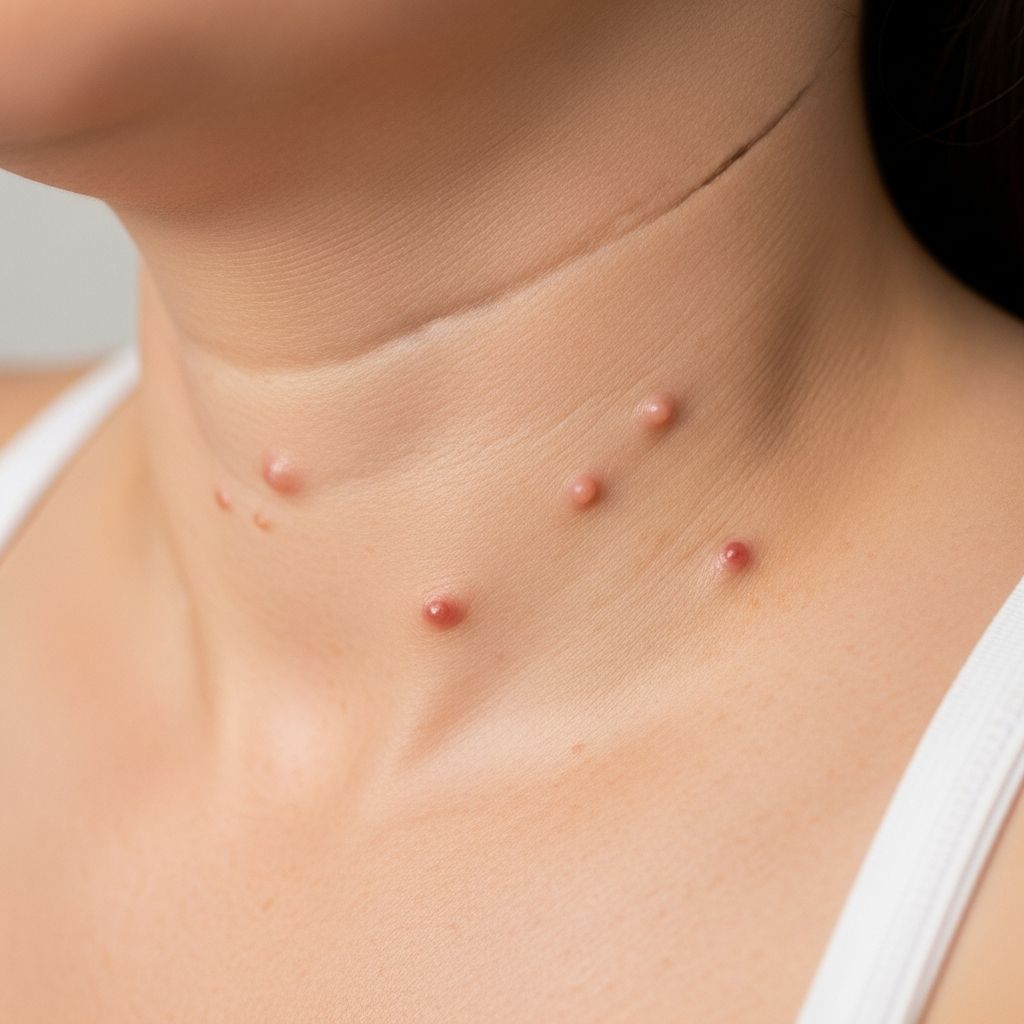
Understanding Skin Tags
Skin tags are common, benign skin growths that affect a significant portion of the population. Also known as acrochordons, papillomas, or fibroepithelial polyps, these soft lesions appear to hang off the skin by a narrow, fleshy stalk. They are harmless and noncancerous, requiring no medical treatment unless they cause irritation or cosmetic concerns.
What Do Skin Tags Look Like?
Skin tags have distinctive visual characteristics that make them relatively easy to identify. They typically appear as small flaps of tissue suspended from the skin surface by a connecting stalk or peduncle.
Physical Characteristics
- Size ranges from 2 to 5 millimeters, though some may grow larger to several centimeters across
- Oval or round shaped with a soft, flesh-like texture
- Usually skin-colored, but may appear lighter, darker, or reddish if irritated
- Thread-like or dangling appearance in appearance
- Often appear in clusters or strings, particularly around the neck area
The color and texture of skin tags can vary depending on individual skin tone and whether the growth has been irritated by friction or contact.
Where Skin Tags Develop
Skin tags are not randomly distributed across the body but rather develop in specific areas prone to friction and warm, moist environments. Understanding these common locations helps with early identification and prevention strategies.
Common Body Areas
- Neck: Most frequently affected area, especially in neck creases
- Armpits: Warm, moist environment conducive to skin tag formation
- Groin area: Region of significant skin-to-skin contact
- Under the breasts: Areas with fold and friction
- Chest and back: Less common but documented locations
- Eyelids: Delicate skin areas susceptible to small growths
These locations share a common characteristic: they are areas where skin rubs against skin, clothing, or jewelry, creating constant friction that can trigger skin tag development.
What Causes Skin Tags?
While the exact etiology of skin tags remains incompletely understood, research has identified several contributing factors and risk conditions.
Primary Contributing Factors
Friction and rubbing: The most widely recognized cause is constant friction where skin rubs against skin, jewelry, or clothing. This mechanical irritation causes the skin to thicken and form tag-like growths over time.
Age and weight: Skin tags appear more frequently in middle-aged and older adults, particularly in women. Weight gain and obesity significantly increase the risk due to increased skin folds and friction areas.
Metabolic factors: Individuals with type 2 diabetes show higher incidence rates, suggesting metabolic dysfunction may play a role in skin tag development.
Pregnancy: During pregnancy, elevated growth factor levels can promote skin tag formation. Women may notice new growths appearing during the second and third trimesters.
Genetic predisposition: Some individuals appear genetically susceptible to developing skin tags, as evidenced by familial clustering in certain populations.
Microscopic Structure and Composition
Understanding the internal structure of skin tags provides insight into why they develop and how removal methods target the tissue.
Under microscopic examination using standard histological staining techniques (hematoxylin and eosin), skin tags reveal a distinctive architecture. The outer layer, the epidermis, appears purple under staining and forms a protective envelope. The inner core, or dermis, displays a pink coloration and contains loosely arranged collagen fibers and blood vessels. This composition explains why certain removal methods—such as cauterization or cryotherapy—are effective, as they disrupt these structural components.
Related Stories



Distinguishing Skin Tags from Other Skin Lesions
Accurate identification is essential to ensure appropriate management and rule out concerning conditions.
Similar Conditions to Consider
| Condition | Appearance | Key Differences |
|---|---|---|
| Seborrheic Keratosis | Yellow/brown greasy papules with ‘stuck-on’ appearance | Contains keratin plugs; lacks the hanging stalk of skin tags |
| Viral Warts | Rough, raised lesions often with irregular borders | Caused by viral infection; different texture and appearance |
| Molluscum Contagiosum | Small, dome-shaped lesions with central dimple | Contagious viral infection; distinctive central umbilication |
| Moles | Flat or slightly raised, uniform color | Lacks the pedunculated (stalked) appearance of skin tags |
When in doubt, consulting a dermatologist ensures accurate diagnosis and appropriate treatment planning.
Are Skin Tags Contagious?
Skin tags are not contagious and pose no risk of transmission to other individuals through contact. They are purely benign growths resulting from mechanical factors and genetic predisposition, not infectious agents.
Symptoms and Associated Issues
Although generally asymptomatic, skin tags can occasionally cause discomfort or complications.
Potential Complications
- Irritation from friction with clothing or jewelry, causing redness and tenderness
- Bleeding if the skin tag becomes caught and torn
- Infection if the area is scratched or injured
- Cosmetic concerns affecting self-confidence in visible areas
- Discomfort when located in areas of frequent movement or friction
Professional Removal Methods
While skin tags are harmless and do not require removal, many individuals choose to have them eliminated for cosmetic reasons or to prevent irritation-related complications. Professional removal should always be performed by board-certified dermatologists.
Surgical Excision
The most straightforward removal method involves cutting off the skin tag using surgical scissors, a scalpel, or specialized tools such as a DermaBlade. This technique requires local anesthesia and offers immediate results. It is effective for single or multiple lesions and allows for histological examination if needed.
Cryotherapy (Freezing)
Cryosurgery uses liquid nitrogen to freeze the skin tag, destroying the cells and causing the lesion to fall off within several days. The procedure is relatively quick, well-tolerated, and commonly used for multiple lesions. Minor discomfort during application and temporary redness or blistering afterward are typical side effects.
Electrosurgery (Cauterization)
Also called diathermy, this method uses heat from an electrical current to burn away the skin tag. A heated implement or small electrical current destroys the tissue, causing the lesion to separate from the skin. This technique is quick but carries a small risk of scarring or infection if not performed properly.
Ligation
This technique involves wrapping a suture tightly around the base of the skin tag’s stalk. The suture cuts off blood supply to the lesion, causing it to eventually fall off naturally. This method requires patience, as separation may take several days to weeks.
CO2 Laser Therapy and Radiocautery
Advanced dermatologists may employ laser therapy using CO2 lasers or radiocautery (burning with radio waves) for precise removal, particularly for sensitive areas or multiple lesions.
At-Home Treatment Options
While professional removal is recommended, many individuals explore at-home approaches, though effectiveness varies considerably.
Over-the-Counter Products
Topical creams and solutions containing salicylic acid or tea tree oil claim to gradually dissolve skin tags over several weeks. However, no medically approved creams specifically for skin tag removal exist, and scientific evidence supporting these products remains limited. Results are inconsistent, and skin irritation or allergic reactions may occur.
Natural Remedies
Popular home remedies include applying apple cider vinegar, tea tree oil, vitamin E oil, garlic, iodine solution, or banana peel to the skin tag. While noninvasive and low-cost, their effectiveness is not scientifically proven, and they pose risks of irritation or adverse reactions.
Important Safety Considerations
Self-removal attempts using methods such as tying off with dental floss, applying nail polish, or using unapproved products are strongly discouraged. These approaches risk infection, scarring, and incomplete removal. Professional evaluation ensures proper diagnosis and safe treatment.
Risk Factors for Skin Tag Development
Identifying risk factors helps explain why some individuals develop skin tags while others do not.
- Female sex: Skin tags appear more frequently in women, especially with weight gain
- Age: Incidence increases in middle age and older adults
- Obesity: Excess weight creates more skin folds prone to friction
- Metabolic conditions: Type 2 diabetes elevates risk significantly
- Pregnancy: Hormonal changes and growth factor elevation during pregnancy promote formation
- Genetic predisposition: Family history suggests hereditary component
Prevention Strategies
While completely preventing skin tags may be impossible for genetically predisposed individuals, certain measures may reduce their frequency or severity.
- Maintain a healthy weight through balanced diet and regular exercise
- Use properly fitting clothing to minimize friction
- Choose comfortable, moisture-wicking fabrics in areas prone to skin tags
- Keep skin folds clean and dry to prevent irritation
- Avoid tight jewelry that creates friction on the neck or chest
- Monitor blood glucose levels if diabetic, as metabolic control may influence skin tag development
When to See a Dermatologist
Consultation with a dermatologist is recommended in the following situations:
- When skin growths change in appearance, size, color, or texture
- If a lesion becomes painful, bleeds frequently, or shows signs of infection
- When removal is desired for cosmetic or functional reasons
- To confirm diagnosis and rule out other skin conditions
- If multiple new growths appear suddenly, suggesting possible underlying metabolic change
Frequently Asked Questions
Q: Are skin tags cancerous?
A: No, skin tags are benign growths and are not cancerous. They pose no health risk and do not become malignant.
Q: Can skin tags come back after removal?
A: Removed skin tags typically do not regrow at the same location. However, new skin tags may develop elsewhere if predisposing factors persist, particularly in individuals with genetic susceptibility or ongoing friction in other skin folds.
Q: Is removal covered by insurance?
A: Most insurance plans do not cover skin tag removal when performed for cosmetic reasons. However, removal may be covered if the skin tag causes functional problems, such as bleeding or infection. Check with your insurance provider for specific policy details.
Q: How can I prevent skin tags from forming?
A: While prevention is not always possible, maintaining healthy weight, wearing properly fitting clothing, and keeping skin folds dry may help reduce their development. Individuals with genetic predisposition may be unable to prevent formation entirely.
Q: Is it safe to remove a skin tag at home?
A: Self-removal is not recommended due to risks of infection, incomplete removal, bleeding, and scarring. Professional removal by a board-certified dermatologist ensures safe, effective treatment with minimal complications.
References
- Skin Tag Causes, Pictures, Symptoms, Cream, Removal Cost — MedicineNet. 2024. https://www.medicinenet.com/skin_tag/article.htm
- Cancerous Skin Tags: Pictures and When to See a Doctor — Healthline. 2024. https://www.healthline.com/health/cancerous-skin-tags
- Benign Lesion (Skin Tags, Warts, Moles, Dermatofibroma) — NHS Lothian RefHelp. 2024. https://apps.nhslothian.scot/refhelp/guidelines/dermatology/benign-lesion-skin-tags-warts-moles-dermatofibroma/
- Moles, Freckles, and Skin Tags: Types, Causes, Treatments — WebMD. 2024. https://www.webmd.com/skin-problems-and-treatments/moles-freckles-skin-tags
- Cancerous Skin Tags: Pictures, Removal, and More — Medical News Today. 2024. https://www.medicalnewstoday.com/articles/cancerous-skin-tags
- Doctor Explains Skin Tags – Including Clinical Photos — YouTube. 2024. https://www.youtube.com/watch?v=SfOQSw6d104
- Skin Tags: Acrochordons — DermNet New Zealand. 2024. https://dermnetnz.org/topics/skin-tag
Similar Articles








Read full bio of medha deb