Skin Tension Lines: Surgical Guide & Clinical Applications
Understanding skin tension lines for optimal surgical outcomes and scar minimization.
Understanding Skin Tension Lines
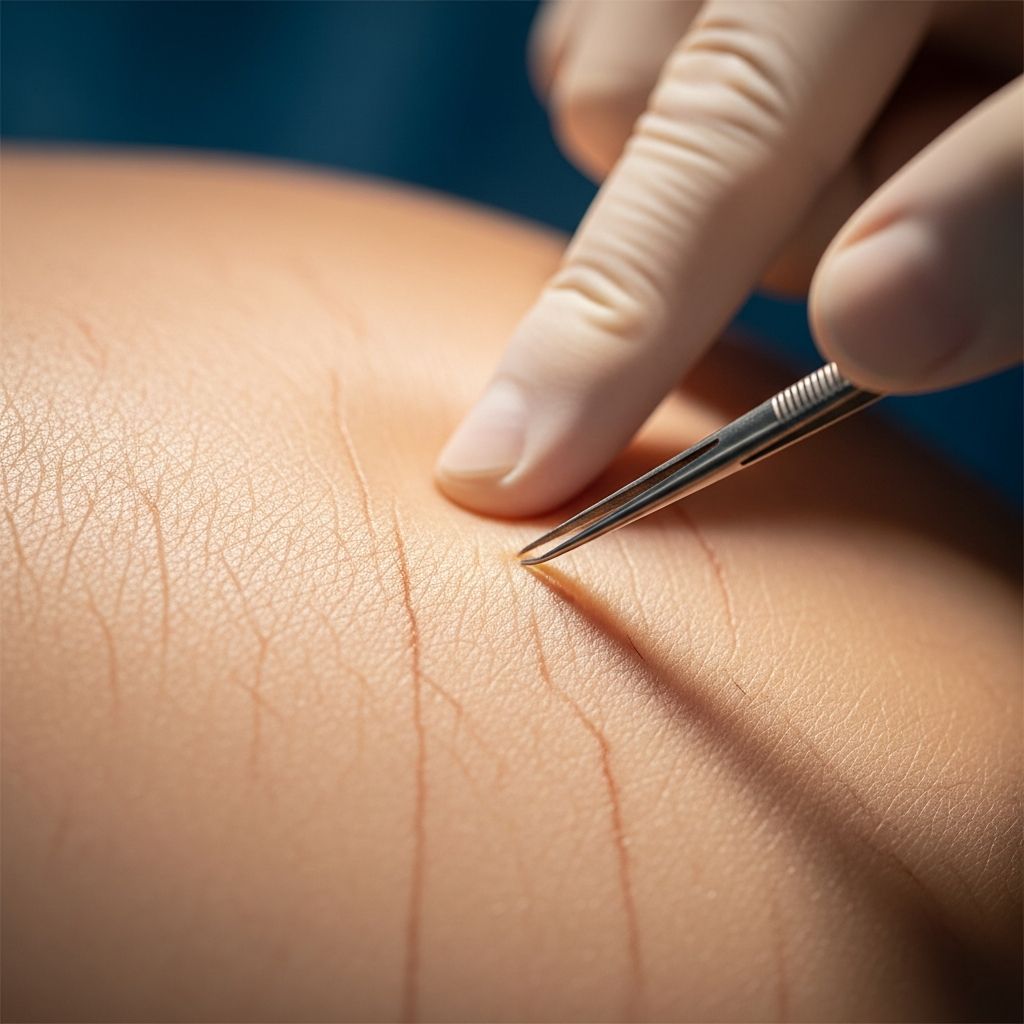
Skin tension lines represent a comprehensive map of the direction in which tension in the skin reaches its maximum at different body sites. These lines are typically illustrated on diagrams of the human body and serve as essential guides for surgical planning and wound management. The concept of tension distribution across skin has been fundamental to surgical practice for over a century, influencing how dermatologists and plastic surgeons approach incisions and excisions.
The skin’s inherent tension arises from underlying muscles, tissues, and joints, which can inhibit optimal wound healing if not properly considered during surgical procedures. Understanding these tension patterns allows surgeons to minimize wound closure tension, promote better healing outcomes, and reduce the visibility of resulting scars.
Types of Skin Tension Lines
Several distinct classifications of skin tension lines have been identified and studied over time, each with different clinical applications and origins:
Langer Lines (Cleavage Lines)
The most widely recognized skin tension lines are the Langer lines, named after Karl Langer who first described them in 1861. These lines, also called cleavage lines, were determined through a distinctive experimental method. Langer pierced cadaver skin with an awl—a small pointed tool used for creating holes in leather—and observed the orientation of the resulting wounds. This pioneering work established the foundational understanding of directional skin tension that has guided surgical practice for generations.
Wrinkle Lines
Wrinkle lines were described by Kraissl and were based on photographic studies of an elderly man with prominent facial wrinkles. However, wrinkle lines do not consistently align with tension lines, particularly in anatomically challenging areas such as the chin, dorsum of the nose, and the region lateral to the eyes. This inconsistency has important implications for surgical planning, as reliance on wrinkle lines alone may not produce optimal outcomes in all anatomical regions.
Relaxed Skin Tension Lines (RSTL)
Relaxed skin tension lines are produced in living subjects through a gentle physical examination method. The technique involves positioning the body to allow skin relaxation and then gently pinching the skin to reveal natural creases. A notable distinction exists between RSTL and Langer lines: on the face, these two sets of lines often run perpendicular to one another. This difference reflects the unique characteristics of living tissue compared to cadaveric specimens, making RSTL particularly valuable for facial surgical planning.
Biodynamic Excisional Skin Tension (BEST) Lines
The most recent advancement in skin tension mapping comes from biodynamic excisional skin tension (BEST) lines, derived using tensiometer data (measurements of muscle force) from patients undergoing actual skin excisions. Dr. Sharad Paul at the Auckland University of Technology developed this groundbreaking approach, analyzing real-time skin tension data in over 1,000 patients to map these lines throughout the body. BEST lines show the optimal orientation of a skin excision to minimize tension across its closure, representing the first major theoretical advancement since Langer’s original 1861 work.
Physiological Basis of Skin Tension Lines
Skin tension lines reflect internal tension within the skin, primarily produced by the connective tissue of the dermis, with additional external tension contributions. Understanding the biomechanical basis of these lines is essential for comprehending their clinical relevance:
Related Stories



- Passive tension: Derived primarily from collagen fibrils that become aligned in parallel patterns, creating directional tension vectors throughout the skin
- Active tension: Produced by contraction of fibroblast cells, which dynamically modulate skin tension in response to mechanical forces
- Structural influences: The protrusion of underlying bone, cartilage, and muscle affects local tension patterns
- Dynamic factors: Movement of nearby joints creates variable tension zones that shift with body position and movement
These physiological factors combine to create a unique tension profile for each individual. Importantly, research has demonstrated that skin tension and BEST lines show remarkable consistency between people, varying minimally with age and sex, which allows for standardized surgical approaches across different individuals.
Clinical Relevance to Surgical Outcomes
The orientation of surgical incisions and excisions in relation to skin tension lines has profound implications for wound healing and aesthetic results. When a surgical incision or excision aligns with skin tension lines, tension across the closure of the defect is minimized. This alignment leads to optimal scar formation and minimizes wound contraction, improving both functional and cosmetic outcomes.
Incisions Versus Excisions
A crucial distinction exists between surgical incisions and excisions in their relationship to skin tension lines. Langer lines and wrinkle lines can be considered incisional lines, as they function optimally for smaller wounds below 8 millimeters in diameter. However, for larger excisions—such as those required for skin cancer removal—BEST lines provide superior guidance.
This difference reflects distinct biomechanical behaviors. During incisions under minimal tension, elastin stretches and collagen buckles. Conversely, during excisions that create larger wounds, collagen stretches and elastin buckles. These differential responses to tension underscore why different line systems should guide incisions versus excisions.
Surgical Technique Optimization
Beyond aligning incisions with appropriate tension lines, surgeons employ additional techniques to minimize wound tension:
- Undermining: Separating the superficial subcutaneous fat from underlying soft tissue to reduce tension on closure
- Relaxing incisions: Creating additional incisions to distribute tension over a greater area
- Zigzag excisions: Simple zigzag patterns have been shown to reduce wound tension, particularly in keloid-prone zones
Skin Tension Lines in Cosmetic Surgery
Research confirms the significant impact of tension line–oriented surgical planning on cosmetic outcomes. In studies of full-thickness skin grafting for basal cell carcinoma, patients who underwent skin tension line–oriented grafting demonstrated superior aesthetic results. These patients achieved higher visual analog scale (VAS) scores compared with those receiving conventional grafts (6.13 versus 5.64, p < 0.05).
Clinically, tension line–oriented grafting was associated with less visible graft contraction and improved contour integration, particularly in cosmetically sensitive facial areas. Notably, no significant differences in patient-reported quality of life were observed between the groups, indicating that tension line–oriented approaches provide aesthetic benefits without compromising functional outcomes.
Limitations of Traditional Approaches
An important historical clarification: Langer lines were not originally intended as guides for surgical excisions. In fact, Langer lines often run perpendicular to skin folds, making them suboptimal for certain excisional approaches. Contemporary evidence indicates that relaxed skin tension lines, BEST lines, and lines following the direction of striae distensae (stretch marks) are significantly more useful for surgical planning.
Recent research has also revealed that 1 millimeter beneath each newly developing wrinkle lies a new lymphatic vessel. This anatomical finding suggests that using wrinkle lines on the limbs for excisions may have unforeseen consequences for cancer surgery due to increased wound closure tension. This discovery further supports the adoption of BEST lines over traditional wrinkle line–based approaches, particularly for cancer-related excisions.
Clinical Applications in Dermatological Conditions
Skin tension lines influence more than just surgical planning; they also affect the presentation and behavior of various skin conditions:
Christmas Tree Pattern
Several skin disorders produce ovoid (egg-shaped) lesions on the back with their long axes aligned with skin tension lines. This characteristic appearance is called the “Christmas tree pattern” and is seen in various conditions where lesion orientation follows these directional lines.
Linear Basal Cell Carcinoma
Linear basal cell carcinoma is a morphological variant of basal cell carcinoma that generally follows relaxed skin tension lines. This lesion typically presents as an elongated lesion often on the neck or around the eyes. The preferential growth in the direction of tension lines likely results from interactions between tumor cells and surrounding stroma, which influence cellular migration and proliferation patterns.
The BEST Lines Paradigm Shift
Dr. Sharad Paul’s development of BEST lines represents a fundamental paradigm shift in skin surgery. Using real-time skin tension data during excision surgery in over 1,000 patients, Paul mapped biodynamic excisional skin tension lines throughout the body. This groundbreaking, first-of-its-kind study provides the first new theory in skin tension lines since the early work of 1861.
The BEST lines approach offers several advantages over historical methods. Studies confirm that excisions in the lower limb using BEST lines result in less wound closure tension compared to RSTL or wrinkle lines. Paul suggests that wrinkle lines are not suitable for excisions—especially skin cancer excisions—and that BEST lines should be used for optimal surgical outcomes and reduced scarring.
Furthermore, BEST lines on the limbs tend to run vertically, aligned with the direction of long bones, which differs from traditional approaches. The anatomical consistency of BEST lines across the human body is remarkable, suggesting that following these lines can be expected to reduce wound tension and improve both cosmetic results and surgical outcomes.
Practical Implications for Surgical Planning
Understanding skin tension lines has direct practical implications for dermatological surgeons. Skin cancer excisions on the trunk often result in poor cosmetic outcomes due to inconsistency in identifying the correct excisional line. An improperly oriented excision may mean the difference between primary closure and the need for a skin graft on the lower limb.
By adhering to appropriate tension line principles—particularly BEST lines—surgeons can significantly improve outcomes. The choice of incisional versus excisional line system becomes critical: Langer and RSTL lines serve adequately for small incisions, but BEST lines provide superior guidance for larger excisions typical in dermatological cancer surgery.
Frequently Asked Questions
Q: What is the difference between Langer lines and BEST lines?
A: Langer lines were derived from cadaver skin in 1861 using awl-piercing techniques and represent directional tension in static tissue. BEST lines were developed using real-time tensiometer measurements from living patients undergoing actual skin excisions, providing more accurate guidance for surgical excision orientation.
Q: Why are wrinkle lines not suitable for skin cancer excisions?
A: Wrinkle lines do not consistently align with actual skin tension, particularly on the face and neck. Additionally, recent research reveals that lymphatic vessels develop 1 mm beneath wrinkles, increasing wound closure tension when wrinkle lines are used for excisions.
Q: Do skin tension lines vary significantly between individuals?
A: No. Research demonstrates that skin tension and BEST lines show remarkable consistency between people and vary minimally with age and sex, making their use standardized across different individuals.
Q: What is the Christmas tree pattern?
A: The Christmas tree pattern refers to ovoid (egg-shaped) skin lesions that appear on the back with their long axes aligned with skin tension lines, characteristic of certain dermatological conditions.
Q: How do surgeons minimize wound tension during closure?
A: Surgeons use several techniques including proper orientation along tension lines, undermining (separating fat layers), relaxing incisions to distribute tension, and zigzag excision patterns in keloid-prone zones.
References
- Skin Tension Lines — DermNet. Accessed 2026-01-28. https://dermnetnz.org/topics/skin-tension-lines
- The Impact of Skin Tension Line Orientation in Full-Thickness Skin Grafting for Basal Cell Carcinoma — Dermatology Times. https://www.dermatologytimes.com/view/the-impact-of-skin-tension-line-orientation-in-full-thickness-skin-grafting-for-bcc
- The BEST Lines for Skin Surgery: A New Paradigm — Research Outreach. https://researchoutreach.org/articles/the-best-lines-for-skin-surgery-a-new-paradigm/
- Biodynamic Excisional Skin Tension Lines for Surgical Excisions — National Institutes of Health/PubMed Central. https://pmc.ncbi.nlm.nih.gov/articles/PMC5958865/
Similar Articles








Read full bio of Sneha Tete