Slapped Cheek Disease: What Parents Need To Know
Comprehensive guide to slapped cheek syndrome (fifth disease): symptoms, causes, treatment, and prevention for parents.
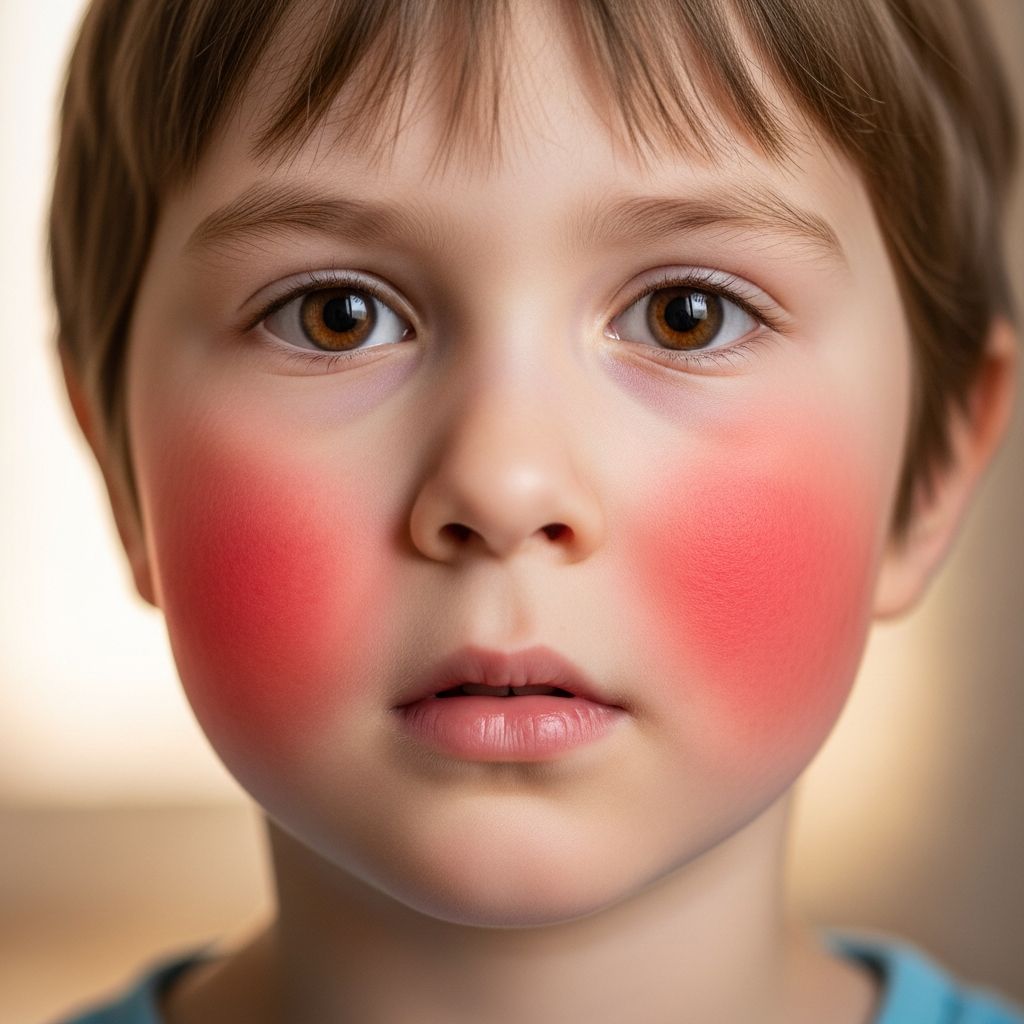
Slapped cheek disease, also known as fifth disease or erythema infectiosum, is a common and usually mild viral infection primarily affecting children. Caused by parvovirus B19, it is characterized by a distinctive bright red rash on the cheeks that resembles as if the child has been slapped. While the illness is generally self-limiting and resolves without specific treatment, understanding its symptoms, transmission, and potential complications is essential for parents and caregivers.
What is Slapped Cheek Disease?
Slapped cheek disease is an infectious condition triggered by the human parvovirus B19. This single-stranded DNA virus targets red blood cell precursors in the bone marrow, temporarily halting their production, which can lead to mild anemia in healthy individuals. The name ‘fifth disease’ originates from its historical classification as the fifth classic childhood rash illness, following measles, scarlet fever, rubella, and Dukes’ disease.
The infection is highly contagious, particularly in settings like schools and daycares where children aged 4-10 are most susceptible. Approximately 25% of infected children remain asymptomatic, unknowingly spreading the virus before the rash appears. In healthy children, the disease runs a benign course, but it poses risks to certain vulnerable groups, including pregnant women, fetuses, and individuals with blood disorders or weakened immune systems.
Symptoms of Slapped Cheek Disease
The progression of symptoms in slapped cheek disease typically unfolds in two phases. Initially, children experience non-specific flu-like symptoms for a few days, which may go unnoticed or be mistaken for a common cold.
Early Symptoms (Prodromal Phase)
- High temperature (fever): Often low-grade but can reach uncomfortable levels.
- Runny nose and sore throat: Mild upper respiratory symptoms resembling a cold.
- Headache: Common complaint, especially in older children.
- Tiredness and malaise: General fatigue and feeling unwell.
- Muscle aches: Mild myalgia may occur.
These early signs appear during the 4-21 day incubation period (typically 4-14 days) and coincide with peak contagiousness.
Rash Phase (Characteristic Signs)
After 1-4 weeks, the hallmark rash emerges, marking the end of the contagious period. The rash begins as:
- Bright red ‘slapped cheek’ appearance: Erythema on both cheeks, sparing the nose and mouth area. On lighter skin, it appears vivid red; on darker skin tones, it may look purplish or dusky.
Within 1-4 days, the rash spreads as a lacy, reticular pattern:
- Lace-like rash: Pink/purple mottled eruption on trunk, arms, legs, buttocks. Flat, non-pruritic in most cases but can itch.
- Duration: Fades in 1-3 weeks but may recur with heat, sunlight, stress, or skin trauma.
Symptoms in Adults
Adults, especially women, more commonly experience joint symptoms rather than rash:
- Joint pain and stiffness: Symmetric arthropathy affecting hands, wrists, knees, ankles; can persist 1-3 weeks or longer.
- Rash less frequent; flu-like symptoms similar to children.
How Long Does Slapped Cheek Disease Last?
The total duration varies by phase:
- Incubation: 4-21 days.
- Prodrome: 2-5 days.
- Rash: 1-3 weeks, with possible flares.
- Joint pain (adults): Weeks to months in rare cases.
Related Stories



Children typically feel well once the rash appears, resuming normal activities. Full viral clearance takes 1-3 months, but infectivity ends with rash onset.
Causes of Slapped Cheek Disease
Exclusively caused by parvovirus B19, a ubiquitous virus with worldwide distribution. Seroprevalence reaches 50-80% in adults, indicating most gain lifelong immunity post-infection.
- Transmission: Respiratory droplets from coughs/sneezes; contact with contaminated surfaces (fomites); rarely blood products.
- Contagious period: Peak before rash (up to 7-10 days pre-rash); non-contagious once rash visible.
- Outbreaks: Common in winter-spring; school/daycare clusters.
How Slapped Cheek Disease Spreads
The virus spreads efficiently in close-contact settings:
| Mode of Transmission | Details |
|---|---|
| Respiratory | Coughs, sneezes, talking; droplets inhaled or land on surfaces. |
| Contact | Touching contaminated objects (toys, doorknobs) then face. |
| Vertical (pregnancy) | Mother-to-fetus transplacental; 30-50% transmission risk. |
| Bloodborne (rare) | Transfusions, needle sticks. |
Household secondary attack rate: 50%; classroom: 10-60%. Asymptomatic shedding drives outbreaks.
Diagnosis of Slapped Cheek Disease
Clinical diagnosis suffices in typical cases: characteristic rash post-prodrome in a child. No routine testing needed.
- Blood tests: Parvovirus B19 IgM (acute), IgG (past immunity); PCR for viremia. Reserved for complications, pregnancy exposure, immunocompromised.
- Differential: Rubella, measles, scarlet fever, drug eruptions.
Treatment of Slapped Cheek Disease
Symptomatic and supportive; no antiviral cure as it’s self-limited in healthy hosts.
Home Management
- Rest: Until fever resolves.
- Hydration: Plenty of fluids; continue normal feeds for infants.
- Pain/fever relief: Paracetamol (acetaminophen) or ibuprofen. Never aspirin in children <16 years (Reye’s syndrome risk).
- Itch relief: Antihistamines (e.g., chlorphenamine) if needed; calamine lotion.
- Rash care: Avoid irritants; loose clothing.
Complicated Cases
- Severe anemia: Blood transfusion.
- Immunocompromised: IVIG.
When to Seek Medical Help
Most cases need no GP visit, but seek urgent care if:
- Severe symptoms: Extreme tiredness, pallor, shortness of breath, fainting (anemia signs).
- High-risk child: Sickle cell, cancer, immune disorders, chronic hemolytic anemia.
- Pregnant exposure: Consult immediately.
- Persistent fever >5 days, worsening joint pain, severe headache.
Call 111 or emergency if breathing difficulty, rapid heartbeat.
Complications of Slapped Cheek Disease
Rare in healthy children (transient low reticulocytes, mild anemia self-resolves).
- Hemolytic crises: In sickle cell, thalassemia.
- Pure red cell aplasia: Immunosuppressed (HIV, chemo).
- Neurologic: Rare encephalitis, meningitis.
Pregnancy Risks
First/early second trimester exposure: 5-10% fetal infection risk; <1% major anomalies (hydrops fetalis, anemia, miscarriage, fetal death). Monitor with serial ultrasounds.
Prevention and Infection Control
No vaccine; prevention focuses on hygiene:
- Handwashing with soap.
- Cover coughs/sneezes.
- Disinfect surfaces.
- Exclude pre-rash cases from school (impractical as rash signals non-contagious).
- Pregnant: Avoid outbreaks; seek advice post-exposure.
Slapped Cheek Disease in School/Daycare
Notify school of cases. Children can attend once well and rash appeared (non-contagious). Inform parents of outbreaks.
Frequently Asked Questions (FAQs)
Q: Is slapped cheek disease dangerous?
A: Usually mild and harmless in healthy children. Complications rare except in high-risk groups or pregnancy.
Q: How long is a child with slapped cheek contagious?
A: Until rash appears; typically 7-10 days post-exposure but before rash.
Q: Can adults get slapped cheek disease?
A: Yes, often with joint pain rather than rash; more symptomatic in women.
Q: Should I keep my child home from school?
A: No, once rash appears and child feels well; safe to return.
Q: What if I’m pregnant and exposed?
A: Contact GP/midwife urgently for blood tests and fetal monitoring.
Q: Is there a vaccine for parvovirus B19?
A: No vaccine available currently.
References
- Slapped cheek syndrome – NHS — NHS. 2023. https://www.nhs.uk/conditions/slapped-cheek-syndrome/
- Slapped Cheek Syndrome Is on the Rise – Could Your Child Be at Risk? — Miller Children’s & Women’s Hospital Long Beach. 2023-10-12. https://www.millerchildrens.memorialcare.org/blog/slapped-cheek-syndrome-rise-could-your-child-be-risk
- Fifth Disease (Slapped Cheek Disease) — UCSF California Child Health Program. 2024. https://cchp.ucsf.edu/resources/illness-sheets/fifth-disease-slapped-cheek-disease
- Fifth Disease — Children’s Hospital of Philadelphia. 2024. https://www.chop.edu/conditions-diseases/fifth-disease
- About Parvovirus B19 — CDC. 2024-06-21. https://www.cdc.gov/parvovirus-b19/about/index.html
- Parvovirus infection – Symptoms & causes — Mayo Clinic. 2023-11-08. https://www.mayoclinic.org/diseases-conditions/parvovirus-infection/symptoms-causes/syc-20376085
Similar Articles








Read full bio of Sneha Tete