Sleep Paralysis: Complete Guide To Causes, Symptoms, And Relief
Understand sleep paralysis: symptoms, causes, treatments, and how to break free from terrifying episodes of temporary paralysis.
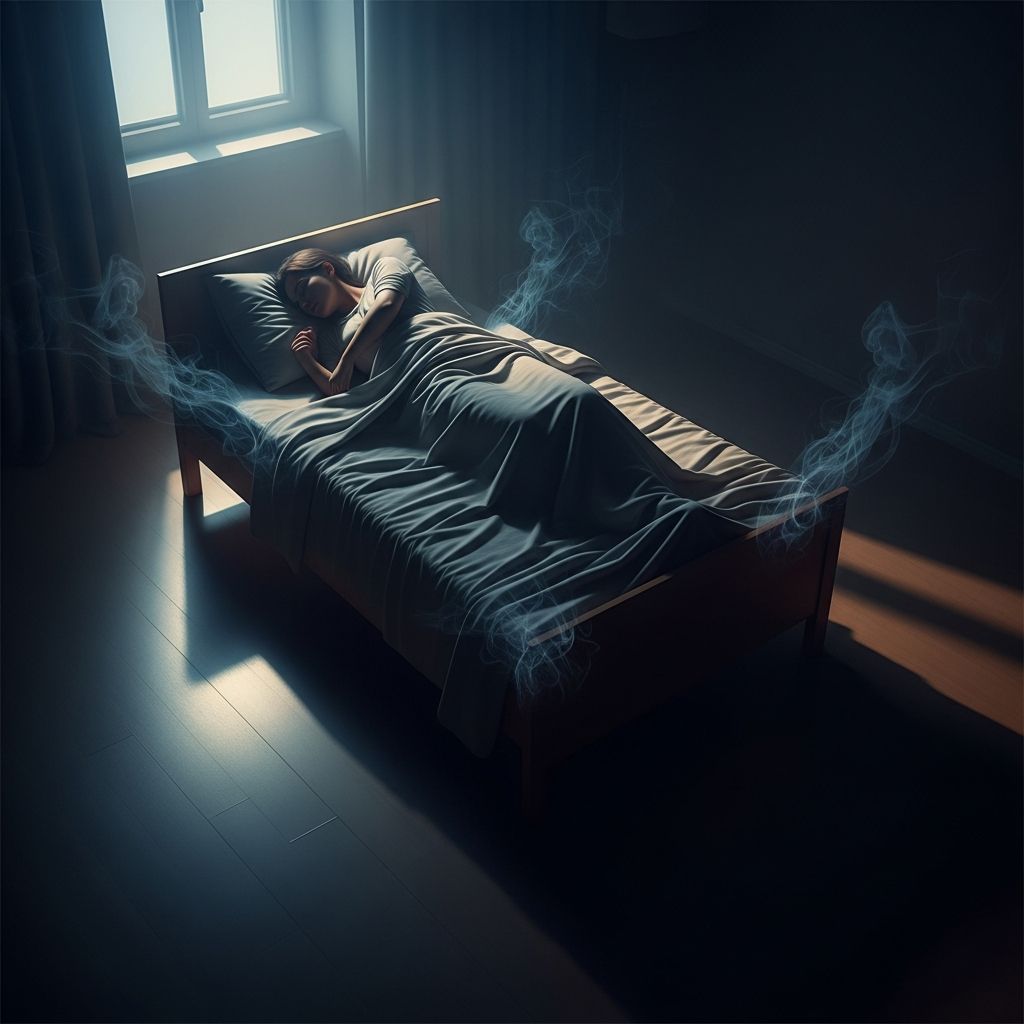
Sleep paralysis is a temporary inability to move or speak while falling asleep or waking up, despite being fully conscious. It often involves vivid hallucinations and intense fear, occurring due to a mismatch between REM sleep atonia and wakefulness.
What Is Sleep Paralysis?
Sleep paralysis is classified as a parasomnia, specifically a REM parasomnia, where the body’s natural muscle atonia from REM sleep persists into conscious wakefulness. During normal REM sleep, vivid dreams occur alongside temporary paralysis to prevent acting out dreams, but this should end upon waking. In sleep paralysis, the mind awakens prematurely while the body remains paralyzed, leading to a terrifying experience lasting seconds to minutes.
This phenomenon affects up to 40% of people at least once in their lifetime, though recurrent episodes are less common, impacting about 8% of the general population. It typically happens during transitions into or out of sleep, creating a hybrid state of awareness.
Sleep Paralysis Symptoms
The hallmark symptom is the sudden inability to move voluntary muscles, such as limbs or torso, despite full mental alertness. People can often move their eyes or breathe, but feel trapped. Episodes last from a few seconds to 20 minutes, averaging 1-2 minutes.
Common accompanying sensations include:
- Chest pressure or choking: A feeling of suffocation or an entity sitting on the chest, linked to reduced respiratory effort in REM sleep causing hypercapnia.
- Hallucinations: Vivid, multisensory experiences categorized as intruder (sense of a presence or threat), incubus (pressure on chest), or vestibular-motor (floating or out-of-body sensations).
- Intense fear and panic: Driven by amygdala hyperactivation, amplifying threat perception.
These symptoms can mimic night terrors but occur with consciousness intact, distinguishing sleep paralysis.
Sleep Paralysis Causes
Sleep paralysis stems from disruptions in the sleep-wake transition, particularly involving REM sleep mechanisms. Key causes include:
- REM atonia persistence: Normally regulated by brainstem regions like the pons and ventromedial medulla; premature wakefulness leaves muscles hypotonic.
- Neurochemical imbalance: Hyperactive cholinergic ‘sleep-on’ neurons and underactive serotonergic ‘sleep-off’ neurons create conflicting signals.
- Sleep fragmentation: Reduced REM latency and irregular cycles from deprivation or schedule shifts.
Brain imaging shows involvement of the amygdala (fear), superior parietal lobule (body distortions), and limbic system during episodes.
Risk Factors for Sleep Paralysis
While anyone can experience isolated episodes, certain factors increase frequency:
| Risk Factor | Description |
|---|---|
| Narcolepsy | 20% of narcolepsy patients experience frequent episodes due to REM dysregulation. |
| Sleep deprivation | Irregular schedules or insufficient sleep heighten risk. |
| Stress and anxiety | Psychological strain disrupts sleep architecture. |
| Sleeping position | Back sleeping correlates with higher incidence. |
| Genetics and family history | Hereditary predisposition noted in studies. |
| Substances/medications | ADHD meds, alcohol, or cannabis can trigger. |
Adolescence and young adulthood see peak onset, with episodes potentially increasing with age in some cases.
How Common Is Sleep Paralysis?
Isolated sleep paralysis occurs in 20-40% of people worldwide, with cultural variations in reporting due to stigma or supernatural interpretations. Recurrent isolated sleep paralysis affects 3-8%, while it’s near-universal in narcolepsy type 1. Women report slightly higher rates, and prevalence is consistent across ethnicities when adjusted for awareness.
Sleep Paralysis vs. Night Terrors
| Aspect | Sleep Paralysis | Night Terrors |
|---|---|---|
| Consciousness | Fully awake/aware | Unconscious, no recall |
| Movement | Paralyzed | Thrashing/screaming |
| Hallucinations | Vivid, realistic | Rare |
| Sleep Stage | REM transition | Non-REM (stage 3) |
| Age Group | Teens/adults | Children |
Sleep paralysis involves awareness without recall issues, unlike night terrors’ partial arousals.
Related Stories



Diagnosis
Diagnosis relies on clinical history, as no specific test exists. Tools include:
- Sleep diaries tracking episodes, positions, and triggers.
- Questionnaires like the Sleep Paralysis Questionnaire.
- Polysomnography (PSG) for recurrent cases to rule out narcolepsy or apnea.
- Exclusion of seizures, psychiatric disorders, or substance effects.
Consult a sleep specialist if episodes exceed twice weekly or cause distress.
Treatment for Sleep Parasomnia
No FDA-approved drug targets sleep paralysis directly, but management focuses on triggers and symptoms:
- Behavioral therapies: Focused-attention meditation with muscle relaxation aborts episodes by refocusing awareness.
- Medications: SSRIs or tricyclics (e.g., clomipramine) reduce frequency in narcolepsy-linked cases; pimavanserin proposed for hallucinations.
- CBT for insomnia: Addresses anxiety cycles.
During an episode, techniques like eye movement, small muscle wiggles, or mental mantras help break paralysis.
Prevention
Proactive steps significantly reduce occurrences:
- Maintain consistent sleep schedule (7-9 hours nightly).
- Avoid back sleeping; use positional therapy.
- Practice sleep hygiene: limit caffeine/alcohol, reduce screen time.
- Manage stress via exercise, meditation, or therapy.
- Treat underlying disorders like narcolepsy or PTSD.
When to See a Doctor
Seek medical help if:
- Episodes are frequent (weekly+).
- Accompanied by daytime sleepiness or cataplexy (narcolepsy signs).
- Hallucinations persist into wakefulness.
- Impact mental health or daily function.
Frequently Asked Questions (FAQs)
Can sleep paralysis kill you?
No, sleep paralysis is harmless physically; you can breathe and regain control naturally. The fear is real but passes.
Is sleep paralysis a sign of something serious?
Usually not, but frequent episodes may indicate narcolepsy or other disorders warranting evaluation.
How do you break out of sleep paralysis?
Focus on eye or finger movements, breathe deeply, or remind yourself it’s temporary. Waking fully ends it.
Does sleep paralysis happen every night?
Rarely; most have isolated events. Chronic cases link to disorders.
Takeaways
Sleep paralysis, though terrifying, is a benign REM sleep glitch demystified by science. Understanding its mechanisms empowers prevention and management for restful nights.
References
- Voices in the Night: Sleep Paralysis & The Intersection of Brain, Trauma, Traditions — Probiologists. 2023. https://www.probiologists.com/article/voices-in-the-night-sleep-paralysis-the-intersection-of-brain-trauma-traditions
- Sleep Paralysis: Symptoms, Causes, and Treatment — Sleep Foundation. 2025-06-01. https://www.sleepfoundation.org/parasomnias/sleep-paralysis
- Sleep Paralysis – StatPearls — NCBI Bookshelf. 2023-07-17. https://www.ncbi.nlm.nih.gov/books/NBK562322/
- Sleep Paralysis — MedlinePlus. 2024. https://medlineplus.gov/ency/article/000801.htm
- Sleep Paralysis: Causes, Symptoms, Treatment, and Prevention — WebMD. 2025. https://www.webmd.com/sleep-disorders/sleep-paralysis
Similar Articles








Read full bio of Sneha Tete