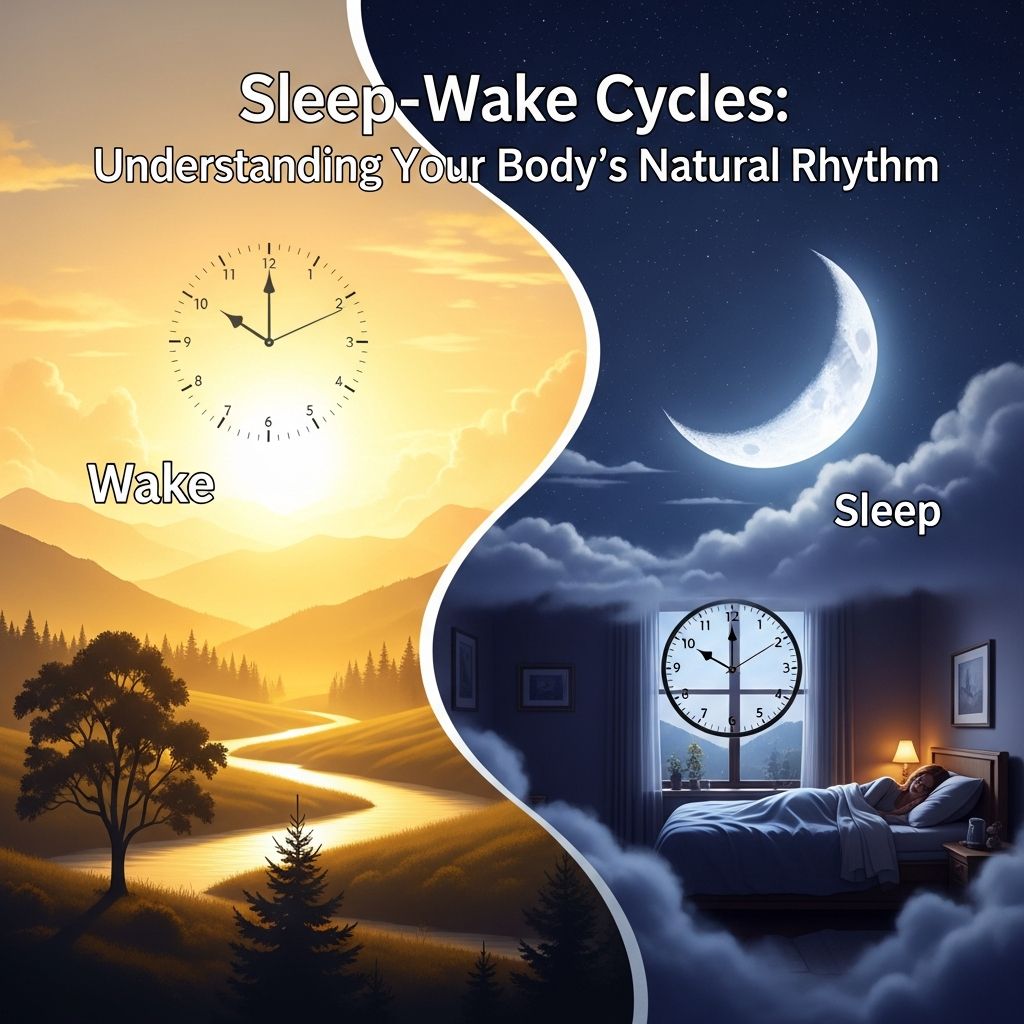
Sleep-Wake Cycles: Understanding Your Body’s Natural Rhythm
Master your body's sleep-wake cycle and optimize your circadian rhythm for better health and wellness.
Understanding Sleep-Wake Cycles
Sleep is one of the most fundamental biological processes that sustains human health and wellness. Your body operates on a carefully orchestrated internal clock known as the circadian rhythm, which regulates a complex cycle of sleep and wakefulness throughout each 24-hour period. Understanding how your sleep-wake cycles function is essential for maintaining optimal physical health, mental well-being, and cognitive performance. The sleep-wake cycle is not a simple on-and-off mechanism but rather a sophisticated interplay of neurological, hormonal, and environmental factors that work together to govern when you feel alert and when you feel tired.
The Two Phases of Sleep
Human sleep consists of two distinct phases that alternate throughout the night: rapid eye movement (REM) sleep and non-rapid eye movement (NREM) sleep. During a typical night of sleep, your body cycles through these phases multiple times, with each complete cycle lasting approximately 90 to 110 minutes. Understanding the differences between these phases helps explain why certain types of sleep are more restorative than others and why sleep quality matters as much as sleep quantity.
Non-Rapid Eye Movement (NREM) Sleep
NREM sleep comprises approximately 75% of your total sleep time and is further divided into three distinct stages: N1, N2, and N3. Each stage represents progressively deeper sleep, with increasing difficulty in arousal. During NREM sleep, your body performs crucial restorative functions including muscle repair, tissue growth, and memory consolidation. The stages of NREM sleep include:
- Stage N1 (Light Sleep): This is the transition phase between wakefulness and sleep, lasting just a few minutes. During this stage, your brain waves begin to slow, and you may experience brief jerks or muscle twitches. You can be easily awakened during N1 sleep.
- Stage N2 (Intermediate Sleep): This stage typically makes up the majority of your sleep time. Brain waves continue to slow, body temperature decreases, and heart rate drops. Your body becomes less responsive to external stimuli, but you can still be awakened.
- Stage N3 (Deep Sleep): This is the deepest and most restorative stage of sleep. Brain waves are at their slowest, and your body is very difficult to arouse. Deep sleep is when your body performs most of its physical restoration, including immune system strengthening and muscle recovery.
Rapid Eye Movement (REM) Sleep
REM sleep is distinctly different from NREM sleep in several important ways. During REM sleep, your eyes move rapidly from side to side beneath your closed eyelids, while your brain wave activity resembles patterns similar to wakefulness. Interestingly, despite high brain activity, your skeletal muscles become almost completely paralyzed except for your eyes and diaphragm. REM sleep is strongly associated with vivid dreams, nightmares, and emotional processing. The duration of REM sleep increases as the night progresses, with the first REM period lasting only about 10 minutes, while the final REM cycle can last up to one hour. During REM sleep, your brain metabolism increases by up to 20%, indicating intense neurological activity.
The Sleep Cycle Architecture
A typical night of sleep consists of 4 to 5 complete sleep cycles, with progression through stages in a specific sequence: N1, N2, N3, N2, and then REM. This cycling pattern repeats throughout the night, with the proportion of time spent in each stage shifting as sleep progresses. Early in the night, you spend more time in deep sleep (N3), which is why the first few hours of sleep are particularly important for physical restoration. As the night progresses, the duration of REM sleep increases while deep sleep decreases, allowing for more opportunity for dream-based emotional and cognitive processing.
Related Stories



The Circadian Rhythm and Sleep Regulation
Your sleep-wake cycle is fundamentally governed by your circadian rhythm, an internal biological clock that operates on approximately a 24-hour cycle. This circadian system is regulated by the suprachiasmatic nucleus (SCN) of the hypothalamus, a specialized region in your brain that responds to environmental light cues and coordinates sleep-wake timing throughout your body.
How Circadian Rhythms Control Sleep
The circadian rhythm controls the release of several crucial hormones and neurochemicals that regulate sleep and wakefulness. Melatonin, often called the “sleep hormone,” is secreted by the pineal gland approximately two hours before your body’s preferred sleep time. This hormone rises as light decreases in the evening, signaling to your body that it is time to prepare for sleep. Cortisol, conversely, rises in the early morning hours, helping you wake up and promoting alertness. The circadian system also regulates the release of adrenocorticotropic hormone (ACTH), prolactin, and norepinephrine, all of which influence sleep quality and daytime functioning.
Individual Differences in Circadian Timing
Not everyone’s circadian rhythm operates identically. Genetic variations influence whether you are naturally a “morning person,” an “evening person,” or somewhere in between. Morning types have an advanced circadian phase and tend to wake early and feel alert in the morning, while evening types (often called “night owls”) have a delayed circadian phase and feel more alert and productive later in the day. These differences are partially determined by variations in circadian clock genes, including per genes and clock genes that regulate the production and degradation of proteins controlling circadian timing.
The Neurobiology of Sleep-Wake Cycles
Multiple brain structures work in concert to regulate your sleep-wake cycles. The hypothalamus controls the onset of sleep and integrates signals about light exposure and circadian timing. The thalamus acts as a sensory gatekeeper, preventing external signals from reaching the cortex during sleep. The pons in the brainstem helps initiate REM sleep, while the reticular formation regulates transitions between sleep and wakefulness. The hippocampus and amygdala, regions involved in memory and emotion, are particularly active during REM sleep when dreaming occurs.
Several neurochemicals maintain the waking state and facilitate sleep through their activity levels. Acetylcholine (ACh) levels are highest during waking and REM sleep, promoting alertness and dream activity. Serotonin, released from neurons in the dorsal raphe nucleus, helps maintain wakefulness. Dopamine, norepinephrine, and histamine also promote alertness, while GABA (gamma-aminobutyric acid) supports sleep promotion through activity in GABAergic nuclei found in the brainstem, lateral hypothalamus, and preoptic area.
Sleep Stages and Their Functions
Each stage of sleep serves important biological functions. During N2 sleep, which comprises the majority of sleep time, your body consolidates procedural memories (learning how to do things) and prepares for deep sleep. During N3 deep sleep, your body performs maximum physical restoration, including growth hormone secretion, immune system strengthening, and tissue repair. REM sleep is crucial for emotional regulation, memory consolidation of complex information, and brain development. The balance between these stages is important for overall health and wellness.
Environmental and Behavioral Factors Affecting Sleep-Wake Cycles
Your sleep-wake cycle is influenced not only by internal biological mechanisms but also by external environmental factors. Light exposure is the most powerful regulator of circadian rhythms, which is why your body functions best when your sleep-wake cycle aligns with the natural light-dark cycle determined by the sun. Exposure to bright light in the morning advances your circadian phase, promoting earlier sleep onset and wake times, while light exposure in the evening delays your circadian phase, shifting sleep and wake times later.
Screen time in the evening can significantly disrupt your circadian rhythm because the blue light emitted by phones, tablets, and computers suppresses melatonin production, potentially shifting your entire sleep schedule later and making it more difficult to fall asleep. Consistent sleep and wake times, regular meal times, and social activities also serve as synchronizers (called zeitgebers) that help entrain your circadian system to a stable 24-hour schedule. Irregular sleep patterns, shift work, and travel across time zones can misalign your circadian rhythm with your desired sleep-wake schedule, leading to sleep difficulties and daytime fatigue.
Sleep-Wake Cycle Across the Lifespan
Sleep patterns change significantly from infancy through adulthood. Newborns enter sleep through REM rather than NREM sleep, and their sleep consists of only 1 or 2 cycles per sleep episode because their circadian rhythms have not yet fully developed. Around 2 to 3 months of age, circadian rhythms begin to emerge, with longer periods of wakefulness during the day and consolidated sleep at night. By 3 months of age, the melatonin and cortisol cycles develop their characteristic circadian patterns, and sleep onset begins with NREM sleep rather than REM.
Optimizing Your Sleep-Wake Cycle
Several evidence-based strategies can help optimize your sleep-wake cycle and improve sleep quality. Strategic timing of light exposure, particularly bright light in the morning and light avoidance in the evening, helps align your circadian rhythm with your desired sleep-wake schedule. Appropriately timed melatonin supplementation can help shift your circadian phase, with research showing that earlier timing of melatonin administration produces better results than evening dosing for phase advancement.
Behavioral strategies are equally important for maintaining healthy sleep-wake cycles. Maintaining consistent sleep and wake times, even on weekends, helps stabilize your circadian rhythm and improves sleep quality. Avoiding screens for at least one to two hours before bedtime allows melatonin to rise naturally. Regular physical activity, social engagement, and structured meal times all serve as zeitgebers that reinforce your circadian rhythm. Social rhythm therapy, which involves structured regulation of sleep-wake timing, meals, and social activities, has demonstrated rapid and long-lasting therapeutic benefits, particularly for individuals with mood disorders.
Common Sleep-Wake Cycle Disorders
When your circadian rhythm becomes misaligned with your desired sleep-wake schedule or becomes disrupted by illness or environmental factors, various sleep disorders can develop. Advanced sleep-wake phase disorder occurs when your circadian rhythm shifts several hours earlier than typical, causing you to feel sleepy very early in the evening and wake up very early in the morning, before desired wake times. This condition affects approximately 1% of the population and is characterized by an endogenous circadian rhythm that occurs several hours earlier than the typical rhythm, with early dim light melatonin onset and early core body temperature minimum.
Delayed sleep-wake phase disorder is more common and represents the opposite pattern, with a circadian rhythm shifted several hours later than typical, making it difficult to fall asleep at conventional bedtimes and causing difficulty waking at desired morning times. Some individuals with narcolepsy experience sudden lapses into REM sleep during waking hours due to dysregulation of the neurochemical systems maintaining wakefulness, resulting in sudden loss of muscle tone and unexpected sleep episodes.
Frequently Asked Questions
How many sleep cycles do you need per night?
Most adults require 4 to 5 complete sleep cycles per night, with each cycle lasting approximately 90 to 110 minutes. This typically corresponds to 7 to 9 hours of total sleep time for optimal health and daytime functioning.
Why is REM sleep important?
REM sleep is crucial for emotional regulation, memory consolidation of complex information, and brain development. During REM sleep, vivid dreaming occurs and your brain metabolism increases significantly, indicating intense neurological processing.
Can you change your circadian type from night owl to morning person?
While your genetic predisposition influences your natural circadian timing, strategic light exposure, melatonin timing, and behavioral adjustments can help shift your circadian phase somewhat, though complete transformation may be limited by your genetic makeup.
How does screen time affect sleep?
Blue light from screens suppresses melatonin production, shifting your circadian rhythm later and making it more difficult to fall asleep. Avoiding screens for 1-2 hours before bedtime allows natural melatonin rise and improves sleep onset.
What is the best melatonin dosage and timing?
Research shows that timing-dependent dosing matters significantly. Lower doses (0.5 mg) of melatonin taken earlier rather than in the evening can produce more effective phase advancement, with some studies showing improvements in sleep onset latency and total sleep time.
References
- Physiology, Sleep Stages — National Center for Biotechnology Information (NCBI), StatPearls. 2024. https://www.ncbi.nlm.nih.gov/books/NBK526132/
- Circadian Rhythms, Sleep, and Mental Health — Johns Hopkins Psychiatry and Behavioral Sciences. 2023. https://www.hopkinsmedicine.org/health/conditions-and-diseases/sleepwake-cycles
- 7 Things to Know About Daylight Saving Time — Johns Hopkins School of Public Health. 2023. https://publichealth.jhu.edu/2023/7-things-to-know-about-daylight-saving-time
Similar Articles








Read full bio of Sneha Tete