Does Sleeping with an Eye Mask Improve Learning and Alertness?
Discover how wearing an eye mask during sleep enhances memory, learning, and daytime alertness through scientific research.
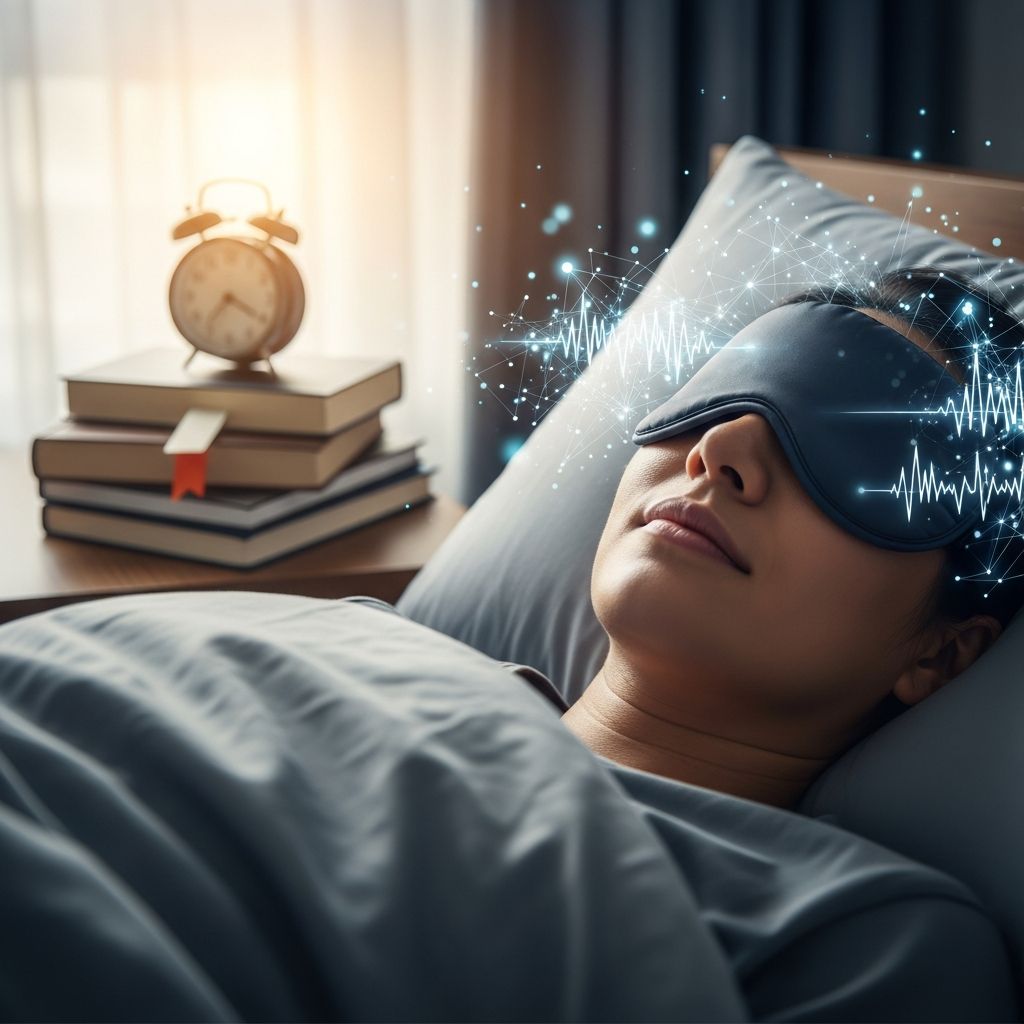
Sleep plays a fundamental role in cognitive function, memory consolidation, and daytime alertness. However, environmental factors such as light pollution, early morning sunlight, and artificial lighting can disrupt sleep quality and interfere with the brain’s ability to process information and maintain optimal alertness. Recent scientific research has explored whether simple interventions, such as wearing an eye mask during sleep, can enhance cognitive performance and learning capacity. The findings are compelling and suggest that this accessible sleep tool may offer significant benefits for anyone seeking to optimize their mental performance.
The Science Behind Sleep and Cognitive Function
Sleep is essential for more than just rest and recovery. During sleep, the brain undergoes critical processes that consolidate memories, process new information, and restore cognitive function. Different sleep stages serve distinct purposes in maintaining mental sharpness and learning capacity. Understanding how light exposure affects these processes provides insight into why blocking light during sleep might enhance cognitive performance.
Light exposure is one of the most powerful regulators of the sleep-wake cycle. When light enters the eyes during sleep, it can trigger wakefulness or disrupt deeper stages of sleep needed for memory consolidation. By wearing an eye mask, individuals can maintain continuous darkness throughout the night, allowing the brain to remain in restorative sleep states longer and more consistently.
Research Findings on Eye Masks and Learning
Recent rigorous scientific studies have provided compelling evidence that eye masks enhance cognitive function. Researchers at Cardiff University conducted two separate experiments involving nearly 130 participants to investigate this relationship systematically.
Experiment 1: Initial Evidence
In the first experiment, researchers recruited 94 healthy young adults without sleep disorders. Participants wore an eye mask for five consecutive nights while maintaining their normal sleep schedule. On the sixth and seventh days, they underwent comprehensive cognitive testing. The following week, they repeated the same protocol using a control eye mask that did not block light effectively.
The results demonstrated measurable improvements in cognitive performance after wearing the effective eye mask. Participants showed significantly faster reaction times, with mean reaction times of 310.26 milliseconds compared to 316.37 milliseconds with the control mask. Word-pair association scores—a measure of episodic memory encoding—improved from 63.87 to 65.06 points after wearing the light-blocking eye mask.
Experiment 2: Understanding the Mechanism
The second experiment included 35 participants aged 18–35 years who alternated between light-blocking and control eye masks every other night. Crucially, researchers used electroencephalogram (EEG) devices to monitor sleep stages and measure light intensity in participants’ bedrooms. This allowed scientists to understand the biological mechanisms underlying the cognitive benefits.
The findings replicated the learning benefits observed in Experiment 1, with word-pair encoding scores of 69.9 after wearing the effective eye mask compared to 67.7 with the control mask. More importantly, researchers discovered that learning improvements correlated strongly with time spent in slow-wave sleep (SWS), the deepest and most restorative sleep stage. The correlation coefficient was 0.51 with statistical significance (p = .011) when wearing the effective eye mask, but showed no correlation when wearing the control mask.
Impact on Alertness and Reaction Time
Beyond memory encoding, eye masks significantly enhance daytime alertness. The Psychomotor Vigilance Task (PVT), one of the most widely used measures of behavioral alertness and sustained attention, showed that participants responded faster after nights spent wearing an effective eye mask. This improvement in reaction time has direct implications for safety, productivity, and performance in tasks requiring quick responses.
Faster reaction times mean that individuals can respond more quickly to visual stimuli, make faster decisions, and potentially perform better in time-sensitive work environments. This benefit persists throughout the following day, suggesting that one night of improved sleep can have meaningful impacts on daytime cognitive performance.
The Role of Slow-Wave Sleep
Understanding slow-wave sleep (SWS) is crucial to comprehending why eye masks work. Slow-wave sleep, also called deep sleep or Stage 3 sleep, is when the brain performs its most intensive memory consolidation and restoration work. During this stage, the brain processes and stores new information acquired during waking hours, strengthening neural connections and preparing the brain for new learning.
Light exposure, even at low levels, can prevent the brain from entering or maintaining slow-wave sleep. By blocking ambient light with an eye mask, individuals extend the time their brains spend in this critical sleep stage. The research revealed that the cognitive benefits of wearing an eye mask directly correlate with increased slow-wave sleep time, establishing a clear biological mechanism for the observed improvements.
What Eye Masks Do NOT Affect
Interestingly, the research identified several factors that eye masks do not significantly influence. Despite improving learning and alertness, eye masks did not affect the total number of hours participants slept (p = .914), subjective sleep quality ratings (p = .131), or perceived comfort levels (p = 1.000).
This distinction is important because it demonstrates that eye masks don’t work simply by helping people sleep longer or feel more rested. Instead, they optimize sleep quality and architecture, specifically enhancing the time spent in deep restorative stages. Participants experienced the same total sleep duration but gained better cognitive benefits from that sleep through improved light-blocking.
Broader Applications in Clinical Settings
Beyond healthy young adults, research has demonstrated that eye masks benefit diverse populations. A meta-analysis of multiple studies involving over 2,000 critically ill patients found that eye masks, whether used alone or combined with earplugs, were among the most effective interventions for enhancing sleep quality in hospital settings.
This finding suggests that eye mask benefits extend beyond the general population to individuals with compromised health or challenging sleep environments. Hospital settings present unique sleep challenges with constant light, noise, and medical monitoring, making light-blocking even more crucial for cognitive recovery and healing.
Practical Considerations and Implementation
Choosing an Effective Eye Mask
Not all eye masks are equally effective. Research specifically used masks designed to block light completely, versus masks with holes cut out (control masks) that allowed light penetration. When selecting an eye mask, look for designs that block 100% of light while remaining comfortable for extended wear. The mask should fit snugly without causing pressure headaches or discomfort that might disturb sleep.
Individual Variability
While the research showed consistent benefits across groups, individual responses may vary. Some people may notice dramatic improvements in alertness and learning capacity, while others might experience more modest gains. Factors such as baseline sleep quality, light sensitivity, and individual differences in slow-wave sleep production can influence outcomes.
Long-term Use
The research involved short-term interventions (5-7 nights), but the simplicity and safety of eye masks suggest they could be used indefinitely without adverse effects. The non-invasive nature of this intervention makes it suitable for regular, long-term use as part of a sleep optimization routine.
Comparison of Sleep Enhancement Methods
| Sleep Enhancement Method | Cost | Invasiveness | Effect on Learning | Effect on Alertness | Ease of Use |
|---|---|---|---|---|---|
| Eye Mask | Low ($10-30) | None | Significant | Significant | Very Easy |
| Earplugs | Low ($5-20) | None | Moderate | Moderate | Very Easy |
| Sleep Medications | Moderate-High | High | Variable | Potential Impairment | Easy |
| Light Therapy Devices | High ($100+) | None | Moderate | Moderate | Moderate |
Real-World Implications
The practical implications of this research are substantial. Students preparing for examinations, professionals in competitive fields, and anyone seeking to optimize cognitive performance might benefit from incorporating eye mask use into their sleep routine. The intervention is economical, requiring minimal investment, and carries virtually no risk of adverse effects.
In educational contexts, where effective encoding determines opportunities for learning and growth, eye masks represent a simple life-hack that could meaningfully improve academic performance. For workplace productivity, enhanced alertness translates directly to faster response times, better decision-making, and improved performance on cognitively demanding tasks.
Frequently Asked Questions
How quickly do eye mask benefits appear?
Research showed measurable improvements after just five nights of consistent use. However, benefits may accumulate over time with regular use. Some individuals might notice improvements after even fewer nights, while others may require longer adaptation periods.
Can eye masks disrupt my natural sleep cycle?
No. Eye masks do not disrupt the natural sleep-wake cycle because they are worn during sleep. Once removed in the morning, normal light exposure resets the circadian rhythm appropriately. The research showed no negative effects on sleep duration or quality ratings.
Are there any side effects from wearing an eye mask?
Eye masks are extremely well-tolerated. The research showed no differences in comfort levels between nights with and without masks. Some individuals may need a brief adaptation period, but serious side effects are essentially non-existent.
Will an eye mask help if I already sleep well?
Yes. Even participants without sleep problems experienced significant cognitive improvements. The benefits appear to result from optimizing sleep architecture rather than correcting sleep problems, making eye masks beneficial for anyone seeking enhanced cognitive performance.
How does this compare to other sleep optimization strategies?
Eye masks offer unique advantages through their simplicity, affordability, and lack of invasiveness. While other strategies like melatonin supplements or blue light blocking glasses have merit, eye masks provide direct evidence for cognitive enhancement without the potential complications of other interventions.
Can children and older adults benefit from eye masks?
The research focused on young adults (18–35 years), but the biological mechanisms—light blocking and enhanced slow-wave sleep—are relevant across age groups. Both children and older adults might benefit, though research on these populations would provide more definitive answers.
References
- Wearing an eye mask during overnight sleep improves episodic memory encoding and alertness — National Center for Biotechnology Information (NCBI). 2023-12-07. https://pmc.ncbi.nlm.nih.gov/articles/PMC9995773/
- Wearing an Eye Mask During Sleep Proves Beneficial for Next-Day Alertness — Neurology Advisor. 2022-12-15. https://www.neurologyadvisor.com/news/wearing-eye-mask-sleep-next-day-alertness/
- New Sleep Mask Benefit Unlocked: Improved Brain Function — Sleep Foundation. 2023-12-20. https://www.sleepfoundation.org/sleep-news/sleep-masks-improve-brain-function
Similar Articles








Read full bio of Sneha Tete