Slit Lamp Exam Guide: Step-By-Step Techniques For Clinicians
Discover how the slit lamp exam provides detailed views of eye structures to detect issues early and guide treatments.
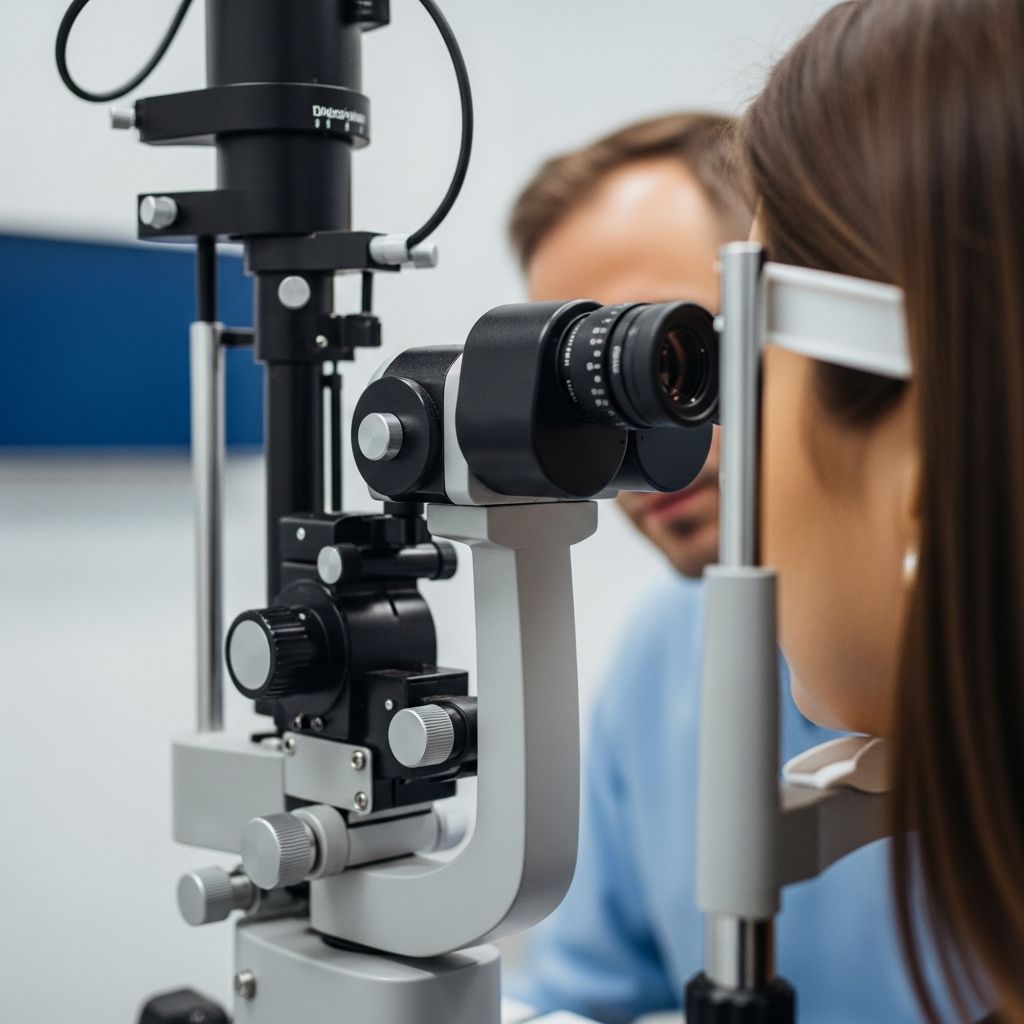
The slit lamp examination represents a cornerstone of modern ophthalmology, offering clinicians a magnified, three-dimensional perspective on the eye’s delicate structures. This non-invasive procedure utilizes a specialized microscope combined with a controllable light source to scrutinize the anterior segment of the eye, including the cornea, iris, lens, and surrounding tissues. By enabling precise detection of abnormalities, it plays a pivotal role in diagnosing conditions ranging from corneal ulcers to glaucoma.
Understanding the Slit Lamp Device
At its core, the slit lamp biomicroscope integrates a high-powered stereoscopic microscope with an adjustable illumination system. The light beam, which can be narrowed to a thin slit or widened for broader coverage, allows for detailed cross-sectional analysis of transparent eye tissues. This setup facilitates illumination techniques such as direct focal, diffuse, and specular reflection, each revealing unique aspects of ocular anatomy.
Key components include the chin rest and forehead band for patient stabilization, a joystick for fine focusing, and knobs for beam width, height, and angle adjustments. The illumination arm swivels horizontally up to 90 degrees, providing flexibility in directing light from nasal or temporal positions. Power switches and filters further enhance versatility, with blue cobalt filters often used alongside fluorescein dye to highlight epithelial defects.
- Microscope optics: Binocular viewing with variable magnification (10x to 40x typically).
- Illumination controls: Slit width from hair-thin to full beam; vertical adjustment via joystick rotation.
- Patient interface: Ergonomic supports to minimize movement during assessment.
Preparation and Patient Positioning
Before initiating the exam, ensure the patient is comfortably seated with their chin securely on the rest and forehead against the band. This alignment centers the eyes in the optical path. Start by powering on the device and performing coarse focusing on a non-ocular surface like the cheek to avoid pupil discomfort.
No extensive preparation is required, though dilating drops may be instilled to expand pupils for posterior views, taking 15-20 minutes to effect. Inform patients about potential light sensitivity post-dilation. For pediatric or anxious individuals, explain the process to reduce apprehension.
| Step | Action | Purpose |
|---|---|---|
| 1. Seat patient | Align chin and forehead | Stabilize head |
| 2. Power on | Unlock carriage | Prepare optics |
| 3. Coarse focus | Aim at skin | Avoid eye glare |
| 4. Fine tune | Use joystick | Sharp image |
Mastering Illumination Techniques
Effective slit lamp use hinges on varied illumination methods to optimize visualization. Direct focal illumination employs a narrow, oblique slit to profile tissue layers, making opacities in the cornea or lens stand out against a dark backdrop.
Diffuse illumination broadens the beam with a neutral filter for overall assessment of conjunctiva or sclera. Retroillumination projects light through the iris to backlight lens defects, while sclerotic scatter traces corneal clarity by observing side-scattered light. Oblique and tangential lighting accentuate surface irregularities.
- Narrow slit (0.1-0.3mm): Measures depth in anterior chamber or lens thickness.
- Wide beam: Surveys large areas like lids and lashes.
- Blue filter + fluorescein: Detects abrasions or foreign bodies via green fluorescence.
Related Stories



Systematic Examination Sequence
A structured approach ensures nothing is overlooked. Begin externally and progress inward, typically examining the right eye first.
External Features and Adnexa
Inspect facial skin, orbits, lids, and lashes for swelling, lesions, or malpositions. Note ptosis, entropion, or ectropion that could impair function.
Lids, Lashes, and Conjunctiva
Everting the upper lid reveals tarsal conjunctiva for follicles or papillae indicative of allergy or infection. Assess bulbar conjunctiva for injection patterns: diffuse suggests viral conjunctivitis, while perilimbal ciliary flush signals uveitis.
Sclera inspection notes jaundice or scleritis-related thinning.
Corneal Evaluation
Sweep a wide beam temporally to nasally at low power, then focus thin slits obliquely to localize opacities (epithelium, stroma, endothelium). Use vertical slit for pachymetry approximation and check for ulcers, dystrophies, or edema.
Anterior Chamber Analysis
A 60-degree oblique slit estimates depth via van Herick grading: grade 4 equals corneal thickness (normal), grade 1 risks angle closure. Search for cells/flare (inflammation), hyphema, or hypopyon.
Iris, Pupil, and Lens
Examine iris for nodules, atrophy, or synechiae; pupils for reactivity and defects. Lens assessment via retroillumination detects cataracts or opacities.
Vitreous and Posterior Views
With condensing lenses (e.g., 90D), view anterior vitreous for floaters or hemorrhage. Dilated exams access fundus.
Clinical Applications and Diagnostics
Beyond basic inspection, slit lamps support tonometry (Goldmann applanation), gonioscopy for angle assessment, and pachymetry for corneal thickness in refractive surgery candidates. Fluorescein aids Seidel test for leaks.
Common findings include:
- Keratoconus: Thinning and Fleischer ring.
- Acute glaucoma: Shallow chamber, narrow angle.
- Uveitis: Keratic precipitates, flare.
- Foreign body: Dye uptake.
In emergency settings, it differentiates trauma severity, guiding interventions like irrigation or patching.
Safety, Limitations, and Patient Experience
The exam is painless, though bright light may cause temporary squinting. Dilation induces blur and photophobia for hours. Contraindications are rare, but avoid in acute corneal abrasions without anesthesia.
Limitations: Operator skill-dependent; obscurations (e.g., dense cataracts) hinder views. Supplements like OCT provide deeper imaging.
FAQs
What does a slit lamp exam detect?
It identifies cataracts, glaucoma signs, infections, dry eye, and injuries in the eye’s front structures.
Is the slit lamp exam painful?
No, it’s comfortable; only dilation might cause temporary light sensitivity.
How long does it take?
5-10 minutes standard; longer with dilation or special tests.
Can children have this exam?
Yes, with age-appropriate cooperation.
Do I need drops?
Often yes, for pupils or staining.
References
- Slit Lamp Examination — EyeWiki (American Academy of Ophthalmology). 2023-10-15. https://eyewiki.org/Slit_Lamp_Examination
- Slit Lamp Examination – Test Overview — Children’s Hospital Association. 2024-05-20. https://www.cham.org/HealthwiseArticle.aspx?id=tu6231
- Slit-Lamp Biomicroscope — StatPearls (NCBI Bookshelf). 2023-11-03. https://www.ncbi.nlm.nih.gov/books/NBK587440/
- Mastering Minor Care: Slit Lamp Exam — Taming the SRU. 2023-07-12. https://www.tamingthesru.com/blog/masteringminorcare/slitlampexam
- Slit Lamp Examination – OSCE Guide — Geeky Medics. 2024-02-10. https://geekymedics.com/slit-lamp-examination-osce-guide/
- Slit-lamp exam — UCSF Benioff Children’s Hospitals. 2023-09-18. https://www.ucsfbenioffchildrens.org/medical-tests/slit-lamp-exam
Similar Articles








Read full bio of Sneha Tete