Slit Lamp Exam: What It Is, Procedure & Results
Comprehensive guide to slit lamp exams: Understanding this essential eye health diagnostic tool.
Understanding the Slit Lamp Exam
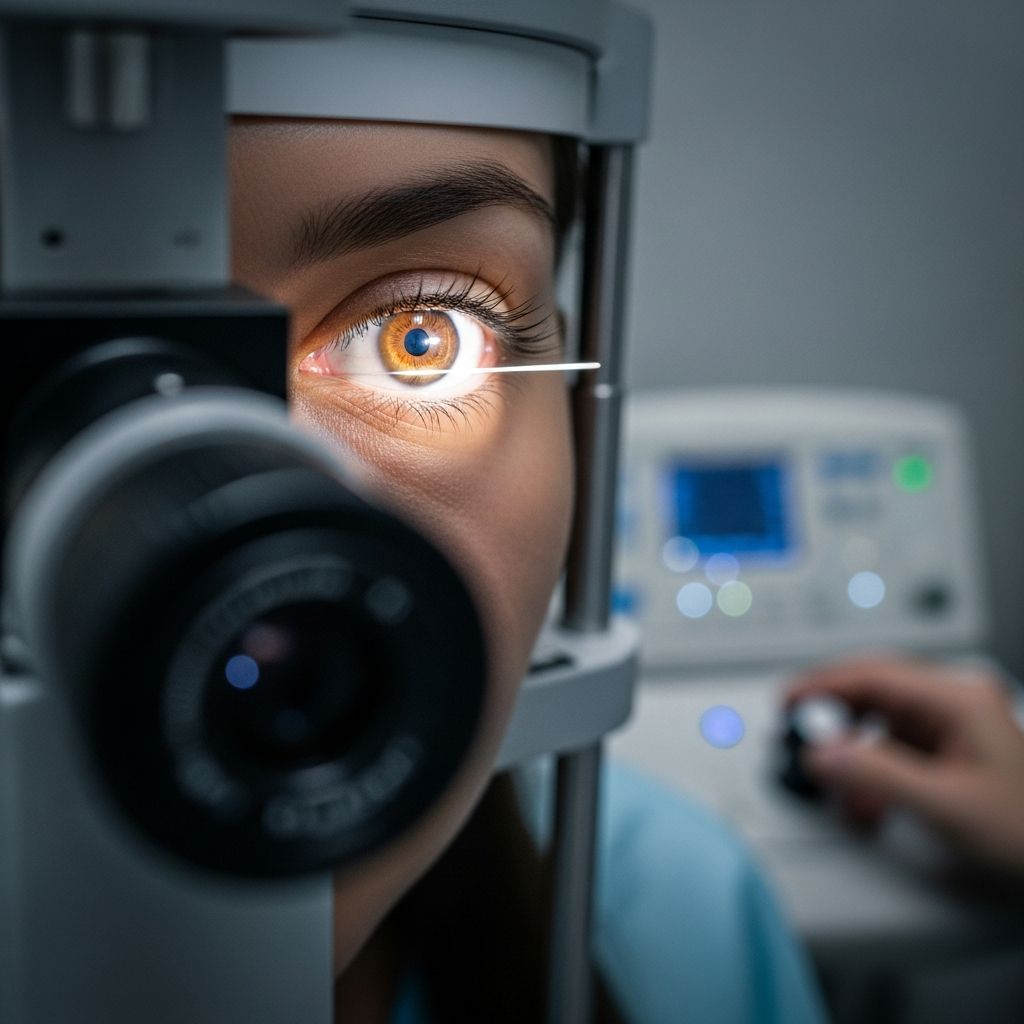
A slit lamp exam is a fundamental diagnostic test that allows eye care specialists to examine every part of your eyes, including structures that are not visible to the naked eye. This specialized microscope equipped with a bright light source enables comprehensive visualization of both the anterior and posterior segments of the eye. The slit lamp exam is a cornerstone of routine eye care and remains one of the most valuable tools in ophthalmology for detecting eye diseases early and monitoring overall ocular health.
The device itself is a sophisticated instrument that combines a low-powered microscope with a high-intensity light source. During your examination, your eye care specialist will adjust the brightness and thickness of the light’s beam to view different layers and structures within your eyes. This precision allows them to detect abnormalities that might otherwise go unnoticed during a standard eye examination.
What Is a Slit Lamp and How Does It Work?
A slit lamp is a specialized microscope featuring four main structural components that work together to provide detailed visualization of ocular structures. Understanding these components helps explain how this instrument functions as a diagnostic powerhouse in eye care.
Key Components of a Slit Lamp
The Base: The foundation of the slit lamp includes an adjustable table, power switch, intensity control (rheostat), a locking carriage mechanism, and joystick controls. These elements allow the operator to position and stabilize the instrument precisely.
The Patient Support Frame: This component ensures patient comfort and proper positioning during the examination. It includes a forehead band, chin rest, chin height adjustment knob, patient handles, and a canthus height indicator to standardize the examination position.
The Illumination Arm: This critical component houses the light source, illumination filters, beam height adjustment controls, slit illuminator, beam width adjustment mechanisms, and center screw. These features allow the practitioner to customize the light beam for optimal visualization.
The Viewing Arm: This component contains the oculars (eyepieces) and magnification control knob, enabling the eye care specialist to observe the examined structures at various magnification levels ranging from 6x to 40x magnification.
Purpose and Benefits of a Slit Lamp Exam
The primary purpose of a slit lamp exam is to examine the internal and external structures of your eye to detect signs of disease, abnormalities, and assess overall eye health. This examination allows your eye care specialist to evaluate critical ocular structures that are essential for maintaining clear vision and healthy eyes.
Structures Examined During a Slit Lamp Exam
During a comprehensive slit lamp examination, your eye care specialist will carefully evaluate the following structures:
– Eyelids and surrounding tissues- Conjunctiva (the clear membrane covering the white part of the eye)- Sclera (the white part of the eye)- Cornea (the clear front surface of the eye)- Iris (the colored part of the eye)- Pupil (the opening in the center of the iris)- Lens (the focusing structure inside the eye)- Retina (the light-sensitive tissue at the back of the eye)- Optic nerve (responsible for transmitting visual information to the brain)
Related Stories



The Slit Lamp Examination Procedure
Understanding what to expect during your slit lamp exam can help you prepare and cooperate effectively with your eye care specialist. The examination follows specific steps to ensure thorough and accurate evaluation of your eye health.
Step-by-Step Procedure
Patient Positioning: The first step involves ensuring you are positioned correctly at the slit lamp. You will rest your forehead against the forehead support and your chin on the chin rest. These positioning devices have been thoroughly sanitized to maintain hygiene and prevent cross-contamination.
Operator Positioning: Your eye care specialist will position themselves at the slit lamp with their dominant hand on the carriage and joysticks and their other hand on the slit width adjustment knob. By convention, the examination typically begins with your right eye, followed by your left eye.
Focusing: During this phase, a light beam will be directed at a specific point on your eye. Your eye care specialist will slowly advance the carriage toward you while adjusting focus to achieve a clear, magnified view of the eye structures.
Illumination and Magnification: Your specialist will adjust the intensity of the light beam to provide adequate illumination without causing discomfort. Both the beam width and height can be modified to make precise measurements and observations during the examination. Different filters may be applied to enhance visualization of specific structures or conditions.
Pupil Dilation (if needed): If your eye care specialist needs to examine the back of your eye more thoroughly, they may dilate your pupils using special eye drops. These drops typically take a few minutes to become effective. Once your pupils are dilated, your eye care specialist will repeat portions of the examination to evaluate the posterior segment of your eye.
Examination Duration
A typical slit lamp examination takes between 5 and 10 minutes to complete. The actual duration may vary depending on whether pupil dilation is necessary and the findings discovered during the examination. Despite its brief duration, this test provides invaluable diagnostic information.
Conditions and Eye Disorders Detected by Slit Lamp Exams
The slit lamp exam is instrumental in diagnosing a wide range of eye conditions and disorders. Early detection of these conditions through slit lamp examination can prevent vision loss and guide appropriate treatment interventions.
Common Eye Conditions Diagnosed
Cataracts: Cataracts develop when proteins in the eye’s lens clump together, causing the lens to become cloudy instead of remaining clear. This cloudiness progressively interferes with light transmission to the retina, affecting vision quality. During a slit lamp exam, your eye care specialist can directly visualize lens opacification and determine cataract severity and type, which is essential for treatment planning.
Glaucoma: Glaucoma encompasses a group of eye conditions characterized by damage to the optic nerve, typically associated with elevated intraocular pressure. A slit lamp exam provides a detailed, magnified view of the optic nerve head, allowing your specialist to detect signs of glaucomatous damage and assess the need for further diagnostic testing or treatment.
Corneal Abrasions: Corneal abrasions are scratches or erosions on the cornea’s surface. The slit lamp’s magnification and specialized lighting allow detection of these often-painful injuries, assessment of their severity, and monitoring of healing progression. Special fluorescein dyes may be used to highlight corneal defects.
Dry Eye Syndrome: Dry eye occurs when your eyes do not produce adequate tears or when tears evaporate too quickly. The slit lamp exam can reveal signs of dry eye including poor tear film quality, reduced tear film stability, and corneal staining patterns. Your specialist can also assess tear break-up time to evaluate tear film stability.
Macular Degeneration: Age-related macular degeneration (AMD) affects the macula, the central portion of the retina responsible for detailed central vision. Slit lamp examination with appropriate lenses allows visualization of macular changes, drusen deposits, and other signs of degeneration, enabling early intervention.
Retinal Detachment: A detached retina occurs when the retina separates from the underlying supportive tissue. This is a serious condition that can lead to permanent vision loss if untreated. The slit lamp, particularly when combined with indirect ophthalmoscopy lenses, helps detect retinal breaks and early signs of detachment.
Bleeding in the Eye: Various conditions can cause bleeding within the eye structures. A slit lamp exam enables visualization of hemorrhages in the anterior chamber or other accessible portions of the eye, helping identify the source and severity of bleeding.
Scleral Damage: The sclera can be affected by trauma, inflammation, or systemic disease. The slit lamp’s magnification allows detailed examination of the sclera for signs of trauma, thinning, ectasia, or other abnormalities.
Preparing for Your Slit Lamp Exam
Proper preparation ensures you have the best possible experience during your slit lamp examination and allows your eye care specialist to perform a thorough evaluation.
Important Preparation Considerations
Plan for Transportation: Your eye care specialist may dilate your pupils during the examination. Dilated pupils temporarily impair your ability to focus on nearby objects and increase light sensitivity, making it unsafe to drive. Arrange for someone to pick you up after your appointment or plan to use alternative transportation such as a rideshare service or public transit.
Arrive Early: Plan to arrive at your appointment with sufficient time to complete necessary paperwork and allow for a relaxed check-in process. This helps reduce stress and ensures the examination can proceed on schedule.
Wear Comfortable Clothing: Choose comfortable attire that allows easy movement and access to your face. Avoid wearing heavy makeup around your eyes, as this may interfere with the examination or the application of dilating drops.
Bring Your Insurance Information: Have your insurance card and identification readily available. If this is your first visit, bring any relevant medical records or documentation of previous eye exams.
What to Expect During and After Your Exam
During the Examination: You will be asked to keep your eyes open while the light beam is directed into your eye. You may see a bright light, but the examination should not be painful. Your eye care specialist will provide guidance and may ask you to look in specific directions to facilitate thorough examination of different eye structures. Remain still and try to relax, as your cooperation enables accurate evaluation.
After the Examination: If your pupils were not dilated, you may resume normal activities immediately. If dilating drops were used, your pupils will gradually return to normal size over several hours. During this time, you may experience blurred near vision and increased light sensitivity. Wear sunglasses if you’ll be outdoors, and avoid driving until your vision has returned to normal. Your vision should be fully normal by the next day.
Frequency of Slit Lamp Exams
Your eye care specialist will determine how often you need a slit lamp exam based on your individual eye health status, risk factors for specific conditions, and any existing eye diseases. People with healthy eyes and no risk factors typically need a slit lamp exam during routine eye exams every 1-2 years. Those with existing conditions like glaucoma, cataracts, or dry eye may require more frequent examinations. Your specialist will discuss the recommended examination schedule during your visit.
Frequently Asked Questions About Slit Lamp Exams
Q: Is a slit lamp exam painful?
A: No, a slit lamp exam is completely painless. You may feel a slight pressure from the chin rest and forehead support, but the examination itself causes no discomfort. If dilating drops are used, you may experience a slight stinging sensation for a moment, but this quickly subsides.
Q: Can I wear contact lenses during a slit lamp exam?
A: You can wear contact lenses to your appointment, but your eye care specialist may ask you to remove them during the examination. If dilating drops are used, it’s generally recommended to remove contact lenses before their application.
Q: How often should I have a slit lamp exam?
A: The frequency depends on your individual eye health and risk factors. Your eye care specialist will recommend an appropriate schedule based on your specific needs. Generally, adults with healthy eyes should have a slit lamp exam as part of a comprehensive eye exam every 1-2 years.
Q: What does it mean if my eye care specialist finds something during the slit lamp exam?
A: Finding something during a slit lamp exam doesn’t necessarily mean you have a serious condition. Many findings are minor and may not require treatment. Your eye care specialist will explain what they found and discuss any necessary follow-up care or treatment options.
Q: Can a slit lamp exam detect all eye problems?
A: While the slit lamp exam is a valuable diagnostic tool, it may be used in combination with other tests like visual field testing, optical coherence tomography (OCT), or other imaging studies to comprehensively evaluate certain conditions.
Q: Will dilating drops affect my vision for the entire day?
A: Dilating drops typically affect your vision for 4-6 hours. Your pupils gradually return to normal size, and your vision normalizes over this period. In some individuals, the effects may last longer, but vision should be completely normal by the following day.
The Importance of Regular Slit Lamp Exams
The slit lamp exam represents one of the most valuable tools in preventive eye care. By incorporating slit lamp examination into regular eye exams, eye care specialists can detect serious conditions like glaucoma and cataracts in early stages before they significantly impact vision. Early detection enables timely intervention, which often prevents or delays vision loss.
If you notice any changes in your vision, experience eye discomfort, or see flashing lights or new floaters, contact your eye care specialist promptly. The sooner symptoms are examined, the more likely early detection of any underlying condition can occur. Schedule regular eye exams with your eye care provider to maintain optimal eye health and catch any emerging issues before they become serious problems.
References
- Slit Lamp Exam: What It Is, Procedure & Results — Cleveland Clinic. 2024. https://my.clevelandclinic.org/health/diagnostics/24422-slit-lamp-exam
- Slit Lamp Exam: Uses, Procedure, and Advantages — Oscar Wylee. 2024. https://www.oscarwylee.com.au/glasses/eye/slit-lamp-exam
- Slit Lamp Exam: Purpose, Procedure and Results — Healthline. 2018. https://www.healthline.com/health/slit-lamp-exam
- Slit-lamp microscopy — EBSCO Research Starters. 2024. https://www.ebsco.com/research-starters/health-and-medicine/slit-lamp-microscopy
- Eye Examinations: What to Expect — Cleveland Clinic Abu Dhabi. 2024. https://www.clevelandclinicabudhabi.ae/en/health-hub/health-resource/diagnostics-and-testing/eye-examinations-what-to-expect
Similar Articles








Read full bio of medha deb