Smallpox: Causes, Symptoms, Treatment & Prevention
Understanding smallpox: history, symptoms, eradication, and why it matters today.
What Is Smallpox?
Smallpox was a serious and highly contagious illness caused by the variola virus, one of the most devastating diseases in human history. For centuries, it claimed the lives of hundreds of millions of people across all continents, leaving survivors permanently scarred and disfigured. The disease was characterized by a severe, blistering rash that covered much of the body and often resulted in lifelong scarring. About 1 in 3 people who contracted smallpox died from the infection, making it one of the deadliest pathogens known to humanity.
Thanks to a coordinated global vaccination effort led by the World Health Organization (WHO), smallpox has been completely eradicated. The disease was officially declared eradicated in 1980, with the last naturally occurring case documented in 1977. This monumental achievement represents the first—and to date, only—complete eradication of a human infectious disease, demonstrating the power of public health initiatives and vaccination programs.
Understanding the Variola Virus
The variola virus belongs to a genus of viruses called orthopoxvirus, which also includes other poxviruses such as mpox (monkeypox). While smallpox and mpox share similar characteristics as orthopoxviruses, smallpox was significantly more lethal and transmitted more readily between humans. The virus is distinct from other pox-related illnesses; despite the similar naming, chickenpox is caused by an entirely different virus called varicella-zoster and is not related to smallpox or orthopoxviruses.
Before eradication, the death rate in unvaccinated individuals infected with smallpox ranged from 30% to 50%, with deaths typically resulting from severe complications such as coagulopathy, multiple organ failure, and bacterial superinfection leading to sepsis.
Symptoms and Clinical Presentation
Smallpox symptoms developed in distinct stages, and the disease progressed in a predictable pattern that helped healthcare providers identify and diagnose cases.
Initial Symptoms
The disease began with systemic symptoms that resembled flu-like illness. Patients initially experienced fever, headache, and fatigue, which typically lasted between two to four days. The fever might continue or recur after the characteristic rash appeared, making the early stages sometimes difficult to distinguish from other common illnesses.
Rash Development and Progression
Following the initial systemic symptoms, a distinctive rash emerged. The smallpox rash started in the mouth and on the face before rapidly spreading to cover most of the body. Unlike chickenpox, where lesions appeared in various stages simultaneously, smallpox lesions all progressed through the same evolutionary stage at the same time—a key diagnostic feature.
In ordinary smallpox, the rash progressed through several distinct stages:
- Started as a flat rash (macules) on the skin
- Evolved into raised bumps (papules)
- Progressed to fluid-filled blisters (vesicles)
- Transformed into pustules containing pus
- Eventually formed hard crusts and scabs
- Finally healed, often leaving permanent scarring and pitting (pockmarks)
The rash followed a characteristic centrifugal pattern, meaning it spread outward from the center of the body, primarily affecting the face, forearms, and hands. This distinctive pattern of lesions all in the same stage of development was crucial for diagnosis before laboratory testing became available.
Transmission and Incubation
Smallpox transmitted from person to person through multiple routes. The primary mode of transmission was airborne droplets expelled when infected individuals coughed or sneezed. The virus could also spread through direct contact with skin lesions and lesions of mucous membranes. Contaminated clothing and bedding could potentially harbor the virus and contribute to transmission.
Related Stories



The incubation period—the time between viral exposure and symptom onset—typically ranged from 10 to 14 days. During the disease course, which lasted approximately three to four weeks, transmissibility remained high, allowing the virus to spread rapidly through communities. This extended period of infectivity contributed significantly to smallpox’s devastating global impact.
Diagnosis of Smallpox
Before laboratory testing became standard, healthcare providers relied on the characteristic appearance of the rash and the pattern of symptoms to diagnose smallpox. The distinctive features of the rash—particularly that all lesions were in the same stage of development and followed a centrifugal distribution—were highly suggestive of smallpox.
When laboratory confirmation was available, providers could:
- Test blood samples for viral DNA using polymerase chain reaction (PCR)
- Examine tissue samples from skin lesions
- Detect antibodies to smallpox in blood tests
- Send samples to specialized laboratories for viral identification
However, it is important to note that the presence of antibodies alone is not specific to smallpox but rather indicates exposure to any orthopoxvirus. The last confirmed case of smallpox was diagnosed in 1978, after which the disease no longer occurred naturally in human populations.
Potential Complications
Beyond the characteristic rash and initial symptoms, smallpox could cause serious systemic complications. These included:
- Bronchopneumonia (infection of the lungs)
- Septicemia (bacterial infection of the bloodstream)
- Encephalitis (inflammation of the brain)
- Coagulopathy (blood clotting disorders)
- Multiple organ failure
- Blindness from corneal scarring
- Permanent disfigurement from extensive scarring
These complications frequently led to death in severe cases, particularly in individuals with underlying health conditions or compromised immune systems.
Treatment Approaches
Unfortunately, there is no proven cure specifically for smallpox disease in humans. Historically, treatment was primarily supportive, focusing on managing symptoms and preventing secondary complications. Supportive care included hydration, pain management, fever reduction, and nursing care to prevent infection of open lesions.
In severe cases, healthcare providers might have utilized antiviral drugs such as tecovirimat (TPOXX) or brincidofovir (cidofovir), which were originally developed for treating other viral infections and showed potential benefit for severe smallpox cases. However, these antivirals had never been tested in humans actually suffering from smallpox, so their effectiveness remained unproven in the context of the disease.
The lack of specific curative treatment underscored the critical importance of prevention through vaccination rather than relying on treatment after infection.
The Smallpox Vaccine: A Medical Breakthrough
Smallpox holds the distinction of being the first disease for which a vaccine was developed. This landmark achievement revolutionized medicine and public health. The vaccine worked by training the immune system to recognize and fight the variola virus before exposure to the actual disease.
Beginning in the 1960s, the WHO led a coordinated global effort to eliminate smallpox through systematic vaccination campaigns and outbreak control measures. By vaccinating populations worldwide and rapidly controlling any cases that emerged, public health officials gradually reduced smallpox incidence across all regions.
The smallpox vaccine provided significant protection, though vaccination didn’t guarantee complete immunity. After receiving the vaccine, some vaccinated individuals could still contract smallpox if exposed, but their illness would typically be less severe and shorter in duration than in unvaccinated people. The vaccine could also provide cross-protection against related orthopoxviruses like mpox.
Today, smallpox vaccines are not recommended for the general public because the disease has been completely eradicated. However, if a smallpox outbreak were ever to occur, health officials would immediately implement vaccination campaigns to control and prevent further spread. The U.S. maintains preparedness with stockpiled vaccines and antiviral treatments, ensuring rapid response capability if this eradicated disease were ever to reemerge.
The Historic Eradication of Smallpox
The eradication of smallpox represents one of humanity’s greatest public health achievements. Beginning in the 1960s, the WHO coordinated an unprecedented international effort to eliminate the disease entirely. This campaign involved identifying all cases, vaccinating populations, isolating infected individuals, and tracking contacts to prevent transmission.
Through decades of sustained effort, smallpox incidence decreased steadily. The last naturally occurring case of smallpox was documented in 1977, and the disease was officially declared eradicated by the WHO in 1980. Nearly half a century has now passed without a single case of natural smallpox infection in the human population.
This achievement demonstrates that with coordinated international public health efforts, vaccines, and sustained commitment, even the most deadly and widespread infectious diseases can be eliminated entirely.
Smallpox Vaccine Scars
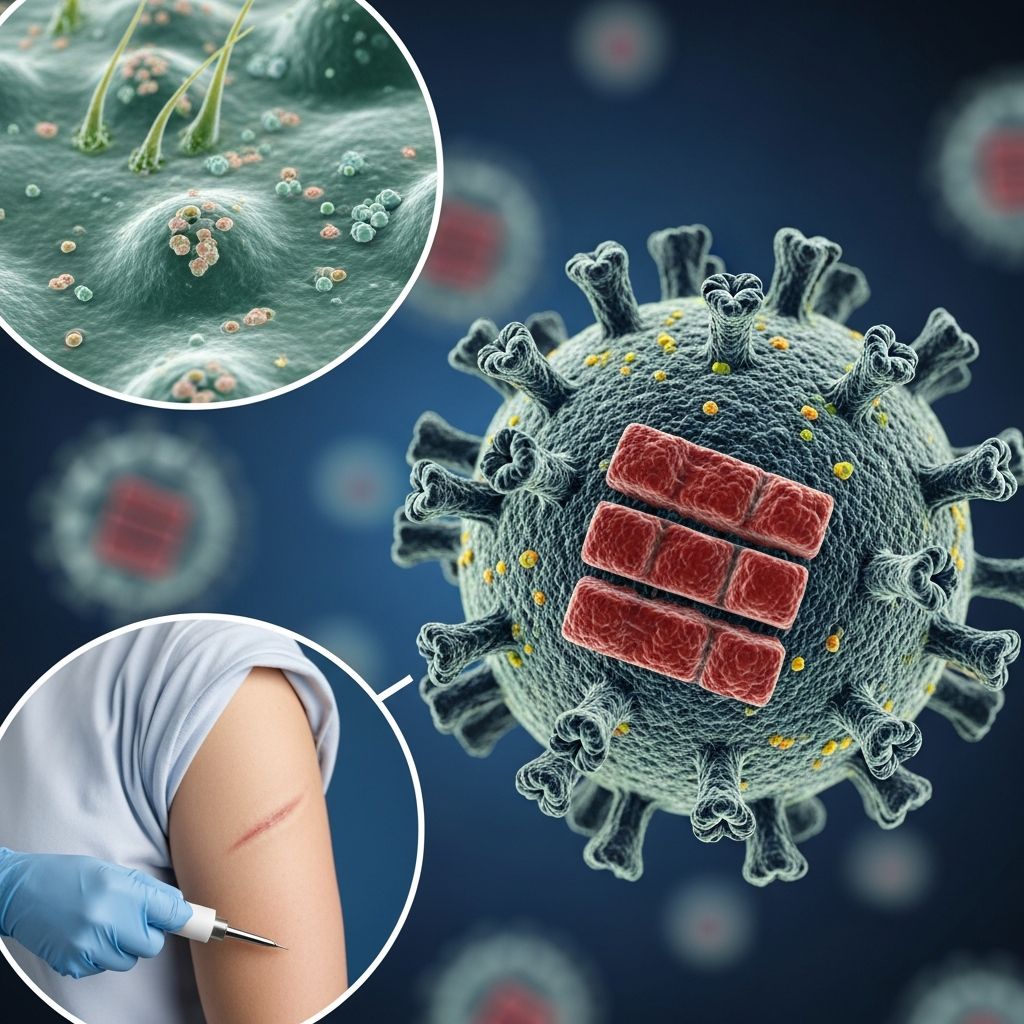
Many individuals who received the Dryvax or ACAM2000 smallpox vaccines developed a characteristic small scar on the upper arm where the vaccine was injected. This scar is a visible sign that the body successfully mounted an immune response to the vaccination. Rather than a mark of disease, the vaccine scar represents evidence that an individual’s immune defenses were strengthened to protect against one of history’s deadliest pathogens. For those who bear this scar, it stands as a testament to the power of vaccination and global cooperation in disease prevention.
Distinction from Related Diseases
It is important to distinguish smallpox from other similar-appearing conditions. While smallpox shares the word “pox” with chickenpox, these are entirely different diseases caused by different viruses. Chickenpox results from infection with varicella-zoster virus, which is not related to the variola virus or orthopoxviruses.
Mpox (formerly called monkeypox), by contrast, is caused by a virus within the same orthopoxvirus genus as smallpox. The two diseases share similarities and vaccinia vaccination can provide cross-protection against both. However, mpox causes less severe illness than smallpox, with significantly lower mortality rates in recent outbreaks.
Current Status and Public Health Preparedness
No one has contracted smallpox naturally in nearly half a century. Most living individuals have never had to consider smallpox as a health threat. However, the disease remains part of medical education and public health preparedness because the virus theoretically exists in laboratory samples and the possibility of accidental or deliberate release cannot be entirely dismissed.
The United States and other nations maintain preparedness for a potential smallpox outbreak. This includes maintaining vaccine stockpiles, developing and testing antiviral treatments, training healthcare workers in recognition and response, and maintaining surveillance systems to detect any cases immediately if they were to occur.
Frequently Asked Questions
Q: Is smallpox still a threat today?
A: No. Smallpox was eradicated in 1980, with the last natural case occurring in 1977. There have been no cases of smallpox in humans for nearly 50 years. However, the U.S. and other nations maintain preparedness and vaccine stockpiles as a precautionary measure.
Q: Why don’t we vaccinate against smallpox anymore?
A: Since smallpox no longer exists naturally in the human population, routine vaccination is no longer necessary or recommended for the general public. Vaccination would only resume if there were an outbreak. Routine vaccination ended after eradication was confirmed.
Q: How deadly was smallpox compared to other diseases?
A: Smallpox had a mortality rate of about 1 in 3 infected individuals, with rates reaching 30-50% in unvaccinated populations during severe outbreaks. This made it one of the deadliest infectious diseases in human history.
Q: Can people who were vaccinated against smallpox still get the disease?
A: Yes, it was theoretically possible for vaccinated individuals to contract smallpox if exposed, but vaccination significantly reduced disease severity and duration. However, this is now purely historical since the disease has been eradicated.
Q: What causes the smallpox vaccine scar?
A: The scar resulted from the injection technique used to administer the vaccine (Dryvax or ACAM2000). The vaccine was inserted under the skin, and the body’s immune response left a small mark. This scar indicates successful vaccination and immune system activation.
Q: How does smallpox compare to mpox?
A: Both are orthopoxviruses with similar characteristics, but smallpox was far more lethal and contagious. Mpox causes less severe illness with lower mortality rates. Vaccination against smallpox provides cross-protection against mpox.
References
- Smallpox: Causes, Symptoms, Treatment & Prevention — Cleveland Clinic. 2023-04-07. https://my.clevelandclinic.org/health/diseases/10855-smallpox
- About Smallpox — U.S. Centers for Disease Control and Prevention. https://www.cdc.gov/smallpox/about/index.html
- Smallpox and monkeypox: Looking back and looking ahead — Cleveland Clinic Journal of Medicine, Vol. 90, No. 3, 2023. https://www.ccjm.org/content/90/3/141
- Mpox (Monkeypox): Causes, Symptoms, Treatment & Prevention — Cleveland Clinic. 2024-10-25. https://my.clevelandclinic.org/health/diseases/22371-monkeypox
- Smallpox and Mpox Vaccine Injection, Live — Cleveland Clinic. https://my.clevelandclinic.org/health/drugs/23731-smallpox-and-monkeypox-vaccine-live
Similar Articles








Read full bio of medha deb