Smallpox: Essential Guide To Symptoms, Transmission, Prevention
Understanding smallpox: history, symptoms, transmission, eradication, and modern bioterrorism risks.
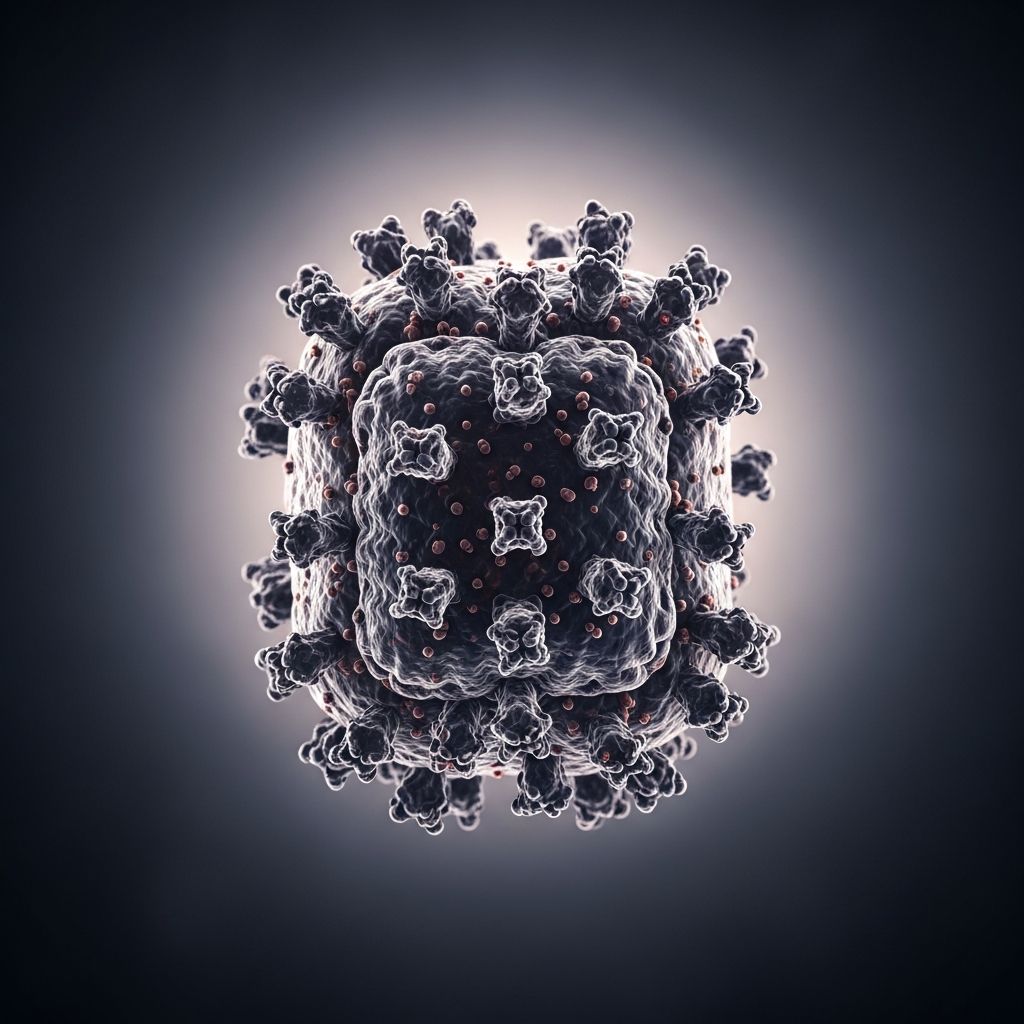
Smallpox is a highly contagious and often fatal disease caused by the variola virus, an orthopoxvirus that was eradicated worldwide in 1980 through a global vaccination campaign led by the World Health Organization (WHO). Despite eradication, the virus remains a concern due to stored laboratory samples and potential use as a bioterrorism agent. The disease presented with characteristic fever, rash progression from macules to pustules, and high mortality, particularly from the variola major strain.
What is smallpox?
Smallpox, also known as variola, is an acute infectious disease unique to humans, caused by the variola virus from the family Poxviridae, genus Orthopoxvirus. It has two main forms: variola major, the severe classic form with up to 30% case fatality, and variola minor (alastrim), a milder variant with 1% mortality. The virus spreads via respiratory droplets or direct contact with infected materials, invading mucosal surfaces before causing viremia and dermal localization. Natural transmission ended with the last wild case in 1977, but lab stocks persist in secure facilities at the CDC in Atlanta and VECTOR in Russia.
Who gets smallpox?
Historically, smallpox affected all age groups without natural immunity, with children under 5 and young adults at highest risk of severe outcomes. In unvaccinated populations, attack rates reached 30-50% during outbreaks due to person-to-person spread in close-contact settings like households or communities. Today, no one is naturally immune, but prior vaccination provides long-term protection, waning after decades. Vulnerable groups include immunocompromised individuals, pregnant people, and those under 50, as routine vaccination ceased post-eradication.
Transmission of smallpox
Smallpox transmits primarily through inhalation of virus-laden respiratory droplets from face-to-face contact with infected persons, especially during the rash phase when oral ulcers shed high viral loads. Less commonly, it spreads via fomites like contaminated bedding, clothing, or crusts, which remain infectious for weeks in dry conditions. Infectivity peaks 7-10 days post-rash onset until scabs separate, typically 3-4 weeks after symptoms begin. The basic reproduction number (R0) is 3-6, enabling rapid epidemics without intervention. Unlike airborne flu, it requires prolonged close contact, but aerosolized release could enhance spread.
- Primary mode: Droplets from coughing/sneezing by symptomatic cases.
- Secondary mode: Contact with lesions, scabs, or soiled items.
- Incubation to contagious period: 7-17 days asymptomatic, infectious from fever/rash onset.
Symptoms of smallpox
The disease progresses through distinct phases: incubation (7-17 days, asymptomatic), prodrome (2-4 days of severe flu-like illness), rash (2-3 weeks evolving stages), and recovery or death.
Prodrome phase
Following incubation, a sudden prodrome emerges with high fever (101-104°F or 38.3-40°C), chills, severe headache, backache, myalgias, prostration, and sometimes vomiting or abdominal pain. Patients appear toxic and bedridden, with fever persisting 2-3 days before rash.
Rash phase
Rash begins 1-2 days post-prodrome on mucosa (oropharynx, tongue), ulcerating quickly and spreading centrifugally to face, forearms, then trunk and legs within 24 hours. Cutaneous lesions evolve synchronously on any body part: macules (1 day) → papules → vesicles → deep-seated, umbilicated pustules (firm, round, “shotty”) → crusts (8-9 days post-rash) → scab separation (2-4 weeks), leaving pock scars. Lesions concentrate on face/extremities/palms/soles, sparing trunk relatively.
Related Stories



| Stage | Duration | Characteristics |
|---|---|---|
| Macular | 1 day | Flat red spots, centrifugal distribution. |
| Papular | 1-2 days | Raised, firm bumps. |
| Vesicular/Pustular | 3-5 days | Clear fluid → pus-filled, umbilicated, deep-seated. |
| Crust/Scab | 7-14 days | Dry crusts fall off, scarring remains. |
Complications
Mortality from variola major subtypes (ordinary 30%, flat/confluent 60-95%) stems from toxemia, encephalitis, pneumonia, bacteremia, or hemorrhage. Survivors suffer blindness (1-2%), scarring (65-80% disfiguring), arthritis, or infertility. Secondary bacterial infections exacerbate outcomes.
Clinical features and images
Key diagnostic hallmarks include prodromal fever >101°F, centrifugal monomorphic rash (same stage per body area), palm/sole involvement, and toxic appearance. Lesions are “pearl-like” pustules, contrasting varicella’s superficial, asynchronous vesicles. Oropharyngeal ulcers precede skin rash, seeding virus into saliva. Hypothetical images would depict: prodromal patient (febrile, prostrate); enanthem (mucosal ulcers); macular rash (face-centric); vesicular stage (umbilicated); confluent hemorrhagic form (grave prognosis).
Diagnosis of smallpox
Diagnosis relies on clinical criteria: major (fever, classic lesions, synchronous development) and minor (centrifugal rash, mucosal onset, slow evolution, palms/soles). Laboratory confirmation via PCR, electron microscopy, or culture from lesions/vesicle fluid, distinguishing from chickenpox, monkeypox, or measles. Risk stratification uses history of exposure/vaccination and lesion morphology. Differential includes varicella (centripetal, polymorphic), hand-foot-mouth, or syphilis.
Differential diagnosis
- Chickenpox (varicella): Superficial vesicles, polymorphic stages, trunk-centric, shorter prodrome, pruritus.
- Monkeypox: Similar rash but lymphadenopathy, zoonotic.
- Disseminated herpes: Smaller vesicles, rapid evolution.
- Drug eruption/erythema multiforme: No pustules, history of trigger.
- Meningococcemia: Petechial, no evolution to pustules.
Management and treatment of smallpox
Supportive care (hydration, nutrition, infection control) is mainstay; antivirals like tecovirimat (Tpoxx), cidofovir, or brincidofovir show promise in animal models. Vaccinia immune globulin (VIG) mitigates complications. Isolation in negative-pressure rooms prevents spread. Post-exposure vaccination within 3-4 days may prevent/abort disease.
Smallpox vaccination
The live vaccinia virus vaccine (Dryvax, ACAM2000) confers 95% protection if given pre-exposure, cross-protective against orthopoxviruses. Post-eradication, used for lab workers/military; ring vaccination eradicated smallpox via contact tracing. Side effects include myocarditis (1:175 post-ACAM2000), eczema vaccinatum; contraindicated in immunocompromised. Newer modified vaccinia Ankara (Jynneos) is safer, replication-deficient.
Prevention of smallpox
Eradication achieved via WHO’s intensified surveillance-containment: case isolation, ring vaccination, certification of no-endemic areas. Current prevention focuses on biosecurity of labs, stockpiling vaccines (300M+ US doses), antivirals, and preparedness drills against bioterrorism. No animal reservoir aids eradication. Traveler screening and global surveillance continue.
Smallpox after eradication
Last natural case: Ali Maow Maalin, Somalia, 1977. WHO declared eradication 1980; routine vaccination stopped. Dual-use lab stocks pose risks; 2001 anthrax attacks heightened bioterror fears. Synthetic biology advances (e.g., horsepox synthesis 2018) raise re-creation concerns. International treaties limit samples.
History of smallpox
Documented since Egyptian antiquity (mummified pocks), spread via trade/war. Killed 300M in 20th century; variolation (1770s) preceded Jenner’s 1796 cowpox vaccine. Endemic in Americas until Cortes/Pizarro introductions decimated populations (90% mortality). Global campaigns vaccinated billions, achieving zero transmission.
Smallpox as a weapon
Soviet Biopreparat weaponized smallpox (1980s, tons produced); US ended offensive program 1972. Post-9/11, CDC Category A agent due to stability, infectivity, 30% lethality. Dispersal via aerosol possible; response plans emphasize rapid detection, ring vaccination, quarantine.
Future impact and prospects
With eradication, smallpox imposes no natural burden, but preparedness sustains vaccine production/antivirals. mRNA vaccine platforms may yield next-gen tools. Biosecurity, synthetic biology oversight critical to prevent resurgence.
Frequently asked questions
What are the first signs of smallpox?
High fever (≥101°F), headache, backache, chills, vomiting, followed by mucosal ulcers and centrifugal rash 2-3 days later.
How is smallpox diagnosed?
By clinical major/minor criteria (synchronous deep pustules, fever) and lab tests (PCR/EM on lesions).
Is smallpox curable?
No specific cure; supportive care and antivirals experimental. Mortality 30% untreated.
Can smallpox return?
Unlikely naturally (no reservoir), but possible via lab theft or synthesis as bioweapon.
Who should get the smallpox vaccine?
High-risk groups: lab personnel, select military, first responders per CDC guidelines.
References
- Diagnosis and Evaluation | Smallpox — Centers for Disease Control and Prevention (CDC). 2023. https://www.cdc.gov/smallpox/hcp/diagnosis-testing/index.html
- Smallpox – Infectious Diseases — MSD Manual Professional Edition. 2024-01-02. https://www.msdmanuals.com/professional/infectious-diseases/pox-viruses/smallpox
- Smallpox — Utah Department of Health Epidemiology. 2023. https://epi.utah.gov/smallpox/
- Smallpox — World Health Organization (WHO). 2024. https://www.who.int/health-topics/smallpox
- AARC Smallpox Health Care Team Guidance Document — American Association for Respiratory Care (AARC). 2014-10. https://www.aarc.org/wp-content/uploads/2014/10/smallpox-guidance-document.pdf
- Smallpox — National Organization for Rare Disorders (NORD). 2023. https://rarediseases.org/rare-diseases/smallpox/
- Smallpox Factsheet — North Dakota Department of Health & Human Services. 2023. https://www.hhs.nd.gov/smallpox-factsheet
Similar Articles








Read full bio of medha deb