Smart Contact Lenses: Monitoring Health Beyond Vision
Discover how advanced lens technology transforms eye care into comprehensive health management.
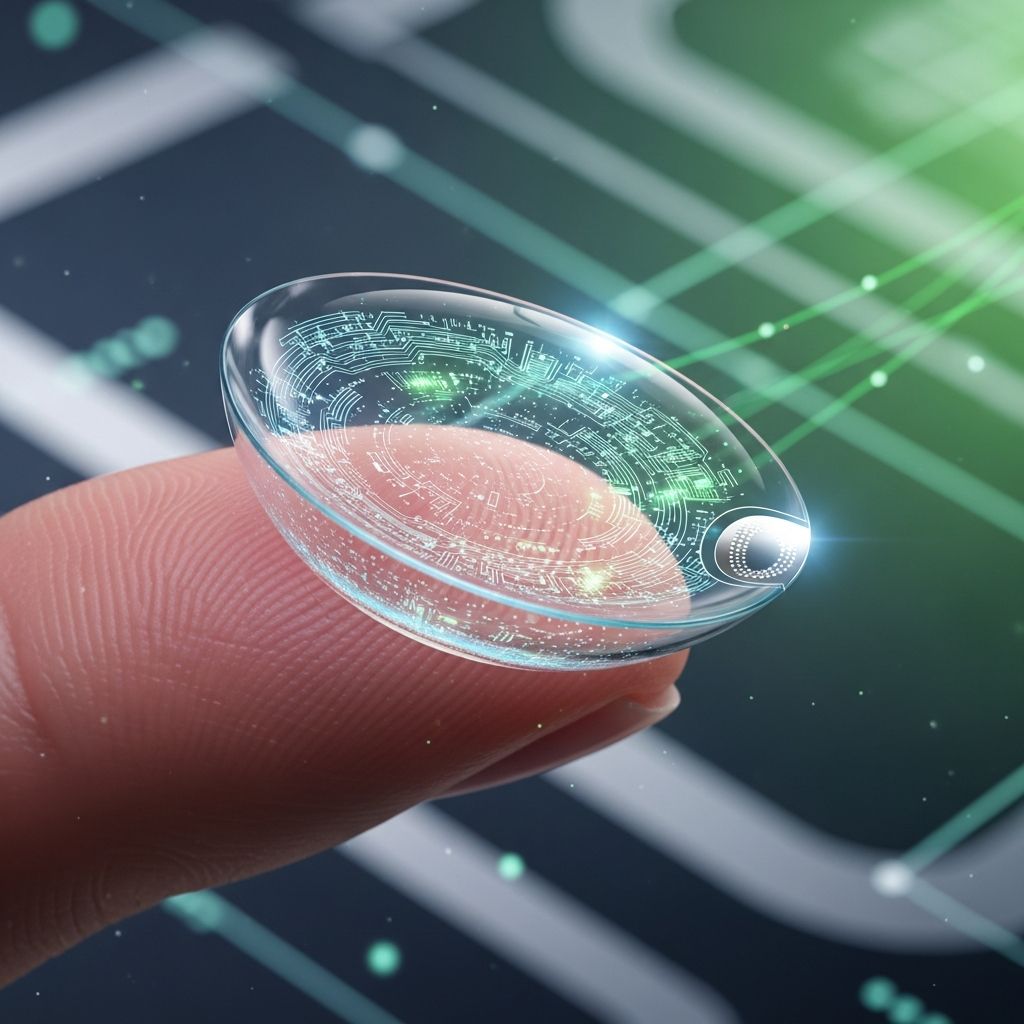
Contact lenses have evolved dramatically from simple vision correction tools to sophisticated medical devices. Smart contact lenses represent the convergence of wearable technology and ophthalmology, enabling continuous health monitoring directly on the eye. These innovative devices integrate embedded sensors, biosensors, and wireless communication capabilities to deliver real-time health insights and enhance quality of life for patients worldwide.
Understanding Smart Contact Lens Technology
Smart contact lenses are fundamentally different from traditional contact lenses. While conventional lenses focus on correcting refractive errors such as myopia, hyperopia, and astigmatism, smart contact lenses accomplish these functions while simultaneously performing advanced medical monitoring and therapeutic functions.
At their core, these devices consist of three primary components. First, they utilize advanced substrate materials that provide comfort and biocompatibility while serving as a foundation for electronic integration. Second, embedded microelectronics and sensors capture physiological data from the eye and surrounding areas. Third, wireless communication systems transmit collected data to external devices or cloud-based platforms for analysis and interpretation.
The non-invasive nature of smart contact lenses makes them particularly valuable in clinical settings. Unlike traditional blood tests or laboratory procedures, these devices continuously monitor vital health indicators without requiring needles, finger pricks, or patient discomfort. This characteristic has driven widespread acceptance among both healthcare professionals and patients.
Key Health Monitoring Capabilities
Glucose Monitoring for Diabetes Management
One of the most significant applications of smart contact lens technology involves monitoring glucose levels in patients with diabetes. Embedded glucose sensors can track blood sugar fluctuations in real-time, eliminating the need for frequent finger-stick tests. This continuous monitoring provides diabetic patients with actionable data to make informed decisions about medication, diet, and physical activity.
The integration of glucose monitoring into wearable form eliminates barriers to frequent testing. Patients who previously relied on periodic finger-stick measurements can now benefit from comprehensive glucose tracking throughout the day and night, revealing patterns and trends that might otherwise go undetected.
Intraocular Pressure Monitoring
Glaucoma represents one of the leading causes of irreversible blindness worldwide. Smart contact lenses equipped with intraocular pressure sensors can detect dangerous pressure elevations before permanent vision loss occurs. This early warning system enables ophthalmologists to initiate treatment protocols promptly, potentially preventing disease progression.
Traditional intraocular pressure measurements require office visits and specialized equipment. Smart lenses provide continuous monitoring, capturing pressure variations throughout the day when they may be most clinically significant. This represents a paradigm shift in glaucoma management, shifting from episodic measurements to continuous surveillance.
General Ocular Health Surveillance
Beyond specific disease monitoring, smart contact lenses track various ocular parameters that indicate overall eye health. These devices can monitor tear film composition, surface hydration, and other indicators of conditions such as dry eye disease. Biosensors embedded within the lens material provide multifaceted physiological insights that traditional examination methods cannot capture.
Therapeutic and Corrective Applications
Targeted Drug Delivery Systems
Drug delivery through smart contact lens material represents one of the most promising therapeutic breakthroughs in ophthalmology. Rather than relying on eye drops that require frequent instillation and carry absorption challenges, these lenses can dispense medications directly at the affected ocular tissue in controlled, precise amounts.
Related Stories



This approach offers multiple clinical advantages. Controlled release minimizes systemic side effects by delivering medication exclusively to the eye rather than allowing absorption into the bloodstream. Treatment efficacy improves because therapeutic agents reach target tissues in optimal concentrations. Patient compliance increases since medication delivery occurs automatically through normal lens wear rather than requiring conscious adherence to drop schedules.
Autofocus and Vision Enhancement
Presbyopia, the age-related loss of accommodation, affects virtually all individuals beyond age forty. Emerging smart lens technology aims to restore the eye’s natural focusing ability through dynamic autofocus mechanisms. These lenses would automatically adjust optical power based on viewing distance, mimicking the accommodation process that diminishes with aging.
This application remains in early development stages, but successful implementation would eliminate the need for bifocals or progressive lenses for presbyopic patients. The lens would actively compensate for age-related changes, restoring functional vision across all distances.
Market Growth and Commercial Development
The smart contact lens market is experiencing rapid expansion. Industry projections indicate the market will grow from $5.83 billion in 2025 to $6.42 billion in 2026, reflecting sustained investor confidence and commercial viability. This growth trajectory continues as major technology companies and established medical device manufacturers commit substantial research and development resources.
Technology giants including MojoVision have created prototype lenses incorporating augmented reality capabilities. These devices overlay digital information directly onto the user’s visual field, enabling applications ranging from real-time notifications and navigation to data visualization in professional and gaming environments. Such integration demonstrates how smart lenses extend functionality beyond health monitoring into lifestyle enhancement.
Material Science and Manufacturing Advances
Substrate Material Evolution
Modern contact lens manufacturing has transitioned from rigid polymethylmethacrylate (PMMA) materials to silicone hydrogel formulations. Silicone hydrogel lenses provide enhanced oxygen transmissibility, increased moisture retention, and improved comfort during extended wear. These material properties prove essential for smart lenses, which must remain comfortable despite integrated electronic components.
Advanced manufacturing techniques enable integration of electronic elements while maintaining lens biocompatibility and optical clarity. Manufacturers employ precision layering and miniaturization technologies adapted from microelectronics manufacturing to embed sensors and conducting pathways into lens materials.
Protective Coatings and Surface Treatments
Modern contact lenses increasingly incorporate protective coatings that shield eyes from environmental hazards. UV-protective and blue-light-filtering coatings represent standard features in contemporary lens designs. These treatments address contemporary concerns about digital eye strain and ultraviolet exposure, reducing the risk of related eye diseases.
Technical Challenges and Solutions
Power Supply and Battery Technology
A fundamental challenge in smart lens development involves powering miniaturized electronic components. Current prototypes rely on bulky batteries that compromise comfort and practicality. Researchers are exploring alternative power solutions, including wireless energy harvesting technologies that draw power from eye movement or ambient light sources.
Wireless power transmission represents a particularly promising avenue, potentially allowing lenses to receive power from external sources without requiring physical contact. This technology could eliminate battery-related bulk and discomfort while ensuring reliable, continuous power availability.
Data Security and Privacy
Smart contact lenses continuously collect sensitive health and behavioral data, creating significant privacy concerns. These devices capture intimate information about glucose levels, intraocular pressure, eye movements, and visual attention patterns. Protecting this data from unauthorized access requires robust encryption, secure transmission protocols, and comprehensive privacy frameworks.
Healthcare organizations and technology developers must implement rigorous security standards that exceed current regulatory requirements. Users need confidence that their continuous health monitoring remains confidential and that their data cannot be compromised or exploited.
Regulatory Pathways and Clinical Validation
Smart contact lenses occupy a unique regulatory position as medical devices that incorporate advanced technology. FDA approval processes and international regulatory frameworks must evolve to accommodate these novel device categories. Clinical validation requirements demand rigorous testing demonstrating both safety and efficacy across diverse patient populations.
Establishing standardized testing protocols for smart lenses requires collaboration among regulatory agencies, manufacturers, clinicians, and researchers. These protocols must address not only optical and physical properties but also electronic functionality, wireless safety, data security, and long-term biocompatibility.
Clinical Applications and Patient Benefits
Chronic Disease Management
Smart contact lenses enable transformative approaches to managing chronic ocular and systemic diseases. For diabetic patients, continuous glucose monitoring eliminates diagnostic uncertainty and enables proactive treatment adjustments. For glaucoma patients, real-time pressure monitoring enables prevention-focused care strategies rather than reactive treatment.
Beyond ophthalmology, smart lenses could eventually monitor systemic biomarkers detectable in tear film, including inflammatory markers and infection indicators. This capability would extend their value beyond eye care into comprehensive preventive medicine.
Reduction in Healthcare Burden
By providing continuous monitoring capabilities, smart contact lenses reduce the frequency of office visits and laboratory tests required for disease management. Patients with well-controlled conditions could potentially extend intervals between clinical examinations, reducing transportation requirements and healthcare costs. Remote monitoring capabilities enable clinicians to identify concerning trends without requiring in-person evaluation.
Future Directions and Emerging Technologies
The convergence of microelectronics, materials science, and biotechnology continues accelerating smart lens development. Innovations in Internet of Things (IoT) integration, artificial intelligence, and edge computing promise to enhance functionality while reducing power requirements and improving data analysis.
Emerging applications include integration with machine learning algorithms that can identify disease patterns, predict health crises, and recommend interventions before critical events occur. Augmented reality capabilities will expand beyond entertainment into medical applications, potentially visualizing diagnostic information and treatment guidance directly in the user’s visual field.
Comparison of Smart Lens Technologies
| Technology Feature | Current Capabilities | Development Status | Clinical Timeline |
|---|---|---|---|
| Glucose Monitoring | Real-time tear glucose detection | Advanced prototype phase | 1-3 years |
| Intraocular Pressure Sensing | Continuous pressure measurement | Clinical trials ongoing | 2-4 years |
| Autofocus Capability | Dynamic optical power adjustment | Early development | 3-5 years |
| Augmented Reality Integration | Basic information overlay | Limited commercial release | 1-2 years |
| Drug Delivery Systems | Controlled medication release | Laboratory validation | 3-5 years |
Frequently Asked Questions
Are smart contact lenses safe for long-term wear?
Safety depends on material biocompatibility and integrated electronic components. Manufacturers are testing long-term wear protocols, but extended clinical data remains limited for current prototypes. FDA approval processes will establish safety standards before widespread commercial availability.
When will smart contact lenses be available to consumers?
Timeline varies by application. Glucose monitoring and pressure sensing lenses may reach clinical availability within 2-4 years. Augmented reality lenses have limited commercial availability now. Drug delivery and autofocus applications require additional development time.
How much will smart contact lenses cost?
Pricing remains uncertain pending regulatory approval and manufacturing optimization. Initial versions will likely be premium products, potentially subsidized by insurance for specific medical indications. Costs should decrease as manufacturing scales and competition increases.
Can smart contact lenses replace traditional contact lenses?
For many applications, yes. However, patients without specific health monitoring needs might prefer conventional lenses due to lower cost and simpler functionality. Smart lenses will likely coexist with traditional lenses, with selection based on individual requirements.
What happens to collected health data?
Data privacy frameworks must be established before widespread deployment. Information should be encrypted, transmitted securely, and stored according to HIPAA and international privacy regulations. Users should maintain ownership and control over their personal health information.
References
- Smart Contact Lenses: How They Work and Key Benefits — Centre for Sight. 2026. https://www.centreforsight.net/blog/smart-contact-lenses-innovations-emerging-trends-in-vision-technology
- Recent Advances in Wireless Smart Contact Lenses for Ophthalmic Health Management and Eye-Function Enhancement — Advanced Materials. February 18, 2026. https://pubmed.ncbi.nlm.nih.gov/41706756/
- The Future of Contact Lenses: Smart Technology — Ophthalmology Congress. 2026. https://opthalmologycongress.insightconferences.com/events-list/the-future-of-contact-lenses-smart-technology
- The Current State of Contact Lens Technology — Optometry Times. 2026. https://www.optometrytimes.com/view/the-current-state-of-contact-lens-technology
- Smart Contact Lenses Market Size, Trends 2026 to 2035 — The Business Research Company. 2026. https://www.thebusinessresearchcompany.com/report/smart-contact-lenses-global-market-report
Similar Articles








Read full bio of medha deb