SMILE Eye Surgery: 4 Key Benefits, Risks, And Recovery
Discover how SMILE revolutionizes vision correction with minimally invasive laser precision for lasting clarity.
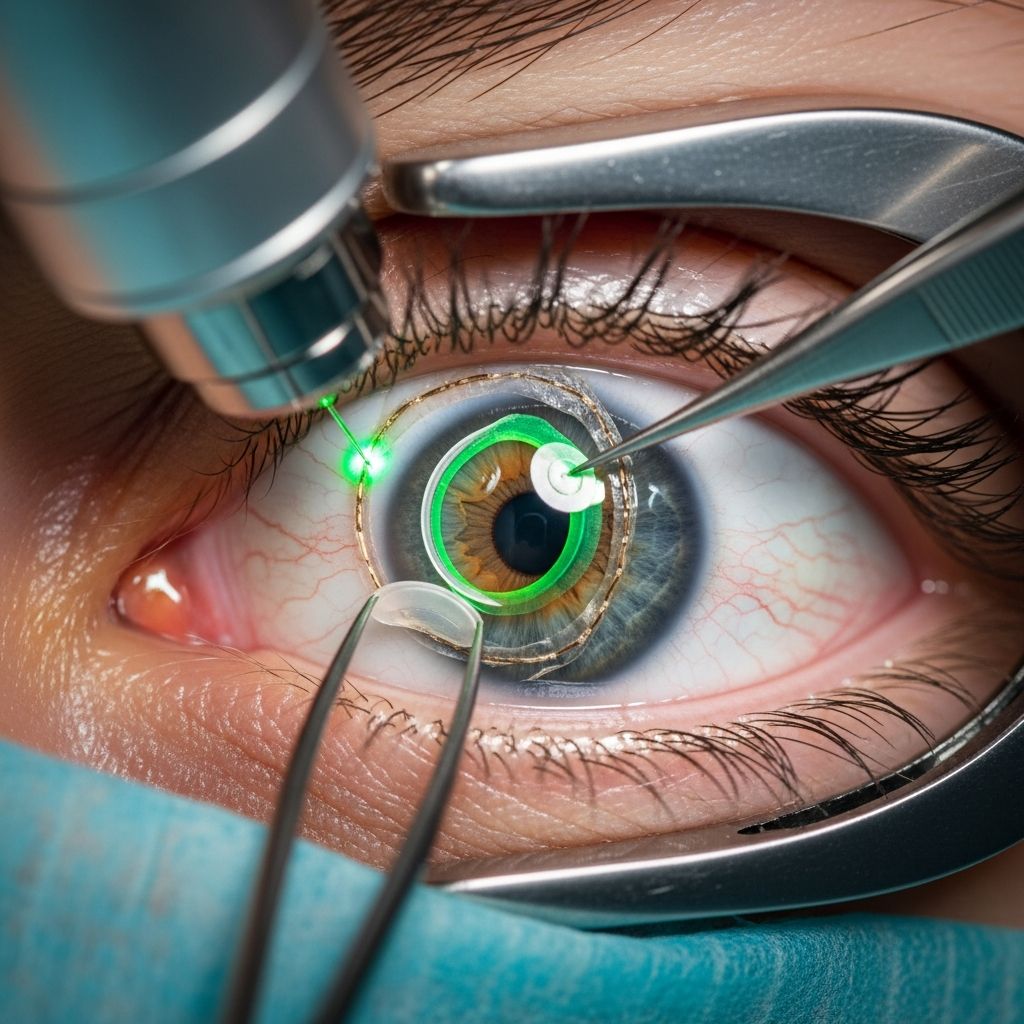
Small Incision Lenticule Extraction (SMILE) represents a significant advancement in refractive surgery, providing a flapless alternative for correcting myopia and associated astigmatism. This procedure utilizes a femtosecond laser to precisely reshape the cornea by removing a small lenticule of tissue through a tiny incision, promoting faster healing and reduced risk of certain complications.
The Science Behind Corneal Reshaping
The cornea serves as the eye’s primary refractive surface, bending light to focus it on the retina. In conditions like myopia, the cornea’s excessive curvature causes light to converge before reaching the retina, resulting in blurred distance vision. SMILE addresses this by altering the corneal curvature through targeted tissue removal.
Unlike traditional methods that rely on excimer lasers for ablation, SMILE employs only a femtosecond laser. This laser creates photodisruptions—tiny pockets of gas and plasma—to form a disc-shaped lenticule within the corneal stroma without affecting the overlying epithelium or endothelium. The procedure’s precision minimizes collateral tissue damage, preserving more of the cornea’s biomechanical strength.
Who Benefits Most from SMILE?
Ideal candidates for SMILE are adults aged 18 to 40 with stable myopia between -1.00 and -10.00 diopters and astigmatism up to 3.00 diopters. Patients should have healthy corneas thicker than 500 microns, no active eye diseases, and realistic expectations. Those engaged in contact sports or professions risking eye trauma may particularly favor SMILE’s flapless design, which lowers dislocation risks.
- Strong Candidates: Stable prescriptions for at least a year, normal topography, adequate corneal thickness.
- Avoid for Beginners: High astigmatism, thin corneas, irregular topography, or prior corneal surgery.
Preoperative assessments include comprehensive exams: refraction, corneal topography, pachymetry, and tear film analysis to ensure suitability.
Preparing for Your SMILE Procedure
Preparation begins weeks ahead. Discontinue soft contact lenses for 7 days and rigid gas-permeable lenses for 3 weeks to allow corneal stabilization. Avoid makeup, lotions, and perfumes on surgery day to prevent laser interference. Patients receive detailed instructions on fasting and medications.
| Pre-Op Timeline | Actions |
|---|---|
| 2-4 Weeks Before | Stop contacts, schedule exams |
| 1 Week Before | Confirm health status, no new meds |
| Day Of | Arrive with companion, numbing drops applied |
A Detailed Look at the SMILE Procedure
SMILE typically lasts 10-15 minutes per eye under topical anesthesia. Here’s the step-by-step process:
- Docking: The patient fixates on a green light as the VisuMax femtosecond laser docks with the cornea via a curved contact glass, creating a meniscus tear film for optimal alignment. Suction at ~35 mmHg stabilizes the eye.
- Laser Application: The laser makes four sequential cuts: posterior lenticule surface (outside-in), anterior surface (inside-out), lenticule side-cut, and a 2-4 mm superior incision. This takes 20-35 seconds.
- Lenticule Dissection: Using a spatula, the surgeon separates the lenticule’s anterior then posterior planes, avoiding tears by maintaining countertraction.
- Extraction: Forceps remove the lenticule through the incision, reshaping the cornea instantly. The incision self-seals without sutures.
Related Stories



Advanced techniques like lenticuloschisis enable direct peeling for smoother interfaces and quicker recovery.
Immediate Post-Operative Care
Patients rest briefly post-surgery, with vision often functional within hours. Artificial tears combat initial dryness, and protective shields prevent rubbing. Avoid swimming, dusty environments, and screens for 48 hours. Most return to work in 1-2 days.
- Day 1: Frequent drops, dim lighting.
- Week 1: No contacts, sports, or makeup.
- Month 1: Follow-up exams at 1 day, 1 week, 1 month.
Outstanding Advantages of SMILE
SMILE’s minimally invasive nature yields several benefits:
- No Flap: Eliminates flap-related issues like displacement or epithelia ingrowth, ideal for active lifestyles.
- Preserved Nerves: Smaller incision disturbs fewer corneal nerves, reducing dry eye incidence by up to 50% compared to LASIK.
- Biomechanical Stability: Retains more anterior lamellae, lowering ectasia risk.
- Quick Recovery: Patients report 20/40 vision same-day, full acuity in days.
Potential Drawbacks and Complications
Though safe (99% complication-free), risks include:
| Risk | Frequency | Management |
|---|---|---|
| Lenticule Tear | Rare (<1%) | Convert to PRK |
| Diffuse Lamellar Keratitis | Low | Topical steroids |
| Residual Refraction | 4-10% | Enhancement possible |
| Corneal Haze | Minimal | Resolves spontaneously |
Learning curve for surgeons is steeper initially, emphasizing experienced providers.
SMILE vs. Traditional LASIK: Key Differences
| Aspect | SMILE | LASIK |
|---|---|---|
| Incision | 2-4 mm, flapless | 18-20 mm flap |
| Laser Used | Femtosecond only | Femtosecond + Excimer |
| Dry Eye Risk | Lower | Higher |
| Procedure Time | 10-15 min | 15-20 min |
| Treatable Range | Myopia up to -10D | Broader (hyperopia too) |
SMILE suits myopia-focused corrections; LASIK offers versatility for hyperopia.
Long-Term Outcomes and Efficacy
Studies show 96% of patients achieve 20/40 or better uncorrected vision, with 88% reaching 20/20 at 5 years. Stability persists, with minimal regression. Patient satisfaction exceeds 95%, bolstered by low enhancement needs.
Latest Innovations in Lenticule Extraction
Evolving variants like SILK use bi-convex lenticules and lower energy (45 nJ) for smoother results. Improved dissectors and direct extraction methods enhance safety and outcomes.
Frequently Asked Questions
Is SMILE painful?
No, only pressure sensations; numbing drops ensure comfort.
How soon can I drive after SMILE?
Typically next day if vision meets legal standards.
Does insurance cover SMILE?
Rarely; considered elective, but check providers.
Can SMILE treat farsightedness?
Currently optimized for myopia; research ongoing.
What’s the cost of SMILE?
Averages $2,000-$3,000 per eye, varying by location.
Choosing the Right Surgeon
Select board-certified ophthalmologists with 500+ SMILE cases. Review outcomes data and technology like VisuMax 800 for precision.
References
- Small Incision Lenticule Extraction – StatPearls — NCBI Bookshelf, NIH. 2023-10-01. https://www.ncbi.nlm.nih.gov/books/NBK549896/
- SMILE Eye Surgery (Small Incision Lenticule Extraction) — Midwest Vision Center. 2024-01-15. https://midwestvision.com/service/smile/
- CataractCoach 1338: Small Incision Lenticule Extraction — YouTube (CataractCoach). 2023-05-20. https://www.youtube.com/watch?v=RAkyy1Lw0s8
- SMILE Eye Surgery — American Refractive Surgery Council. 2024-02-10. https://americanrefractivesurgerycouncil.org/smile-eye-surgery/
- SMILE Eye Surgery Chicago — Ma Eyecenter. 2023-11-05. https://www.maeyecenter.com/procedures/smile-eye-surgery-chicago/
- Keratorefractive Lenticule Extraction (KLEx) Surgeries — EyeWiki (AAO). 2025-01-12. https://eyewiki.org/Keratorefractive_Lenticule_Extraction_(KLEx)_Surgeries
- SMILE Eye Surgery: What It Is, Details & Recovery — Cleveland Clinic. 2024-08-22. https://my.clevelandclinic.org/health/treatments/25076-smile-eye-surgery
Similar Articles








Read full bio of Sneha Tete