Smoking And Its Effects On The Skin: What You Need To Know
Discover how tobacco smoke damages skin health, accelerates aging, and increases disease risk—quit to reclaim youthful skin.
Tobacco smoke contains thousands of harmful substances that damage the skin, with nicotine itself causing vasoconstriction and reduced oxygen delivery. Smoking accelerates skin aging, impairs healing, and increases risks of various dermatological conditions.
What is smoker’s face?
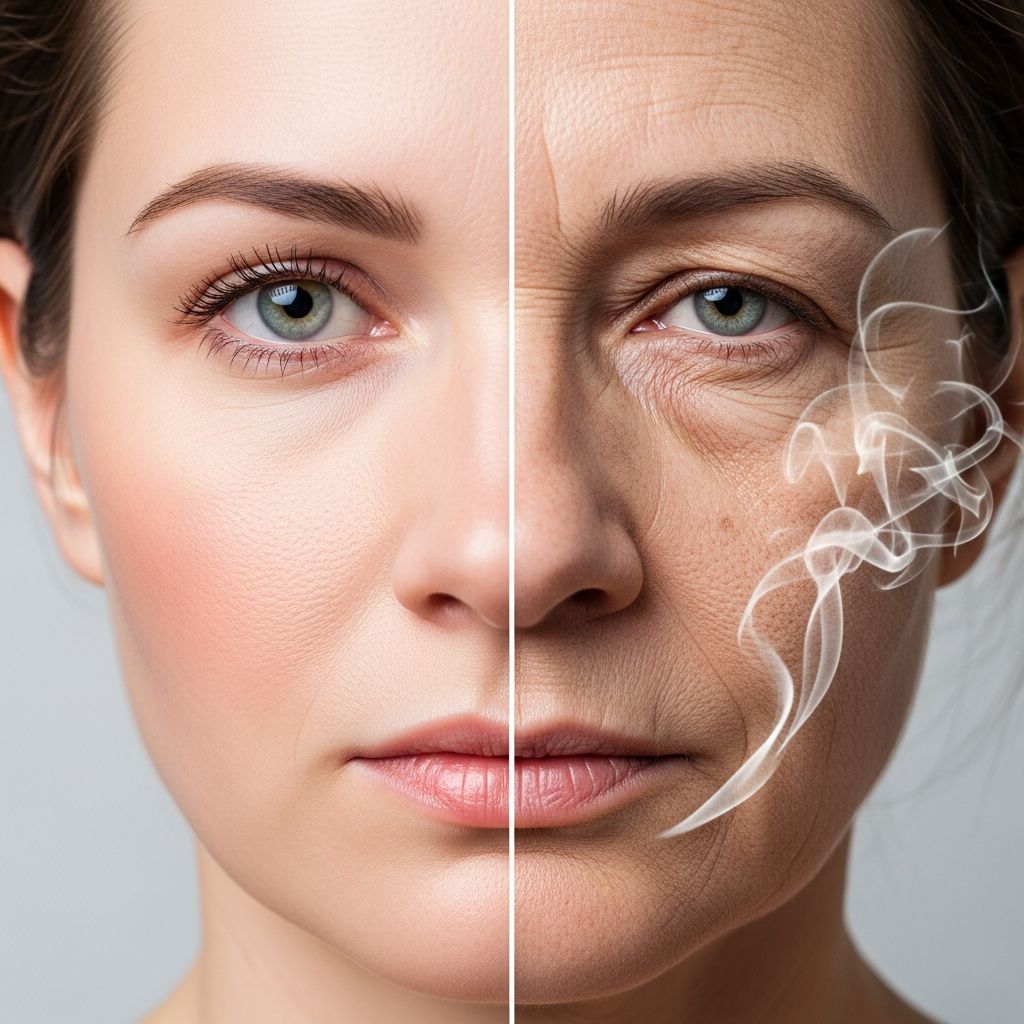
Smoker’s face describes the characteristic appearance of facial skin in long-term smokers, featuring deep wrinkles, gaunt features, and a greyish, atrophic complexion due to chronic exposure to tobacco toxins. By age 70, smoking 30 cigarettes daily equates to an extra 14 years of skin aging. Prominent signs include crow’s feet, perioral rhytides (smoker’s lines), and prominence of underlying bony contours.
How does smoking damage the skin?
Smoking induces oxidative stress via free radicals from over 4,000 cigarette chemicals, leading to blood vessel narrowing, collagen and elastin degradation, and reduced nutrient supply. Nicotine activates metalloproteinase MMP-1, which breaks down collagen, while vasoconstriction limits oxygen and vitamin A delivery, causing tissue ischemia and premature aging. Heat from cigarettes may directly burn skin, and toxins reduce moisture levels.
- Oxidative stress: Free radicals damage cellular structures, promoting inflammation and enzyme activation that degrades skin matrix.
- Vascular effects: Nicotine-induced vasoconstriction reduces blood flow, starving skin of oxygen and nutrients.
- Structural damage: Breakdown of collagen and elastin leads to loss of elasticity and sagging.
Premature skin ageing
Smoking is the strongest predictor of facial wrinkling after age, with changes visible within 10 years. It causes elastosis—abnormal elastic fiber accumulation—and deepens wrinkles like crow’s feet and lip lines from repetitive pursing. Smokers develop wrinkles earlier and more severely than non-smokers, even compared to sun exposure.
Theories include:
- Direct heat damage from cigarettes.
- Vasoconstriction reducing collagen production.
- Elastosis from altered elastic fibers.
- Depleted vitamin A and moisture.
Skin wrinkling
Vertical perioral wrinkles (smoker’s lines) result from lip pursing, while facial and neck wrinkles stem from collagen loss. Hands and underarms also show premature wrinkling and staining. Nicotine binds to skin cells, promoting proliferation and inflammation.
Skin tone and staining
Smokers often have uneven, greyish-yellow or orangish skin tones due to poor oxygenation and chemical deposition. Fingers stain yellow-brown from tar.
Skin sagging
Loss of elasticity affects cheeks, jowls, upper arms, breasts, and abdomen, creating a prematurely aged, droopy appearance.
Impaired wound healing
Smoking delays healing by increasing infection risk, tissue necrosis, and graft failure via hypoxia and toxins. Surgeons often require cessation pre-surgery; scars are more pronounced. It may also heighten stretch mark risk.
Skin cancers
Smoking elevates risks of squamous cell carcinoma (SCC), basal cell carcinoma (BCC), and melanoma, particularly on lips and face, due to carcinogens and immunosuppression.
Other effects
Tobacco exacerbates conditions like:
- Psoriasis: Nicotine promotes keratinocyte proliferation and inflammation.
- Hidradenitis suppurativa: Worsens via immune dysregulation.
- Alopecia: Contributes to hair loss.
- Lupus erythematosus: Aggravates autoimmune responses.
- Chronic dermatoses: Increases severity.
- Polymorphous light eruption: Heightens photosensitivity.
- Tobacco-associated oral lesions: Includes leukoplakia and gum disease.
Related Stories



Benefits of quitting smoking
Quitting improves circulation within weeks, enhancing skin tone and elasticity over months. Collagen production recovers, reducing wrinkles; wound healing normalizes, and cancer risks decline. Nicotine replacement is safer for skin than smoking. Full reversal may not occur, but progression halts.
Frequently Asked Questions
What does a smoker’s face look like?
A smoker’s face shows deep wrinkles around mouth and eyes, sagging skin, grey pallor, and bony prominence.
Does smoking cause wrinkles?
Yes, via collagen destruction and poor blood flow; wrinkles appear earlier and deeper.
Can quitting reverse skin damage?
Improvements in tone and healing occur quickly, but structural changes like deep wrinkles may persist.
Is vaping safer for skin?
No evidence confirms; nicotine still causes vasoconstriction, though less oxidative damage than smoke.
How soon after quitting does skin improve?
Circulation boosts in 2-3 weeks; visible changes in 1-9 months.
| Feature | Smokers | Non-Smokers |
|---|---|---|
| Wrinkles | Deeper, earlier onset | Gradual with age |
| Skin Tone | Grey/yellow, uneven | Even, vibrant |
| Elasticity | Reduced, sagging | Maintained longer |
| Wound Healing | Delayed, poor scars | Normal |
Smoking profoundly harms skin health across multiple dimensions, from aesthetic changes to disease risks. Cessation offers significant recovery potential.
References
- Smoking and its effects on skin — Beminimalist.co. 2023. https://beminimalist.co/blogs/skin-care/smoking-is-generally-injurious-but-how-can-it-impact-your-skin-specifically
- Smoking and Your Skin — Olansky Dermatology & Aesthetics. 2023. https://www.olanskydermatology.com/smoking-and-your-skin/
- How smoking affects your looks: Skin and more — Medical News Today. 2023-10-05. https://www.medicalnewstoday.com/articles/smoking-face-before-and-after
- Does smoking affect your skin? — PMC – PubMed Central – NIH. 2021-07-28. https://pmc.ncbi.nlm.nih.gov/articles/PMC8330869/
Similar Articles








Read full bio of medha deb