Snake Bite: Symptoms, First Aid, Treatment
Understand snake bite symptoms, essential first aid steps, and life-saving treatments to act swiftly and effectively.
Snake bites are medical emergencies that require immediate action, as venomous bites can lead to severe complications like paralysis, bleeding disorders, or tissue damage. Globally, snakebite envenoming affects millions annually, with up to 2 million cases in Asia and 435,000–580,000 in Africa each year, highlighting its status as a neglected tropical disease. This guide covers symptoms, first aid, treatment protocols, and prevention based on authoritative medical sources.
What Is a Snake Bite?
A snake bite occurs when a snake’s fangs puncture the skin, potentially injecting venom. While many snakes are non-venomous, venomous species like vipers, elapids (cobras, kraits), and sea snakes pose significant risks. Venom contains toxins that disrupt blood clotting, nerves, muscles, or tissues, leading to life-threatening envenoming. Children face higher risks due to lower body mass, experiencing more severe effects from the same venom dose. In North America, bites from pit vipers (rattlesnakes, copperheads) and elapids (coral snakes) are common, often occurring during handling or accidental encounters.
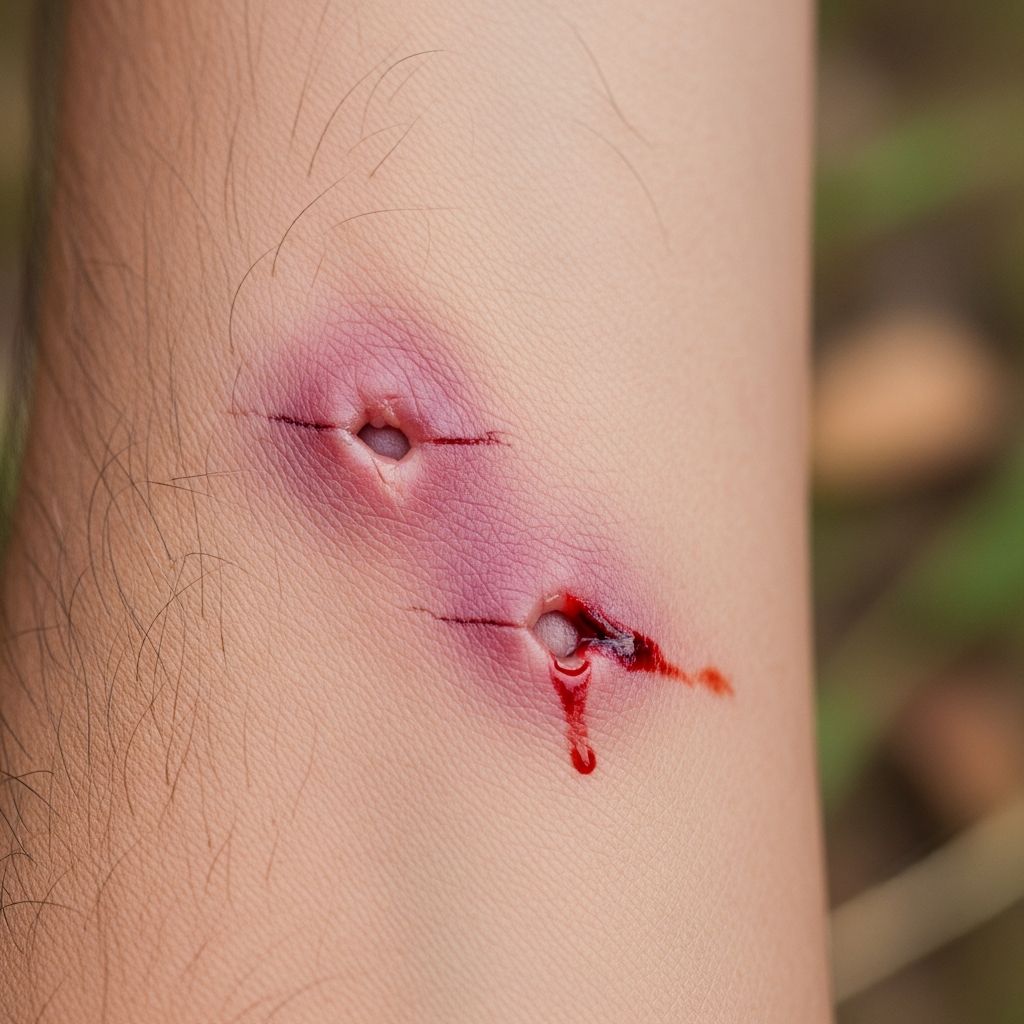
Distinguishing venomous from non-venomous bites is challenging without expert identification. Venomous bites typically show two distinct fang marks, while non-venomous ones appear as small arc-shaped punctures. However, symptoms, not marks alone, determine severity.
Symptoms of a Snake Bite
Symptoms vary by snake family and venom type: hemotoxic (blood/tissue damage), neurotoxic (nerve paralysis), or myotoxic (muscle breakdown). Onset can be immediate or delayed up to hours.
Local Symptoms
- Pain: Burning, throbbing, or bursting pain starts immediately and spreads proximally; krait and sea snake bites may be painless.
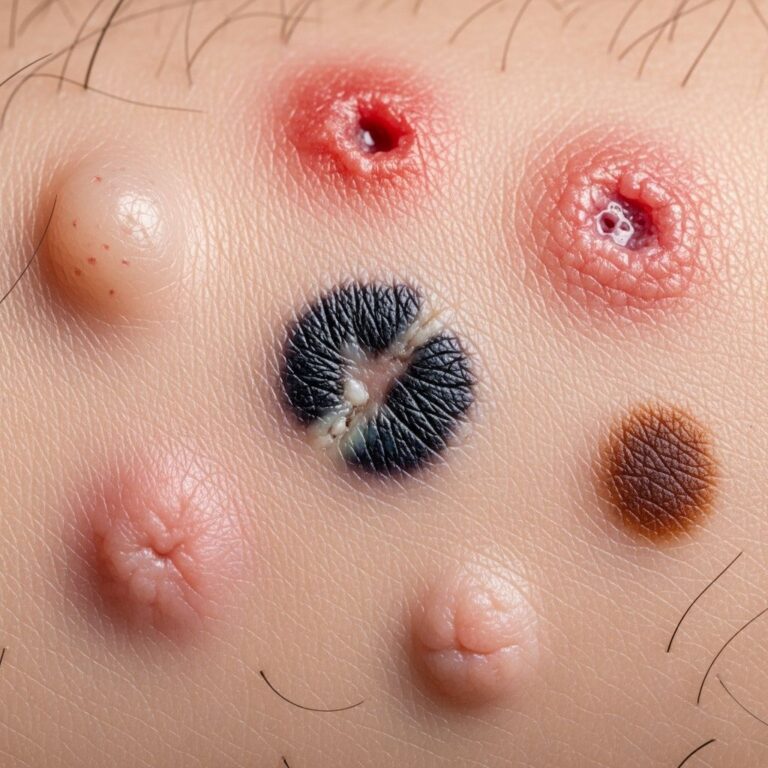
- Fang Marks: Two puncture wounds for venomous bites; bruising, blistering, and necrosis develop in viper bites over days.
- Swelling and Necrosis: Tender swelling, blisters in cobra bites; marked necrosis from pit vipers or rattlesnakes.
- Secondary Infection: From snake oral bacteria, causing cellulitis.
Systemic Symptoms
- Neurotoxic Effects: Ptosis, diplopia, dysphagia, respiratory paralysis; reversible with antivenom but critical for breathing.
- Hemotoxic Effects: Spontaneous bleeding, incoagulable blood, thrombocytopenia, shock.
- Myotoxicity: Muscle pain, stiffness, rhabdomyolysis with myoglobinuria 3–8 hours post-bite in sea snakes.
- Cardiovascular: Hypotension, arrhythmias, bradycardia.
Grading systems classify severity: Grade I (minimal edema), Grade II (edema to first joint), up to Grade V (severe systemic effects requiring antivenin). In a 20-year U.S. study, 77.8% of bites occurred in adult men handling snakes, with delays in seeking care worsening outcomes.
First Aid for Snake Bites
Immediate first aid minimizes venom spread while prioritizing hospital transport. WHO guidelines emphasize:
- Move away from the snake safely.
- Remove tight items (rings, clothing) near the bite to accommodate swelling.
- Immobilize the bitten limb with a splint or sling at heart level; avoid exertion.
- Do not use tourniquets, cut wounds, suck venom, or apply ice—these risk gangrene, infection, or intensified envenoming.
- Transport to a facility quickly; reassure the victim as most bites are not fatal immediately.
Studies show average delays over an hour from bite to hospital, often due to underestimating severity. In pediatric cases, conservative care suffices for many, but prompt evaluation is key.
When to Seek Medical Help
Every suspected venomous bite warrants emergency care. Indicators of envenoming include:
Related Stories



- Swelling, blistering, necrosis spreading from bite site.
- Hypotension, shock, hemorrhage.
- Coagulation defects, neuroparalysis, myoglobinuria, arrhythmias.
Even without symptoms, monitor for 24 hours. North American data shows low complication rates (weakness, paralysis, death rare) but classifies bites as emergencies. A 20-year review found only 3 fatalities in 546 cases with timely care, though antivenom reactions occur.
Snake Bite Treatment in the Hospital
Hospital evaluation starts with ABCs (airway, breathing, circulation), history, and physical exam. Labs check clotting (20-minute whole blood clotting test), CK for myotoxicity, and urine for myoglobin.
Grading and Monitoring
Use WHO grading: Grades III–V (moderate-severe) need antivenin. Monitor for progression: swelling, ecchymosis, systemic signs.
Supportive Care
- Pain control, elevation for swelling.
- No routine antibiotics; prophylactic only if infected.
- Respiratory support for paralysis; fluids for shock.
Antivenom Therapy
Antivenom is the definitive treatment, neutralizing unbound venom. Indications:
- Systemic bleeding, incoagulability, thrombocytopenia.
- Neurotoxicity, myotoxicity, severe local effects.
Administer IV after test dose for hypersensitivity. Response is rapid: bleeding stops in 15–30 minutes, coagulopathy in 6 hours. Effective even days post-bite if envenoming persists. Challenges include species-specific polyvalent antivenoms and shortages in high-burden areas.
Potential Complications of Treatment
- Anaphylaxis: Early reaction to horse serum; premedicate with antihistamines.
- Serum Sickness: Delayed fever, rash 5–10 days later.
- Compartment Syndrome: Rare; fasciotomy if pressures high.
In U.S. military data, venomous bites are managed effectively with protocols.
Recovery from a Snake Bite
Recovery varies: mild bites heal in days; severe cases need weeks, with risks of amputation or disability from necrosis. Neurotoxic effects resolve in 1–7 days. Follow-up monitors infection, function. Rehab aids mobility post-necrosis.
Prevention of Snake Bites
Most bites (e.g., 1/3 in one study) are preventable. Strategies:
- Wear boots, long pants in snake habitats.
- Avoid handling wild snakes; use tools for capture.
- Shake out shoes, bedding in endemic areas.
- Educate on local venomous species (e.g., rattlesnakes in U.S.).
Provider education shortens treatment time.
Snake Bite FAQs
Can all snake bites be fatal?
No, most venomous bites are survivable with prompt care; global estimates show 5.4 million bites yearly, but fatalities are a fraction with antivenom.
How long do snake bite symptoms take to appear?
Local pain immediate; systemic 0.5–3.5 hours for myotoxicity, variable for others.
Is antivenom always necessary?
No, for Grade I–II; yes for moderate-severe or systemic signs.
What should you never do after a snake bite?
Avoid tourniquets, cutting, ice, or venom sucking—increases harm.
Are children at higher risk?
Yes, due to body mass; they need faster intervention.
References
- Clinical Features And Management Of Snake Bite — PMC – NIH. 2016-06-01. https://pmc.ncbi.nlm.nih.gov/articles/PMC4925324/
- Key Features of North American Venomous Snake Bites — MDEdge. 2023-10-01. https://mdedge.com/cutis/article/272356/key-features-north-american-venomous-snake-bites
- Study: Lessons learned from 20 years of snakebites — UF Health. 2025-01-01. https://ufhealth.org/news/2025/study-lessons-learned-from-20-years-of-snakebites
- Snakebite envenoming — World Health Organization (WHO). 2023-12-31. https://www.who.int/health-topics/snakebite
- Venomous Animal Bites and Stings in Active Component U.S. — Health.mil. 2025-08-01. https://www.health.mil/News/Articles/2025/08/01/MSMR-Venomous-Bites
- Snakebite envenoming — World Health Organization (WHO). 2023-12-31. https://www.who.int/news-room/fact-sheets/detail/snakebite-envenoming
Similar Articles








Read full bio of Sneha Tete