Snake Bites: Symptoms, Treatment & Prevention Guide
Comprehensive guide to snake bite recognition, immediate response, and medical treatment options.
Understanding Snake Bites
Snake bites represent a significant health concern worldwide, affecting thousands of individuals annually. With proper knowledge and prompt medical intervention, most snake bite injuries are treatable and rarely fatal. However, understanding the nature of snake bites, recognizing symptoms, and knowing how to respond appropriately can mean the difference between a full recovery and serious complications or permanent injury.
Snake bites occur when a snake punctures the skin with its fangs, which may or may not inject venom into the wound. Not all snake bites result in envenomation, meaning venom injection. Approximately 25% of snake bites are considered “dry bites” where no venom is injected, though this does not eliminate the risk of infection or other complications.
Types of Venomous Snakes
In North America, several species of venomous snakes pose a threat to humans. Understanding which snakes are venomous and their characteristics can help with identification and prevention. The main venomous snakes include:
- Pit Vipers: This family includes rattlesnakes, copperheads, and cottonmouths (water moccasins). These snakes have heat-sensing pits located between their eyes and nostrils, which help them detect prey. Pit vipers account for the majority of venomous snake bites in the United States.
- Coral Snakes: These snakes are characterized by their distinctive red, yellow, and black banding pattern. The saying “Red touches yellow, kill a fellow; red touches black, friend of Jack” helps distinguish venomous coral snakes from non-venomous mimics. Coral snake bites are less common but can be extremely dangerous.
- Rattlesnakes: Identified by the distinctive rattle at the end of their tail, rattlesnakes are responsible for more human fatalities than any other venomous snake in the United States.
Symptoms of Snake Bites
Recognizing the symptoms of a snake bite is crucial for determining the severity of the injury and the urgency of medical treatment. Symptoms can vary depending on whether the bite is from a venomous or non-venomous snake, the type of venom, the amount of venom injected, the location of the bite, and the victim’s individual response.
Immediate Symptoms
Symptoms may appear within minutes or can be delayed for several hours. Early signs of a venomous snake bite include:
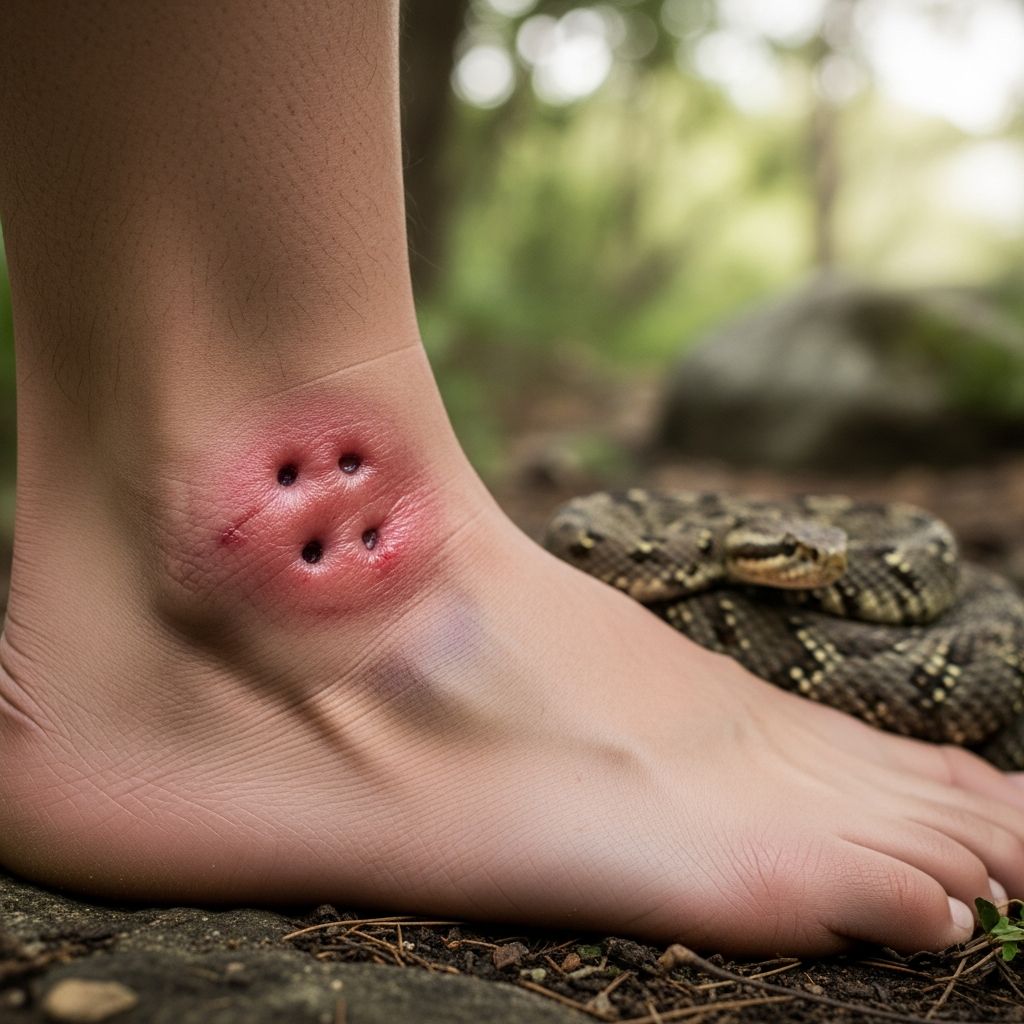
- Two puncture wounds with one or more lines of fang marks
- Immediate pain at the bite site that may intensify over time
- Swelling and redness around the bite area
- Bruising that may spread away from the bite site
- Tissue damage or blistering
- Numbness or tingling around the bite area or in the mouth and tongue
Systemic Symptoms
As venom circulates through the body, more serious symptoms may develop:
- Difficulty breathing or shortness of breath
- Difficulty swallowing
- Weakness or paralysis
- Nausea and vomiting
- Abdominal pain or cramping
- Changes in heart rate or blood pressure
- Blurred vision or difficulty seeing
- Muscle weakness or fasciculations (visible muscle twitching)
- Loss of consciousness
- Coagulopathy (blood clotting dysfunction)
First Aid and Immediate Response
The first few hours after a snake bite are critical. Proper first aid can minimize venom absorption and prevent complications. However, it is important to understand what should and should not be done.
What to Do
- Remove yourself from danger: Move away from the snake to avoid additional bites. Most snakes will not chase you.
- Remove constrictive items: Take off watches, bracelets, rings, and tight clothing near the bite site, as swelling may occur.
- Immobilize the bitten limb: Keep the affected arm or leg as still as possible. If possible, position it below the level of the heart.
- Seek immediate medical attention: Call 911 or go to the nearest emergency room. Even if you believe the snake was non-venomous, professional evaluation is important.
- Apply a pressure immobilization bandage: If trained to do so and if it does not delay transport to a hospital, wrap the bitten area firmly (not tightly) with a bandage or cloth, starting from the bite site and moving upward toward the heart. This helps slow venom absorption without cutting off circulation.
- Mark the bite location: Note the time and location of the bite, and watch for progression of swelling by marking the edge of the swelling and recording the time.
Related Stories



What NOT to Do
Several common misconceptions about snake bite treatment can actually worsen the situation and are strongly discouraged:
- Do not attempt to suck or cut out venom: This causes additional tissue damage and does not effectively remove venom.
- Do not apply a tourniquet: Tourniquets can lead to tissue death and may result in unnecessary amputation.
- Do not apply ice directly to the skin: This can cause frostbite and additional tissue damage.
- Do not elevate the bitten limb above the heart: This can increase venom absorption.
- Do not use electric shock: There is no evidence that this helps, and it can cause burns and other injuries.
- Do not delay seeking medical care: Time is critical when venom is involved.
- Do not attempt to catch or kill the snake: This risks additional bites. Let medical professionals handle snake identification if necessary.
Medical Evaluation and Treatment
Upon arrival at the emergency department, medical professionals will perform a thorough evaluation to determine the severity of the bite and appropriate treatment. This evaluation typically includes:
Initial Assessment
Medical staff will gather information about the snake bite incident, including the time of the bite, the location of the bite on the body, the type of snake if known, and whether the victim was wearing protective clothing. They will perform a physical examination to assess the extent of local and systemic symptoms and establish a baseline for monitoring progression of symptoms.
Laboratory Tests
Blood tests may be ordered to evaluate coagulation status, platelet count, and other parameters that may be affected by venom toxins. These baseline values help guide treatment decisions and monitor response to therapy.
Antivenom Therapy
Antivenom is the specific treatment for venomous snake bites and works by neutralizing the toxins present in the venom. The type of antivenom used depends on the species of snake. In the United States, the main antivenom is CroFab (crotalidae polyvalent immune fab) or Anavip (crotalidae immune F(ab’)2), both designed to treat bites from pit vipers. For coral snake bites, Coral Snake Antivenom may be used, though this has become increasingly difficult to obtain.
Antivenom is most effective when administered as soon as possible after the bite. The decision to administer antivenom is based on the severity of local and systemic manifestations. Medical professionals use grading systems to determine the appropriate dose and whether additional doses are needed.
Supportive Care
In addition to antivenom, patients receive supportive care to manage symptoms and prevent complications:
- Pain management with appropriate analgesics
- Elevation of the affected limb to reduce swelling
- Tetanus prophylaxis if needed
- Antibiotics if there are signs of infection
- IV fluids to maintain hydration
- Management of bleeding or coagulation disorders
- Monitoring of vital signs and symptoms
Complications of Snake Bites
Snake bite envenomation can lead to serious complications if not properly managed. Understanding potential complications underscores the importance of seeking immediate medical care.
Local Complications
Local effects at the bite site include tissue death, severe swelling that can impair circulation, compartment syndrome (where pressure builds up within muscle compartments), and permanent scarring or deformity. In severe cases, amputation of the affected limb may be necessary.
Systemic Complications
Systemic effects of snake venom can affect multiple organ systems. These include neurological symptoms such as paralysis or respiratory failure, coagulopathy leading to uncontrolled bleeding, shock from cardiovascular collapse, organ failure, and disseminated intravascular coagulation (DIC), a life-threatening condition where blood clots form throughout the body followed by severe bleeding.
Long-term Effects
Some patients experience prolonged effects from snake bites, including chronic pain, permanent loss of function, infection or osteomyelitis (bone infection), psychological trauma, and financial burden from medical expenses.
Prevention Strategies
The best approach to snake bites is prevention. Understanding how to reduce your risk of encountering and being bitten by a venomous snake can help keep you and your family safe.
In Your Home and Yard
- Keep grass cut short and remove debris where snakes may hide
- Remove potential food sources such as rodents by securing garbage and pet food
- Seal gaps and cracks in your home’s foundation and exterior walls
- Keep doors and windows properly screened and sealed
- Consider snake-proofing your yard with appropriate fencing
When Outdoors
- Wear protective clothing including long pants, boots, and thick socks when hiking in snake-prone areas
- Watch where you place your hands and feet, especially when reaching into areas you cannot see
- Make noise while walking to alert snakes of your presence, giving them time to move away
- Stay on established trails and avoid tall grass and brush
- Do not handle snakes, even if they appear dead or non-venomous
- Be especially cautious during warm months when snakes are more active
General Precautions
- Learn to identify venomous snakes in your region
- Teach children never to touch snakes
- Keep pets vaccinated and watch them closely when outdoors
- Have a plan for rapid transportation to a hospital if bitten
- Consider carrying a pressure bandage or first aid kit when hiking in remote areas
When to Seek Emergency Care
Any snake bite should prompt immediate medical evaluation. Seek emergency care if you experience a snake bite regardless of whether you believe it was from a venomous snake. Do not wait to see if symptoms develop. Call 911 or go to the nearest emergency room immediately. Time is critical in snake bite management, and delays in receiving antivenom can result in serious complications or death.
Medical professionals can properly evaluate the bite, provide appropriate treatment, and monitor you for delayed complications. Even “dry bites” from venomous snakes warrant medical evaluation to rule out envenomation and prevent infection.
Recovery and Prognosis
With prompt and appropriate medical treatment, most snake bite victims recover well. However, recovery time varies depending on the severity of the bite. Some patients experience complete recovery within days, while others require weeks or months of rehabilitation, particularly if tissue damage was extensive or if they experienced neurotoxic effects.
Physical therapy may be necessary to restore function to the affected limb. Psychological support can help address trauma and anxiety related to the bite experience. Follow-up appointments with your healthcare provider are important to monitor healing and address any complications.
Frequently Asked Questions
Q: How quickly do snake bite symptoms appear?
A: Symptoms can begin within minutes of the bite, though some effects may be delayed for up to 24 hours. Seek medical attention immediately regardless of symptom onset.
Q: Can a snake bite through clothing?
A: Most snake fangs can penetrate thin clothing, though thick leather boots and heavy denim provide better protection. Proper footwear and long pants reduce bite risk significantly.
Q: What should I do if bitten by a snake I cannot identify?
A: Treat all unidentified snake bites as potentially venomous and seek immediate emergency medical care. Doctors can manage treatment based on symptoms even without species identification.
Q: Is antivenom always necessary?
A: Not all bites require antivenom, but medical professionals must evaluate each bite to determine if treatment is necessary. Some dry bites may not need antivenom, but professional assessment is essential.
Q: Can I die from a snake bite?
A: Deaths from snake bites are rare with prompt medical treatment. Most snake bite fatalities result from delayed care or lack of access to appropriate medical facilities.
Q: What is the difference between pit vipers and other venomous snakes?
A: Pit vipers have heat-sensing pits between their eyes and nostrils. This physical feature, along with a triangular head and thick body, distinguishes them from non-venomous snakes and coral snakes.
References
- Perspectives on snakebite envenoming care needs across different health systems and cultural contexts — National Center for Biotechnology Information (NCBI). 2023. https://pmc.ncbi.nlm.nih.gov/articles/PMC9791583/
- Time to Act: WHO’s New Snakebite Strategy — Global Health NOW. 2019-05. https://globalhealthnow.org/2019-05/time-act-whos-new-snakebite-strategy
- Snake Venom Used in Medicine Development — Johns Hopkins University Newsletter. 2013-02. https://www.jhunewsletter.com/article/2013/02/snake-venom-used-in-medicine-development-49746
Similar Articles








Read full bio of Sneha Tete