Sodium Cromoglicate Capsules for Food Allergy (Nalcrom)
Learn how Nalcrom capsules help prevent food allergy symptoms by stabilizing mast cells and reducing allergic reactions.
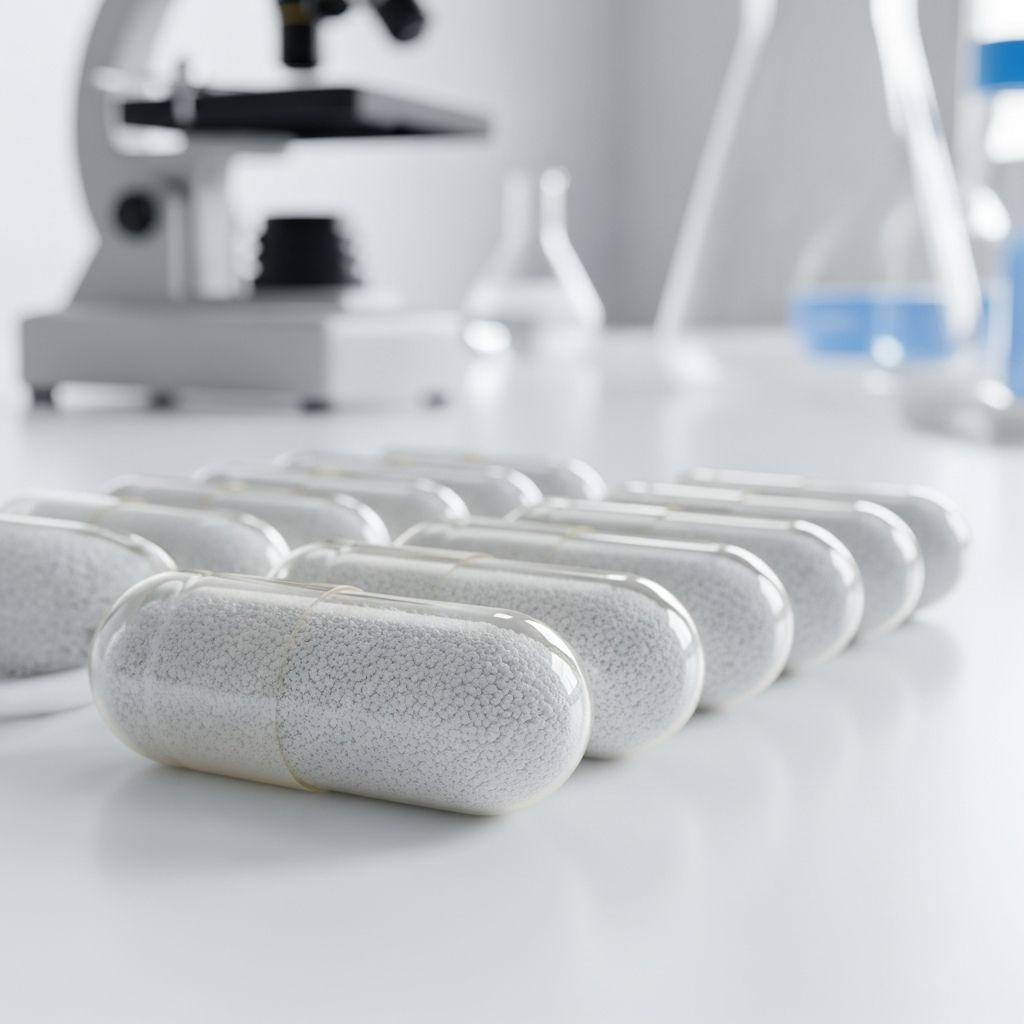
Sodium cromoglicate capsules, marketed as
Nalcrom
, are a specialized anti-allergy medication designed to prevent symptoms associated with food allergies. This treatment is particularly useful when complete avoidance of allergenic foods is challenging. By stabilizing mast cells in the gastrointestinal tract, it inhibits the release of histamine and other inflammatory mediators, thereby reducing or preventing allergic reactions.About Sodium Cromoglicate
**Sodium cromoglicate** belongs to the class of
mast cell stabilizers
, a type of anti-allergy medicine primarily used forfood allergy
management. It is also known as cromolyn sodium in the US and is available ascapsules
ororal liquid
formulations.| Type of Medicine | Used For | Also Called | Available As |
|---|---|---|---|
| An anti-allergy medicine (mast cell stabilizer) | Food allergy | Cromolyn sodium (US); Nalcrom® | Capsules, oral liquid |
Food allergies occur when the immune system overreacts to specific proteins in foods such as milk, eggs, peanuts, tree nuts, shellfish, wheat, soy, and certain fruits like citrus or kiwi. Even trace amounts can trigger reactions ranging from mild gastrointestinal discomfort to severe anaphylaxis. While strict avoidance remains the cornerstone of treatment, sodium cromoglicate provides supportive therapy by preventing mast cell degranulation in the gut, which curbs local inflammation and systemic absorption of allergens.
This medication is licensed for adults and children aged 2 years and older, often initiated by specialist allergy teams. It is not a cure but helps in scenarios like accidental exposure, school meals, or restaurant dining where avoidance is imperfect. Clinical evidence supports its role alongside dietary restriction, though large randomized trials specifically for gastrointestinal food allergy symptoms are limited.
How to Take Sodium Cromoglicate
Always follow the manufacturer’s leaflet and your doctor’s instructions before starting treatment. Dosing is tailored based on age, symptom severity, and response.
Dosage Guidelines
- Adults and children over 14 years: Starting dose of 200 mg (two 100 mg capsules) four times daily.
- Children aged 2-14 years: Starting dose of 100 mg (one capsule) four times daily.
- Doses may be adjusted up or as low as needed for control; maximum often 4 capsules per dose in responsive patients.
Take
capsules 30-60 minutes before meals
with water. They can be swallowed whole or opened and mixed with hot water (add cold water before drinking to avoid burns). For prevention during unavoidable exposure (e.g., parties), a single dose 15-20 minutes prior may suffice.Oral Liquid for Children or Swallowing Difficulties
An oral solution in 5 ml ampoules is available:
- Children: 1 ampoule per dose.
- Adults: 2 ampoules per dose.
- Take
15 minutes before meals
; twist off cap and consume directly.
Consistency is key—take before every meal containing potential allergens. Improvement may take 2-4 weeks; do not stop abruptly without medical advice. Initiation is typically by specialists with GP shared care for continuation.
How Sodium Cromoglicate Works
Sodium cromoglicate exerts a stabilizing effect on mast cells in the gastrointestinal mucosa. During an allergic encounter, mast cells release mediators like histamine, leukotrienes, and prostaglandins, causing local inflammation, gut symptoms (nausea, cramps, diarrhea), or systemic reactions via allergen absorption.
Related Stories



By preventing this degranulation, the drug reduces symptom severity and frequency. It is most effective for gut-focused allergies and complements elimination diets, providing cover for dietary lapses. Unlike antihistamines, it acts upstream to block mediator release rather than countering effects post-release. Studies confirm its utility in food allergy adjunct therapy, though efficacy varies by individual.
Side-Effects of Sodium Cromoglicate
Side effects are
uncommon
due to its poor systemic absorption (less than 1% reaches bloodstream). Most issues are mild and gastrointestinal.| Common Side-Effects | What Can I Do? |
|---|---|
| Feeling sick (nausea) | Stick to simple, bland meals; avoid rich or spicy foods |
| Skin rash or joint pain | Speak with your doctor if troublesome |
Rare reports include headache, itching, or weight gain. If symptoms like severe rash, swelling, or breathing issues occur, seek urgent care—these may indicate unrelated allergy. Report persistent issues to your doctor or pharmacist. Long-term use is generally safe under supervision.
How to Cope with Side-Effects
To minimize nausea:
- Eat small, frequent meals.
- Take with food if tolerated, though pre-meal timing is ideal.
- Stay hydrated and avoid triggers.
For rash or joint pain, monitor and consult promptly. Most resolve with dose adjustment or discontinuation.
Precautions
- Pregnancy/Breastfeeding: Limited data; use only if benefits outweigh risks—consult your doctor.
- Driving/Operating Machinery: No known effects.
- Alcohol: No interactions noted.
- Known Allergies: Inform your doctor of cromoglicate or excipient sensitivity.
- Other Conditions: Safe in renal/hepatic impairment due to minimal absorption.
Store at room temperature, away from moisture. Keep out of children’s reach. Dispose of unused medicine properly.
Other Things to Know
Sodium cromoglicate is prescription-only in most regions, restricted to allergy specialists for initiation. It does not replace epinephrine auto-injectors for anaphylaxis risk or immunotherapy. Regular allergy testing and dietitian input optimize outcomes.
Monitor response: If no improvement after 4 weeks, reassess diagnosis or switch therapies. Cost-effectiveness supports use at maintenance doses (e.g., 4-8 capsules/day). Emerging research explores its role in other mast cell disorders like mastocytosis.
Frequently Asked Questions (FAQs)
Q: When should I take sodium cromoglicate?
A: Take capsules 30-60 minutes or liquid 15 minutes before meals containing potential allergens.
Q: Is it safe for children?
A: Yes, from age 2+ at reduced doses; use liquid for younger kids.
Q: How long until it works?
A: Full effect in 2-4 weeks; use consistently.
Q: Can it cure food allergy?
A: No, it manages symptoms alongside avoidance; not a cure.
Q: What if I miss a dose?
A: Take next dose as scheduled; do not double up.
Q: Does it interact with other drugs?
A: No significant interactions; inform doctor of all medications.
References
- Sodium cromoglicate capsules for food allergy – Patient.info — Patient.info. 2024-10-11. https://patient.info/medicine/sodium-cromoglicate-capsules-for-food-allergy-nalcrom
- Sodium Cromoglicate capsules for gastrointestinal symptoms due to food allergy — SELondonICS (.org, official formulary). 2022-12. https://www.selondonics.org/wp-content/uploads/dlm_uploads/2022/12/RE28A51.pdf
- Oral sodium cromoglycate: its use in the management of food allergy — PubMed (peer-reviewed). 1995. https://pubmed.ncbi.nlm.nih.gov/8542460/
- NALCROM Sodium Cromoglicate Capsules (Product Monograph) — Health Canada (gov). N/A. https://pdf.hres.ca/dpd_pm/00078787.PDF
- Cromoglicic acid: Uses, Interactions, Mechanism of Action — DrugBank (official drug database). N/A. https://go.drugbank.com/drugs/DB01003
- Cromolyn (oral route) – Mayo Clinic — Mayo Clinic (.org, authoritative medical). N/A. https://www.mayoclinic.org/drugs-supplements/cromolyn-oral-route/description/drg-20063181
Similar Articles








Read full bio of Sneha Tete