Sodium Cromoglicate Eye Drops (Opticrom)
Effective relief for itchy, red, watery eyes from allergies like hay fever using sodium cromoglicate drops.
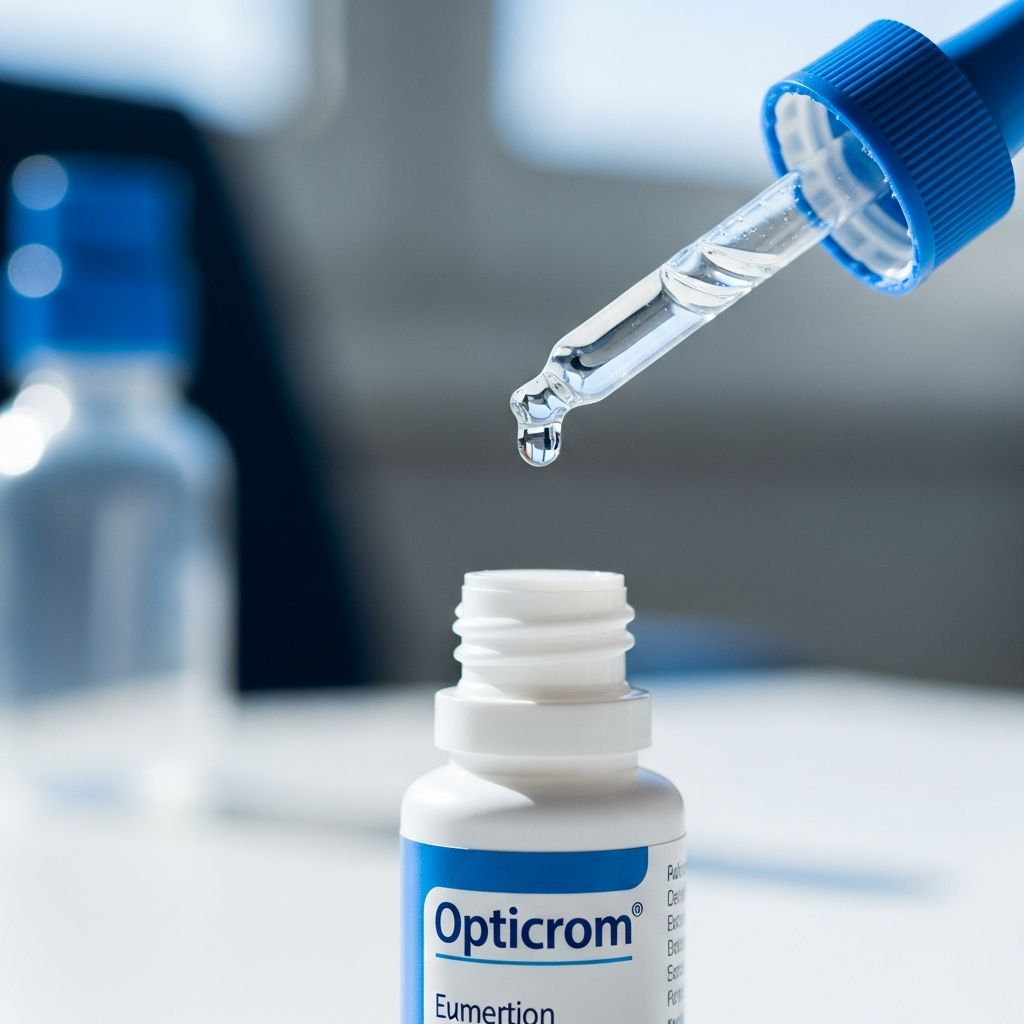
About sodium cromoglicate eye drops
Sodium cromoglicate eye drops are a widely used treatment for relieving the uncomfortable symptoms of
allergic conjunctivitis
, a condition that causes red, watery, and itchy eyes. These drops belong to the class ofanti-inflammatory eye drops
specifically designed to combat eye allergies triggered by common environmental allergens such as pollen during hay fever season, house dust mites, pet dander, or even cosmetic irritants. Unlike steroids or antihistamine drops, sodium cromoglicate works preventatively by stabilizing mast cells in the eye, preventing the release ofhistamine
and other inflammatory chemicals that lead to allergic reactions.Allergic conjunctivitis affects millions annually, particularly during spring and summer when pollen counts peak. Symptoms include intense itching, redness, swelling of the eyelids, and excessive tearing, which can significantly impair daily activities like reading, driving, or working on screens. Sodium cromoglicate eye drops, available under brand names like
Opticrom®, Catacrom®, Eycrom®, Librachrom®, Murine® Hayfever Relief, and Optrex® Hayfever Relief
, provide targeted relief without systemic side effects. They are suitable for both adults and children over 5 years old and come in multi-dose bottles or preservative-free single-use units.| Type of medicine | Used for | Also called | Available as |
|---|---|---|---|
| Anti-inflammatory eye drops | Relieving eye symptoms of allergies such as hay fever (allergic conjunctivitis) | Cromolyn sodium (US); Allercrom®; Catacrom®; Eycrom®; Librachrom®; Murine® hayfever relief; Opticrom®; Optrex® hayfever relief | Eye drops and single-use eye drops |
The mechanism of action is key to its effectiveness: by inhibiting mast cell degranulation, the drops reduce inflammation at the source, offering relief that builds over a few days of consistent use. For optimal results, start using them before allergy season or at the first sign of symptoms. Clinical data from product monographs confirm that regular application—two drops per eye four times daily—delivers approximately 0.8 mg of sodium cromoglicate per drop, sufficient to maintain symptom control even during high-allergen exposure. This makes them a first-line over-the-counter option, available without prescription at pharmacies, though consulting a healthcare professional is advised for persistent cases.
In addition to hay fever, these drops are effective against perennial allergies from dust mites or animal fur, and issues related to contact lens wear, though lens users must follow specific precautions. Long-term use is generally safe, but monitoring for preservative-related irritation is recommended, especially with bottled formulations containing benzalkonium chloride.
Before using sodium cromoglicate eye drops
Before starting sodium cromoglicate eye drops, it’s crucial to ensure they are appropriate for your condition to avoid complications. Consult a doctor or pharmacist if you have any of the following:
- Wear soft contact lenses: Preservatives like benzalkonium chloride in multi-dose bottles can be absorbed by lenses, potentially discoloring them or causing irritation. Remove lenses before application and wait at least 15 minutes before reinserting.
- Have dry eye disease or use dry eye drops: Concurrent use may exacerbate dryness or alter efficacy; space applications by 5-10 minutes.
- Are pregnant or breastfeeding: Although no specific risks are documented, use only on medical advice to ensure safety for you and your baby.
- Ever had an allergic reaction to eye drops: Signs include rash, swelling, breathing difficulties, or worsened eye redness/itching. Discontinue immediately if hypersensitivity occurs.
Additionally, do not use if you suspect an eye infection, foreign body, or non-allergic cause of redness, as these drops treat allergies only and won’t address infections or other pathologies. Inform your doctor of any other medications, including other eye drops, to prevent interactions. For children under 5, usage is not recommended without pediatrician approval. Always check the patient information leaflet for full ingredient details, as some formulations contain 2% w/v sodium cromoglicate (20 mg/ml).
Patient safety is paramount; if symptoms like severe pain, vision changes, or light sensitivity accompany itching, seek urgent medical evaluation, as these may indicate glaucoma, uveitis, or corneal issues unrelated to allergies.
Related Stories



How to use sodium cromoglicate eye drops
Proper administration maximizes efficacy and minimizes waste or contamination. Follow these steps meticulously:
- Wash hands thoroughly: Use soap and water to prevent introducing bacteria into the eye.
- Remove the cap: For single-dose units, twist off the tip; avoid touching it to prevent contamination.
- Tilt head back slightly: Look up and gently pull down the lower eyelid to create a pocket.
- Hold bottle upside down near the eye: Avoid contact with the eye, lashes, or skin.
- Instill drops: Squeeze gently for one or two drops (per dosage instructions) into the pocket. Blink gently after.
- Close eye for 1-2 minutes: Press the inner corner of the eye (nasolacrimal sac) to block drainage into the nose, enhancing retention.
- Repeat in other eye: If both eyes are affected.
- Replace cap securely: Discard single-use units; store bottles upright in a cool, dry place.
Shake the bottle well before each use if required by the label. If a drop misses, apply a second. Practice in front of a mirror initially for accuracy. These steps, outlined in official product monographs, ensure the 2% solution delivers precise dosing.
Getting the most from your treatment
To optimize therapeutic outcomes, adhere strictly to guidance from the manufacturer’s leaflet. Key tips include:
- Dosage regimen: Instill
one or two drops in each eye four times daily
at regular intervals (e.g., morning, midday, afternoon, evening). Do not exceed this. - Consistency: Use continuously throughout allergy season, even if symptoms subside, for sustained prevention. Improvement typically occurs within 2-5 days.
- Duration: Safe for short-term use; for over two weeks, consult a doctor.
- Combination therapy: Space other eye products by 5-10 minutes; use first if multiple needed.
- Contact lenses: Avoid soft lenses during treatment unless preservative-free units are used.
- No improvement: If symptoms persist beyond 2 days or worsen, see a doctor promptly.
Track usage with a diary if prone to forgetting doses. Combine with oral antihistamines for comprehensive relief if eyes are part of broader allergies, but only on advice. Storage: Keep at room temperature, away from children, and discard 4 weeks after opening multi-dose bottles.
Side effects
Sodium cromoglicate is well-tolerated, with most side effects mild and transient. Common ones include:
| Side Effect | Description | Management |
|---|---|---|
| Mild eye irritation (burning, stinging) | Occurs immediately post-application | Resolves in minutes; wait before driving |
| Blurred vision | Temporary due to drop viscosity | Avoid activities requiring clear vision until resolved |
| Preservative reaction (redness, inflammation) | From benzalkonium chloride in bottles | Switch to single-dose; consult doctor |
Rarely, prolonged use of preserved drops may cause dry eye-like symptoms or allergic responses. Report persistent or new effects (e.g., severe swelling, rash) to a healthcare provider. No systemic absorption occurs, minimizing risks like those with steroids. Post-marketing data confirms infrequency of adverse events.
Frequently Asked Questions (FAQs)
Q: How quickly do Opticrom eye drops work?
A: Relief may start within days, with full effect after 5-7 days of regular use. Begin early in allergy season for best prevention.
Q: Can children use sodium cromoglicate eye drops?
A: Yes, for children over 5 years; two drops per eye four times daily. Younger children need doctor approval.
Q: Are these drops safe during pregnancy?
A: Use only if recommended by a doctor; limited data exists, but topical use poses low risk.
Q: What if I forget a dose?
A: Apply as soon as remembered; resume schedule. Do not double dose.
Q: Can I use them with contact lenses?
A: Remove soft lenses first; wait 15 minutes. Prefer preservative-free options.
Q: How long can I use the bottle after opening?
A: Typically 4 weeks; check label and discard if discolored or cloudy.
References
- Sodium cromoglicate eye drops — Patient.info. 2023. https://patient.info/medicine/sodium-cromoglicate-eye-drops-opticrom
- PRODUCT MONOGRAPH OPTICROM® Sodium Cromoglycate — Health Canada. 2023-10-01. https://pdf.hres.ca/dpd_pm/00043961.PDF
- Opticrom® Allergy 2% w/v Eye Drops – Sodium Cromoglicate — Medicines.org.uk (MHRA). 2023-05-15. https://www.medicines.org.uk/emc/files/pil.9318.pdf
- SUMMARY OF PRODUCT CHARACTERISTICS – Opticrom Allergy — HPRA (Ireland). 2023. https://assets.hpra.ie/products/Human/18053/0cf495d4-17ba-43b9-a3ae-831116dd3c12.pdf
- Opticrom® Hayfever 2% w/v Eye Drops – Sodium Cromoglicate — Medicines.org.uk (MHRA). 2023-05-15. https://www.medicines.org.uk/emc/files/pil.9320.pdf
Similar Articles








Read full bio of Sneha Tete