Sodium Hyaluronate for Dry Eyes: Hycosan & Hylo Forte
Complete guide to sodium hyaluronate eye drops for dry eye relief and treatment.
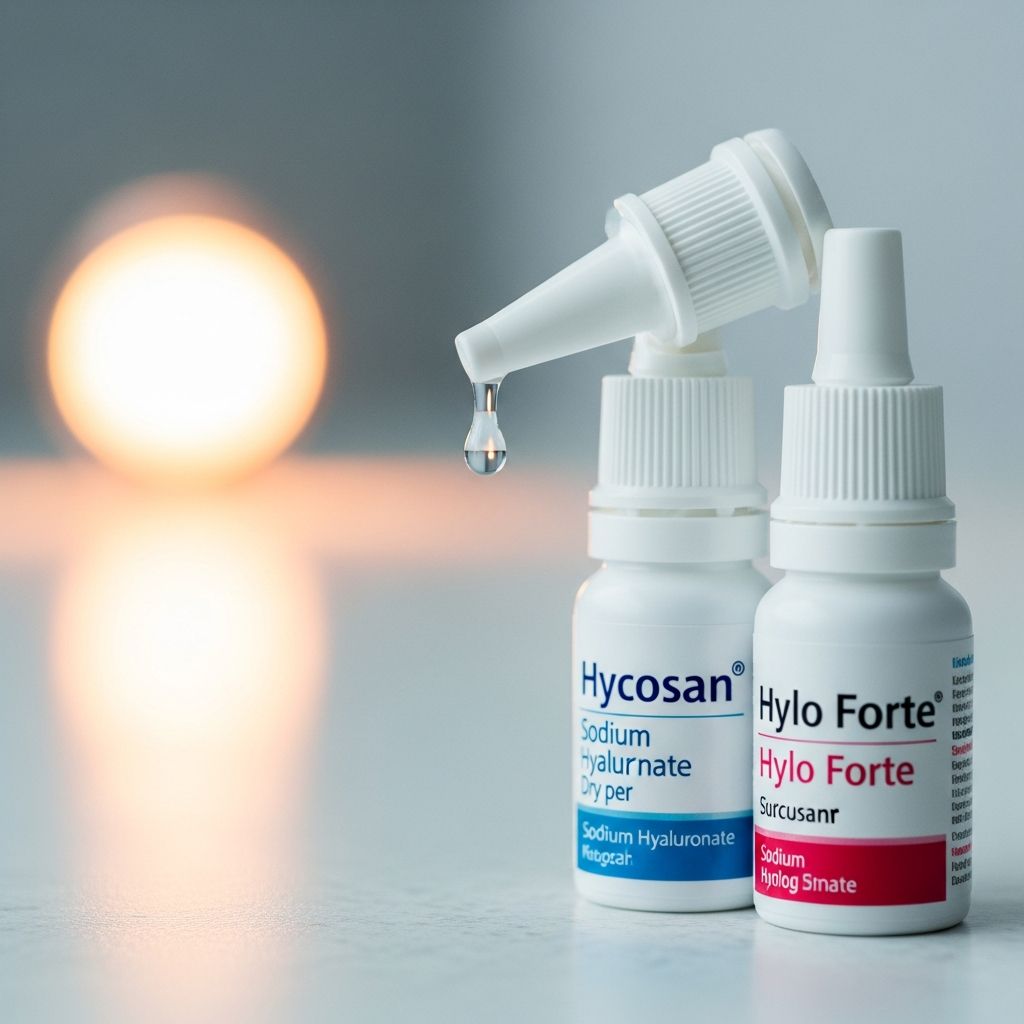
Sodium Hyaluronate for Dry Eyes: Hycosan and Hylo Forte
Dry eye disease (DED) is a common condition affecting approximately 10-20% of the adult population, causing discomfort and potentially leading to long-term vision complications if left untreated. Sodium hyaluronate has emerged as an effective therapeutic component in artificial tear formulations, with products like Hycosan and Hylo Forte becoming popular treatment options. These preservative-free eye drops offer patients a reliable solution for managing dry eye symptoms and restoring ocular surface health.
What is Sodium Hyaluronate?
Sodium hyaluronate is a naturally occurring substance found in the human body that plays a crucial role in retaining moisture and maintaining tissue hydration. In eye drop formulations, sodium hyaluronate acts as a highly effective lubricant and moisture-retaining agent. Its unique viscoelastic properties allow it to create a protective layer over the cornea while attracting and binding water molecules to the ocular surface.
The substance works by thickening the tear film and slowing tear evaporation, addressing both primary causes of dry eye disease. Available in various concentrations—typically ranging from 0.1% to 0.4%—sodium hyaluronate can be tailored to individual patient needs. Hycosan and Hylo Forte are preservative-free formulations designed to minimize irritation while maximizing therapeutic benefit.
How Sodium Hyaluronate Works for Dry Eyes
The mechanism of action for sodium hyaluronate involves multiple pathways that address dry eye disease comprehensively. First, its moisture-attracting properties help thicken and stabilize the tear film, creating a more durable protective layer over the cornea. This stabilization reduces tear breakup and prevents the rapid evaporation that characterizes many dry eye conditions.
Second, sodium hyaluronate nourishes and protects the corneal surface, facilitating healing from previous damage caused by chronic dryness. The substance acts as a biological bandage, reducing inflammation and promoting epithelial regeneration. Third, by maintaining optimal tear film composition and volume, it alleviates the root causes of dry eye, whether related to insufficient tear production or excessive evaporation.
Clinical evidence supports these mechanisms. Studies demonstrate that sodium hyaluronate of 0.1% and 0.3% concentrations significantly reduces ocular irritation symptoms and lengthens non-invasive break-up time (NIBUT) more effectively than saline controls. The 0.3% concentration tends to provide superior performance, achieving statistical significance for NIBUT improvement over a six-hour observation period.
Effectiveness and Clinical Studies
Research consistently demonstrates the efficacy of preservative-free sodium hyaluronate eye drops for treating mild-to-moderate dry eye disease. In a randomized, prospective study published in Clinical Ophthalmology, preservative-free sodium hyaluronate (0.4%) effectively alleviated both clinical signs and symptoms in approximately 50% of patients within one month of treatment.
The study evaluated 111 patients with a mean age of 36.5 years, predominantly female (67.6%), using multiple dosing regimens:
- Twice daily (BID): Mean OSDI score improvement of -14.7; 50% achieved normal OSDI scores
- Four times daily (QID): Mean OSDI score improvement of -15.2; 48.6% achieved normal OSDI scores
- Six times daily (6TD): Mean OSDI score improvement of -13.9; 55.6% achieved normal OSDI scores
Related Stories



Key findings included tear break-up time (TBUT) improvement in 50.5% of patients after 15 days, with mean TBUT values ranging from 8.8 to 9.03 seconds across dosing groups. Notably, every patient in the study improved their Ocular Surface Disease Index (OSDI) score and at least one evaluated sign—including TBUT, corneal fluorescein staining (CFS), conjunctival lissamine green staining (CLGS), or conjunctival hyperemia—compared to baseline.
Hycosan and Hylo Forte Specifications
Hycosan and Hylo Forte represent two popular preservative-free formulations of sodium hyaluronate designed for extended symptom relief and patient convenience. These products differ primarily in their sodium hyaluronate concentration and intended use patterns:
Hycosan typically contains a standard concentration optimized for frequent daily use, providing consistent moisture replacement throughout the day. Hylo Forte features a higher concentration of sodium hyaluronate, delivering more concentrated lubrication suitable for moderate-to-severe dry eye or less frequent dosing schedules.
Both formulations are manufactured as preservative-free solutions, eliminating the risk of preservative-induced irritation—a significant concern with frequently applied eye medications. The preservative-free design makes these products suitable for patients with sensitive eyes and those requiring multiple daily applications.
Dosage and Administration
The appropriate dosing regimen for sodium hyaluronate eye drops depends on dry eye severity and individual response patterns. Clinical studies have evaluated dosing frequencies ranging from twice daily to six times daily, with successful outcomes reported across all regimens.
Generally recommended dosing patterns include:
- Mild dry eye: 1-2 applications per day
- Moderate dry eye: 2-4 applications per day
- Severe dry eye: 4-6 applications per day or as needed
It’s not definitively established how frequently patients should use hyaluronic acid eye drops, as studies report usage anywhere from 2 to 8 times daily. Higher concentrations of sodium hyaluronate may require less frequent application while still providing sustained relief. However, drops with higher concentrations can occasionally cause temporary blurry vision, requiring patients to balance therapeutic benefit against visual clarity.
Benefits of Sodium Hyaluronate Eye Drops
Sodium hyaluronate-based eye drops offer multiple advantages for dry eye management:
- Extended symptom relief: Higher viscosity formulations provide longer-lasting lubrication between applications
- Preservative-free formulation: Eliminates preservative-related irritation and toxicity concerns
- Natural compatibility: Sodium hyaluronate occurs naturally in the eye, promoting biocompatibility
- Corneal protection: Creates a protective barrier facilitating epithelial healing
- Inflammation reduction: Supports ocular surface healing and reduces associated inflammation
- Tear film stabilization: Improves tear film quality and duration
- Moisture retention: Attracts and binds water to the ocular surface
Expected Improvements and Timeline
Patients using sodium hyaluronate eye drops can anticipate specific symptom improvements and clinical changes. Observable benefits typically include:
- Less eye irritation and reduced burning sensations
- Decreased eye redness
- Fewer episodes of blurry vision
- Improved ability to maintain comfortable eye opening
- Enhanced vision stability throughout the day
Clinical improvement timelines vary by individual and dry eye severity. Research indicates that significant OSDI score reductions and tear film improvements may be observed within 15 days of treatment initiation. However, optimal results typically emerge after one month of consistent use, with approximately 50% of patients achieving normalization of key clinical parameters.
Comparison with Other Dry Eye Treatments
While sodium hyaluronate eye drops form an important part of dry eye management, several other treatment modalities exist:
- Artificial tears: Basic lubricating solutions without hyaluronate; less effective for moderate-to-severe disease
- Medicated drops (Restasis): Cyclosporine-based prescription medication addressing immune-mediated inflammation
- Punctal plugs: Surgical inserts reducing tear drainage and maintaining tear film
- Omega-3 supplements: Systemic treatment improving meibomian gland function
- Autologous serum tears: Patient’s own blood serum processed as therapeutic drops
- Nasal spray (Tyrvaya): Neurostimulation therapy enhancing natural tear production
- Warm compresses: Non-pharmacological therapy improving lipid layer function
Sodium hyaluronate eye drops typically serve as first-line treatment for mild-to-moderate dry eye disease, often used in combination with other therapeutic approaches for more severe conditions.
Oral Hyaluronic Acid vs. Topical Formulations
While topical sodium hyaluronate eye drops have strong clinical evidence supporting their efficacy, oral hyaluronic acid supplements represent an emerging area of investigation. However, oral supplementation does not produce the same therapeutic effects as topical application.
Topical eye drops deliver hyaluronic acid directly to the ocular surface, where it immediately provides lubrication and moisture retention. Conversely, oral hyaluronic acid supplements lack robust clinical evidence demonstrating direct dry eye symptom improvement. One small study of 54 participants suggested potential additive benefits when combining oral hyaluronic acid with topical eye drops, but substantial research is lacking. Currently, there is no strong evidence supporting replacement of topical hyaluronic acid eye drops with oral supplementation.
Safety and Side Effects
Preservative-free sodium hyaluronate eye drops demonstrate excellent safety profiles with minimal adverse effects. Clinical trials have reported no significant differences among dosing groups regarding conjunctival hyperemia or safety parameters. The preservative-free formulation eliminates concerns associated with chronic preservative exposure, making these products suitable for frequent, long-term use.
Occasional side effects may include temporary blurring of vision—particularly with higher concentration formulations—which typically resolves within seconds to minutes. This minor inconvenience can usually be managed by timing instillation with non-critical visual activities.
Who Should Use Sodium Hyaluronate Eye Drops?
Sodium hyaluronate eye drops are appropriate for patients experiencing:
- Mild-to-moderate dry eye disease symptoms
- Ocular irritation from environmental or lifestyle factors
- Tear film instability
- Post-surgical dry eye (e.g., following LASIK)
- Contact lens-related discomfort
- Age-related tear production decline
- Sensitivity to preservative-containing eye drops
However, patients with severe dry eye disease, especially those with corneal scarring or advanced disease, may require additional or alternative treatments in conjunction with sodium hyaluronate drops.
Important Considerations
Several factors merit attention when using sodium hyaluronate eye drops. Interestingly, research indicates that improvements may be less consistent in patients within reproductive age ranges using oral contraceptives, suggesting potential hormonal influences on treatment response. This observation underscores the importance of individualized therapy and close monitoring of treatment efficacy.
Additionally, while sodium hyaluronate eye drops effectively manage symptoms, they address the symptoms and signs of dry eye rather than treating underlying causes in many cases. Concurrent management of contributing factors—such as meibomian gland dysfunction, reduced tear production, or environmental irritants—may be necessary for optimal outcomes.
Frequently Asked Questions
Q: How quickly do sodium hyaluronate eye drops work?
A: Many patients experience symptom relief within days, though optimal improvements typically emerge after one month of consistent use. Research shows that approximately 50% of patients achieve normal OSDI scores after 30 days of treatment.
Q: Can I use sodium hyaluronate eye drops with contact lenses?
A: Yes, sodium hyaluronate eye drops are compatible with contact lenses and can actually improve comfort for lens wearers. However, it’s advisable to instill drops before lens insertion or after removal to maximize efficacy.
Q: How do Hycosan and Hylo Forte differ?
A: The primary difference is sodium hyaluronate concentration, with Hylo Forte containing a higher concentration for more intensive lubrication. This allows Hylo Forte users potentially less frequent application while maintaining symptom relief.
Q: Are there any drug interactions with sodium hyaluronate eye drops?
A: Sodium hyaluronate eye drops are generally safe to use alongside other medications. However, inform your eye care provider about all medications and supplements, as some may contribute to dry eye symptoms.
Q: What should I do if sodium hyaluronate drops aren’t providing adequate relief?
A: Consult your eye care provider. You may benefit from combination therapy incorporating punctal plugs, medicated drops, omega-3 supplementation, or other treatments addressing your specific dry eye etiology.
Q: Is sodium hyaluronate safe for long-term daily use?
A: Yes, sodium hyaluronate eye drops are safe for extended use. The preservative-free formulation eliminates safety concerns associated with chronic preservative exposure, making them suitable for indefinite daily application.
References
- Preservative-Free Sodium Hyaluronate Drop Improves Dry Eye for Half of Patients Within a Month — Ophthalmology Advisor/Clinical Ophthalmology. 2025. https://www.ophthalmologyadvisor.com/news/preservative-free-sodium-hyaluronate-alleviates-symptoms-and-clinical-parameters-of-ded/
- Effectiveness of Sodium Hyaluronate Eyedrops in the Treatment of Dry Eye — PubMed Central/National Center for Biotechnology Information. 2006-02-15. https://pubmed.ncbi.nlm.nih.gov/15983814/
- Oral Hyaluronic Acid for Dry Eyes: Uses, Benefits, & Side Effects — GoodRx Health. 2025. https://www.goodrx.com/conditions/dry-eye/oral-hyaluronic-acid-for-dry-eyes
Similar Articles








Read full bio of medha deb