Soft Tissue Injury: Types, Causes & Treatment Guide
Complete guide to soft tissue injuries: understand sprains, strains, and effective recovery strategies.
Understanding Soft Tissue Injury
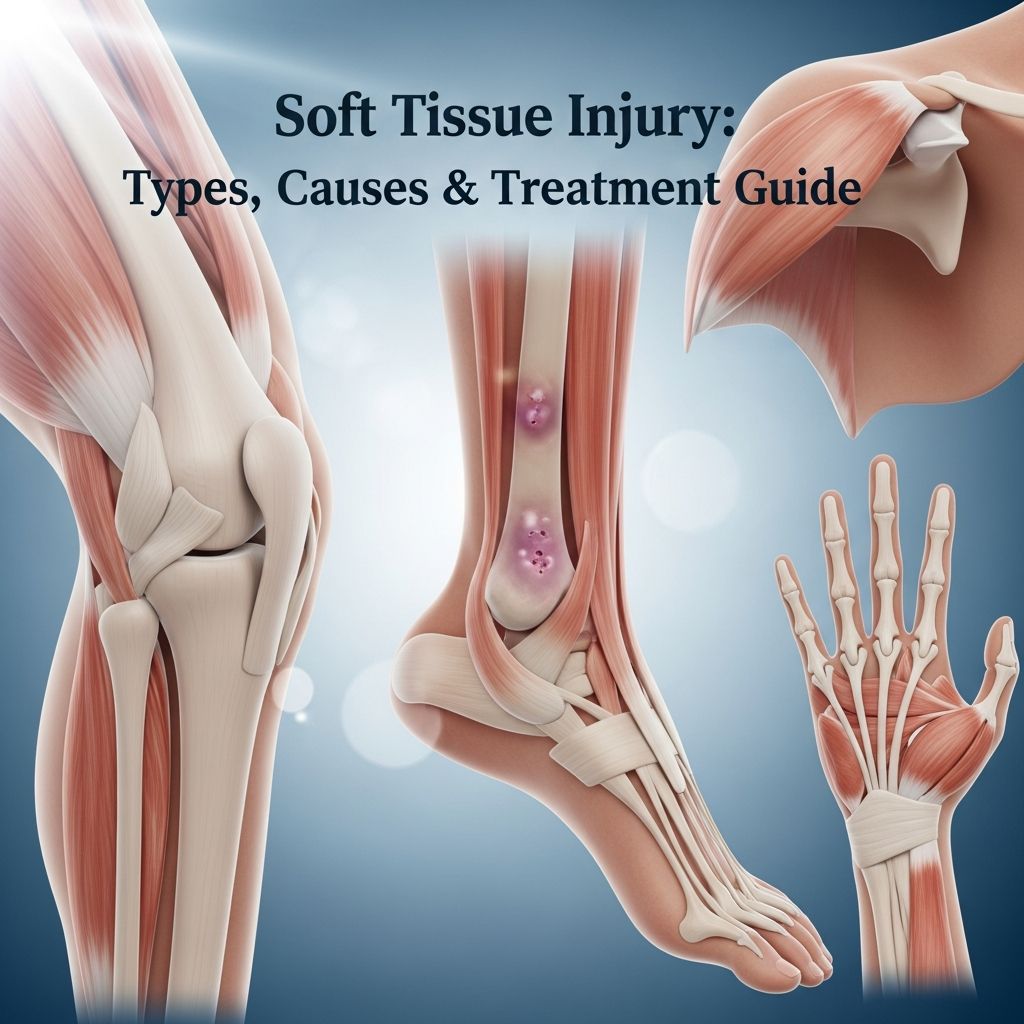
Soft tissue injuries represent one of the most common types of musculoskeletal damage affecting millions of people annually. These injuries occur in the soft parts of your musculoskeletal system, including your muscles, tendons, and ligaments. These tissues are critical components that support your skeleton and enable movement throughout your body. Whether resulting from a traumatic event or chronic overuse, soft tissue injuries can be painful and debilitating, often requiring extended recovery periods. Understanding the nature of these injuries, their causes, and appropriate treatment strategies is essential for promoting proper healing and preventing long-term complications.
What Constitutes Soft Tissue Injury
A soft tissue injury happens when the muscles, tendons, and ligaments that support your skeletal system become damaged. You can injure these tissues during physical activity or in an accident. Sudden, excessive force can cause a traumatic injury, while chronic overuse may lead to a repetitive strain injury. The severity of soft tissue injuries can vary dramatically, from minor irritation to complete tissue rupture. Most soft tissue injuries heal with time and rest, though the healing timeline depends on injury severity and proper management. These injuries deserve serious attention because they can be just as serious as bone injuries and may take equally long—or even longer—to heal completely.
Types of Soft Tissue Injuries
Acute Soft Tissue Injuries
Acute soft tissue injuries occur suddenly and result from immediate trauma or forceful impacts. These injuries are graded based on severity:
First-Degree Injuries: The tissue is pulled but not torn. This represents the mildest form of soft tissue injury, characterized by minimal damage to the tissue fibers.
Second-Degree Injuries: A partial tear occurs in the tissue. These injuries are more serious than first-degree injuries and typically cause significant pain and functional limitation.
Third-Degree Injuries: A complete tear through the tissue represents the most severe form of acute soft tissue injury. Third-degree injuries often require surgical repair and have longer recovery periods.
Common acute soft tissue injuries include sprains (ligament injuries), strains (muscle or tendon injuries), and contusions (bruising from direct impact). These injuries frequently occur during sports, accidents, or falls and require immediate attention to prevent complications.
Repetitive Strain Injuries
Repetitive strain injuries develop gradually through overuse and chronic stress on soft tissues. Unlike acute injuries that occur suddenly, these injuries result from repeated motion or sustained pressure over extended periods. Common repetitive strain injuries include tendonitis, bursitis, and various overuse syndromes. Repetitive strain can cause inflammation in your soft tissues, which can damage them if it lasts too long. These injuries are particularly common among athletes, manual laborers, and individuals with occupational demands involving repetitive motions. Recovery from repetitive strain injuries requires ceasing the aggravating activity, but if you return to those activities too soon, they can become chronic injuries that cause lasting damage.
Common Causes of Soft Tissue Injury
Traumatic Causes
Traumatic soft tissue injuries result from sudden, forceful impacts or excessive strain. A forceful impact from a direct blow, fall, or collision may cause a contusion. Sudden, jerking movements or many strong pulls may strain a muscle or tendon or sprain a ligament. These injuries are frequently associated with sports activities, vehicle accidents, falls from heights, or direct physical contact. The force applied during trauma determines the extent of tissue damage and the severity of resulting symptoms.
Overuse and Repetitive Strain
The two major causes of soft tissue injury or damage are repetitive strain from overuse and trauma from a sudden force. Repetitive strain injuries develop when tissues experience continuous or frequent stress without adequate recovery time. This category includes occupational injuries from repetitive job tasks, sports overuse injuries, and cumulative microtrauma from poor biomechanics or posture. Understanding your activity levels and modifying behaviors that stress soft tissues can help prevent these injuries.
Related Stories



Recognizing Soft Tissue Injury Symptoms
The most common symptom of soft tissue injuries is pain, usually accompanied by swelling. Swelling is a sign of inflammation, which is your body’s way of responding to an injury. Your body is sending extra blood and resources to the area to begin the healing process. However, swelling can add to your discomfort and may limit your range of motion.
Additional possible symptoms include:
– Reduced function or ability to use the affected body part- Bruising or visible discoloration at the injury site- Stiffness in the affected area- Weakness or instability- Warmth or heat around the injury- Visible deformity in severe cases- Difficulty bearing weight on the injured area
Recognizing these symptoms promptly allows you to seek appropriate medical evaluation and begin proper treatment immediately after injury occurs.
Complications Associated with Soft Tissue Injuries
Immediate Complications
Immediate complications can occur with soft tissue injuries in the acute phase following injury. These may include severe swelling that compromises circulation, excessive bleeding into tissues, compartment syndrome in severe cases, and acute pain that limits function. Very severe muscle contusions can cause extra complications due to severe swelling, which may require special treatment and a longer recovery. Prompt intervention during this phase can prevent progression to chronic complications.
Long-Term Complications
Long-term complications can occur with improper healing. These may include chronic pain that persists beyond normal healing timelines, tissue scarring that limits flexibility and strength, chronic inflammation that creates ongoing irritation, persistent instability in affected joints or limbs, and recurrent injuries due to inadequate rehabilitation. Additionally, soft tissue injuries sometimes occur alongside bone injuries. For example, a broken bone or one that’s been dislocated may penetrate or pull the surrounding tissues. The bone injury might be more obvious, but you might also have damaged soft tissues with it, requiring comprehensive treatment addressing both injury types.
Diagnosis of Soft Tissue Injuries
A healthcare provider will physically examine your injury and ask you questions about how it happened or what type of stress might have caused it. The examination typically includes assessing pain levels, range of motion, strength, and stability. Sometimes, providers will want to take images to see the injury in more detail or to check for additional injuries or complications. Advanced imaging such as MRI can show soft tissue damage in exceptional detail, allowing providers to determine injury severity and guide treatment decisions. Additional diagnostic tools may include ultrasound imaging, X-rays to rule out fractures, CT scans for complex injuries, and sometimes specialized testing to assess function and stability.
Treatment Approaches for Soft Tissue Injuries
Conservative Care Protocols
Most soft tissue injuries heal at home with conservative care. The traditional approach involves the RICE method—Rest, Ice, Compression and Elevation—which helps reduce inflammation, swelling, pain and bleeding in your soft tissues. RICE is good for immediate relief, particularly during the first 72 hours following injury. Recently, healthcare providers introduced PRICE, adding Protection to the original protocol. Protection involves immobilizing or supporting the injured area to prevent further damage.
After the acute phase, newer protocols guide recovery more effectively. Healthcare providers have introduced PEACE and LOVE as updated recovery protocols. These approaches emphasize the importance of gradual rehabilitation and progressive loading after the initial acute inflammation phase subsides.
Pain Management
Pain relief and standard protocols form the foundation of soft tissue injury treatment. Over-the-counter pain medications, including nonsteroidal anti-inflammatory drugs (NSAIDs) like ibuprofen, can help manage pain and reduce inflammation. These should be used as directed and in consultation with healthcare providers, especially for extended use.
Rehabilitation and Recovery
Soft tissue injuries can take considerable time to heal properly. This can be hard to understand and explain to others, especially when you and they want you to return to your activities as soon as possible. However, don’t shortchange your recovery. It takes time and slow, deliberate rehabilitation to repair these tissues, but it’s worth doing it right. Your body will thank you. Progressive rehabilitation programs should include:
– Range of motion exercises within pain tolerance- Gradual strengthening as healing progresses- Functional activities designed to prepare tissues for return to normal activities- Flexibility and balance training- Sport-specific or activity-specific training as appropriate
Surgical Intervention
Rarely, you might need surgery for a severe injury. Third-degree injuries with complete tissue rupture frequently require surgical repair to restore normal function. Surgical intervention becomes necessary when conservative care fails to produce adequate healing, when significant functional loss persists, or when the injury involves complete tissue disruption. Your healthcare provider will discuss surgical options if they determine surgery would benefit your recovery.
When to Seek Emergency Care
Head to the emergency room if you think you have a severe injury, or if you have alarm symptoms like increasing pain, numbness or faintness. You should still see a healthcare provider for minor injuries to ensure proper diagnosis and treatment guidance. Early professional evaluation can prevent complications and establish an appropriate treatment plan.
Prevention Strategies
Preventing soft tissue injuries involves maintaining physical fitness, using proper technique during activities, gradually increasing activity levels rather than sudden increases, wearing appropriate protective equipment, and allowing adequate recovery time between intense activities. Strengthening exercises, flexibility training, and proper biomechanics education can significantly reduce injury risk in both recreational and occupational settings.
Frequently Asked Questions
Q: How long do soft tissue injuries typically take to heal?
A: Healing time varies based on injury severity. First-degree injuries may heal in weeks, while second-degree injuries typically require several weeks to months. Third-degree injuries requiring surgery may take several months or longer for complete recovery.
Q: Can I continue exercising with a soft tissue injury?
A: Initial rest is essential during the acute phase. As healing progresses, graduated rehabilitation and gentle movement within pain tolerance can promote recovery. Consult your healthcare provider before resuming exercise to prevent re-injury.
Q: Is the RICE method still recommended for soft tissue injuries?
A: RICE remains effective for immediate acute phase management (first 72 hours). However, healthcare providers now often recommend transitioning to PEACE and LOVE protocols after the acute phase to optimize long-term recovery and rehabilitation.
Q: When should I see a doctor for a soft tissue injury?
A: You should seek medical evaluation for any significant pain, swelling, loss of function, or if symptoms don’t improve within a few days. Severe injuries with extreme pain, numbness, or signs of shock require emergency care.
Q: Can soft tissue injuries become chronic?
A: Yes, returning to activities too soon or inadequate rehabilitation can result in chronic injuries. Proper recovery protocols and gradual return to activity help prevent chronic complications and recurrent injuries.
Q: What’s the difference between a strain and a sprain?
A: A strain involves injury to muscles or tendons, while a sprain involves stretching or tearing of ligaments. Both are soft tissue injuries but affect different tissue types and may require slightly different treatment approaches.
References
- Soft Tissue Injury: What It Is, Types, Causes & Treatment — Cleveland Clinic. 2025-02-21. https://my.clevelandclinic.org/health/diseases/soft-tissue-injury
- RICE Method: Rest, Ice, Compression, & Elevation — Cleveland Clinic. https://my.clevelandclinic.org/health/treatments/rice-method
- Sports Injuries: Types, Symptoms, Causes & Treatment — Cleveland Clinic. https://my.clevelandclinic.org/health/diseases/22093-sports-injuries
- Soft Tissue of the Body — Cleveland Clinic. https://my.clevelandclinic.org/health/body/soft-tissue
- Tendonitis: Symptoms, Causes & Treatment — Cleveland Clinic. https://my.clevelandclinic.org/health/diseases/10919-tendonitis
Similar Articles








Read full bio of Sneha Tete