Protecting Your Vision During Solar Eclipses
Essential guidelines for safely observing solar eclipses without risking permanent vision loss.
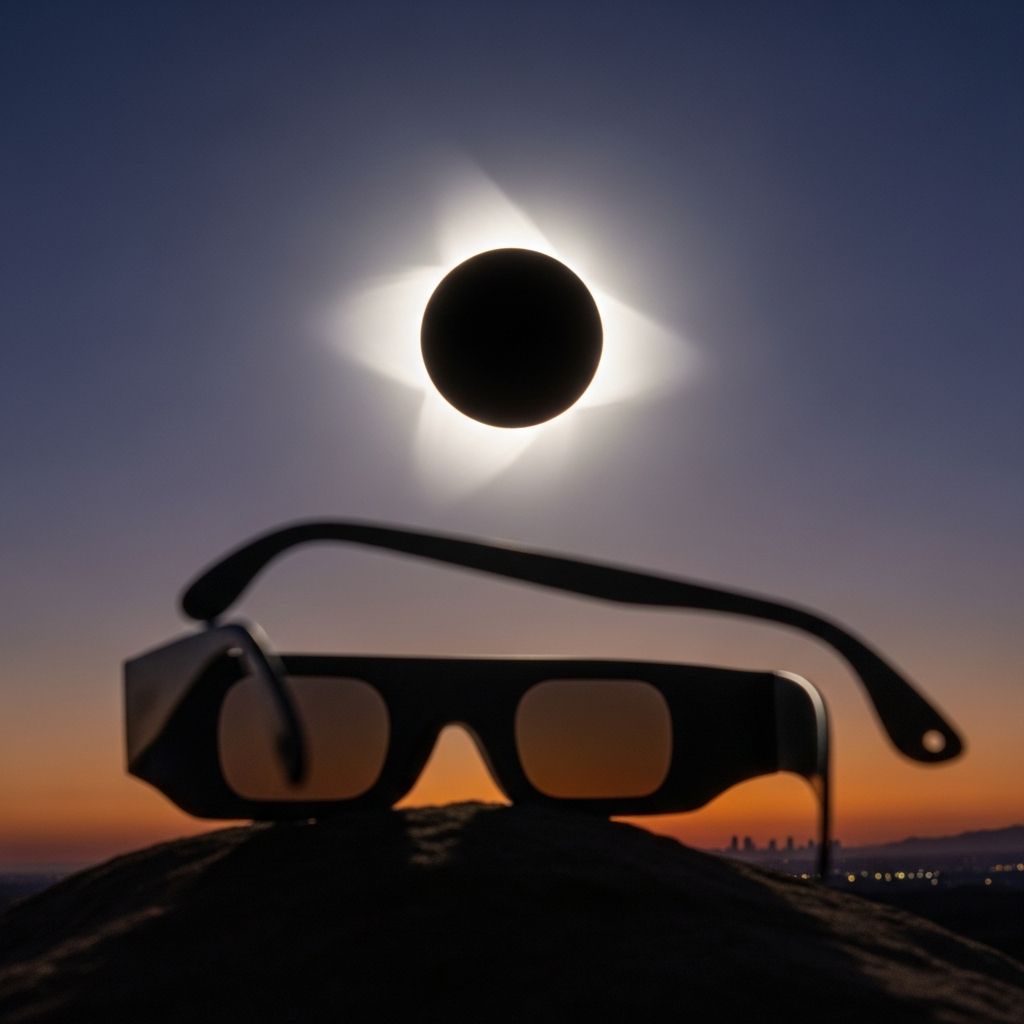
A solar eclipse represents one of nature’s most captivating astronomical events, drawing millions of observers eager to witness the Moon’s passage between the Earth and Sun. However, this spectacular occurrence poses significant risks to eyesight if proper precautions are not taken. The intense radiation emitted by the Sun can cause permanent and irreversible damage to the retina, potentially leading to vision loss or blindness. Understanding how to observe an eclipse safely is essential for anyone planning to view this natural phenomenon.
Understanding the Risks: Why Solar Eclipses Threaten Eye Health
The fundamental danger posed by solar eclipses stems from the Sun’s powerful energy output. Even when the Moon obscures most of the Sun’s disk during a partial eclipse, the remaining visible portion emits sufficient radiation to cause serious ocular damage. The retina, which contains specialized light-sensitive cells responsible for vision, lacks pain receptors. This anatomical feature means that damage occurs silently—individuals may not immediately recognize they have suffered an injury, and symptoms might not become apparent for hours after exposure.
The condition resulting from improper eclipse viewing is called solar retinopathy, which involves burning of the retina’s light-sensing tissue. This damage can be permanent, causing lasting vision impairment or complete blindness. Individuals of all ages are susceptible, though children and young adults face heightened risk due to their eyes’ increased sensitivity to visible and near-infrared radiation.
A critical misconception many people hold is that extensive Sun blockage by the Moon makes viewing safe without protection. However, even when 99.9 percent of the Sun is obscured, the remaining crescent emits dangerous radiation that can cause injury. The only exception occurs during the brief period of totality in a total solar eclipse, when the Moon completely blocks the Sun’s bright face for approximately two minutes.
Certified Solar Filters: The Gold Standard for Protection
The safest method for viewing a solar eclipse involves using special-purpose solar filters specifically designed for this application. These filters must comply with the ISO 12312-2 international standard, which ensures they block 99.99968 percent of the Sun’s light and provide adequate protection.
Eclipse Glasses
Eclipse glasses represent the most accessible and widely available form of solar protection. These devices function through lenses coated with aluminized Mylar, which filters dangerous radiation while allowing safe viewing of the eclipse. When shopping for eclipse glasses, consumers should seek the ISO 12312-2 certification insignia on the packaging or frames. Four manufacturers have achieved official certification for their eclipse glasses and handheld solar viewers: Rainbow Symphony, American Paper Optics, Thousand Oaks Optics, and TSE 17.
Before each use, eclipse glasses must be inspected for damage. Scratches, punctures, tears, or warping indicate the filter has been compromised and should be discarded immediately. Even minor damage can allow concentrated solar rays to reach the eye, causing instant and severe injury.
Handheld Solar Viewers
Similar to eclipse glasses, handheld solar viewers employ the same filtering technology and must meet identical ISO 12312-2 standards. These devices offer an alternative viewing method and may appeal to those who prefer not to wear glasses. Like eclipse glasses, they require inspection before use and replacement if damaged.
Welder’s Glass Alternative
Shade #14 welder’s glass provides another viable option for safe eclipse viewing. This industrial safety equipment, though originally designed for metalworking, offers sufficient solar protection when used for eclipse observation. Welder’s glass is often more affordable and durable than disposable eclipse glasses.
Related Stories



What NOT to Use: Common Safety Mistakes
Numerous viewing methods may seem reasonable but provide inadequate protection and should be avoided entirely.
Ordinary Sunglasses and Homemade Filters
Regular sunglasses, regardless of darkness level, fail to provide sufficient protection. While sunglasses block visible light to reduce glare, they do not filter the dangerous infrared radiation that causes retinal damage. Homemade filters constructed from everyday materials like colored film, neutral density filters, smoked glass, or photographic negatives offer similarly inadequate protection.
Optical Devices Without Proper Solar Filters
Attempting to view a solar eclipse through cameras, telescopes, binoculars, or other optical instruments without specialized solar filters attached to the front of the device causes instant and severe eye injury. These devices concentrate solar rays, intensifying the radiation that reaches the retina. The concentrated beam can destroy the eye’s internal structures before any protective reflex can occur.
Critically, wearing eclipse glasses while using an unfiltered optical device provides no protection. The concentrated rays will penetrate the eclipse glass filter, rendering it ineffective. If photography or telescopic observation is desired, qualified astronomers or astrophotographers should be consulted to ensure proper solar filters are installed on the front of the optical equipment.
Viewing Methods for Different Eclipse Types
Partial and Annular Eclipses
During partial eclipses and annular eclipses (where the Moon is farther from Earth and doesn’t completely block the Sun), direct solar protection must be worn at all times while viewing. There is no safe moment to view without eclipse glasses or certified solar viewers throughout these eclipse types.
Total Solar Eclipses
Total solar eclipses present a unique viewing circumstance. During the brief period of totality, when the Moon completely blocks the Sun’s bright face, it becomes safe to view the eclipse without protective equipment. However, this window is brief, lasting roughly two minutes or less. The moment the Sun’s edge becomes visible again, eclipse glasses must be immediately replaced. For those outside the narrow path of totality, the eclipse remains partial throughout, requiring continuous protection.
Indirect Viewing Techniques
Those without access to eclipse glasses can safely observe the eclipse using indirect viewing methods that do not require looking directly at the Sun.
Pinhole Projector Method
A pinhole projector represents one of the simplest and most accessible indirect viewing techniques. This device can be constructed from basic materials: two sheets of white paper and a pin. One sheet receives a small hole created by the pin, through which sunlight passes. The second sheet, held at a distance below the first, displays a projection of the eclipsed Sun. This method requires no special equipment and poses no eye safety risks.
Other Projection Techniques
Additional indirect methods include using a colander, tree leaves, or observing the eclipse’s shadow patterns on the ground through natural phenomena. These approaches allow eclipse observation while directing attention away from the Sun itself.
Special Considerations for Supervising Children
Children require extra attention during eclipse viewing. Parents and guardians must ensure that children use eclipse glasses correctly, keeping them in place and not removing them to look directly at the Sun. Supervision becomes particularly important because children may not understand or appreciate the dangers involved and might be tempted to look away from proper equipment or experiment with unsafe viewing methods.
Establishing clear rules before the eclipse occurs—such as keeping glasses on at all times during partial phases and not attempting any improvised viewing—helps prevent accidental injury. Teaching children why protection is necessary increases compliance and safety awareness.
Preparation and Pre-Eclipse Planning
Proper preparation before eclipse day significantly reduces injury risk.
- Purchase early: Obtain eclipse glasses well in advance, as inventory often becomes scarce as eclipse dates approach.
- Verify certification: Confirm ISO 12312-2 certification on packaging or contact manufacturers directly.
- Inspect thoroughly: Check all filters for damage before the eclipse occurs, not just minutes before viewing.
- Read instructions: Familiarize yourself with proper usage and any specific manufacturer guidelines.
- Plan viewing location: Identify a safe location with good viewing conditions and minimal distractions.
- Have backup supplies: Prepare extra eclipse glasses in case some are damaged or lost.
Frequently Asked Questions About Eclipse Eye Safety
Q: Is it safe to look at the sun through a regular camera using eclipse glasses?
A: No. Never use eclipse glasses while looking through cameras, binoculars, or telescopes. These devices concentrate solar rays that will burn through the eclipse glass filter and cause serious eye injury. Only specialized solar filters attached to the front of optical devices provide protection when using such equipment.
Q: How can I tell if my eclipse glasses are damaged?
A: Inspect glasses for scratches, punctures, tears, wrinkles, or loose lenses. If any damage is visible, discard the glasses immediately. Even minor imperfections compromise the filter’s ability to protect your eyes.
Q: Can I view a partial eclipse for just a few seconds without protection?
A: No. Even brief unprotected viewing of a partial eclipse can cause permanent retinal damage. The danger exists throughout any partial or annular eclipse phase, with no safe duration for unprotected viewing.
Q: What should I do if I experience eye discomfort or vision changes after viewing an eclipse?
A: Seek immediate medical attention from an eye care professional. Describe your eclipse viewing activities and any protection used. Prompt professional evaluation is important because retinal damage may not cause immediate symptoms.
Q: Are all ISO 12312-2 certified eclipse glasses equally safe?
A: Yes, all ISO 12312-2 certified products meet the same rigorous safety standards. While NASA does not endorse any particular brand, any product displaying ISO 12312-2 certification provides equivalent protection.
The Bottom Line on Eclipse Safety
Solar eclipses offer remarkable opportunities to witness extraordinary astronomical phenomena. However, this experience requires genuine commitment to safety protocols. Using certified eclipse glasses, avoiding unfiltered optical devices, supervising children, and understanding the specific risks associated with different eclipse types form the foundation of safe viewing practices.
The consequences of improper eclipse viewing—permanent vision loss or blindness—far exceed any benefit of unprotected observation. By following established safety guidelines and taking reasonable precautions, millions can safely enjoy solar eclipses while preserving their vision for a lifetime of future experiences.
References
- Safely View a Solar Eclipse — National Safety Council. Accessed February 2026. https://www.nsc.org/community-safety/safety-topics/seasonal-safety/how-to-watch-a-solar-eclipse
- Eclipse Viewing Safety — NASA Science. Accessed February 2026. https://science.nasa.gov/eclipses/safety/
- Solar Eclipse Safety — Anne Arundel County Health Department. Accessed February 2026. https://www.aahealth.org/news/solar-eclipse-safety
- Eclipse Safety — National Eclipse. Accessed February 2026. https://nationaleclipse.com/safety.html
- 5 Tips for Safely Viewing the Great American Solar Eclipse — Texas Children’s Hospital. Accessed February 2026. https://www.texaschildrens.org/content/wellness/5-tips-safely-viewing-great-american-solar-eclipse
- Eye Experts Remind Public to Take Safety Precautions When Viewing Solar Eclipse — American Journal of Managed Care. Accessed February 2026. https://www.ajmc.com/view/eye-experts-remind-public-to-take-safety-precautions-when-viewing-solar-eclipse
Similar Articles








Read full bio of Sneha Tete