Somatic Nervous System: What It Is & Function
Understanding the somatic nervous system: your body's control center for movement and sensation.
Understanding the Somatic Nervous System: What It Is and How It Functions
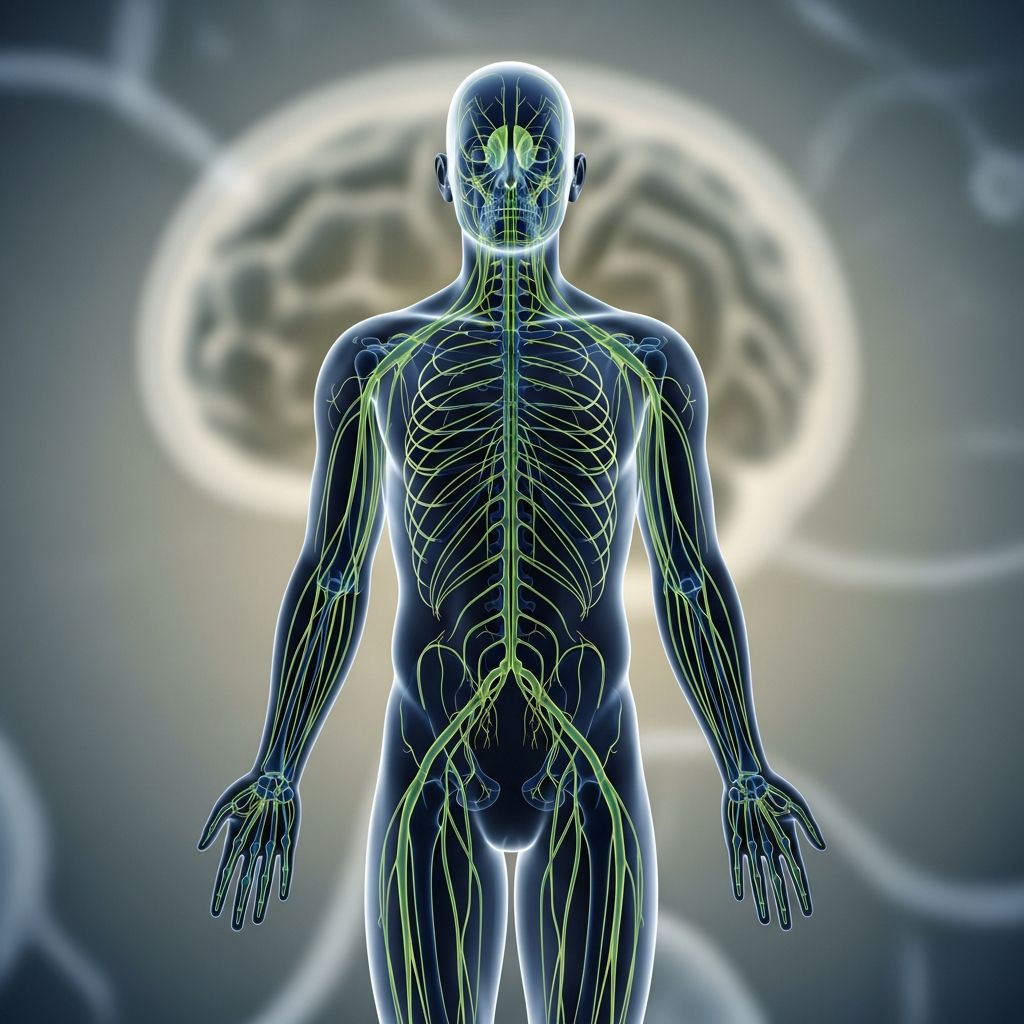
Your somatic nervous system is a vital component of your body’s communication network, enabling you to interact with your environment and control your movements. This specialized subdivision of your peripheral nervous system stretches throughout nearly every part of your body, delivering crucial information from your senses to your brain while simultaneously carrying commands from your brain to your muscles. Unlike systems that operate automatically in the background, your somatic nervous system involves conscious processes that you can perceive and control, making it essential for your daily functioning and quality of life.
What Is the Somatic Nervous System?
The somatic nervous system is a division of your peripheral nervous system, which encompasses all of the nervous tissue in your body except your brain and spinal cord. Think of your nervous system as a massive communication network with three main divisions: the central nervous system (comprising your brain and spinal cord), the peripheral nervous system (all nerves outside the brain and spinal cord), and within the peripheral nervous system, two distinct subdivisions known as the somatic and autonomic nervous systems.
What distinguishes the somatic nervous system from other parts of your nervous system is its conscious nature. While your autonomic nervous system runs behind-the-scenes processes that keep you alive—such as regulating your heart rate, digestion, and breathing—your somatic nervous system handles processes you can consciously sense and deliberately control. This makes it fundamentally different from automatic bodily functions, as you can decide to move your arm, feel pain when you touch something hot, or taste your food.
The Two Main Functions of Your Somatic Nervous System
Your somatic nervous system performs two critical and complementary functions that work together to keep you connected to and in control of your physical world:
Sensory Input: Gathering Information
The first major function involves collecting sensory information from your environment and body. Your somatic nervous system gathers data from four of your five senses: smell, sound, taste, and touch. These sensory nerves act as your body’s information collectors, continuously scanning your surroundings and internal state, then transmitting this information up to your brain where it’s processed and interpreted. When you smell freshly baked cookies, hear a friend’s voice, taste salt on your lips, or feel the texture of different fabrics, your somatic nervous system is the pathway that delivers these sensations to your conscious awareness.
Motor Control: Executing Movement
The second major function is motor control—your ability to move and manipulate your body. Motor nerves in your somatic nervous system carry commands from your brain down to your muscles, allowing you to consciously control voluntary movements. Whether you’re walking, typing, picking up an object, or gesturing while talking, these actions are all coordinated through your somatic nervous system. This system gives you the ability to respond to your environment intentionally and purposefully, translating your conscious decisions into physical action.
How Your Somatic Nervous System Is Organized
Your somatic nervous system spreads outward from your brain and spinal cord through a highly organized network of nerves, each serving specific regions and functions of your body.
Related Stories



Cranial Nerves: The Head and Neck Connection
In your head and neck region, your somatic nervous system operates through cranial nerves. You have 12 pairs of cranial nerves, each identified by Roman numerals (CN I through CN XII), and 11 of these 12 pairs have connections that are part of your somatic nervous system. One exception is cranial nerve II, which connects to your eyes and is technically considered part of your brain itself rather than your somatic nervous system. These cranial nerves handle sensory input from your face, head, and neck, as well as motor control for the muscles in these regions.
Spinal Nerves: The Body-Wide Network
Extending further down your body, your somatic nervous system has connections in all 31 spinal nerves that branch out from your spinal cord. These spinal nerves are the major highways of your somatic nervous system, carrying both sensory information up to your brain and motor commands down from your brain. As these nerves branch and spread throughout your body, they eventually become the individual nerves that reach nearly every part of you, from your fingertips to your toes.
Sensory and Motor Nerve Pathways
Within your somatic nervous system, nerves are categorized by their function. Sensory nerves conduct information in one direction only: from your body up to your brain. These nerves transmit data about pain, temperature, pressure, and proprioception (your body’s sense of where it is in space). Motor nerves also conduct information in one direction: from your brain down to your muscles. These nerves carry the signals that tell your muscles to contract, enabling conscious movement and control.
Somatic Nervous System and Referred Pain
While your somatic nervous system handles sensory input from your muscles, skin, and joints, its role with your internal organs is more limited. For most of your internal organs, your somatic nervous system primarily helps communicate pain through a phenomenon called referred pain. This occurs when you feel pain in one area of your body, but the pain is actually originating from a problem in a nearby location. The classic example is pain from a heart attack, which is often felt in your left arm, back, jaw, or abdomen rather than directly in the heart itself. Understanding referred pain helps explain why sometimes the source of your discomfort isn’t located where you feel the pain.
Conditions and Disorders Affecting the Somatic Nervous System
Because your somatic nervous system is part of your peripheral nervous system, it’s susceptible to conditions that cause peripheral neuropathy—disease or damage to your peripheral nervous system. These conditions can range from common disorders to rare neurological diseases:
Common Conditions Include:
– Diabetes and diabetic neuropathy- Vitamin B12 deficiency- Infections such as shingles or Lyme disease- Autoimmune disorders like lupus or rheumatoid arthritis- Chemotherapy and other medications- Traumatic injuries to nerves- Alcohol use disorder- Multiple sclerosis- Parkinson’s disease
Recognizing Symptoms of Somatic Nervous System Problems
The symptoms of somatic nervous system disorders vary significantly depending on which types of nerves are affected. Identifying these symptoms early can lead to faster diagnosis and more effective treatment.
Symptoms of Motor Nerve Damage
When motor nerves are damaged, your muscles lose the ability to receive proper commands from your brain. This typically results in:
– Weakness or paralysis in affected areas- Muscle atrophy (wasting)- Loss of fine motor control- Difficulty with coordination- Involuntary muscle twitching or tremors- Difficulty with basic movements or activities of daily living
Symptoms of Sensory Nerve Damage
Damage to sensory nerves impairs your ability to feel and perceive your environment, causing:
– Numbness or reduced sensation- Tingling or “pins and needles” sensation (paresthesia)- Heightened sensitivity to pain or touch- Loss of temperature sensation- Difficulty detecting vibration or proprioception- Increased risk of injury due to inability to feel pain- Burning sensations, especially in the feet and hands
Diagnosing Somatic Nervous System Disorders
Healthcare providers use several diagnostic approaches to identify problems affecting your somatic nervous system. The evaluation process typically begins with a thorough assessment and may include multiple specialized tests.
Neurological Examination
The most common starting point is a comprehensive neurological exam. During this evaluation, your healthcare provider will ask you to use different parts of your body—particularly your arms, hands, legs, and feet—in specific ways. This allows them to assess strength, coordination, sensation, and reflexes, helping them narrow down the source of problems to particular nerves, spinal cord regions, or brain areas.
Additional Diagnostic Tests
Beyond the basic neurological exam, physicians may employ several other tests to get a clearer picture of what’s affecting your somatic nervous system:
– Electromyography (EMG) to measure muscle electrical activity- Nerve conduction studies to assess how quickly nerves transmit signals- MRI or CT imaging to visualize nerve damage or compression- Blood tests to identify underlying conditions- Lumbar puncture to analyze cerebrospinal fluid- Nerve biopsy in select cases- Skin biopsy to assess small nerve fibers
Treatment Approaches for Somatic Nervous System Disorders
Treatment for somatic nervous system problems is highly individualized and depends on the underlying cause, associated conditions, and your specific symptoms. In many cases, treating the underlying cause can substantially relieve the effects on the somatic nervous system.
Potential Treatment Options
– Managing underlying conditions (such as diabetes control)- Medications to relieve pain or reduce symptoms- Physical therapy and rehabilitation exercises- Occupational therapy for functional improvement- Nutritional supplementation when deficiencies exist- Lifestyle modifications and stress reduction- Assistive devices to compensate for lost function- Surgery in cases of nerve compression or injury- Regenerative medicine approaches in select cases
Prevention and Risk Reduction Strategies
Many conditions affecting your somatic nervous system are preventable or can have their severity limited through proactive measures. While some conditions cannot be completely prevented, you can often delay their onset or minimize their impact through lifestyle choices and preventive care.
Protective Measures Include:
– Maintaining tight blood sugar control if diabetic- Eating a balanced diet rich in B vitamins- Limiting alcohol consumption- Managing stress effectively- Regular exercise and physical activity- Protecting yourself from injuries- Getting vaccinated against preventable infections- Taking medications as prescribed- Avoiding repetitive strain injuries- Maintaining healthy body weight- Regular health screenings and check-ups
The Somatic Nervous System and Your Quality of Life
Your somatic nervous system is fundamental to your independence, mobility, and ability to experience and enjoy the world. When it functions properly, you can move freely, feel sensations that warn you of danger, and interact meaningfully with your environment. Understanding how this system works and recognizing warning signs of problems can help you take preventive action and seek appropriate care when needed. Regular consultation with healthcare providers, maintaining healthy habits, and staying aware of changes in your sensation or movement can all contribute to preserving somatic nervous system health throughout your life.
Frequently Asked Questions About the Somatic Nervous System
Q: What is the main difference between the somatic and autonomic nervous systems?
A: The somatic nervous system controls voluntary, conscious movements and carries sensory information you’re aware of, while the autonomic nervous system automatically regulates involuntary functions like heart rate, digestion, and breathing without your conscious awareness.
Q: Can somatic nervous system damage be reversed?
A: Reversibility depends on the cause and severity of damage. Some conditions respond well to treatment, especially when the underlying cause is addressed promptly, while others may result in permanent changes requiring adaptive strategies and management.
Q: How many nerves are in the somatic nervous system?
A: The somatic nervous system includes 11 of the 12 cranial nerve pairs and all 31 spinal nerve pairs, plus their branches extending throughout your body—totaling thousands of individual nerve fibers that form an intricate network.
Q: What should I do if I experience numbness or weakness?
A: Contact your healthcare provider for evaluation. These symptoms warrant professional assessment through a neurological exam and possibly additional tests to determine the cause and appropriate treatment.
Q: Can lifestyle changes help protect my somatic nervous system?
A: Yes, maintaining good overall health through balanced nutrition, regular exercise, stress management, avoiding alcohol abuse, and managing chronic conditions like diabetes can significantly protect your somatic nervous system health.
References
- Somatic Nervous System: What It Is & Function — Cleveland Clinic. 2024. https://my.clevelandclinic.org/health/body/23291-somatic-nervous-system
- Peripheral Nervous System (PNS): What It Is & Function — Cleveland Clinic. 2024. https://my.clevelandclinic.org/health/body/23123-peripheral-nervous-system-pns
- Central Sensitization, Chronic Pain, and Other Symptoms — Cleveland Clinic Journal of Medicine, Vol. 90, No. 4. 2023. https://www.ccjm.org/content/90/4/245
- Nervous System: What It Is, Parts, Function & Disorders — Cleveland Clinic. 2024. https://my.clevelandclinic.org/health/body/21202-nervous-system
- Autonomic Nervous System: What It Is, Function & Disorders — Cleveland Clinic. 2024. https://my.clevelandclinic.org/health/body/23273-autonomic-nervous-system
Similar Articles








Read full bio of Sneha Tete