Somatostatin: Functions, Effects, and Clinical Importance
Understanding somatostatin’s role in hormone regulation, gastrointestinal function, and disease management.
What Is Somatostatin?
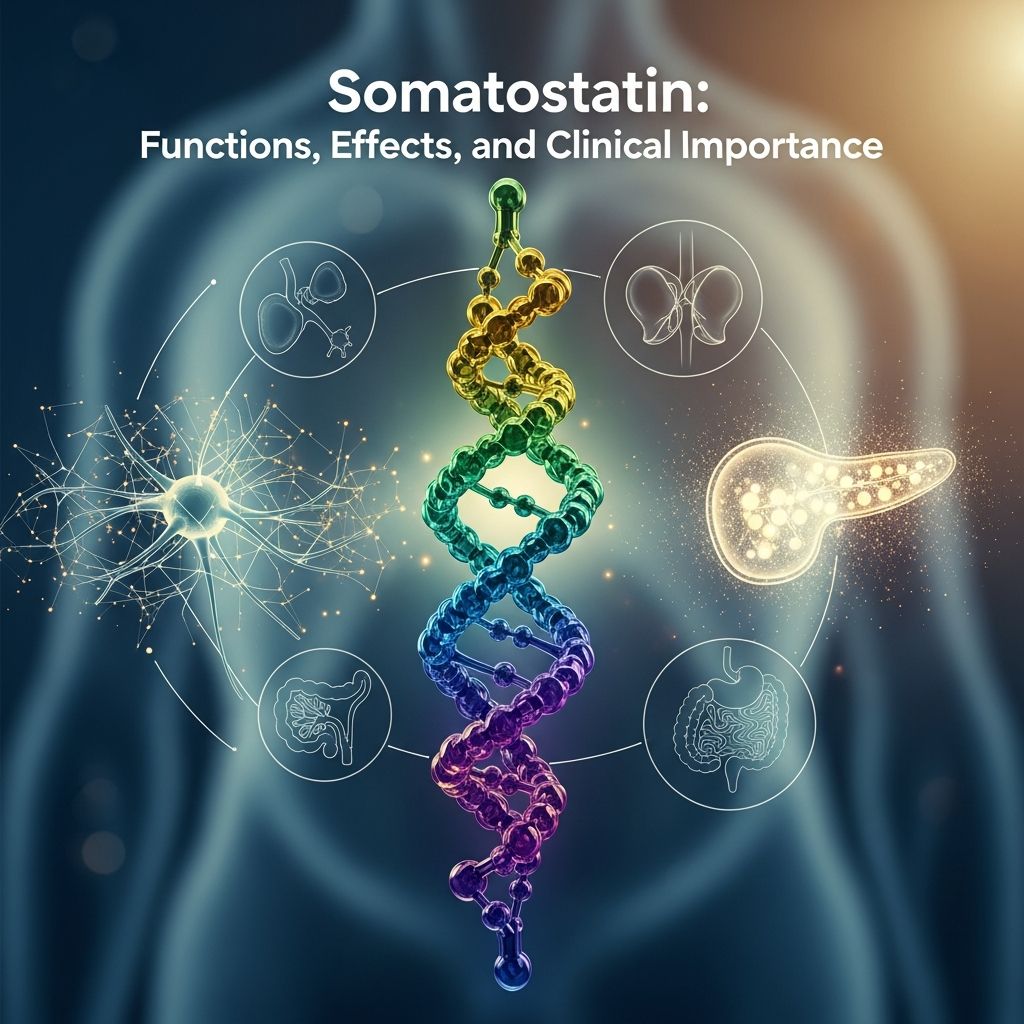
Somatostatin is a hormone that plays a crucial role in regulating various bodily functions. It is produced in several tissues, including the hypothalamus, pancreas, and gastrointestinal tract. Somatostatin exists in two forms: one composed of 14 amino acids and another composed of 28 amino acids. The name somatostatin, meaning “stagnation of a body,” was coined when researchers discovered that an extract of hypothalamic tissues inhibited the release of growth hormone from the pituitary gland. Since then, somatostatin has been found to be widely distributed throughout the central nervous system and other tissues.
Functions of Somatostatin
Somatostatin is an important hormone that works to inhibit the release of other hormones. It also regulates the activity of the gastrointestinal tract and prevents the rapid reproduction of cells. Here are some of the key functions of somatostatin:
- Hormone Regulation: Somatostatin inhibits the release of various hormones, including growth hormone, insulin, glucagon, thyroid-stimulating hormone (TSH), and others. This helps maintain hormonal balance in the body.
- Gastrointestinal Function: Somatostatin regulates the activity of the gastrointestinal tract by inhibiting the secretion of digestive enzymes, acid, and other gastrointestinal hormones. This helps control digestion and nutrient absorption.
- Cell Growth Control: Somatostatin stops the unnatural rapid reproduction of cells, which can help prevent the formation of tumors.
- Neurotransmitter Role: Somatostatin acts as a neurotransmitter in the central nervous system, affecting the activity of neurons and other cells.
Endocrine and Exocrine Systems
Somatostatin works in both the endocrine and exocrine systems. The endocrine system consists of glands that release hormones directly into the bloodstream, such as the thyroid, pituitary gland, and adrenal glands. The exocrine system consists of glands that release substances through a duct, such as salivary glands, sweat glands, and glands within the gastrointestinal tract. Somatostatin helps regulate the activity of both systems by inhibiting the release of hormones and secretions when they are not needed.
Clinical Uses of Somatostatin
Healthcare providers use a synthetic form of somatostatin to treat certain health conditions. Some of the clinical uses of somatostatin include:
- Treatment of Acromegaly: Somatostatin analogs are used to control the excessive production of growth hormone in patients with acromegaly.
- Management of Neuroendocrine Tumors: Somatostatin analogs are used to manage symptoms and control hormone secretion in patients with neuroendocrine tumors.
- Control of Gastrointestinal Bleeding: Somatostatin analogs can be used to control bleeding in the gastrointestinal tract.
- Diagnosis of Somatostatinoma: Somatostatinoma is a rare tumor that secretes excess somatostatin. Diagnosis involves measuring somatostatin levels and identifying the presence of a tumor.
Somatostatinoma
Somatostatinoma is a rare tumor that can occur randomly or in association with certain genetic syndromes. Excess somatostatin results in an extreme reduction of the release of many other endocrine hormones. Symptoms of somatostatinoma can be similar to those of many other conditions, making it difficult to diagnose. Common symptoms include:
- Diabetes mellitus
- Weight loss
- Diarrhea
- Gallstones
- Abdominal pain
If a member of your family has been diagnosed with an inherited condition that puts them at risk for developing a somatostatinoma, it is important to inform your healthcare provider. They can run tests to determine if you are also at risk.
Related Stories



Low Levels of Somatostatin
There are very few reports of someone having lower-than-normal levels of somatostatin. Issues with somatostatin and somatostatinomas are rare. However, if you suspect a problem with somatostatin levels, it is important to consult a healthcare provider for proper evaluation and management.
FAQs
Q: What is the primary function of somatostatin?
A: The primary function of somatostatin is to inhibit the release of other hormones and regulate the activity of the gastrointestinal tract.
Q: How does somatostatin affect the endocrine system?
A: Somatostatin inhibits the release of various hormones from endocrine glands, helping to maintain hormonal balance.
Q: What are the symptoms of somatostatinoma?
A: Symptoms of somatostatinoma include diabetes mellitus, weight loss, diarrhea, gallstones, and abdominal pain.
Q: Can somatostatin be used to treat other conditions?
A: Yes, somatostatin analogs are used to treat conditions such as acromegaly, neuroendocrine tumors, and gastrointestinal bleeding.
Q: Are there any risks associated with somatostatin therapy?
A: Somatostatin therapy is generally safe, but it can cause side effects such as nausea, diarrhea, and gallstones. It is important to follow the guidance of a healthcare provider.
References
References
- Somatostatin: What It Is, Function & Symptoms — Cleveland Clinic. 2023. https://my.clevelandclinic.org/health/articles/22856-somatostatin
- Somatostatin | Hormone Regulation, Neuroendocrine — Britannica. 2023. https://www.britannica.com/science/somatostatin
- Acromegaly: a clinical perspective — PMC – NIH. 2020. https://pmc.ncbi.nlm.nih.gov/articles/PMC7441684/
Similar Articles








Read full bio of Sneha Tete