Sorafenib Tablets (Nexavar): Dosage, Side Effects, Monitoring
Comprehensive guide to Sorafenib (Nexavar) for treating advanced kidney, liver, and thyroid cancers effectively.
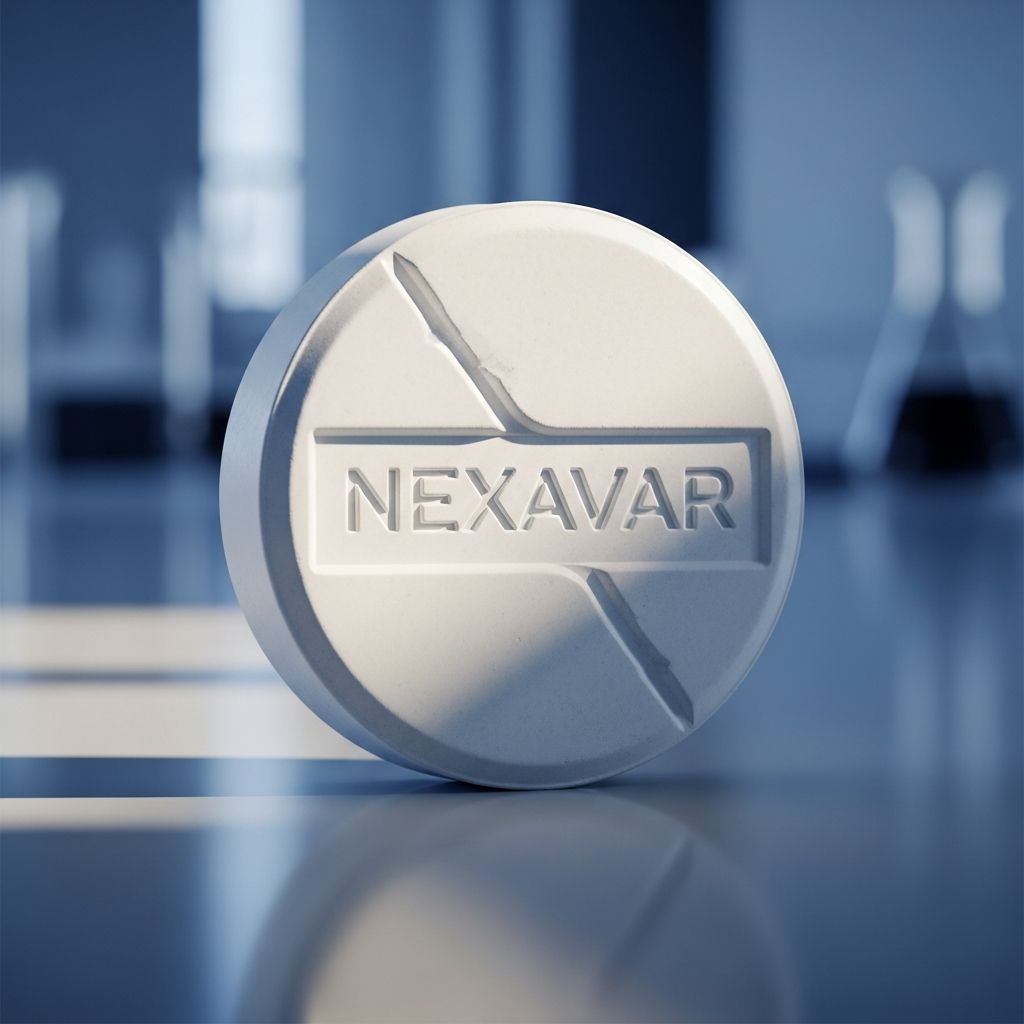
Sorafenib, marketed as Nexavar, is an oral kinase inhibitor medication primarily used to treat certain advanced forms of cancer, including kidney, liver, and thyroid cancers. It works by blocking specific enzymes that promote cancer cell growth and tumor blood vessel formation, helping to slow disease progression and improve survival in patients with unresectable or metastatic disease.
About Sorafenib Tablets
Sorafenib tablets, known by the brand name Nexavar, contain the active ingredient sorafenib tosylate, available in 200 mg strength. Developed by Bayer, this medication belongs to a class of drugs called multikinase inhibitors. These targeted therapies selectively block multiple protein kinases involved in cancer cell proliferation and angiogenesis—the formation of new blood vessels that feed tumors.
The mechanism of action is dual: sorafenib inhibits RAF kinases to slow tumor cell division and targets vascular endothelial growth factor receptors (VEGFR) and platelet-derived growth factor receptors (PDGFR) to disrupt the tumor’s blood supply. This approach minimizes damage to healthy cells compared to traditional chemotherapy.
Approved by regulatory bodies like the European Medicines Agency (EMA) and U.S. Food and Drug Administration (FDA), Nexavar is indicated for patients when surgery or other standard treatments are no longer viable options.
Before taking sorafenib tablets
Understanding when sorafenib is prescribed
Sorafenib is prescribed for advanced cancers where curative treatments are unavailable. Key indications include:
- Unresectable hepatocellular carcinoma (HCC): Primary liver cancer that cannot be surgically removed.
- Advanced renal cell carcinoma (RCC): Kidney cancer that has spread or is inoperable.
- Radioactive iodine-refractory differentiated thyroid carcinoma (DTC): Thyroid cancer that no longer responds to iodine therapy and is progressive.
Clinical evidence supports its use: In the SHARP trial for HCC (602 patients), median survival was 10.7 months with sorafenib versus 7.9 months with placebo. For RCC (903 patients), progression-free survival was 5.5 months versus 2.8 months. The DECISION trial for DTC (417 patients) showed 10.8 months versus 5.8 months.
Allergies and medical history considerations
Do not take sorafenib if you have a known allergy to sorafenib or any ingredients in Nexavar tablets. Inform your doctor about your full medical history, especially:
- Heart conditions, high blood pressure, or bleeding disorders, as sorafenib increases cardiovascular risks.
- Liver or kidney impairment, due to potential for drug-induced liver injury.
- Recent bleeding events or use of anticoagulants.
- Pregnancy or breastfeeding—sorafenib can harm the fetus and is excreted in milk.
Other medicines, alcohol, and pregnancy
Sorafenib interacts with many drugs, including CYP3A4 inducers (e.g., rifampin, St. John’s wort) that reduce its effectiveness, and CYP2B6 or CYP2C8 substrates. Avoid grapefruit products, which inhibit metabolism. Inform your doctor of all medications, including over-the-counter and herbal supplements.
Related Stories



Limit alcohol, as it may exacerbate liver side effects in HCC patients. Sorafenib is contraindicated in pregnancy (Category D); use effective contraception during treatment and for at least 2 weeks after. Men should use condoms. Breastfeeding is not recommended.
Babies, children, and adolescents
Safety and efficacy in children under 18 have not been established. Sorafenib is not recommended for pediatric use outside clinical trials.
How and when to take sorafenib tablets
Dosage instructions
The standard adult dose is 400 mg twice daily (two 200 mg tablets in the morning and two in the evening), totaling 800 mg per day. Take consistently at the same times each day.
| Patient Group | Recommended Dose | Frequency |
|---|---|---|
| Adults | 400 mg (2 x 200 mg tablets) | Twice daily |
| Dose reduction for side effects | 400 mg once daily or 400 mg every other day | As tolerated |
Your doctor may reduce the dose or interrupt treatment based on side effects or response.
Administration tips
- Swallow tablets whole with a full glass of water.
- Take on an empty stomach: at least 1 hour before or 2 hours after meals to optimize absorption.
- If vomiting occurs soon after dosing, do not take an extra dose; resume the next scheduled dose.
- Miss a dose? Take it as soon as remembered unless close to the next dose. Never double up.
Duration of treatment
Treatment continues until disease progression, unacceptable toxicity, or as advised by your oncologist. Long-term use is common in responsive patients, with real-world HCC survival averaging 8.5 months.
Dosage adjustments and monitoring
Regular monitoring is essential:
- Blood pressure: Check weekly initially, then monthly; hypertension occurs in up to 40% of patients.
- Liver function tests: Monitor transaminases, bilirubin; discontinue if severe injury occurs.
- Thyroid function: Hypothyroidism is common; test TSH regularly.
- ECG and electrolytes: For cardiac risks and hypokalemia/phosphatemia.
Dose modifications: Reduce to 400 mg daily or 400 mg every other day for moderate side effects; permanent discontinuation for life-threatening events.
Side effects of sorafenib tablets
Most side effects are manageable and decrease over time. Common ones (affecting >20%):
- Hand-foot skin reaction: Painful redness, blisters on palms/soles—use moisturizers, avoid hot water.
- Diarrhea: Up to 50%; treat with loperamide.
- Fatigue and weight loss: Stay hydrated, eat nutrient-rich foods.
- Rash, hair thinning, hypertension.
Serious risks (report immediately):
- Cardiac ischemia (2.9% vs. 0.4% placebo), bleeding, liver failure.
- QT prolongation, wound healing complications.
Managing side effects
- Skin issues: Urea-based creams, dose reduction.
- GI upset: Antidiarrheals, antiemetics.
- Hypertension: Antihypertensives like ACE inhibitors.
- Contact your doctor for persistent or severe symptoms.
Common questions about sorafenib tablets
Q: How does sorafenib work?
A: It inhibits multiple kinases (RAF, VEGFR, PDGFR), blocking cancer cell growth and tumor angiogenesis.
Q: What cancers does it treat?
A: Unresectable HCC, advanced RCC, and iodine-refractory DTC.
Q: How should I take it?
A: 400 mg twice daily on an empty stomach.
Q: What are the main side effects?
A: Hand-foot reaction, diarrhea, fatigue, hypertension—most are manageable.
Q: Can I take it with food?
A: No, take 1 hour before or 2 hours after meals for best absorption.
Q: Is sorafenib curative?
A: No, it slows progression and extends survival but does not cure cancer.
This article provides detailed, patient-focused information on sorafenib (Nexavar), drawing from clinical data and guidelines. Always consult your healthcare provider for personalized advice. Treatment decisions should consider individual health status and ongoing monitoring.
References
- Nexavar | European Medicines Agency (EMA) — EMA. 2023. https://www.ema.europa.eu/en/medicines/human/EPAR/nexavar
- Sorafenib (Nexavar): What patients need to know? — OncoDaily. 2024. https://oncodaily.com/drugs/sorafenib-nexavar-patient-version
- Sorafenib (Nexavar®) — OncoLink. 2024. https://www.oncolink.org/cancer-treatment/oncolink-rx/sorafenib-nexavar-R
- PharmGKB summary: Sorafenib Pathways — PMC – NIH. 2017-05-19. https://pmc.ncbi.nlm.nih.gov/articles/PMC5418090/
- NEXAVAR (sorafenib) tablets, for oral use — FDA. 2018. https://www.accessdata.fda.gov/drugsatfda_docs/label/2018/021923s020lbl.pdf
- Sorafenib (oral route) — Mayo Clinic. 2024. https://www.mayoclinic.org/drugs-supplements/sorafenib-oral-route/description/drg-20068145
Similar Articles








Read full bio of Sneha Tete