Sourdough Bread: 7 Health Benefits For Digestion, Blood Sugar
Discover how sourdough bread impacts digestion, blood sugar, gut health, and more compared to regular bread.
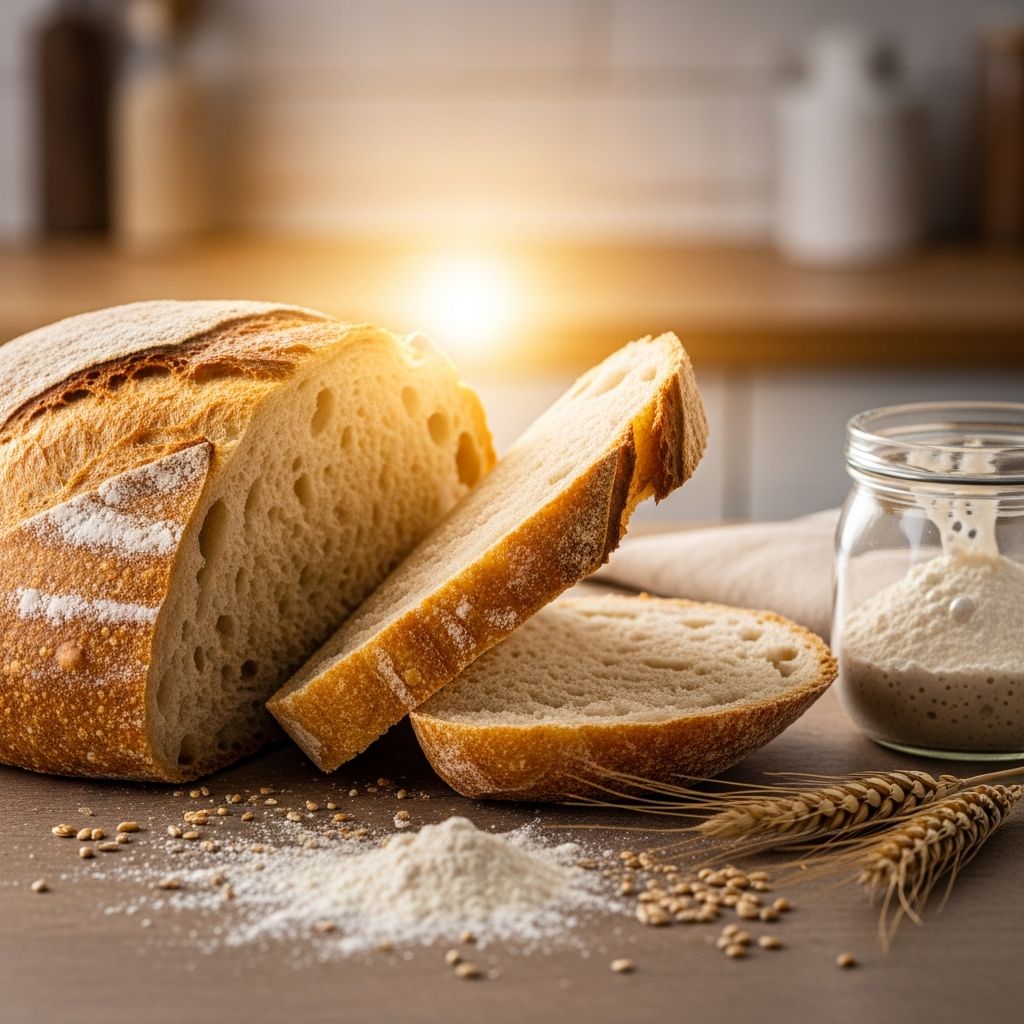
Sourdough bread, fermented naturally with wild yeast and lactic acid bacteria, influences digestion, blood sugar control, nutrient absorption, gut health, and cardiovascular function differently than conventional yeast-leavened bread. This article examines these effects based on scientific evidence.
What Is Sourdough Bread?
Sourdough bread arises from a natural fermentation process using a starter culture of flour and water, capturing wild yeasts and bacteria over days at room temperature. This contrasts with regular bread, which relies on commercial yeast for rapid rising without extended fermentation.
The starter functions as a living microbial community. Yeasts metabolize starches and gluten, producing carbon dioxide for lift and organic acids for flavor and preservation. Bacteria like Lactobacillus generate lactic and acetic acids, lowering pH and enhancing shelf life while altering the bread’s nutritional profile.
Traditional sourdough avoids additives, preservatives, or dough conditioners common in mass-produced bread, yielding a chewier texture, tangy taste, and potentially superior digestibility.
7 Health Benefits of Sourdough Bread
Scientific reviews and clinical studies highlight sourdough’s advantages over yeast bread, particularly in metabolic and gastrointestinal responses.
1. Easier Digestion and Less Bloating
Fermentation predigests complex carbohydrates and gluten proteins, breaking down fructans and other FODMAPs (fermentable oligosaccharides, disaccharides, monosaccharides, and polyols) that trigger bloating and gas. This makes sourdough more tolerable for those with mild gluten sensitivities or irritable bowel syndrome (IBS), though not suitable for celiac disease.
- In healthy subjects, sourdough croissants reduced expired hydrogen (a bloating marker) and subjective discomfort over 240 minutes compared to yeast versions.
- Low-FODMAP sourdough strains decreased gastrointestinal symptoms in IBS patients via visual analog scales.
- Gastric emptying slowed with sourdough, aiding steady digestion without overload.
2. Better Blood Sugar Control
Sourdough’s lower glycemic index stems from organic acids delaying gastric emptying and inhibiting starch-degrading enzymes, leading to slower glucose release.
- Healthy subjects showed significantly lower glucose incremental area under the curve (iAUC) over 120-300 minutes with sourdough versus yeast bread.
- In obese or hyperglycemic individuals, sourdough whole-grain bread reduced glucose iAUC by 180 minutes compared to refined wheat.
- Fermentation converts starch to resistant forms, mimicking fiber for sustained energy.
This benefits diabetes management and insulin resistance, preventing spikes.
3. Improved Nutrient Absorption
Phytic acid in grains binds minerals like iron, zinc, and magnesium, reducing bioavailability. Sourdough phytase enzymes degrade phytates during fermentation, enhancing mineral uptake.
- Studies confirm fermentation releases these minerals, supporting better absorption than unfermented flour.
Zinc aids immunity, magnesium supports muscle function, and iron prevents anemia, amplifying sourdough’s nutritional value.
4. Gut Health Support
Resistant starch from fermentation reaches the colon intact, feeding beneficial bacteria like bifidobacteria and lactobacilli, fostering a balanced microbiome.
- This promotes short-chain fatty acid production, linked to reduced inflammation, stronger immunity, and mental health via the gut-brain axis.
- Sourdough’s prebiotic effects outpace regular bread.
5. Heart Health Support
Whole-grain sourdough’s fiber lowers LDL cholesterol and supports blood pressure. Fermentation may further benefit lipids.
- One trial found whole wheat sourdough reduced total and LDL cholesterol versus white yeast bread.
- Fiber and minerals like magnesium contribute to cardiovascular function.
Related Stories



6. Potential Reduction in Inflammation
Lower FODMAPs and organic acids may curb inflammation markers, though evidence is preliminary. No consistent lipid or inflammatory changes appear across all studies, but trends favor sourdough.
7. Enhanced Satiety
Some trials show sourdough increases fullness and reduces hunger via organic acids and fiber.
- Sourdough crispbread lowered hunger versus refined wheat.
- Einkorn sourdough raised satiety AUC and cut ghrelin versus white bread.
Effects vary by grain type, but fermentation aids portion control.
Sourdough Bread Nutrition Facts
Per 100g slice (whole wheat sourdough):
| Nutrient | Amount | % Daily Value* |
|---|---|---|
| Calories | 289 | 14% |
| Carbs | 56g | 20% |
| Protein | 12g | 24% |
| Fiber | 6g | 21% |
| Fat | 2g | 3% |
| Sodium | 602mg | 26% |
*Based on 2,000-calorie diet. Fermentation boosts mineral bioavailability beyond listed values.
Is Sourdough Bread Healthier Than Regular Bread?
Yes, for most: lower GI, better digestibility, prebiotics, and mineral access make sourdough superior, especially whole-grain versions. Limitations include IBS-specific strains and variable commercial products.
What Makes Sourdough Bread Different From Regular Bread?
| Aspect | Sourdough | Regular Bread |
|---|---|---|
| Leavening | Wild yeast + bacteria starter | Commercial yeast |
| Fermentation | Long (hours-days), natural acids | Short, minimal breakdown |
| Digestibility | High (reduced FODMAPs/gluten) | Lower |
| Glycemic Index | Lower | Higher |
| Additives | Minimal (flour, water, salt) | Often includes dough conditioners |
How to Make Sourdough Bread at Home
- Create Starter: Mix equal flour/water; feed daily for 5-7 days until bubbly.
- Autolyse: Combine 500g flour, 350g water, 10g salt; rest 30 min.
- Mix Dough: Add 100g starter; knead/fold 10 min.
- Bulk Ferment: 4-12 hours at room temp, folding hourly first 2-3.
- Shape: Form loaf; proof 2-4 hours or overnight cold.
- Bake: 450°F Dutch oven, 20 min lid on, 20-25 off.
Store starter refrigerated, feeding weekly.
What To Look for When Buying Sourdough Bread
- True starter (no commercial yeast).
- Whole grains (wheat, rye, spelt).
- Short ingredients: flour, water, salt.
- Low additives; check sodium (<600mg/slice).
- Avoid sweetened or preserved versions.
Frequently Asked Questions (FAQs)
Is sourdough bread gluten-free?
No, fermentation reduces but doesn’t eliminate gluten. Avoid for celiac.
Does sourdough bread spike blood sugar?
Less than regular due to low GI and acids.
Is sourdough good for gut health?
Yes, resistant starch feeds beneficial bacteria.
Can sourdough help with weight loss?
May via satiety, but portion control key.
Is homemade sourdough healthier?
Yes, full fermentation control.
References
- Nutritional benefits of sourdoughs: A systematic review — Arboleya et al., National Library of Medicine. 2023-04-11. https://pmc.ncbi.nlm.nih.gov/articles/PMC10103004/
- Is Sourdough Bread Healthier Than Regular Bread? — University Hospitals. 2025-05-20. https://www.uhhospitals.org/blog/articles/2025/05/is-sourdough-bread-healthier-than-regular-bread
Similar Articles








Read full bio of Sneha Tete