Soy Usefulness And Safety: 5 Science-Backed Health Benefits
Understanding soy's potential health benefits and safety concerns from scientific evidence.
Soy: Usefulness and Safety
Soy products have become increasingly popular in modern diets, particularly among those seeking plant-based protein sources and natural health remedies. As interest in soy consumption has grown, so too has scientific research examining its potential benefits and risks. Understanding what the evidence shows about soy can help consumers make informed dietary choices.
How Much Do We Know?
Extensive research has been conducted on the safety and usefulness of soy products across various populations and health conditions. Current scientific evidence supports several potential health benefits, though the magnitude of these effects varies depending on the type of soy product consumed and the specific population being studied.
Scientists have gathered sufficient evidence to conclude that soy may offer beneficial effects in several key areas:
– Blood cholesterol levels- Menopausal hot flashes- Breast cancer risk- Bone density- Blood pressure regulation
Soy and Heart Health
Cholesterol Management
One of the most well-established benefits of soy consumption is its potential to improve cardiovascular health markers. Research indicates that consuming soy protein in place of other protein sources may lower cholesterol levels to a modest extent. More specifically, studies have found that soy foods can reduce LDL cholesterol (often called “bad” cholesterol) by approximately 4% to 6%. When soy protein replaces animal protein sources, the reduction in harmful LDL cholesterol can reach as high as 12.9 percent.
It is important to note that soy isoflavones—compounds found in soy that have estrogen-like properties—may not produce the same cholesterol-lowering effects as whole soy foods or soy protein. A 2015 meta-analysis examining 35 studies found that soy foods were more effective in lowering cholesterol than soy protein supplements, and that isoflavones did not lower cholesterol on their own.
These cholesterol reductions, if sustained over time, could translate to a greater than 20% lower risk of heart attack, stroke, or other forms of cardiovascular disease. In recognition of soy’s heart-health potential, the FDA approved labeling in 1999 allowing companies to claim that diets low in saturated fat and cholesterol that include soy “may reduce the risk of heart disease.”
Blood Pressure and Overall Cardiovascular Benefits
Beyond cholesterol management, high protein diets are linked to modest reductions in blood pressure. Regular consumption of soy protein can lower systolic blood pressure by 2 to 5 millimeters of mercury (mmHg). Additionally, soy isoflavones may lead to modest decreases in blood pressure.
The cardiovascular benefits of soy extend further. Research suggests that consuming soy protein can potentially lower the risk of cardiovascular disease by 5-15%. Soy and soy foods have also been shown to improve endothelial function—the function of the inner lining of blood vessels—and reduce arterial stiffness, both of which are important markers of vascular health.
Related Stories



Menopausal Symptom Relief
Menopausal women experience various symptoms, including hot flashes, which can significantly impact quality of life. Soy isoflavone supplements and soy protein may help reduce the frequency and severity of menopausal hot flashes, though the effect may be relatively small, and research results have not been completely consistent.
A systematic review and meta-analysis found that taking soy isoflavone supplements led to a 20% reduction in the frequency and severity of hot flashes compared to a placebo group. However, further analysis revealed that the effects of soy were twice as high when the amount of genistein isoflavone (a specific type of isoflavone) was 19 milligrams compared to lower amounts. To obtain 19 mg of genistein, one would need to take 40 mg of total isoflavone supplements.
Breast Cancer Risk and Soy Consumption
Among the most extensively studied aspects of soy consumption is its relationship to breast cancer risk. Observational studies indicate that among Asian and Asian-American women, higher dietary intakes of soy are associated with a lower risk of breast cancer. However, the amounts of soy typically consumed in Western diets, even among the highest consumers, may be too low for this protective association to be observed.
Research suggests that timing of soy consumption matters significantly. Data indicates that soy consumption must take place during childhood and/or adolescence to substantially lower breast cancer risk. High soy intake in early life can lower the risk of breast cancer by 25% to 60%. Additionally, a 22% lower risk of breast cancer has been observed when comparing the highest to lowest intakes of soy during adulthood.
A landmark study—the Shanghai Women’s Health Study—followed 73,223 Chinese women for more than seven years and found that women who ate the most soy had a 59% lower risk of premenopausal breast cancer compared with those who ate the lowest amounts. Specific findings regarding hormone receptor status show a 28% lower risk of hormone positive breast cancer in postmenopausal women and a 54% lower risk of hormone negative breast cancer in premenopausal women.
It is crucial to note that soy products in supplement form have not been shown to reduce breast cancer risk, unlike whole food sources of soy. For women with a history of breast cancer, higher soy intake after diagnosis has been associated with a 64% lower risk of deaths from any cause and a 51% lower risk of death from breast cancer specifically.
Bone Health and Density
Postmenopausal women are at increased risk for osteoporosis and bone loss. Soy isoflavones probably have a beneficial effect on bone density in postmenopausal women, making soy consumption potentially valuable for this population concerned with maintaining skeletal strength and preventing fractures.
Blood Sugar Control and Diabetes
Emerging research suggests that people who consume diets high in soy may have a lower risk of type 2 diabetes. However, it remains uncertain whether soy products improve blood sugar control in people who already have type 2 diabetes, indicating that more research is needed in this area.
Anti-Inflammatory Effects
Inflammation is a key factor underlying many chronic health conditions. A systematic review and meta-analysis of more than a dozen clinical trials showed a 22% reduction in C-reactive protein (CRP)—an important indicator of inflammation in the body—in postmenopausal women with high baseline CRP concentrations after soy intake compared to controls. This suggests that soy may have beneficial anti-inflammatory properties, though more research is needed to fully understand this relationship and its broader health implications.
Kidney Function and Protection
There is emerging evidence that soy protein places less stress on the kidneys than other types of proteins. This could potentially lower the risk of developing kidney disease in people at high risk, such as those with diabetes. Specifically, replacing animal protein with soy protein may protect against kidney damage in people with diabetes. However, in studies involving patients with chronic kidney disease, dietary soy protein did not affect the glomerular filtration rate—a key measure of kidney function.
Cognitive Function and Brain Health
The potential effects of soy on cognitive function remain uncertain, as studies have produced conflicting results. Animal studies have suggested that soy compounds can weaken the progression of Alzheimer’s disease and prevent nerve cell death, while also reducing inflammation and excess free radical production in the brain. Fermented soy foods, which contain beneficial bacteria like Lactobacilli and Bifidobacteria, may offer additional brain-protective benefits through their production of butyrate, a short-chain fatty acid being investigated for its protective effects on the brain.
Safety Considerations and Concerns
Phytoestrogens and Hormonal Effects
Soy isoflavones are phytoestrogens—plant compounds that exhibit estrogen-like activity in the body. While this property contributes to some of soy’s potential health benefits, particularly for menopausal symptoms and bone health, it has also raised concerns about potential hormonal disruption. Some individuals worry that phytoestrogen consumption could affect male fertility, thyroid function, or link to certain cancers.
However, current scientific evidence suggests that soy consumption has either a beneficial or neutral effect on various health conditions, and safety concerns related to phytoestrogens appear to be overstated for typical dietary consumption levels.
Supplement Versus Whole Food Sources
An important distinction exists between consuming soy as whole foods versus concentrated supplements. A 2023 review concluded that any beneficial effect of soy proteins is likely derived from a healthy diet in which soy proteins replace animal proteins rather than from the intrinsic properties of soy supplementation alone. This suggests that the broader dietary context matters significantly for achieving soy’s potential health benefits.
Forms of Soy Products
Soy is available in multiple forms, each with varying compositions of proteins and isoflavones:
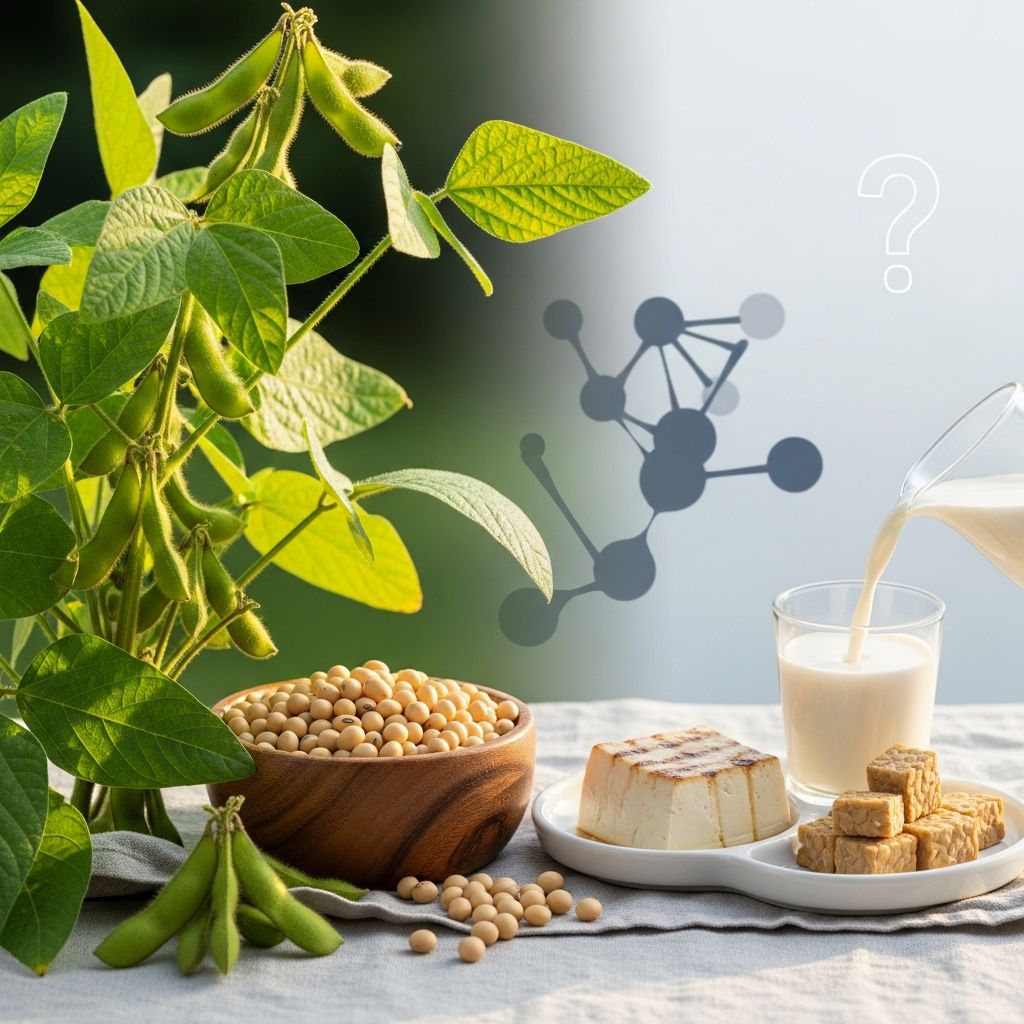
– Whole soy foods (edamame, tofu, tempeh, soy milk)- Soy protein isolates and concentrates- Soy isoflavone supplements- Fermented soy products (miso, soy sauce, tempeh)- Textured vegetable protein (TVP)
Frequently Asked Questions
Q: Is soy safe for everyone to consume?
A: For most people, soy products are safe when consumed as part of a balanced diet. However, individuals with soy allergies should avoid soy products. Those with thyroid conditions or taking certain medications should consult with healthcare providers before significantly increasing soy consumption.
Q: Does soy increase breast cancer risk?
A: No. Scientific evidence indicates that soy consumption is associated with lower breast cancer risk, particularly when consumed from childhood or adolescence and when consumed as whole food sources rather than supplements.
Q: How much soy should I consume daily?
A: There is no established recommended daily intake for soy. Typical Asian diets that show protective health benefits contain approximately 25-50 grams of soy protein daily, but individual needs vary based on overall diet and health status.
Q: Are soy supplements as effective as whole soy foods?
A: Research suggests that whole soy foods are more effective than supplements for most health benefits, particularly for cholesterol reduction. The broader nutritional context of incorporating soy into a healthy diet appears important for maximizing benefits.
Q: Can soy help with menopause symptoms?
A: Soy isoflavone supplements and soy protein may help reduce menopausal hot flashes, though the effect is typically modest. Results have been inconsistent across studies, with optimal benefit appearing to occur at higher isoflavone doses.
References
- Is Soy Bad for You? Weighing Its Risks and Benefits — BuzzRx. 2024. https://www.buzzrx.com/blog/is-soy-bad-for-you
- Straight Talk About Soy — Harvard T.H. Chan School of Public Health, The Nutrition Source. 2024. https://nutritionsource.hsph.harvard.edu/soy/
- Soy: Usefulness and Safety — National Center for Complementary and Integrative Health (NCCIH). 2024. https://www.nccih.nih.gov/health/soy
- High Cholesterol and Natural Products: What the Science Says — National Center for Complementary and Integrative Health (NCCIH). 2024. https://www.nccih.nih.gov/health/providers/digest/high-cholesterol-and-natural-products-science
- Are Soy Isoflavones Truly a Public Health Concern? — Frontiers in Nutrition. 2025. https://www.frontiersin.org/journals/nutrition/articles/10.3389/fnut.2025.1608814/pdf
- Does soy really affect breast cancer risk? — Mayo Clinic. 2024. https://www.mayoclinic.org/healthy-lifestyle/nutrition-and-healthy-eating/expert-answers/soy-breast-cancer-risk/faq-20120377
Similar Articles








Read full bio of medha deb