Spa Pool Folliculitis: Causes, Symptoms & Treatment
Understanding hot tub rash: bacterial infection risks, clinical features, and effective management strategies.
Introduction to Spa Pool Folliculitis
Spa pool folliculitis, also known as hot tub folliculitis, jacuzzi folliculitis, or pseudomonas folliculitis, is a Gram-negative bacterial infection of hair follicles acquired during exposure to contaminated warm water environments. This condition is caused by opportunistic bacteria that thrive in hot water conditions and can affect anyone exposed to affected water sources, though it predominantly impacts certain populations more severely than others.
The infection is commonly associated with recreational water exposure, but can develop from various warm water sources beyond traditional spa pools. Understanding this condition is essential for prevention and appropriate management, particularly for individuals who frequently use hot tubs, public pools, and similar water facilities.
Demographics and Susceptibility
Spa pool folliculitis can affect individuals of all age groups and racial backgrounds following exposure to contaminated water. However, the condition predominantly affects females, suggesting potential differences in exposure patterns or skin microflora composition between sexes.
Immunocompromised patients may experience predisposition to rapid skin colonization by Gram-negative bacteria, potentially leading to more severe or persistent infections. Notably, not all individuals exposed to contaminated water develop the infection, indicating that factors such as duration of exposure, individual skin microflora composition, and possibly other host factors influence susceptibility.
Risk factors for developing spa pool folliculitis include:
- Prolonged or frequent exposure to warm water environments
- Immunocompromised status due to HIV/AIDS, diabetes, or other conditions
- Recent hair removal through shaving or waxing
- Use of tight-fitting clothing that traps heat and moisture
- Existing skin damage or dermatitis
- Use of certain medications including corticosteroids and long-term antibiotics
Causes and Bacterial Mechanisms
Spa pool folliculitis is due to an opportunistic bacterial infection caused primarily by Pseudomonas aeruginosa, with Aeromonas hydrophila being a less common causative agent. These ubiquitous Gram-negative bacteria are capable of surviving in warm water even when adequately chlorinated due to the formation of biofilms on tub surfaces and within piping systems.
Common exposure sources include:
- Spa pools and hot tubs
- Jacuzzis and whirlpools
- Warm water swimming pools and rehabilitation pools
- Floatation tanks and floatation aids
- Contaminated wet suits and swimwear
- Contaminated toys in family bathtubs
- Industrial closed-loop water recycling systems
- Water slides and heated recreational facilities
The longer the duration and frequency of water exposure, the greater the infection risk. Contamination becomes more common when water is inadequately treated or when organic material such as skin cells is present in the water. The bacteria survive chlorinated water by developing protective biofilms, making standard disinfection challenging.
Water absorption into the stratum corneum increases proportionately with time submerged in water, enhancing skin permeability to bacterial penetration and colonization of hair follicles.
Clinical Features and Presentation
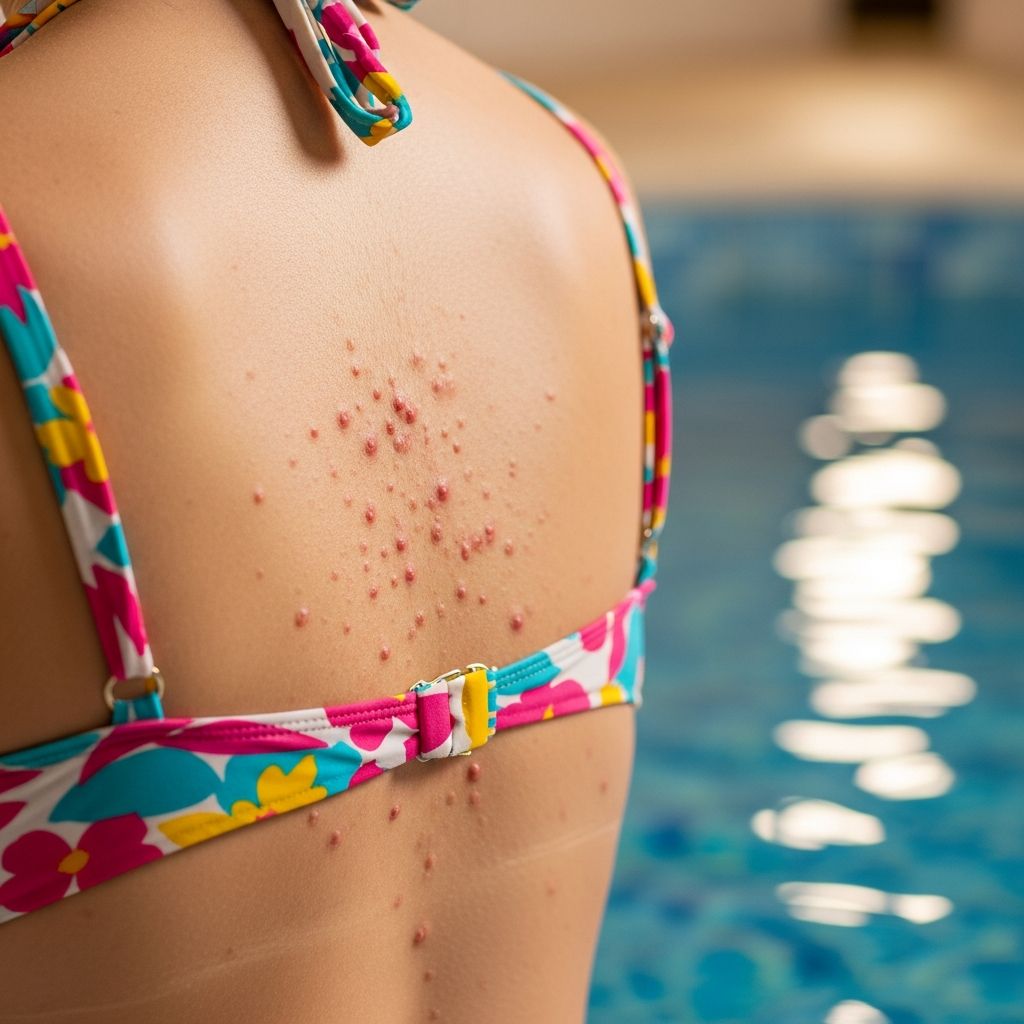
Spa pool folliculitis presents as a sudden eruption of scattered red macules that evolve into papules and pustules centered on hair follicles. The onset typically occurs between 8 hours and five days after exposure to contaminated water. Areas of skin covered by swimwear, such as the buttocks, lower back, and areas under the arms, are most prone to develop the characteristic rash due to prolonged water contact and moisture retention in these regions.
Related Stories



Primary cutaneous symptoms include:
- Red, itchy bumps on follicle-bearing areas
- Pustules that may contain pus
- Burning sensation and pain
- Swelling and tenderness of affected areas
- Excoriated papules from scratching
- Darker red tender nodules as the rash progresses
Systemic symptoms may accompany cutaneous manifestations in some cases. Patients may experience malaise, fatigue, headache, low-grade fever, earache, sore throat, abdominal discomfort, nausea, vomiting, and diarrhea. These constitutional symptoms typically indicate more widespread bacterial effects beyond localized folliculitis.
Pseudomonas aeruginosa can also cause ‘hot hand-foot syndrome’ (hot-foot syndrome), presenting as tender or painful red nodules on the palms and pressure-bearing areas of the soles of the feet, particularly in children. This variant may develop simultaneously with the folliculitis or as a separate manifestation of the infection.
Swollen and tender lymph glands may develop in cases involving systemic symptoms, indicating immune system activation in response to bacterial infection.
Clinical Variation in Different Skin Types
While spa pool folliculitis can develop in all skin types, the clinical presentation may vary depending on individual skin characteristics. Darker skin types may present with more prominent post-inflammatory hyperpigmentation following resolution of acute infection. The appearance of lesions, distribution patterns, and healing timeframes may differ subtly between individuals, though the underlying bacterial pathology remains consistent.
Individuals with sensitive skin or existing dermatological conditions may experience more pronounced inflammatory responses and longer recovery periods. Proper identification and management remain essential regardless of skin type variations in presentation.
Potential Complications
While spa pool folliculitis is typically self-limited, several complications can develop if the condition is not properly managed or if secondary infections occur:
- Secondary bacterial infection: Scratching lesions can introduce additional pathogens and delay healing
- Post-inflammatory hyperpigmentation: Darkened areas may persist after resolution, particularly in darker skin types
- Scarring: Severe pustules or aggressive scratching may result in permanent scarring
- Systemic spread: Rare cases may involve bacteremia or more widespread infection in immunocompromised individuals
- Psychological impact: Visible lesions may cause emotional distress or social discomfort
Recurrent infections remain possible if exposure to contaminated water sources continues or if the source pool is not properly disinfected.
Diagnosis and Microbiological Assessment
Diagnosis of spa pool folliculitis is primarily clinical, based on characteristic presentation and exposure history. The history of recent warm water exposure in combination with sudden onset of follicular pustules within days of water contact strongly suggests the diagnosis.
The source of infection may be confirmed through microbiological assessment of the water, pool surfaces, filters, and pipes. Culture and identification of Pseudomonas aeruginosa or Aeromonas hydrophila from water samples provide definitive evidence of contamination. Such testing is particularly valuable when multiple individuals develop similar symptoms following the same water exposure.
Bacterial culture from patient skin lesions can also be obtained, though this is often unnecessary given the self-limiting nature and predictable clinical course of the condition.
Differential Diagnoses
Several dermatological conditions may resemble spa pool folliculitis and should be considered during diagnosis:
- Acne vulgaris: May appear similar but lacks clear relationship to water exposure
- Bacterial folliculitis from other causes: From shaving, friction, or other bacteria
- Tinea corporis: Fungal infection that may present with similar distribution but different characteristics
- Contact dermatitis: From water additives, swimwear materials, or other irritants
- Viral exanthem: May present similarly but occurs without specific water exposure history
A detailed exposure history and timeline are essential for accurate differentiation.
Treatment Approaches
Spa pool folliculitis is best treated by avoiding the source of infection. The responsible pool should be properly cleaned and disinfected to prevent continued exposure and transmission to other potential users.
Treatment options vary based on severity:
| Severity Level | Treatment Approach | Duration |
|---|---|---|
| Mild Cases | Observation, warm compresses, anti-itch measures | Self-resolving in 7-14 days |
| Moderate Cases | Topical antiseptics, topical polymyxin B, astringents | 10-14 days |
| Severe Cases | Oral ciprofloxacin 500mg twice daily for 7 days | 7-14 days |
Home management strategies include:
- Applying warm compresses for 15-20 minutes, three to four times daily to soothe discomfort
- Using anti-itching creams or lotions to relieve itching and prevent scratching
- Applying antibacterial topical agents like Neosporin to prevent secondary infection
- Using topical polymyxin B 0.1% for antimicrobial coverage
- Applying topical astringents to reduce inflammation
- Avoiding further water exposure until the rash completely resolves
A topical skin antiseptic and/or oral antibiotics may sometimes be required in more severe presentations or when constitutional symptoms are present. However, the vast majority of cases resolve without specific medical intervention.
For children under 18 years, fluoroquinolone use requires careful consideration, and consultation with pediatric infectious disease specialists is recommended for severe cases requiring systemic antibiotics.
Prognosis and Outcome
Spa pool folliculitis is usually self-resolving within 14 days without sequelae, provided the patient avoids further exposure to contaminated water. Most cases resolve without specific treatment, though home management can accelerate healing and improve comfort.
Complete healing typically occurs within 7-14 days from onset, with symptoms most significant during the first few days and progressively improving thereafter. Recurrences may occur if the source of infection is not identified and treated or avoided, making water source remediation critical for preventing future episodes.
Long-term scarring is uncommon unless severe secondary infection occurs or extensive scratching causes tissue damage.
Prevention Strategies
Preventing spa pool folliculitis involves maintaining proper water quality and personal protective measures:
- Regular cleaning and disinfection of hot tubs, spa pools, and whirlpools according to manufacturer guidelines
- Maintaining appropriate chlorine and pH levels in water systems
- Filtering water to remove organic material and bacteria
- Regular inspection and cleaning of pipes and filter systems
- Showering before and after water exposure
- Avoiding submersion of open wounds or recent shaving sites in public water
- Wearing protective clothing in high-risk situations
- Using personal protective equipment when possible
Frequently Asked Questions
Q: How quickly does spa pool folliculitis develop after exposure?
A: Symptoms typically appear between 8 hours and 5 days after exposure to contaminated water, with most cases becoming evident within 24-48 hours.
Q: Is spa pool folliculitis contagious between people?
A: The condition is not directly contagious between individuals through skin contact, but multiple people exposed to the same contaminated water may develop the infection independently.
Q: Can I use regular pools if I have spa pool folliculitis?
A: It is best to avoid all water exposure, including regular pools, until the rash completely resolves to prevent spreading the infection or worsening the condition through further bacterial exposure.
Q: Will spa pool folliculitis leave permanent scars?
A: Permanent scarring is uncommon in typical cases. Scars may develop only with severe pustules, aggressive scratching, or secondary infections.
Q: What should I do if my spa pool is contaminated?
A: The pool should be drained, thoroughly cleaned, and disinfected according to manufacturer guidelines. Water testing can confirm successful decontamination before resuming use.
Q: Are certain areas of the body more likely to develop the rash?
A: Yes, areas covered by swimwear such as the buttocks, lower back, and underarms are most prone to infection due to prolonged water contact and moisture retention.
References
- Spa pool, jacuzzi, hot tub, pseudomonas folliculitis — DermNet New Zealand. May 2021. https://dermnetnz.org/topics/spa-pool-folliculitis
- Preventing Hot Tub Rash — Centers for Disease Control and Prevention. https://www.cdc.gov/healthy-swimming/prevention/preventing-hot-tub-rash.html
- Folliculitis – Symptoms & Causes — Mayo Clinic. https://www.mayoclinic.org/diseases-conditions/folliculitis/symptoms-causes/syc-20361634
- Hot Tub Folliculitis — UF Health. https://ufhealth.org/conditions-and-treatments/hot-tub-folliculitis
- Hot tub folliculitis (Pseudomonas Folliculitis, Hot tub rash) — Dermatology Advisor. https://www.dermatologyadvisor.com/home/decision-support-in-medicine/dermatology/hot-tub-folliculitis-pseudomonas-folliculitis-hot-tub-rash-pseudomonas-dermatitis/
Similar Articles








Read full bio of Sneha Tete