Undefined Spa Pool Folliculitis Images: 5 Clinical Photos
Explore clinical images and detailed insights into spa pool folliculitis, a common bacterial skin infection from hot tubs and jacuzzis.
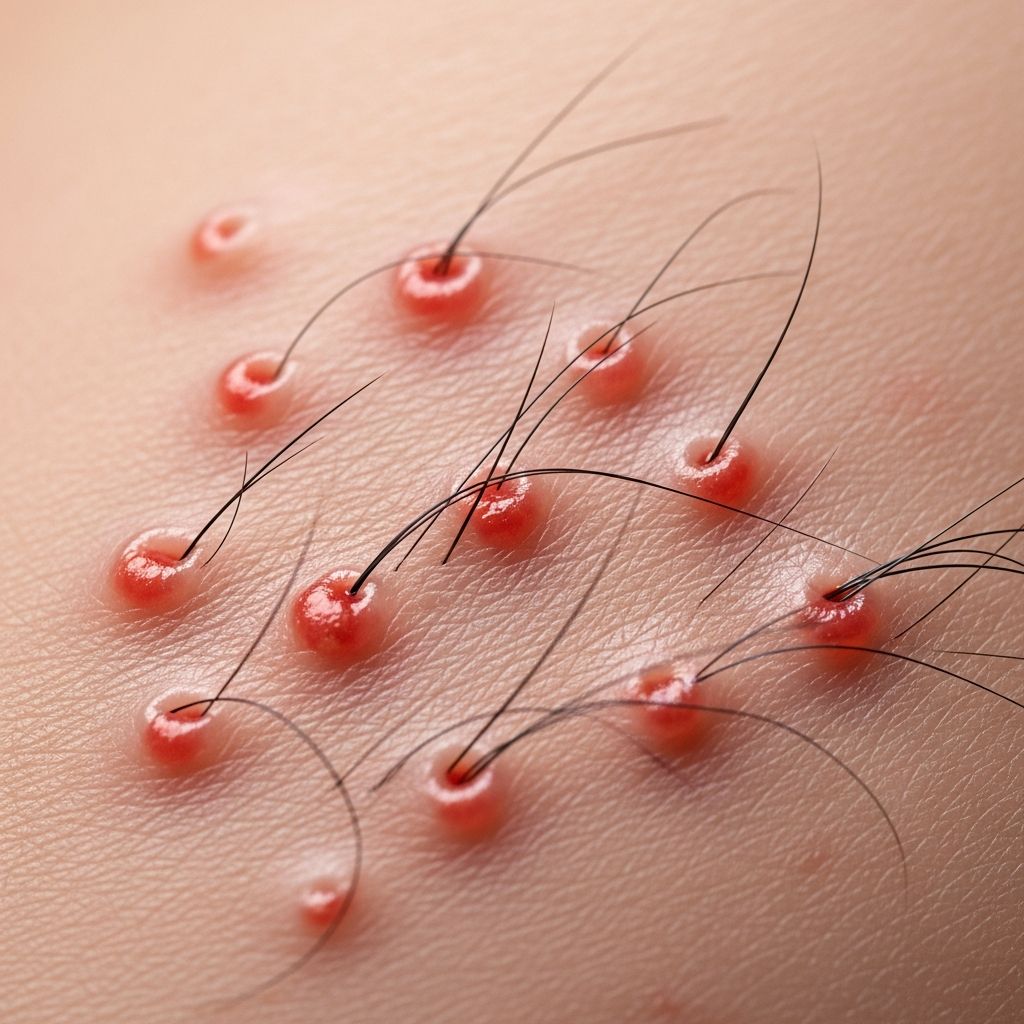
Spa pool folliculitis, also known as hot tub folliculitis or pseudomonas folliculitis, is a bacterial infection of hair follicles caused by exposure to contaminated warm water environments such as spa pools, jacuzzis, and hot tubs. This condition manifests as an acute eruption of pruritic follicular papules and pustules, typically appearing 8 hours to 5 days post-exposure. The following images illustrate the characteristic clinical presentations across various skin types and severities.
Introduction
Spa pool folliculitis represents a self-limited dermatological infection primarily due to Pseudomonas aeruginosa, a Gram-negative bacterium thriving in inadequately maintained aquatic facilities. First described in the 1970s, it has become increasingly recognized with the popularity of hot tubs and whirlpools. The infection occurs when bacteria penetrate hair follicles facilitated by water-logged stratum corneum, leading to inflammation. While generally benign and resolving within 7-14 days, it can cause significant discomfort and, rarely, systemic symptoms.
Understanding the visual hallmarks is crucial for prompt recognition, especially in primary care settings where misdiagnosis as acne or allergic dermatitis is common. These images, sourced from clinical dermatology archives, depict the evolution from erythematous macules to pustular lesions, aiding in accurate identification.
Demographics
Spa pool folliculitis affects individuals of all ages, races, and genders following exposure to contaminated water, though females predominate, possibly due to behavioral exposure patterns or skin physiology differences. Children are particularly susceptible to associated ‘hot-foot syndrome,’ while immunocompromised patients face higher risks of dissemination.
- All ages: From infants in family tubs to elderly in rehabilitation pools.
- Female bias: Approximately 60-70% of cases in outbreak reports.
- Outbreak settings: Common in hotels, gyms, and residential spas.
Global incidence spikes during summer months with increased hot tub usage, underscoring the need for public health awareness.
Causes
The primary causative agent is Pseudomonas aeruginosa, an opportunistic pathogen ubiquitous in moist environments. Less commonly, Aeromonas hydrophila is implicated. These bacteria form biofilms in spa systems, resisting standard chlorination (optimal free chlorine 3-5 ppm, pH 7.2-7.8). Organic contaminants like skin cells, cosmetics, and lotions exacerbate growth.
Key risk factors include:
- Inadequate disinfection: Low chlorine, improper pH, or neglected filters.
- Prolonged immersion: Enhanced skin permeability after >15 minutes submersion.
- Biofilm persistence: Within pipes, jets, and surfaces.
- Other sources: Whirlpools, water slides, wetsuits, flotation tanks.
CDC guidelines emphasize daily shocking with high chlorine doses and weekly superchlorination to prevent outbreaks.
Clinical features
The eruption begins 8-48 hours post-exposure (up to 5 days) as pruritic red macules evolving into follicular papules and sterile pustules (1-5 mm). Lesions cluster on trunk, buttocks, thighs, and axillae—areas occluded by swimwear trapping contaminated water. Itching, burning, and tenderness ensue; excoriations are common.
Image 1: Acute phase on light skin: Scattered erythematous papules with central pustules on abdomen, mimicking folliculitis decalvans.
Image 2: Widespread involvement on back and flanks in a swimmer, showing evolution to crusting.
Systemic features (10-20% cases): Fever, malaise, headache, nausea, diarrhea, lymphadenopathy.
Variation in skin types
Related Stories



Presentation varies by phototype:
| Skin Type | Appearance | Image Description |
|---|---|---|
| Fitzpatrick I-II (light) | Bright red papules/pustules | Distinct follicular white-headed pustules on erythematous base (Image 3). |
| Fitzpatrick III-IV (intermediate) | Violaceous papules | Hyper pigmented nodules on thighs (Image 4). |
| Fitzpatrick V-VI (dark) | Follicular hyperpigmentation, less pus | Dark papules with minimal erythema (Image 5). |
Darker skin may show post-inflammatory hyperpigmentation persisting weeks post-resolution.
Complications
Most cases resolve without sequelae, but complications include:
- Secondary bacterials: Staph/Strep impetigo from scratching.
- Hot-foot syndrome: Painful plantar/palmar nodules in children.
- Otitis externa, keratitis: Rare ocular/ear spread.
- Recurrent outbreaks: If source unaddressed.
Severe disseminated infection in immunocompromised (e.g., ecthyma gangrenosum).
Diagnosis
Clinical: History of hot tub exposure + characteristic rash. Confirm by:
- Water culture: Swabs from tub, filters, pipes for P. aeruginosa.
- Skin swab: Rarely positive (sterile pustules).
- Biopsy: Pseudofolliculitis with Gram-negative rods (uncommon).
No routine labs needed unless systemic.
Differential diagnoses
| Condition | Key Distinguishers |
|---|---|
| Bacterial folliculitis (S. aureus) | Less acute, no exposure hx, positive Gram stain. |
| Tinea corporis | Annular, scaling, KOH+. |
| Acne vulgaris | Chronic, comedones, face/upper trunk. |
| Scabies | Burrows, interdigital, family cases. |
| Drug eruption | Diffuse, eosinophilia. |
Outbreak context strongly favors spa pool folliculitis.
Treatment
Primary: Avoid contaminated water; clean/disinfect source (drain, scrub, hyperchlorinate).
| Severity | Treatment |
|---|---|
| Mild | Observation, cool compresses, Burow solution soaks, OTC hydrocortisone. |
| Moderate | Topical antiseptic (chlorhexidine, polymyxin B), bleach baths. |
| Severe/systemic | Oral cipro 500mg BID x5-7d (adult); alternatives: TMP-SMX, gentamicin. |
Pediatrics: Consult ID; cipro cautious <18yo. Symptomatic: Antihistamines, analgesics.
Outcome
Self-resolves 7-14 days; PIDH in darker skin up to months. Recurrence if re-exposure. Prophylaxis: Shower post-soak, proper maintenance.
Frequently Asked Questions (FAQs)
What causes spa pool folliculitis?
Primarily Pseudomonas aeruginosa from poorly maintained hot tubs, surviving chlorination via biofilms.
How soon after hot tub use does the rash appear?
8 hours to 5 days, peaking at 48 hours.
Is hot tub folliculitis contagious?
Not person-to-person; spread via shared contaminated water.
Does it go away on its own?
Yes, most cases resolve in 1-2 weeks without treatment.
How to prevent spa pool folliculitis?
Maintain chlorine 3-5ppm, pH 7.2-7.8, shock weekly, clean filters. Shower after use.
When to see a doctor?
Fever, spreading rash, immunocompromised, or no improvement in 7 days.
References
- Spa pool folliculitis — DermNet NZ. 2021-05-01. https://dermnetnz.org/topics/spa-pool-folliculitis
- Hot tub folliculitis: Pictures, causes, symptoms, & treatment — Medical News Today. 2023-10-15. https://www.medicalnewstoday.com/articles/324721
- Folliculitis – Symptoms & causes — Mayo Clinic. 2024-01-10. https://www.mayoclinic.org/diseases-conditions/folliculitis/symptoms-causes/syc-20361634
- Hot Tub Folliculitis — UF Health. 2023-05-20. https://ufhealth.org/conditions-and-treatments/hot-tub-folliculitis
- Hot tub folliculitis (Pseudomonas Folliculitis) — Dermatology Advisor. 2024-02-14. https://www.dermatologyadvisor.com/home/decision-support-in-medicine/dermatology/hot-tub-folliculitis-pseudomonas-folliculitis-hot-tub-rash-pseudomonas-dermatitis/
- Hot Tub Folliculitis: Rash, Treatment, Contagious — Healthline. 2023-11-08. https://www.healthline.com/health/hot-tub-folliculitis
- Preventing Hot Tub Rash — CDC. 2024-06-12. https://www.cdc.gov/healthy-swimming/prevention/preventing-hot-tub-rash.html
Similar Articles








Read full bio of medha deb