Spasticity: Causes, Symptoms, and Treatment Options
Understanding spasticity: comprehensive guide to causes, symptoms, and effective management strategies.
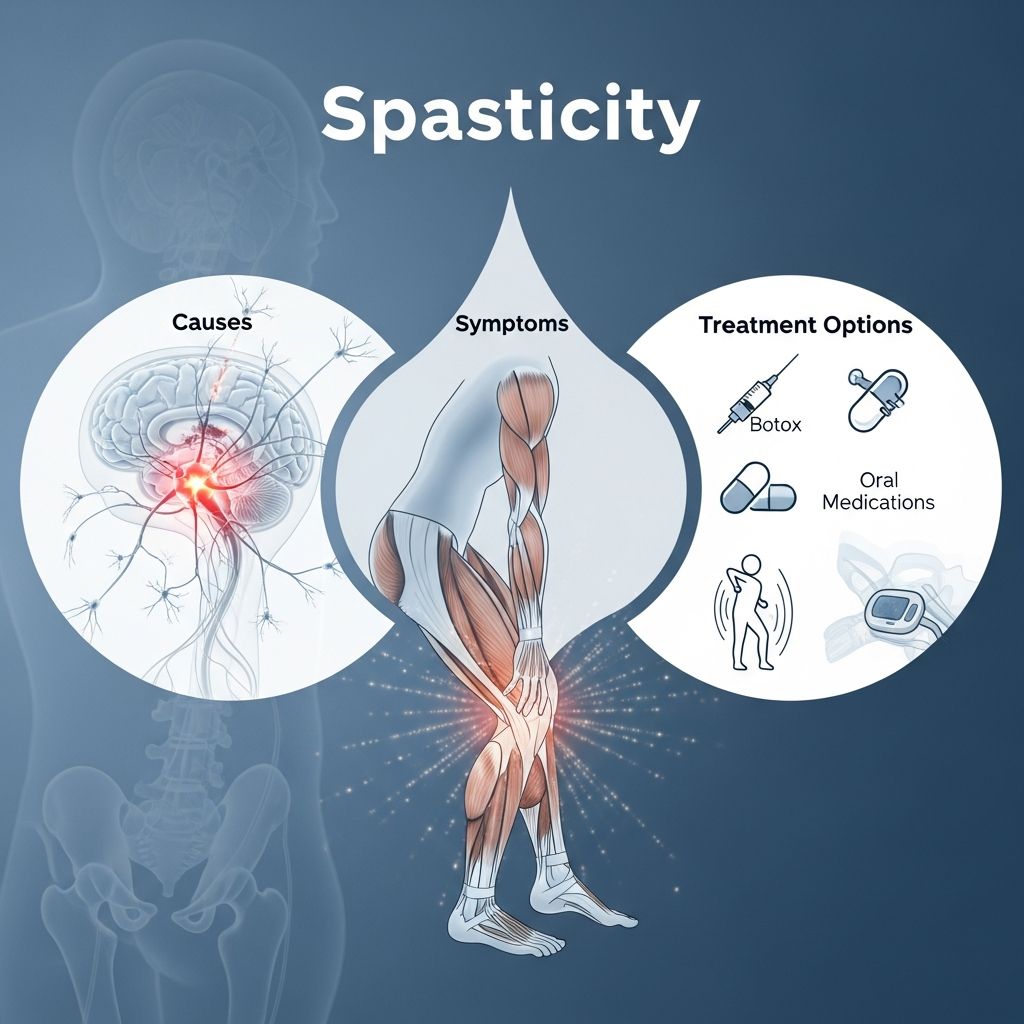
Understanding Spasticity: A Complete Guide
Spasticity is a disruption in muscle movement patterns that causes certain muscles to contract all at once when you try to move or even at rest. This neurological condition affects the normal communication between your brain, spinal cord, and muscles, resulting in muscles that remain contracted and resist being stretched. The condition can significantly interfere with movement, speech, and overall quality of life, ranging from mild muscle tightness to severe, painful, and uncontrollable stiffness and spasms of the extremities.
What Is Spasticity?
Spasticity is a symptom and characteristic of certain neurological conditions that disrupts the normal control of muscle movement. Muscle movements are typically controlled by a complex system that allows some muscles to contract while others relax in a coordinated manner. Damage to nerves in your central nervous system, which includes your brain and spinal cord, can disrupt this delicate balance. As a result, many muscles may contract all at once in what is sometimes called co-contraction, making it extremely difficult to perform voluntary movements.
The condition can vary greatly in severity. For some individuals, spasticity may feel like nothing more than mild tightness in the muscles. For others, it can cause painful, uncontrollable stiffness and involuntary muscle spasms that severely limit their ability to function in daily life.
What Causes Spasticity?
Spasticity is usually caused by damage to nerve pathways within your brain or spinal cord that control movement and stretch reflexes. This damage disrupts the normal signals that regulate muscle contraction and relaxation. Several neurological conditions and injuries can lead to the development of spasticity:
- Cerebral palsy — a group of neurological conditions affecting movement and coordination
- Traumatic brain injury — resulting from head trauma or accidents
- Stroke — when blood flow to the brain is interrupted
- Spinal cord injury — from trauma or damage to the spinal column
- Multiple sclerosis — a chronic autoimmune disease affecting the central nervous system
- Parkinson’s disease — a progressive neurological disorder
- Hypoxic-ischemic encephalopathy — brain damage from lack of oxygen
The underlying damage to the central nervous system interrupts the normal pattern of reflexes, which in turn affects how muscles contract and respond to movement.
Common Symptoms of Spasticity
Spasticity presents with a variety of symptoms that can significantly impact daily functioning. Understanding these symptoms is crucial for early recognition and treatment. The most common symptoms include:
- Increased muscle tone: Muscles feel abnormally tight and rigid
- Involuntary movements: Including spasms and involuntary muscle contractions that occur without conscious control
- Clonus: A series of fast involuntary contractions that feel like a tremor
- Pain or discomfort: Ranging from mild to severe, especially with movement
- Reduced ability to function: Difficulty performing everyday tasks and activities
- Problems with care and hygiene: Challenges with bathing, dressing, and personal grooming
- Abnormal posture: Unusual body positioning resulting from muscle imbalances
- Muscle stiffness: Persistent tightness that may worsen with activity or stress
- Scissoring of the legs: Involuntary crossing of the legs due to excessive muscle tone
- Contractures: Permanent shortening of muscles and tendons, leading to fixed joints that cannot be moved
- Difficulty walking: Gait disturbances and balance problems
- Changes in sensation: Altered sensory perception in affected areas
Related Stories



Spasticity often affects the legs but can also occur in the arms, neck, and trunk. The specific symptoms experienced depend on which areas of the central nervous system are damaged and the severity of that damage.
How Spasticity Is Diagnosed
Diagnosing spasticity involves a comprehensive clinical assessment. Your healthcare provider will conduct a detailed interview and physical examination to evaluate your condition thoroughly. During this process, your doctor will:
- Ask about your symptoms, including stiffness, tightness, cramping, spasms, and difficulty moving
- Analyze your posture and observe your movements and coordination
- Assess your muscle strength and resistance to passive movement
- Observe any visible spasms and clonus during examination
- Stretch various muscles to assess how tight they are and evaluate your range of motion
- Evaluate functional limitations that affect your daily activities
Your doctor may also order certain diagnostic tests to understand what causes your spasticity. Imaging studies such as magnetic resonance imaging (MRI) can be used to look for damage in the central nervous system. Physical and occupational therapy evaluations are also helpful complements to the clinical assessment, providing detailed information about functional limitations and rehabilitation potential.
Impact of Spasticity on Daily Life
The consequences of spasticity extend far beyond muscle tightness. Untreated or inadequately managed spasticity can significantly interfere with daily function and quality of life. Common impacts include:
- Sleep disruption and difficulty obtaining restorative sleep
- Discomfort and chronic pain
- Interference with work and other activities of daily living
- Gait and balance disturbances that increase fall risk
- Difficulty with stair climbing, walking, and mobility
- Challenges with personal hygiene and basic self-care
- Increased risk of developing pressure injuries (bedsores), which can lead to infection and sepsis
- Development of contractures and permanent joint deformities
- Reduced independence and need for increased caregiver support
Research indicates that spasticity most frequently interferes with stair climbing, walking, and sleep quality. The severity of spasticity is associated with worse disability, mobility problems, bladder dysfunction, and increased fatigue.
Treatment Options for Spasticity
While there is no cure for spasticity, several effective treatment options can help alleviate symptoms and improve quality of life. People who have spasticity usually undergo more than one treatment at a time, as a multifaceted approach tends to be most effective. Treatment plans are individualized based on the severity of symptoms, underlying causes, and patient goals.
Physical Therapy and Exercise
Physical therapy is a cornerstone of spasticity management. Regular stretching, water-based activities, cycling, and treadmill training can all provide significant benefits. Physical therapists work with patients to develop customized exercise programs that maintain flexibility, prevent contractures, and improve functional mobility. Home exercise programs are also important components of long-term management.
Medications
Several oral medications can help reduce muscle tone and spasticity. Common medications include baclofen, which works to decrease muscle spasticity by reducing neurotransmitter activity, and other muscle relaxants. Medication selection depends on individual factors such as the underlying cause of spasticity, other medical conditions, and potential drug interactions.
Botulinum Toxin Injections
Botulinum toxin (Botox) injections are effective for managing localized spasticity. These injections work by blocking the release of acetylcholine at the neuromuscular junction, thereby reducing muscle contractions in targeted areas. This treatment option is particularly useful when spasticity is limited to specific muscle groups.
Occupational Therapy
Occupational therapists help patients develop adaptive strategies and techniques to maintain independence in daily activities despite spasticity. They may recommend assistive devices and environmental modifications to enhance function and safety.
FAQs About Spasticity
Q: Can spasticity be completely cured?
A: There is currently no cure for spasticity. However, various treatment options can significantly reduce symptoms and improve quality of life. The goal of treatment is to manage symptoms effectively and maintain as much function and independence as possible.
Q: At what age can spasticity develop?
A: Spasticity can appear shortly after birth in conditions like cerebral palsy, or it can develop later in life following an injury to the nervous system such as stroke or spinal cord injury.
Q: How is spasticity different from muscle soreness?
A: Spasticity involves involuntary muscle contractions and increased muscle tone caused by neurological damage, whereas muscle soreness is typically temporary discomfort from overuse or minor injury that resolves with rest.
Q: Can spasticity worsen over time?
A: Without appropriate treatment and management, moderate to severe spasticity can worsen and lead to contractures and permanent joint deformities. Regular treatment and therapy can help prevent progression and maintain function.
Q: What should I do if my current spasticity treatment isn’t working?
A: If your current treatment plan is not providing adequate symptom relief, consult with your healthcare provider. They can adjust your medications, recommend additional therapies, or explore alternative treatment options that may be more effective for your specific situation.
Q: How long does it take to see improvement with spasticity treatment?
A: The timeline for improvement varies depending on the type of treatment. Physical therapy benefits may accumulate over weeks to months, while medication effects can sometimes be noticed within days to weeks. Botulinum toxin injections typically show improvement within one to two weeks.
Living with Spasticity
Spasticity is a common symptom and feature of several neurological conditions. While the severity of spasticity can range from a minor inconvenience to a significant disruption of your day-to-day life, the good news is that several treatment options exist. Although fewer than half of individuals with spasticity report being fully satisfied with their current treatment, most receive some form of treatment, typically including oral medications, stretching exercises, home exercise programs, and physical therapy.
Working closely with your healthcare team is essential for developing and maintaining an effective treatment plan. Regular communication about symptom changes, side effects, and functional goals helps ensure that your treatment remains optimized. With proper management and treatment, many people with spasticity can maintain independence and quality of life.
References
- Spasticity: What It Is, Causes, Symptoms & Treatment — Cleveland Clinic. 2022-07-09. https://my.clevelandclinic.org/health/symptoms/14346-spasticity
- A Cross-Sectional Study of the Impact of Spasticity on Daily Activities in a Large Sample of Individuals with Spasticity — PubMed Central/National Institutes of Health. 2016. https://pubmed.ncbi.nlm.nih.gov/27154536/
- Spasticity – Child Neurology Foundation — Child Neurology Foundation. https://www.childneurologyfoundation.org/disorder/spasticity/
- Mellen Center Approaches: Spasticity Fact Sheet — Cleveland Clinic. https://my.clevelandclinic.org/services/spasticity-treatment
- Best Exercises for Spasticity — Cleveland Clinic Health. https://health.clevelandclinic.org/best-exercises-to-reduce-spasticity
Similar Articles








Read full bio of medha deb