Special Stains and Tests in Dermatopathology
Master diagnostic techniques: immunofluorescence, electron microscopy, and molecular testing in skin pathology.
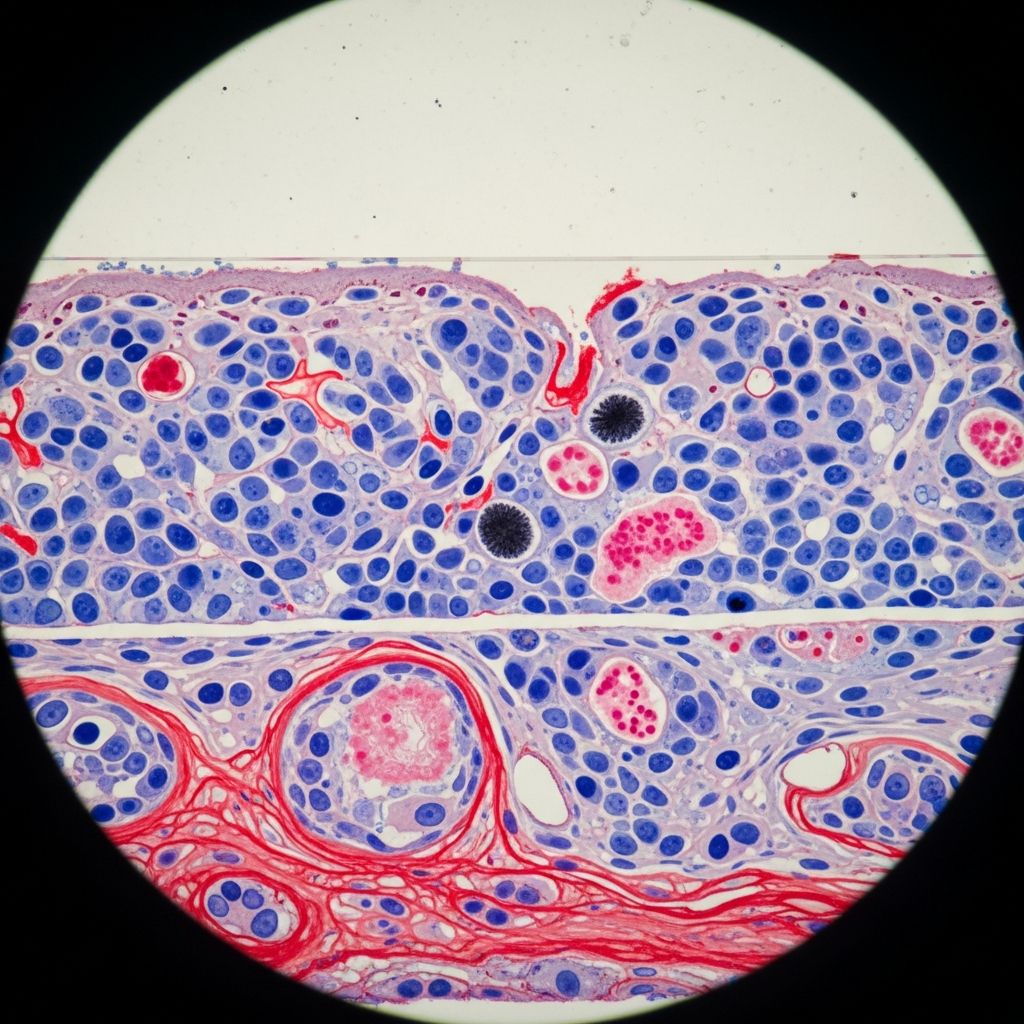
Dermatopathology relies on specialized diagnostic techniques to identify tissue components, infectious agents, and confirm clinical diagnoses. While routine haematoxylin and eosin (H&E) staining provides the foundation for most diagnoses, special stains and advanced tests are essential for detecting specific pathologic processes that would otherwise remain invisible or subtle under standard microscopy. These techniques enhance diagnostic accuracy and enable dermatopathologists to characterize disease at the cellular and molecular level.
Understanding Special Stains in Dermatopathology
Special stains employ dyes or chemicals with specific affinity for particular tissue components. They are used to highlight structures and substances not adequately visualized with routine H&E staining. The selection of appropriate stains depends on the clinical suspicion, tissue type, and target tissue component. In many cases, board-certified dermatopathologists can render definitive diagnoses using H&E staining alone; however, special stains provide critical supplementary information when routine staining is inconclusive or when specific pathologic processes require visualization.
Special stains serve multiple diagnostic purposes including identification of infectious agents, detection of abnormal deposits, visualization of specific tissue structures, and characterization of cellular infiltrates. The strategic use of these stains significantly improves diagnostic precision and helps dermatopathologists correctly diagnose and manage a broad array of skin conditions.
Tissue Components and Corresponding Stains
Different tissue components require specific staining techniques for optimal visualization. The following table summarizes common tissue materials and their corresponding diagnostic stains:
| Tissue Material to be Demonstrated | Stains Used |
|---|---|
| Mucin (mucopolysaccharides) | PAS, Alcian Blue, DPAS |
| Melanin | Fontana-Masson, Melanin bleach |
| Iron (haemosiderin) | Prussian blue, Perl’s stain |
| Calcium | Von Kossa, Alizarin red |
| Fibrin | PTAH, Fibrin stain |
| Elastic fibres | Verhoeff-van Gieson (EVG), Elastic stains |
| Fat | Sudan black, Oil red O |
| Mast cells | Toluidine blue, Giemsa |
| Bacteria | Gram, Gram-Twort, Giemsa |
| Fungi | PAS, Grocott’s methenamine silver, GMS |
| Spirochaetes | Warthin-Starry, silver stains |
Direct Immunofluorescence Staining
Direct immunofluorescence (DIF) staining is a specialized form of immunohistochemistry used to detect the presence of immunoglobulins and complement components within skin tissue. This technique employs fluorescein isothiocyanate-labelled antibodies directed against IgG, IgM, IgA, fibrin, and C3 complement component. Fresh tissue is fixed appropriately and cut into frozen sections, then stained with the fluorescent antibody panel and examined using fluorescence microscopy.
DIF is particularly valuable in diagnosing immunobullous diseases, where characteristic staining patterns appear at the basement membrane zone or dermal-epidermal junction. It is also essential for diagnosing lupus erythematosus, where a distinctive “full-house” pattern of immunoglobulin and complement deposition is observed, and in vasculitis cases where complement deposition within vessel walls confirms the diagnosis. The identification of specific immunoglobulin and complement patterns provides confirmatory evidence for autoimmune and immune-mediated skin conditions.
Indirect Immunofluorescence Testing
Indirect immunofluorescence (IIF) detects circulating skin antibodies in a patient’s serum. In this technique, the patient’s serum is incubated with normal squamous epithelium obtained from donor tissue. Any antibodies present in the patient’s serum that bind to the epithelial antigens are then identified using a fluorescein-labelled secondary antibody probe. This technique helps detect circulating autoantibodies associated with various autoimmune bullous diseases and other conditions where serum antibodies play a pathogenic role.
Electron Microscopy in Dermatopathology
Electron microscopy (EM) provides ultra-high magnification that permits visualization of subcellular structures and organelles. In dermatopathology, EM is particularly useful for examining genetic and autoimmune bullous diseases where ultrastructural features provide diagnostic information unavailable at light microscopy levels. The hemidesmosomes, anchoring fibrils, and other ultrastructural elements can be precisely characterized using transmission electron microscopy.
Optimal EM evaluation requires fresh tissue fixed immediately with glutaraldehyde, which preserves ultrastructural detail superior to routine formalin fixation. While suboptimal, EM examination can occasionally be performed on appropriately treated formalin-fixed tissue when fresh material is unavailable. In contemporary practice, EM can be combined with immunohistochemistry techniques, allowing researchers and clinicians to correlate ultrastructural findings with specific protein localization. This integrated approach has become increasingly valuable in studying genetic mutations and autoimmune mechanisms in bullous diseases. EM services are available from select research laboratories.
Molecular Testing: Fluorescence In Situ Hybridization
Fluorescence in situ hybridization (FISH) is a powerful molecular technique used to identify specific chromosomal alterations in tissue samples. This method is particularly valuable in cutaneous lymphomas, where identification of clonal populations or specific chromosomal rearrangements can further classify the diagnosis or help differentiate between systemic lymphomas and primary cutaneous disease.
In FISH, labelled DNA probes attach to known areas on specific chromosomes, allowing visualization of chromosomal abnormalities, deletions, translocations, and amplifications. Beyond chromosome analysis, immunohistochemistry can be employed to stain proteins that are gained or lost due to specific mutations, providing complementary molecular information. The combination of FISH and immunohistochemical protein detection enables comprehensive characterization of neoplastic populations and can guide therapeutic decisions in cutaneous malignancies.
Histochemical Stains for Infectious Agents
Special stains are routinely employed to identify infectious agents within tissue samples. These techniques are essential because many microorganisms are not readily visible with standard H&E staining. Key stains for infectious agents include:
- Acid-Fast Stains: Ziehl-Neelsen (ZN) and Wade-Fite stains detect acid-fast bacilli, particularly Mycobacterium species. These stains are critical for diagnosing skin tuberculosis and leprosy, conditions that present with distinctive cutaneous manifestations.
- Gram Staining: Gram and Gram-Twort stains are used to identify gram-positive and gram-negative bacteria. These techniques help differentiate bacterial species based on cell wall composition.
- Silver Stains: Warthin-Starry staining detects spirochetes such as Leptospira and Helicobacter species. Grocott’s methenamine silver stain and Jones methenamine silver stain are excellent for identifying fungal organisms and certain bacteria.
- Fungal Stains: PAS (periodic acid-Schiff) and Grocott’s methenamine silver stains are commonly used to identify fungal infections including ringworm and nail fungus. DPAS (diastase-PAS) helps differentiate fungal elements from glycogen.
- Giemsa Staining: This versatile stain identifies various microorganisms including bacteria, spirochetes, and parasites such as Leishmania.
Stains for Tissue Components and Deposits
Beyond infectious agents, special stains detect abnormal deposits and tissue components critical for diagnosis. These include:
- Amyloid Staining: Amyloid substance staining, typically using Congo red or thioflavin stains, is essential for identifying amyloid deposits composed of misfolded proteins. These deposits are associated with primary skin amyloidosis and systemic amyloidosis, and their detection is crucial for diagnosis and management.
- Mucin Stains: Alcian blue and PAS stains detect mucopolysaccharide deposits. These are particularly important in conditions with mucinosis, such as myxedema and certain dermatologic variants of systemic disease.
- Elastic Fiber Stains: Verhoeff-van Gieson (EVG) and other elastic tissue stains highlight elastic fibers, essential for diagnosing elastic tissue abnormalities including pseudoxanthoma elasticum and elastofibroma dorsi.
- Connective Tissue Stains: Masson’s trichrome stain highlights collagenous stroma and helps determine the pattern of tissue injury, particularly valuable in perforating disorders and collagenous diseases.
- Mineral Deposits: Von Kossa stain detects calcium, Prussian blue identifies iron (haemosiderin), and other specialized stains visualize specific mineral accumulations.
Mast Cell Staining
Mast cells play crucial roles in immune reactions and allergic responses. Mast cell staining using toluidine blue or Giemsa stains allows dermatopathologists to visualize these cells clearly in tissue samples. Mast cell staining is particularly valuable in diagnosing urticaria pigmentosa and mastocytosis, where abnormal mast cell proliferation is the defining feature. The technique also permits assessment of mast cell numbers and distribution within affected tissue, providing important diagnostic and prognostic information. Specialized stains like the AgNOR stain can also assess nucleolar organizer regions in mast cell tumors, serving as a prognostic marker.
Glycogen Detection
Glycogen is an energy-storage compound present in cells. Glycogen staining, achieved through PAS staining or diastase-PAS (DPAS) techniques, detects glycogen deposits in tissue samples. The presence of glycogen deposits may indicate metabolic disorders or other disease states affecting the skin. DPAS staining, which includes diastase pre-treatment to remove glycogen, helps differentiate glycogen from other PAS-positive materials such as fungi.
Selection of Appropriate Stains
Selecting the proper stain is crucial for achieving accurate diagnostic results. Several factors influence stain selection:
- Clinical Suspicion: The clinical history and suspected diagnosis guide which stains are most likely to provide diagnostic information.
- Tissue Type: Different tissue types may require different staining approaches to optimize visualization.
- Target Component: The specific tissue component or organism being sought determines which stain provides optimal contrast and visualization.
- Combination Staining: Using multiple stains together offers comprehensive analysis and highlights different aspects of the tissue sample simultaneously.
Clinical Applications by Category
Infections: Special stains are essential for identifying infectious agents that may be subtle or completely invisible with routine staining. Culture and PCR methods should complement microscopic examination for optimal diagnostic yield.
Inflammatory Dermatoses: Certain inflammatory conditions present with subtle findings that may be invisible or missed on H&E examination. Mucin staining helps identify mucinosis in lupus erythematosus and dermatomyositis. Vasculitic conditions may show cryoglobulins, infectious agents, or toxic hyalin deposits that require special staining.
Neoplastic Disorders: Special stains aid in identifying specific tumor types, such as mast cell disease, clear cell acanthoma, and mucin-producing tumors. Immunohistochemistry and chromosomal analysis help classify cutaneous lymphomas and confirm specific diagnoses.
Subtle Infiltrates: Dense dermal infiltrates may obscure specific cell types. Immunohistochemical stains can identify specific cell populations including histiocytes, myeloid cells, mast cells, and other infiltrating cells.
Frequently Asked Questions
Q: Are special stains necessary for every skin biopsy?
A: No. Board-certified dermatopathologists render definitive diagnoses using H&E staining alone in approximately 96% of cases. Special stains are used selectively when H&E findings are inconclusive or when specific pathologic processes require visualization.
Q: What is the difference between direct and indirect immunofluorescence?
A: Direct immunofluorescence (DIF) detects immunoglobulin and complement deposits directly within tissue samples using labelled antibodies. Indirect immunofluorescence (IIF) detects circulating antibodies in a patient’s serum by incubating serum with normal epithelium and identifying antibody binding.
Q: Why is fresh tissue preferred for electron microscopy?
A: Fresh tissue fixed immediately with glutaraldehyde preserves subcellular ultrastructure far superior to formalin-fixed tissue. This optimal preservation is essential for visualizing the fine details of ultrastructural changes, such as hemidesmosomes and anchoring fibrils in bullous diseases.
Q: How does FISH help diagnose cutaneous lymphomas?
A: FISH identifies specific chromosomal alterations characteristic of lymphomas. These findings can further classify lymphoma subtype and help differentiate primary cutaneous lymphomas from systemic disease, guiding treatment decisions.
Q: What special stains are most useful for diagnosing infections?
A: Acid-fast stains (ZN, Wade-Fite) for mycobacteria, silver stains (Warthin-Starry, Grocott) for spirochetes and fungi, Gram stains for bacteria, PAS stains for fungi, and Giemsa stains for various organisms are among the most commonly used.
Q: Can special stains definitively diagnose skin conditions?
A: Special stains provide essential confirmatory and supplementary diagnostic information, but they are typically interpreted in conjunction with clinical history, H&E findings, and other clinical data to render a definitive diagnosis.
References
- Dermatopathology: Special stains and tests — DermNet NZ. 2025. https://dermnetnz.org/cme/dermatopathology/special-stains-and-tests
- Special Stains — Department of Pathology and Laboratory Medicine, University of Texas Health Science Center. 2024. https://lsom.uthscsa.edu/pathology/reference-labs/histology-immunohistochemistry-laboratory/laboratory-services-2/special-stains/
- Top 10 Special Stains Every Dermatologist Should Know — Celnovte. 2025. https://www.celnovte.com/news/top-10-special-stains-every-dermatologist-should-know/
- Reference Guide to Special Stains — Finn Pathologists. 2024. https://www.finnpathologists.com/2024/01/31/reference-guide-to-special-stains/
- Dermatopathology Evaluation of Tumors — StatPearls, National Center for Biotechnology Information (NCBI). 2024. https://www.ncbi.nlm.nih.gov/books/NBK614157/
- Special Stains in Dermatopathology — DermpathPRO. 2024. https://dermpathpro.com/
- PAS and GMS utility in dermatopathology: Review of the current evidence — Clinical & Experimental Dermatology, Wiley Online Library. 2023. https://onlinelibrary.wiley.com/doi/10.1111/cup.13769
Similar Articles



Read full bio of Sneha Tete