Speech Audiometry: Testing Hearing and Speech Comprehension
Understand how speech audiometry evaluates your ability to hear and comprehend spoken words effectively.
What Is Speech Audiometry?
Speech audiometry is a specialized hearing test that evaluates not just your ability to hear sounds, but also how well you understand and comprehend spoken words. Unlike pure tone audiometry, which measures hearing sensitivity using beeps or tones at different frequencies, speech audiometry uses actual speech material to assess your auditory function in a more practical, real-world context. This test plays a crucial role in comprehensive hearing evaluations because it measures speech perception abilities rather than simply detecting sounds.
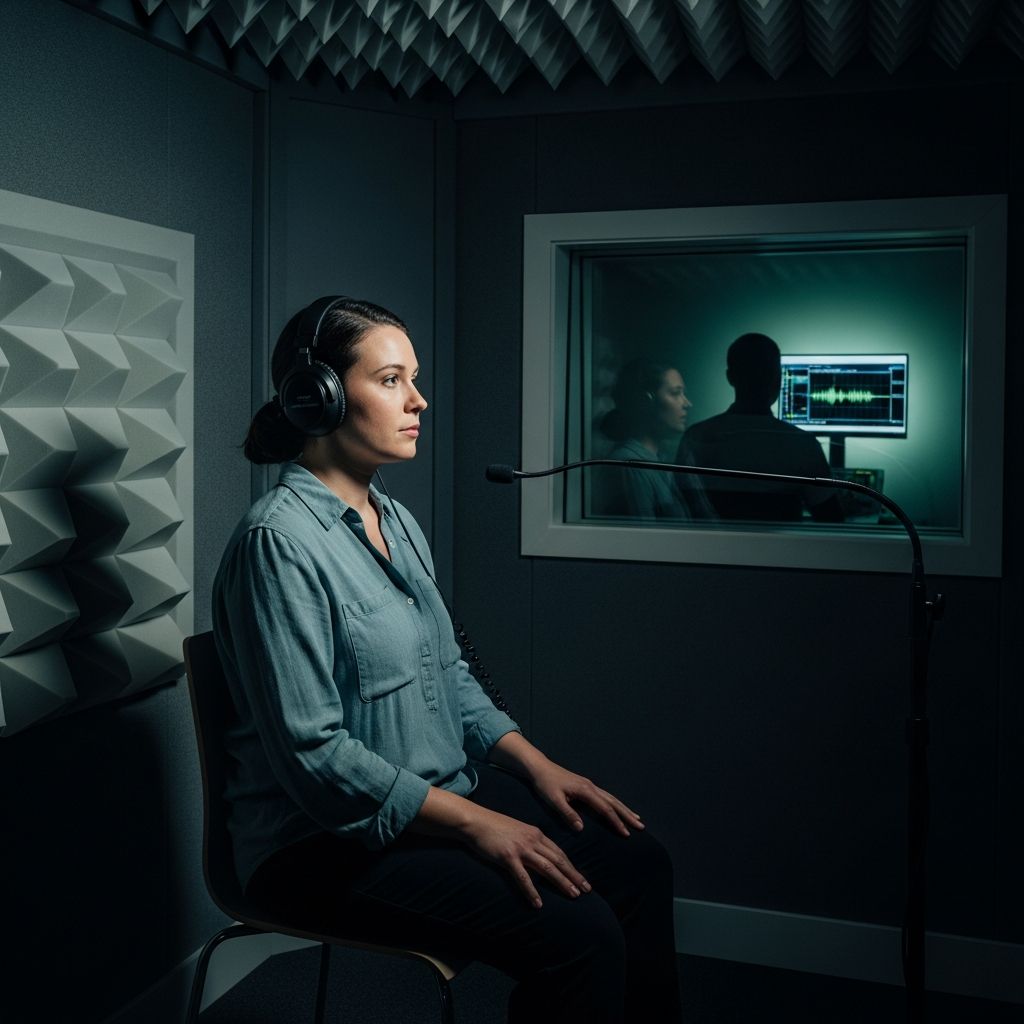
The test typically takes between five to thirty minutes and is performed by a qualified audiologist in a quiet, sound-treated environment. Speech audiometry consists of two main components: one that measures your speech reception threshold (SRT) and another that determines your speech discrimination (SD) or word recognition abilities. The results are scored using a percentage scale and are charted on an audiogram, which measures the decibel level, frequency, and severity of hearing loss.
Why Is Speech Audiometry Important?
Speech audiometry serves multiple critical purposes in hearing healthcare. Because pure tone audiometry is a limited predictor of a person’s actual ability to recognize and understand speech, speech audiometry provides essential functional assessment information. Understanding how someone with hearing loss recognizes or discriminates speech is particularly important before fitting them with hearing aids or other amplification devices.
Speech audiometry can reveal hearing impairments that other tests might miss or not measure effectively. It helps differentiate between types of hearing loss, such as sensorineural or conductive hearing loss, providing a clearer diagnostic picture. Additionally, it assesses the client’s full auditory pathway—from the ear through the cochlea, auditory nerve, brainstem, and to the brain’s auditory centers.
Key Applications of Speech Audiometry
Speech audiometry has several important clinical applications:
Speech Recognition Assessment: Evaluates your capacity to identify and understand words across varying volume levels, helping pinpoint problems with speech perception.
Hearing Loss Diagnosis: Helps differentiate between types of hearing loss and provides a clearer diagnostic picture of hearing impairment.
Hearing Aid Fitting and Fine-Tuning: Accurate speech audiometry results allow audiologists to customize hearing aids so they amplify sounds in ways that enhance speech clarity and improve communication.
Communication Impact Assessment: The test helps understand how hearing loss affects daily conversations and social interactions in everyday life.
Site-of-Lesion Assessment: Speech audiometry can help identify problems with the ear, cochlea, auditory nerve, brainstem, or the brain’s auditory centers.
Monitoring Hearing Health: Routine speech tests can track the status of hearing ability over time, which is necessary for continued management and adjustment of treatment.
Components of Speech Audiometry
Speech Detection Threshold (SDT)
The speech detection threshold is the minimum hearing level at which an individual can detect the presence of speech material 50% of the time. During an SDT test, the listener does not have to identify the material as speech but must indicate awareness that sound is present. This is similar to pure tone audiometry in that the patient simply responds to the presence of sound without needing to understand it. Common test material for SDT may include running speech or familiar words. The SDT is essentially the lowest volume at which someone can correctly perceive that speech is present.
Related Stories



Speech Reception Threshold (SRT)
The speech reception threshold is the minimum hearing level at which an individual can recognize and correctly repeat 50% of speech material presented. Unlike the SDT, which only requires detection of sound, the SRT requires actual recognition and comprehension. Spondees—two-syllable words with equal stress on both syllables—are the typical test material used to determine the SRT. Examples of spondaic words include “baseball,” “hotdog,” “sunset,” and “toothbrush.”
SRT testing is often used to validate your pure tone audiometric results. In other words, does the lowest level at which an individual can detect speech correlate to the hearing loss obtained through pure tone audiometry? The SRT score is also frequently used as a starting point in determining the presentation level when performing suprathreshold speech testing like word recognition scores (WRS).
Word Recognition Score (WRS)
Word recognition testing, also called word discrimination testing or speech discrimination testing, measures how clearly you can understand words when they are presented at a comfortable or loud listening level. During word recognition testing, audiologists present phonetically balanced word lists at suprathreshold levels (louder than the SRT) and ask patients to repeat the words they hear.
The audiologist scores the test by calculating the percentage of words correctly repeated. For example, if a 50-word list is presented and the patient correctly repeats 45 words, the word recognition score would be 90%. Common word lists used include CID W-22, CID W-1, and other phonetically balanced word lists that represent sounds commonly used in everyday speech.
Speech-in-Noise Testing
Speech-in-noise (SIN) testing evaluates how well a person can understand speech in the presence of background noise, which reflects real-world listening situations. The signal-to-noise ratio (SNR) is a key measurement in this type of testing, determining the level of the speech signal compared to the level of background noise. The higher the SNR, the easier it is for the patient to hear and understand speech in noisy environments.
What Happens During a Speech Audiometry Test?
The speech audiometry test is simple, non-invasive, and typically takes about five to thirty minutes depending on which components are performed. It is conducted by an expert audiologist in a quiet, sound-treated environment to minimize external distractions and ensure accurate results.
Test Procedure
Initial Setup: You will be seated in a soundproof booth or quiet testing room wearing headphones or using a speaker system.
Explanation: The audiologist will explain the procedure and what you need to do during the test. Your comfort and understanding of the instructions are essential.
SDT Testing: If performed, the audiologist will present speech material at varying volume levels, and you simply indicate when you hear sound.
SRT Testing: Spondaic words are presented at decreasing volume levels until you can no longer repeat them correctly 50% of the time.
Word Recognition Testing: Word lists are presented at a comfortable or loud listening level, and you repeat each word you hear. The audiologist records your responses and calculates the percentage correct.
Speech-in-Noise Testing: Speech is presented against background noise at varying ratios to assess your ability to understand speech in realistic listening environments.
Interpreting Speech Audiometry Results
Understanding Your Results
Your audiologist will help you understand your speech audiometry test scores, which reveal the type, frequency, and severity of a hearing impairment. Results are typically presented in relation to your pure tone audiometry findings.
Common Result Patterns
Normal Hearing: Speech reception threshold (SRT) matches the pure-tone average; word recognition score (WRS) is typically above 90%.
Sensorineural Hearing Loss: Normal or near-normal SRT but reduced WRS, indicating that while the hearing threshold is relatively preserved, speech clarity is compromised.
Conductive Hearing Loss: Elevated SRT but high WRS when speech is loud enough, showing that amplification of sound can restore clear speech understanding.
What WRS Scores Mean
Excellent: 90-100% – Normal speech understanding
Good: 80-88% – Mild difficulty understanding speech
Fair: 70-78% – Moderate difficulty
Poor/Great Difficulty: 54-64%
Very Poor: Below 52%
Speech Audiometry and Hearing Aid Fitting
Speech audiometry results are invaluable when it comes to hearing aid fitting and optimization. The SRT helps determine appropriate starting points for presentation levels during word recognition testing. Additionally, the SRT can be used to establish the most comfortable loudness level (MCL), which is helpful in setting hearing aid parameters.
Understanding a patient’s speech discrimination abilities helps audiologists select appropriate hearing aid technology and adjust settings to maximize speech clarity and comprehension. By knowing how well someone discriminates speech at different volume levels, audiologists can program hearing aids to enhance speech while managing background noise effectively.
Speech Audiometry for Different Types of Hearing Loss
Speech audiometry is particularly useful for identifying and characterizing different types of hearing loss. In sensorineural hearing loss, which affects the inner ear or auditory nerve, patients may have difficulty discriminating speech even when it is loud enough to hear. This is because the condition affects not just volume perception but also frequency resolution and sound clarity.
In conductive hearing loss, which occurs in the outer or middle ear, speech discrimination typically remains good once the sound reaches a sufficient volume. This is because the underlying neural pathways remain intact.
In central auditory processing disorders, pure tone thresholds may be normal, but speech discrimination—particularly in background noise—may be significantly impaired. Speech audiometry helps identify these conditions by revealing the discrepancy between pure tone results and speech recognition abilities.
Why Speech Audiometry Matters More Than You Think
While pure tone audiometry forms the foundation of hearing assessment, it has limitations in predicting real-world communication ability. Speech audiometry bridges this gap by using actual speech material that people encounter in daily life. This makes speech audiometry an essential component of comprehensive hearing evaluations because it directly measures functional communication ability rather than just theoretical hearing sensitivity.
Additionally, speech audiometry can assess the full auditory pathway—from the peripheral hearing system through central auditory processing. Some individuals may hear words presented but have difficulty processing those words due to neurological factors. Speech audiometry is often the only test that can detect these processing difficulties.
Frequently Asked Questions About Speech Audiometry
Q: How long does a speech audiometry test take?
A: Speech audiometry typically takes between five to thirty minutes depending on which components are performed and whether other hearing tests are included in your comprehensive hearing evaluation.
Q: Is speech audiometry painful or uncomfortable?
A: No, speech audiometry is completely non-invasive and painless. You simply listen to speech material through headphones or speakers and respond to what you hear.
Q: Can speech audiometry diagnose all types of hearing loss?
A: Speech audiometry is a valuable diagnostic tool that works best in combination with other tests like pure tone audiometry. Together, these tests can characterize most types of hearing loss and identify communication difficulties.
Q: What should I do to prepare for a speech audiometry test?
A: Simply arrive at your appointment on time and be prepared to listen carefully and respond to what you hear. No special preparation is needed. Make sure you’re well-rested and in a good frame of mind for the test.
Q: Why is my SRT different from my pure tone average?
A: Small differences between SRT and pure tone average are normal. Larger discrepancies may indicate testing issues, different acoustic conditions, or underlying auditory processing difficulties that warrant further investigation.
Q: Will speech audiometry results change my hearing aid settings?
A: Speech audiometry results can help your audiologist optimize your hearing aid settings for better speech clarity and comprehension, especially in different listening environments.
Q: Can children undergo speech audiometry testing?
A: Yes, speech audiometry can be adapted for children, though the specific testing materials and procedures may be modified based on age and developmental level. Pediatric audiologists are trained to conduct age-appropriate speech testing.
References
- Speech Audiometry — Burlington Ear Nose & Throat. Accessed December 1, 2025. https://burlingtonent.com/audiologist/audiometry/
- What is Speech Audiometry and Why is it Done? — Centre For Hearing. Accessed December 1, 2025. https://www.centreforhearing.org/wiki/speech-audiometry-tests-guide-4045
- Hearing Loss in Adults — American Speech-Language-Hearing Association (ASHA). Accessed December 1, 2025. https://www.asha.org/practice-portal/clinical-topics/hearing-loss/
- What is speech audiometry? — Amplivox. Accessed December 1, 2025. https://www.amplivox.com/education/knowledge-hub/what-is-speech-audiometry
- What is Speech Audiometry? — Auditdata. Accessed December 1, 2025. https://www.auditdata.com/audiology-solutions/measure/hearing-assessment/speech-audiometry/
- Speech Audiometry: An Introduction — Interacoustics Academy. Accessed December 1, 2025. https://www.interacoustics.com/academy/audiometry-training/speech-audiometry/speech-audiometry-introduction
Similar Articles








Read full bio of Sneha Tete