Spinach vs. Kale: Which Super Green Wins?
Discover the nutritional showdown between spinach and kale: vitamins, health benefits, risks, and how to choose the best leafy green for your diet.
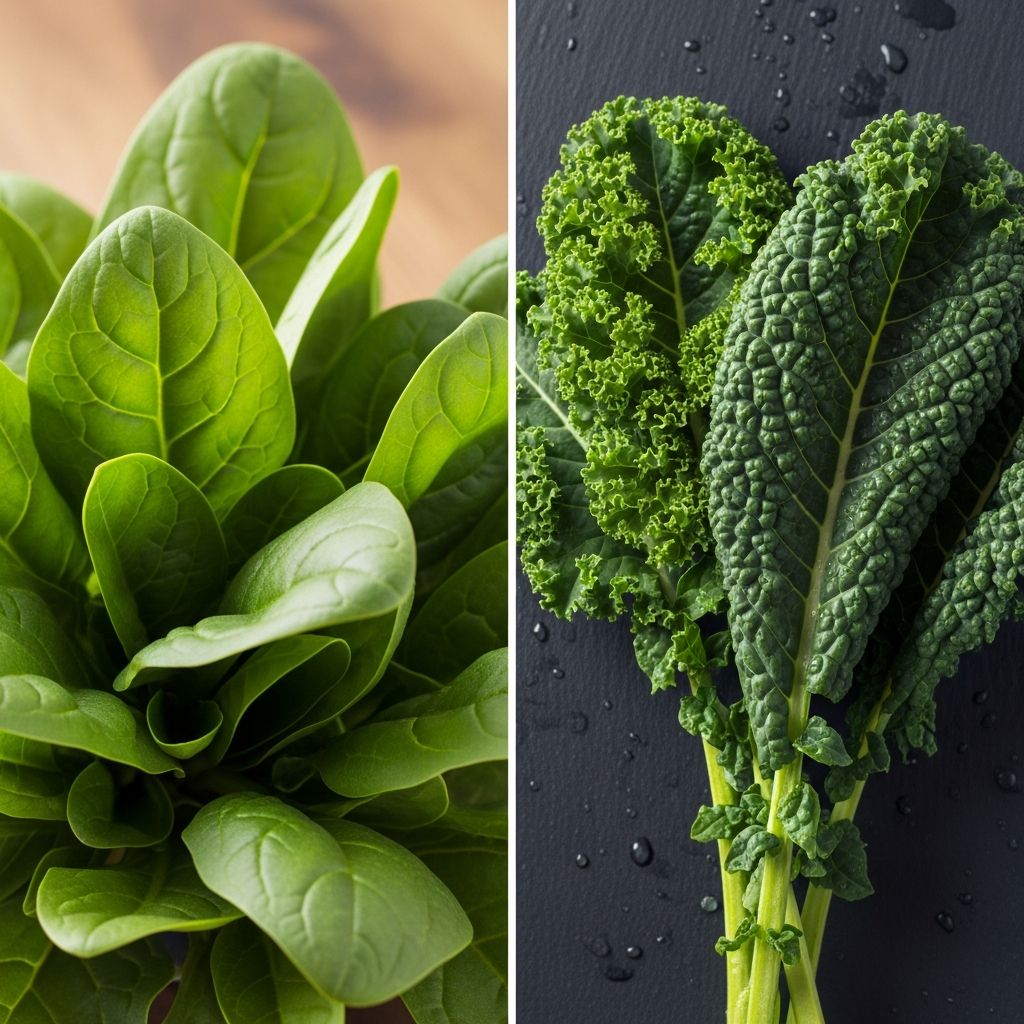
Spinach and kale are powerhouse leafy greens celebrated for their dense nutrient profiles and versatility in meals. Both belong to the cruciferous and amaranth families, respectively, delivering vitamins, minerals, antioxidants, and fiber that support heart health, digestion, and disease prevention. While no single green reigns supreme, understanding their differences helps tailor choices to specific health needs.
A Nutrition Showdown: Spinach vs. Kale
Per cup of raw greens, spinach and kale pack similar calories (around 7) but diverge in key nutrients. Kale excels in
vitamin C
(over twice spinach’s amount) and flavonoids, while spinach leads infolate
,vitamin A
, andiron
.| Nutrient (per 1 cup raw) | Kale (21g) | Spinach (30g) |
|---|---|---|
| Calories | 7 | 7 |
| Carbs | 1g | 1g |
| Fiber | 0.9g | 0.7g |
| Protein | 0.6g | 0.9g |
| Vitamin K (mcg) | 390 | 483 |
| Vitamin C (mg) | ~80 (higher) | 28 |
| Vitamin A (mcg) | 241 | 469 |
| Folate (mcg) | 62 | 194 |
| Iron (mg) | 1.6 | 2.7 |
| Calcium (mg) | 254 | 99 |
Data synthesized from comparative analyses; values approximate per 100g raw adjust proportionally. Kale’s edge in vitamin C boosts immunity and collagen production, while spinach’s folate supports DNA synthesis and pregnancy health.
Health Benefits of Kale
**Kale** crushes in heart-healthy flavonoids with anti-inflammatory and anti-cancer properties. It’s lower in calories, aiding weight management, and rich in
zeaxanthin and lutein
for eye health, potentially reducing age-related macular degeneration risk.- Heart Health: Flavonoids lower cholesterol and inflammation; omega-3s combat chronic disease roots.
- Digestion: Higher fiber (4.1g/100g) eases constipation and correlates with reduced heart disease/cancer risk.
- Protein Boost: 2.92g/100g helps plant-based diets meet needs.
- Pregnancy Support: Folate aids fetal development, though spinach has more.
Studies show kale juice improves cholesterol and antioxidant status in high-cholesterol individuals over 12 weeks.
Health Benefits of Spinach
**Spinach** shines with superior
vitamin A
for eye health and immunity, plus moreiron
andcalcium
for blood and bone support. Its thylakoids and glycolipids may curb cancer, obesity, and blood sugar spikes.- Blood Pressure: Nitrates and potassium reduce hypertension; one study found spinach soup lowered BP in 7 days.
- Cancer Prevention: Antioxidants protect cells; higher fiber (2.2g/100g) links to lower risks.
- Pregnancy Power: Double kale’s folate prevents neural tube defects.
- Bone Health: Vitamin K and calcium, though oxalates limit absorption.
Spinach’s profile supports eye health, cancer prevention, and metabolic control.
Potential Downsides and Risks
Neither is perfect.
Spinach
is high inoxalates
, binding calcium and raising kidney stone risk (80% of stones are calcium oxalate). Boiling reduces oxalates by 87%; limit if prone to stones.**Kale** risks include goitrogens (raw), potentially slowing thyroid function—cooking mitigates. Both can carry
E. coli
from contamination; wash thoroughly. Kale’s higher vitamin K may interact with blood thinners.- Choose organic or well-washed to minimize pesticides.
- Rotate greens to avoid excess oxalates or nitrates.
Taste, Texture, and How to Choose
**Kale** has a pungent, peppery bite; remove tough stems and massage leaves for tenderness. Opt for baby kale if milder.
Spinach
is milder, tender (especially baby varieties), blending seamlessly into smoothies.Related Stories



- When to Pick Kale: Need vitamin C boost, lower calories, or bold flavor in chips/salads.
- When to Pick Spinach: Folate needs (pregnancy), iron, or subtle taste in sautés.
- Best strategy: Eat both for complementary benefits.
How to Incorporate Spinach and Kale into Your Diet
Variety maximizes gains. Aim for 2+ cups daily.
- Smoothies: Blend spinach (mild) or kale with fruits for hidden greens.
- Salads: Massage kale; wilt spinach.
- Cooking: Sauté, steam, or bake kale chips; spinach in soups/eggs.
- Recipes: Kale pesto, spinach lasagna, green juices.
Pro tip: Freeze for longevity; cook to reduce oxalates/antinutrients.
Which Is Healthier for Your Heart?
Both excel, but
kale
edges with flavonoids and lower calories; spinach offers more fiber/protein. Leafy greens prevent too much intake—superfoods for cardiovascular health.Frequently Asked Questions (FAQs)
Is kale or spinach better for weight loss?
Both low-calorie, nutrient-dense; kale’s extra vitamin C and flavonoids slightly favor it, but volume eating either aids satiety.
Can spinach cause kidney stones?
High oxalates may; boil to reduce by 87% and pair with calcium-rich foods.
Is raw kale safe to eat daily?
Yes, in moderation; cook to deactivate goitrogens if thyroid concerns.
Which has more protein?
Kale slightly (2.92g vs. 2.86g/100g), but both boost plant protein.
Are baby kale and baby spinach healthier?
Milder, tender; similar nutrition, easier digestion.
How much vitamin K in each?
Spinach: 483mcg/cup; kale: 390mcg—both exceed daily needs.
References
- Kale vs. Spinach: Which Is Heart-Healthier? — Cleveland Clinic. 2023-approx. https://health.clevelandclinic.org/kale-vs-spinach-which-is-heart-healthier
- Kale vs. spinach: Health benefits, nutrition, and more — Medical News Today. 2023-approx. https://www.medicalnewstoday.com/articles/kale-vs-spinach
- Spinach vs. Kale: Is One Healthier? — Healthline. 2019-03-01 (updated; authoritative nutrition review). https://www.healthline.com/nutrition/kale-vs-spinach
Similar Articles








Read full bio of medha deb