Spinal Cord Compression: Causes, Symptoms & Treatment
Comprehensive guide to understanding spinal cord compression, its symptoms, causes, and effective treatment options.
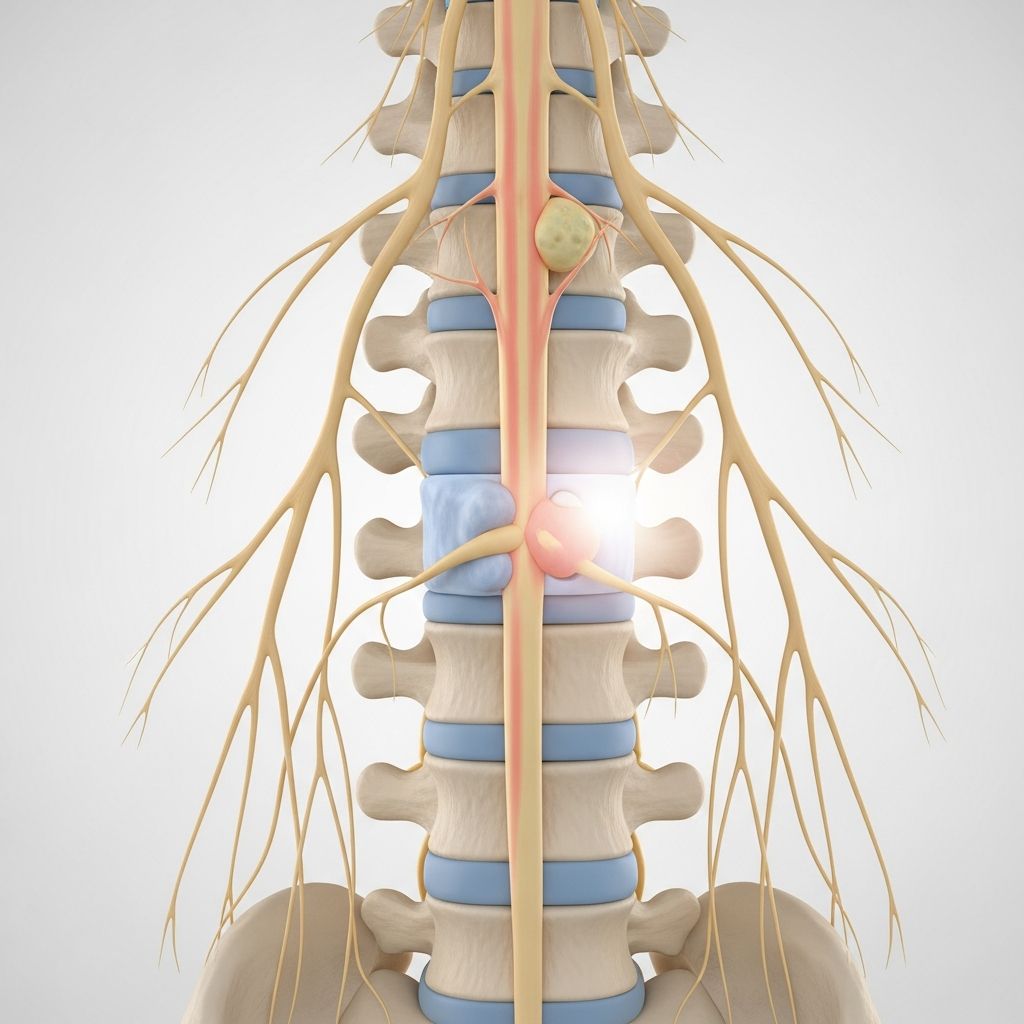
Understanding Spinal Cord Compression
Spinal cord compression, also known as myelopathy, is a serious medical condition in which pressure is placed on the spinal cord, disrupting normal nerve function and potentially causing permanent damage if left untreated. This condition can develop gradually over time or occur suddenly, depending on the underlying cause. The spinal cord is a vital bundle of nerves that transmits signals between the brain and the rest of the body, controlling movement, sensation, and vital functions. When something compresses or squeezes the spinal cord, these signals become disrupted, leading to a range of symptoms that can significantly impact a person’s quality of life.
Spinal cord compression can occur at any level of the spine—cervical (neck), thoracic (mid-back), or lumbar (lower back)—though cervical compression is particularly common and often referred to as cervical spondylotic myelopathy (CSM) when caused by degenerative changes. The severity and progression of symptoms depend on the degree of compression, how quickly it develops, and the individual’s overall health status.
Causes of Spinal Cord Compression
Spinal cord compression can result from various conditions affecting the spine and surrounding structures. Understanding the underlying cause is essential for determining the appropriate treatment approach.
Degenerative Disc Disease and Spondylosis
One of the most common causes of spinal cord compression is cervical spondylosis, a degenerative condition involving deterioration of the discs and joints in the spine. Over time, normal wear and tear can cause the intervertebral discs to lose height and integrity, and bone spurs (osteophytes) may develop along the vertebral bodies. These degenerative changes gradually narrow the spinal canal, reducing the space available for the spinal cord and nerve roots.
Herniated or Ruptured Discs
A herniated or ruptured intervertebral disc occurs when the soft inner material of the disc bulges through the fibrous outer ring, potentially pressing directly on the spinal cord or nerve roots. This can happen suddenly due to trauma or gradually through progressive disc degeneration.
Trauma and Injury
Traumatic events such as motor vehicle accidents, falls, or sports injuries can cause acute spinal cord compression through fractures, dislocations, or damage to the vertebrae. These injuries can lead to immediate or delayed compression as swelling and inflammation develop.
Tumors and Malignancies
Spinal cord compression can be caused by cancerous tumors that originate in the spine, metastasize to the spine from other locations, or grow within the spinal canal itself. Metastatic spinal cord compression (MSCC) is an oncological emergency requiring immediate intervention.
Infections and Abscess
Spinal epidural abscesses (SEA), collections of pus around the spinal cord, can cause compression and are typically associated with bacterial infections. These require urgent antibiotic therapy and sometimes surgical drainage.
Other Causes
Additional causes include bone spurs from arthritis, scoliosis or abnormal spine curvature, hematomas (blood collections), rheumatoid arthritis with atlantoaxial subluxation, ossification of the posterior longitudinal ligament, and cysts that compress the spinal cord.
Recognizing Symptoms of Spinal Cord Compression
The symptoms of spinal cord compression vary depending on the location and severity of compression, as well as the speed of onset. Early recognition of symptoms is crucial because prompt treatment can prevent permanent nerve damage.
Related Stories



Common Symptoms
Patients with spinal cord compression may experience:
- Pain in the back or neck that may radiate to the arms or legs
- Tingling or numbness in the arms, fingers, hands, legs, or feet
- Weakness in the muscles of the arms, shoulders, hands, or legs with difficulty grasping objects
- Loss of fine motor control or coordination
- Stiffness in the neck or back
- Difficulty walking or balance problems
- Loss of bladder or bowel control
- Bilateral symptoms (affecting both sides of the body), which may indicate more severe compression
Symptom Progression
Symptoms may develop gradually over months or years in cases of chronic compression, or they can appear suddenly if compression occurs acutely due to trauma or hemorrhage. The gradual progression often makes spinal cord compression difficult to diagnose initially, as patients may attribute symptoms to normal aging or minor conditions.
Diagnostic Approaches
Accurate diagnosis is essential for determining the appropriate treatment strategy. Physicians use several diagnostic tools to identify and assess spinal cord compression.
Physical Examination
During physical examination, the neurosurgeon or orthopedic spine surgeon will assess for myelopathy signs, including weakness, changes in reflexes, altered sensation, and gait abnormalities. The Lhermitte sign (an electric shock-like sensation when the neck is flexed) may be present in cervical compression.
Imaging Studies
Magnetic resonance imaging (MRI) is the gold standard for evaluating spinal cord compression, as it provides detailed images of the spinal cord, discs, and surrounding structures. Computed tomography (CT) can assess bone detail and may be combined with myelography for additional information. X-rays may reveal underlying degenerative changes or instability.
Additional Tests
Electromyography (EMG) and nerve conduction studies (NCS) can assess nerve function and help localize the level of compression. Laboratory tests may be necessary if infection is suspected.
Treatment Options for Spinal Cord Compression
Treatment decisions depend on the severity of compression, the underlying cause, the speed of symptom onset, and the patient’s overall health status. The general principle is to relieve pressure on the spinal cord as quickly as possible to prevent permanent neurological damage.
Conservative (Non-Surgical) Treatment
In milder cases with early-stage symptoms, initial treatment may be non-surgical. The goal of conservative management is to decrease pain and improve functional ability, though it does not address the underlying structural problem causing compression.
Medications
Several medication classes may help manage symptoms:
- Nonsteroidal Anti-Inflammatory Drugs (NSAIDs): Anti-inflammatory medications like ibuprofen, naproxen, and aspirin can relieve pain and reduce inflammation.
- Oral Corticosteroids: A short course of oral corticosteroids may help reduce inflammation and provide temporary symptom relief.
- Muscle Relaxants: These agents can help reduce muscle tension and associated discomfort.
- Narcotics: Reserved for severe pain unresponsive to other options, narcotics are typically prescribed for limited periods.
Epidural Steroid Injections
In this procedure, steroids are injected into the epidural space surrounding the spinal cord to reduce local inflammation. While these injections may temporarily relieve pain and swelling, they do not resolve pressure on the spinal cord and may sometimes be contraindicated, potentially worsening cervical spondylotic myelopathy.
Physical Therapy and Activity Modification
Physical therapy helps strengthen muscles around the spine, improve flexibility, and enhance stability. Limiting high-risk physical activities and avoiding movements that exacerbate symptoms are also important components of conservative care.
Immobilization
Wearing a cervical collar or brace may help limit motion in the neck and prevent further compression in cervical cases.
Surgical Treatment
Cervical spondylotic myelopathy is generally considered a surgical condition when conservative management fails or symptoms are moderate to severe. The goal of surgery is to decompress the spinal cord and, when necessary, stabilize the spine.
Indications for Surgery
Surgery may be recommended when:
- Symptoms worsen despite conservative treatment
- Neurological function continues to decline
- The spine is unstable
- A biopsy is needed to diagnose the underlying cause
- Compression is severe and causing significant functional impairment
- Symptoms developed suddenly and loss of function is recent
Surgical Procedures
Anterior Cervical Discectomy and Fusion (ACDF): This is a commonly performed procedure for discogenic compression caused by herniated discs or degenerative disc disease. The surgeon removes the problematic disc from the front of the spine and may insert an implant or perform fusion with bone graft material to stabilize the spine.
Cervical Arthroplasty: In this procedure, the diseased disc is replaced with an artificial disc, potentially preserving more neck motion than fusion.
Posterior Cervical Laminectomy with Fusion: When compression involves multiple levels or when the spinal canal is narrow, the surgeon may remove the lamina (posterior portion of the vertebra) to create more space for the spinal cord.
Foraminotomy: This procedure widens the opening where nerve roots exit the spinal canal by removing a small portion of bone. It is often used when bone spurs or foraminal narrowing compresses the nerve roots and sometimes is performed in conjunction with a laminectomy.
Stabilization Procedures
When spinal instability is present, the surgeon may insert rods, screws, and pins to stabilize the spine and prevent further damage.
Treatment for Specific Causes
Cancer-Related Compression
High-dose intravenous corticosteroids such as dexamethasone or methylprednisolone are administered immediately to reduce swelling around the spinal cord. External radiation therapy is the most common treatment for spinal cord compression caused by cancer. Surgery may be performed to remove tumors or in cases where tumors recur after radiation therapy.
Spinal Epidural Abscess
Once diagnosed, intravenous antibiotics are routinely administered immediately. The standard regimen typically includes ceftriaxone and vancomycin to cover common organisms. In stable patients without evidence of sepsis, the decision to withhold antibiotics before obtaining cultures may be made in consultation with neurosurgery. Surgical drainage may be necessary in certain cases.
Hematomas
Surgical drainage is sometimes necessary to relieve compression from blood collections around the spinal cord.
Importance of Urgent Treatment
When spinal cord compression is detected and treated quickly—before nerve pathways are destroyed—treatment can prevent permanent damage to the spinal cord, and neurological function is usually recovered. Delayed treatment can result in permanent paralysis, loss of bladder or bowel control, and irreversible neurological deficit. Therefore, patients experiencing symptoms consistent with spinal cord compression should seek immediate medical evaluation.
Important Precautions
Patients with spinal cord compression should avoid chiropractic manipulation, as this treatment approach can worsen compression and cause additional nerve damage. Any therapeutic approach should be discussed with qualified spine specialists.
Prevention and Lifestyle Considerations
While not all causes of spinal cord compression can be prevented, maintaining spinal health reduces the risk of degenerative conditions:
- Maintain a healthy body weight
- Eat a well-balanced diet
- Avoid smoking
- Engage in regular physical activity
- Practice proper ergonomics and body mechanics
- Wear appropriate protective equipment during sports and high-risk activities
Frequently Asked Questions
Q: What is the difference between spinal cord compression and spinal cord injury?
A: Spinal cord compression involves pressure on the spinal cord that can develop gradually or acutely, potentially reversible with prompt treatment. Spinal cord injury involves actual damage or trauma to the nerve fibers themselves and may result in permanent neurological changes depending on severity and treatment timing.
Q: Can spinal cord compression heal on its own?
A: Mild cases may improve with conservative treatment, but structural compression typically requires intervention to relieve pressure. Without treatment, compression often worsens progressively, leading to permanent nerve damage.
Q: How long does recovery take after spinal cord compression surgery?
A: Recovery time varies depending on the procedure performed and individual factors. Most patients can return to light activities within 2-4 weeks, with full recovery taking several months. Physical therapy plays an important role in rehabilitation.
Q: What are the risks of not treating spinal cord compression?
A: Untreated spinal cord compression can lead to permanent paralysis, loss of bladder or bowel control, chronic pain, and irreversible neurological damage. Early intervention is crucial to prevent these complications.
Q: Can spinal cord compression recur after treatment?
A: Recurrence is possible, particularly if the underlying degenerative process continues. However, surgical fusion or arthroplasty reduces recurrence at the treated level. Multiple level involvement may require treatment of additional segments over time.
Q: Are there non-surgical alternatives to spinal cord compression surgery?
A: Conservative treatments including physical therapy, medications, epidural injections, and activity modification can help manage mild to moderate symptoms. However, progressive neurological decline or severe compression typically requires surgical intervention.
References
- Spinal Cord Compression – StatPearls — National Center for Biotechnology Information (NCBI). 2024. https://www.ncbi.nlm.nih.gov/books/NBK557604/
- Cervical Spondylotic Myelopathy (Spinal Cord Compression) — American Academy of Orthopaedic Surgeons (AAOS). 2024. https://orthoinfo.aaos.org/en/diseases–conditions/cervical-spondylotic-myelopathy-spinal-cord-compression/
- Compression of the Spinal Cord – Merck Manuals — Merck & Co., Inc. 2024. https://www.merckmanuals.com/home/brain-spinal-cord-and-nerve-disorders/spinal-cord-disorders/compression-of-the-spinal-cord
- Spinal Cord Compression: Symptoms, Treatment, and Urgency — CNS of Maryland. 2024. https://www.cnsomd.com/blog/spinal-cord-compression-symptoms-treatment-and-urgency/
- Spinal cord compression — Canadian Cancer Society. 2024. https://cancer.ca/en/treatments/side-effects/spinal-cord-compression
- Spinal Cord Compression — University of Rochester Medical Center. 2024. https://www.urmc.rochester.edu/encyclopedia/content?ContentTypeID=134&ContentID=13
Similar Articles








Read full bio of medha deb