Spinal Cysts: Types, Symptoms, Causes & Treatment
Complete guide to spinal cysts: understand symptoms, causes, diagnosis, and treatment options.
What Are Spinal Cysts?
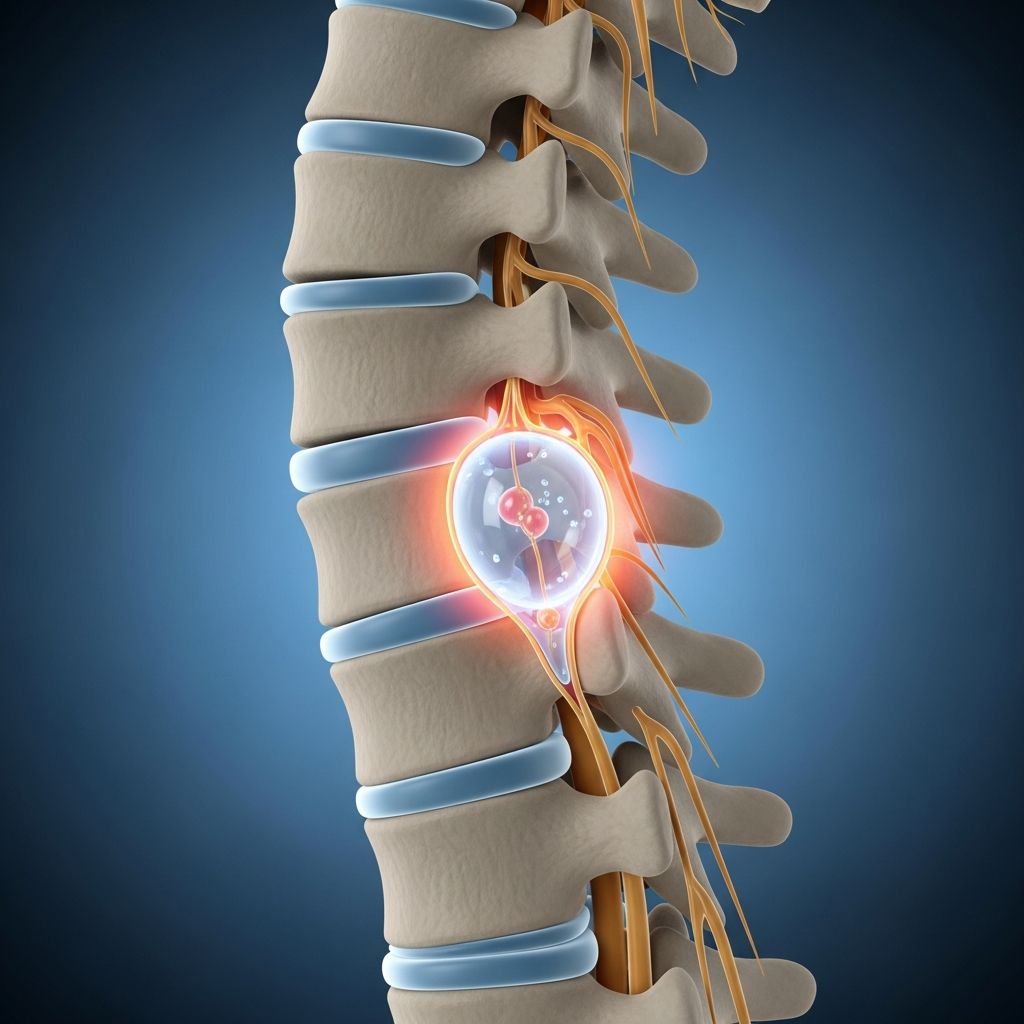
Spinal cysts are fluid-filled sacs that develop within or around the spine. These abnormal growths can occur as a result of spinal degeneration, aging, or other medical conditions affecting the vertebral column. While many spinal cysts remain asymptomatic and require no treatment, some can grow large enough to compress nearby nerves and structures, leading to pain and other neurological symptoms. Understanding the nature of spinal cysts is crucial for patients who may be concerned about imaging findings or experiencing spine-related symptoms.
Most spinal cysts are benign, meaning they are non-cancerous and do not pose immediate danger to overall health. However, their location within the spinal canal and proximity to vital neural structures determine whether they will cause functional problems. When cysts develop within the tight confines of the spinal canal, even modest growth can result in significant compression of nerve roots or the spinal cord itself.
Types of Spinal Cysts
Several distinct types of cysts can develop within the spinal region, each with different characteristics, causes, and clinical implications.
Synovial Cysts
Synovial cysts, also called articular cysts or ganglion cysts, represent the most common type of spinal cyst encountered in clinical practice. These cysts develop within the facet joints, which are the small joints connecting adjacent vertebrae. As cartilage wears away due to age-related degeneration or osteoarthritis, excess synovial fluid accumulates within the joint capsule. This fluid becomes trapped and forms a fluid-filled sac that may bulge into the spinal canal. Synovial cysts most frequently occur at the L4 and L5 levels in the lumbar spine, affecting older adults with pre-existing degenerative disc disease.
The mechanism behind synovial cyst formation involves ongoing inflammation and mechanical wear of the facet joints. When joint capsules rupture due to overloading and inflammation, the resulting disruption can lead to cyst development. Some synovial cysts remain small and stable indefinitely, while others gradually enlarge and begin to compress adjacent neural structures.
Tarlov Cysts
Tarlov cysts, also known as meningeal cysts or perineural cysts, are fluid-filled sacs that develop on spinal nerve roots. These cysts typically occur at the base of the spine, particularly at the sacral level where nerve roots exit the spinal canal. Tarlov cysts affect less than 10 percent of the population, making them relatively uncommon, though they are frequently discovered incidentally during imaging studies performed for other reasons.
Most people with Tarlov cysts experience no symptoms, and these incidental findings typically require no intervention. However, when cysts enlarge sufficiently to compress nerve roots, patients may develop pain, numbness, bladder or bowel dysfunction, and mobility limitations.
Other Types of Spinal Cysts
Additional cyst types include arachnoid cysts, which develop from the membrane surrounding the spinal cord; extramedullary cysts that form outside the spinal cord tissue; and syringomyelia, a condition involving fluid collection within the spinal cord itself. Syringomyelia can develop secondary to various conditions including Chiari malformation, spinal cord injury, meningitis, spinal cord tumors, or tethered spinal cord conditions. Each type has distinct characteristics and potential clinical significance.
Related Stories



Causes and Risk Factors
Understanding the underlying mechanisms that lead to spinal cyst development is essential for appreciating why these lesions occur more frequently in certain populations.
Age-Related Degeneration
The primary cause of synovial cyst formation is age-related degeneration of spinal structures. As individuals age, the intervertebral discs lose hydration and height, the facet joint cartilage gradually wears away, and the spinal ligaments become less elastic. These degenerative changes alter the biomechanics of the spine, placing increased stress on facet joints and promoting synovial cyst development.
Osteoarthritis and Degenerative Disease
Patients with pre-existing osteoarthritis and other degenerative spine conditions face higher risk of developing synovial cysts. The inflammatory processes associated with degenerative disc disease and facet joint arthritis create an environment conducive to cyst formation. These cysts are most often diagnosed in older adults who have both arthritis and degenerative spinal conditions.
Spinal Instability and Trauma
Spinal instability resulting from trauma, injury, or abnormal spine movement can contribute to cyst formation. When segments of the spine develop excessive movement or lose normal stability, mechanical stress increases on the facet joints and surrounding structures, promoting inflammation and cyst development.
Symptoms and Clinical Presentation
The clinical presentation of spinal cysts varies dramatically depending on cyst size, location, and whether neural compression occurs.
Asymptomatic Cysts
The majority of spinal cysts cause no symptoms and are discovered incidentally during imaging studies performed for unrelated reasons. These asymptomatic cysts typically remain stable over time and require no treatment or monitoring beyond occasional follow-up imaging to confirm stability.
Pain Symptoms
When spinal cysts enlarge and compress nerve roots or the spinal cord, characteristic pain patterns emerge. Patients frequently experience lower back pain that radiates into one or both legs, a condition commonly referred to as sciatica. The pain is often described as radiating, persistent nerve pain that may extend preferentially into the leg corresponding to the compressed nerve root.
A distinctive feature of cyst-related pain is its relationship to patient positioning and activity. Pain often worsens with standing or remaining still for prolonged periods, but may improve when patients sit down or change positions frequently. This positional relationship occurs because certain positions alter the degree of neural compression, either increasing or decreasing pressure on affected nerve roots.
Neurological Symptoms
Beyond pain, spinal cysts can cause various neurological manifestations including:
– Numbness and tingling in the legs or feet
– Leg weakness or heaviness
– Muscle spasm or cramping
– Loss of reflexes
– Difficulty sitting for prolonged periods
– Decreased mobility and stiffness
– Changes in bowel or bladder function
– In severe cases, cauda equina syndrome from compression of multiple nerve roots in the sacral region
Symptoms in pediatric patients can include nausea and vomiting, seizures, neck pain or stiffness, loss of balance, and walking difficulties, though pediatric spinal cysts are relatively rare.
Misdiagnosis Considerations
Because spinal cysts present with symptoms similar to other spinal conditions, they may be misdiagnosed as herniated discs or other degenerative spine pathology. Accurate diagnosis requires appropriate imaging and clinical correlation with symptoms.
Diagnosis
Proper diagnosis of spinal cysts involves imaging studies combined with clinical evaluation.
Magnetic Resonance Imaging (MRI)
MRI is the gold standard imaging modality for identifying spinal cysts. This imaging technique provides excellent visualization of soft tissues, cyst fluid, and the relationship between cysts and neural structures. MRI can determine cyst size, exact location, and the degree of compression affecting surrounding structures.
Computed Tomography (CT)
CT imaging may be used to visualize bony anatomy and can demonstrate calcification within cysts. CT is particularly useful for surgical planning when intervention is considered necessary.
Clinical Correlation
Imaging findings must be correlated with patient symptoms and physical examination findings. An incidentally discovered cyst in an asymptomatic patient typically requires no intervention, while the same finding in a symptomatic patient warrants consideration of treatment options.
Treatment Options
Management of spinal cysts depends on symptom severity, cyst characteristics, and patient preferences.
Conservative Management
Most patients with spinal cysts benefit from conservative treatment approaches. These include activity modification to avoid positions that exacerbate symptoms, frequent position changes to reduce neural compression, physical therapy to strengthen supporting muscles, and anti-inflammatory medications to manage pain and inflammation. Many patients find symptom improvement by adjusting their activities to remain in seated positions more often.
Interventional Procedures
For patients with persistent symptoms despite conservative treatment, minimally invasive interventions may be considered. These can include cyst aspiration, rupture procedures, or steroid injections to reduce inflammation around compressed nerve roots.
Surgical Treatment
Surgery becomes an option for patients with significant neurological symptoms or functional impairment unresponsive to conservative management. Surgical procedures typically involve cyst decompression or removal, often combined with stabilization procedures if underlying instability exists. Surgical candidates should be carefully selected, as outcomes depend on proper patient selection and procedure selection.
Prognosis and Monitoring
Most spinal cysts have an excellent prognosis, particularly asymptomatic cysts that remain stable over time. Periodic follow-up imaging may be recommended for asymptomatic cysts or those causing minimal symptoms to monitor for any change in size or characteristics. Symptomatic cysts that respond well to conservative treatment often maintain improved function with continued activity modification and symptom management strategies.
When to Seek Medical Attention
Patients should seek medical evaluation if they experience persistent lower back pain, leg pain or numbness, progressive weakness, or changes in bowel or bladder function. These symptoms may indicate nerve compression requiring professional evaluation. Emergency evaluation is warranted if patients develop cauda equina syndrome symptoms, including sudden onset of bilateral leg pain, numbness in the saddle distribution, bowel or bladder dysfunction, or progressive leg weakness.
Frequently Asked Questions
Q: Are spinal cysts dangerous?
A: Most spinal cysts are benign and not dangerous. Many cause no symptoms and require no treatment. They become concerning only if they enlarge enough to compress nerves, causing pain or neurological dysfunction.
Q: Can spinal cysts go away on their own?
A: Most spinal cysts remain stable indefinitely. While some may decrease in size spontaneously, they typically do not completely resolve. Many remain asymptomatic throughout a patient’s lifetime.
Q: How common are spinal cysts?
A: Synovial cysts are the most common type and frequently occur in older adults with degenerative spine disease. Tarlov cysts affect less than 10 percent of the population and are often found incidentally.
Q: Do all spinal cysts require surgery?
A: No. Most spinal cysts respond well to conservative treatment with activity modification, physical therapy, and medications. Surgery is reserved for patients with significant symptoms unresponsive to conservative measures.
Q: Can I exercise with a spinal cyst?
A: Yes, appropriate exercise is often beneficial. Physical therapy and gentle strengthening exercises can help manage symptoms, though high-impact activities or excessive bending may need to be modified based on individual symptoms.
Q: How often should spinal cysts be monitored?
A: Asymptomatic cysts may require occasional follow-up imaging to confirm stability, typically at intervals recommended by your physician. Symptomatic cysts are monitored based on treatment response and symptom progression.
Q: What is the difference between a spinal cyst and a herniated disc?
A: Herniated discs involve nucleus pulposus material protruding from the disc space, while cysts are fluid-filled sacs. Though symptoms can overlap, the underlying pathology and treatment approaches differ.
Q: Can spinal cysts cause permanent nerve damage?
A: Prolonged compression of nerve roots can potentially cause permanent damage, which underscores the importance of seeking medical evaluation for progressive neurological symptoms. Most cases respond well to treatment before permanent damage occurs.
References
- How Common Are Lumbar Cysts? — Atlanta Brain and Spine. https://atlantabrainandspine.com/how-common-are-lumbar-cysts/
- Spinal Cysts — Alamo Neurosurgical Institute. https://alamoneurosurgicalinstitute.com/services/spinal-cysts/
- Synovial Cyst on the Spine: Symptoms & Causes — NewYork-Presbyterian. https://www.nyp.org/ochspine/synovial-cyst
- Tarlov Cyst: What It Is, Causes, Symptoms & Treatment — Cleveland Clinic. https://my.clevelandclinic.org/health/diseases/tarlov-cyst
- Spinal Cysts — Avicenna Klinik. https://avicenna-klinik.com/en/spine-symptoms-disorders/spinal-cysts/
- Spine Cysts — Goodman Campbell Brain and Spine. https://www.goodmancampbell.com/conditions/spine/pediatric/spine-cysts/
- Syringomyelia – Symptoms and Causes — Mayo Clinic. https://www.mayoclinic.org/diseases-conditions/syringomyelia/symptoms-causes/syc-20354771
Similar Articles








Read full bio of medha deb