Spinal Manipulation: What You Need To Know
Evidence-based guide to spinal manipulation: benefits, risks, and what research shows.
Understanding Spinal Manipulation
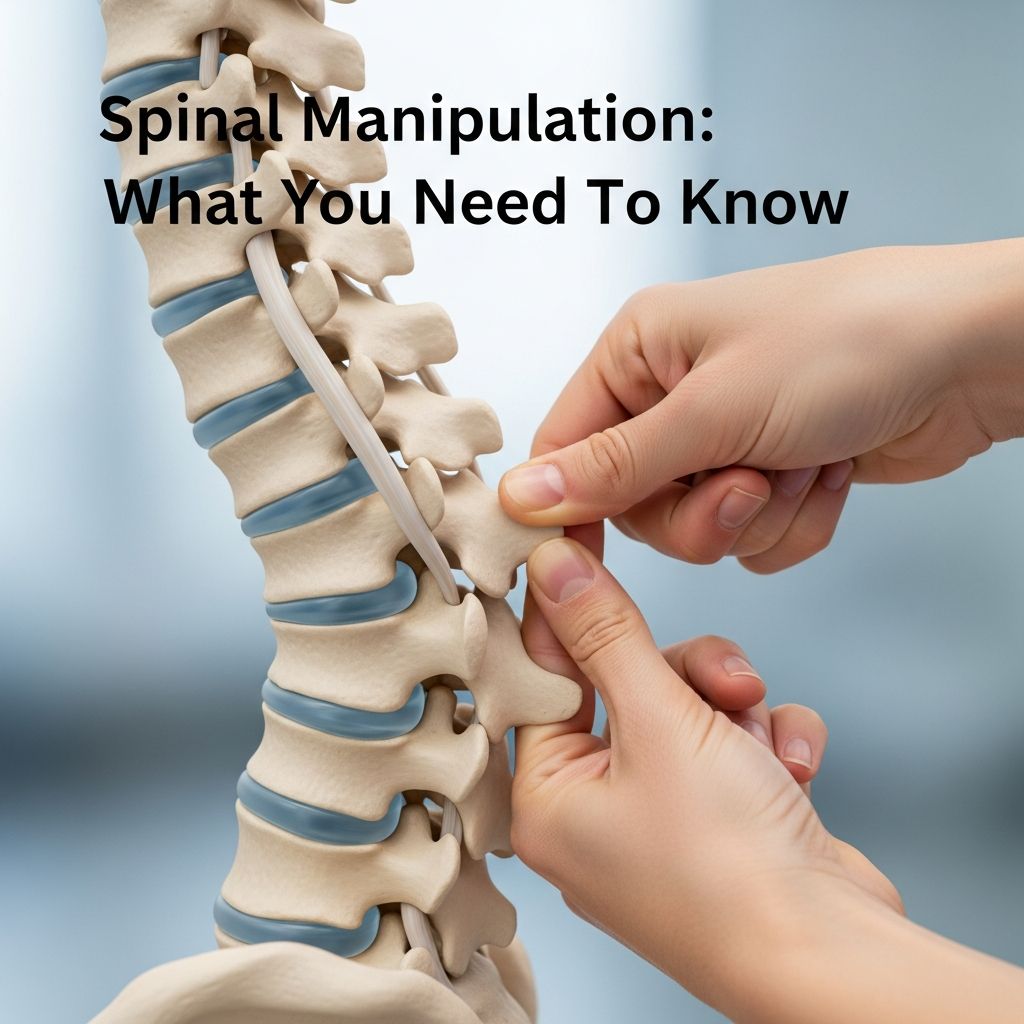
Spinal manipulation, also known as a chiropractic adjustment, is a hands-on manual therapy technique in which practitioners apply controlled force to joints of the spine to improve spinal motion and the body’s overall ability to move. This therapeutic intervention is performed on the synovial joints of the spine, including the facet joints, and represents one of the most commonly used complementary and integrative health approaches in the United States. The procedure aims to address musculoskeletal pain, improve function, and potentially influence the nervous system through biomechanical changes.
The technique involves applying a rapid force, known as a thrust, perpendicular to the surfaces of a spinal joint. This action creates a separation between the articular surfaces of the joint, resulting in cavitation within the synovial fluid—a phenomenon often accompanied by an audible popping sound. Understanding how spinal manipulation works requires knowledge of both the mechanical processes involved and the physiological effects that occur within the body.
What the Science Says About Effectiveness
Low-Back Pain
Research has demonstrated that spinal manipulation can be effective for managing low-back pain, particularly acute pain. A comprehensive analysis found that spinal manipulation was more effective than placebo and as effective as medication in reducing low-back pain intensity. For individuals experiencing acute low-back pain, the evidence suggests modest improvements in pain and function. Studies have identified specific patient characteristics that predict positive responses to manipulation, enabling clinicians to better select candidates most likely to benefit from this treatment.
The effectiveness of spinal manipulation for chronic low-back pain shows more variable results. While some patients experience sustained relief, the research indicates that benefits may be temporary in nature. Recent NCCIH-funded research has investigated the biomechanisms underlying spinal manipulation, revealing that the treatment affects pain perception in specific ways that differ from other therapeutic approaches such as stationary bicycle exercise or low-back extension exercises.
Neck Pain and Cervical Spine Conditions
For patients with acute neck pain, research evidence indicates that spinal manipulation or home exercises appeared to be more effective than medication in both the short and long term. An NCCIH-funded study of 272 patients demonstrated this finding in 2012. A 2015 research review that examined results from 51 trials involving 2,920 participants reported that there is weak evidence that spinal manipulation may provide short-term relief from acute or chronic neck pain.
The National Institute for Health and Care Excellence (NICE) guidelines recommend the use of thoracic spinal manipulation in conjunction with range of movement and strengthening exercises to help relieve neck pain. This recommendation is based on guidelines from the American Physical Therapy Association, which found that for patients with acute neck pain with mobility deficits, multiple sessions of thoracic manipulation provided benefits compared to control groups in reducing pain over the immediate and short term.
However, it is important to note that for patients with chronic neck pain not associated with whiplash and without arm pain or headaches, there is moderate- to high-quality evidence of clinically meaningful improvements from spinal manipulation or mobilization. For whiplash-related neck pain, the evidence for long-term effectiveness is insufficient, although short-term benefits have been documented.
Related Stories



How Spinal Manipulation May Work
Biomechanical Mechanisms
The biomechanical changes caused by spinal manipulation are thought to have physiological consequences through their effects on sensory information flowing to the central nervous system. When a spinal joint is manipulated, the kinematics of the complete spinal motion segment become considerably more complex than manipulation of independent peripheral joints. However, the fundamental mechanical events remain consistent: separation of articular surfaces and cavitation within synovial fluid.
Neurophysiological Effects
An experimental body of evidence indicates that spinal manipulation impacts multiple components of the nervous system. The treatment influences primary afferent neurons from muscles such as the erector spinae, affects motor control systems, and modulates pain processing pathways.
Central Sensitization Reduction: Central sensitization, defined as increased responsiveness of pain receptors in the central nervous system to normal or sub-threshold sensory input, results in heightened pain sensitivity. Spinal manipulation may affect central sensory processing by removing subthreshold mechanical or chemical stimuli from the erector spinae muscles, thereby reducing this hypersensitivity phenomenon.
Muscle Spindle and Tendon Organ Stimulation: Spinal manipulation stimulates muscle spindle afferents and Golgi tendon organ afferents—nervous system components that influence movement and flexibility. This stimulation may contribute to improvements in range of motion and functional capacity.
Effects on Herniated Discs: Mechanical and chemical changes in the intervertebral foramen caused by a herniated intervertebral disc can affect dorsal roots and dorsal root ganglia, structures involved in pain perception. While it remains unclear whether spinal manipulation directly affects these changes, individuals with herniated lumbar discs have demonstrated clinical improvement in response to the treatment.
Identifying Candidates for Manipulation
Predictors of Success for Low-Back Pain
Research has identified specific clinical characteristics that predict favorable responses to spinal manipulation. The presence of these factors helps clinicians select patients most likely to benefit from treatment:
- Pain lasting less than 16 days
- No symptoms extending below the knee
- Fabry Anxiety and Belief Questionnaire (FABQ) score below 19
- Internal hip rotation of at least 35 degrees in at least one hip
- Hypomobility (restricted movement) of at least one lumbar spine level
The two most important identifiers for potential success are pain lasting less than 16 days and absence of symptoms distal to the knee. Patients presenting with these characteristics have significantly higher probability of responding positively to manipulation.
Predictors of Success for Cervical Spine Conditions
For patients with acute neck pain, six factors predict immediate favorable responses to cervical manipulation:
- Initial Neck Disability Index scores below 11.50
- Bilateral involvement pattern (symptoms on both sides)
- Not performing sedentary work exceeding 5 hours daily
- Experiencing improvement when moving the neck
- Not experiencing worsening when extending the neck
- Diagnosis of spondylosis without radiculopathy
The presence of four or more of these predictors increases the probability of successful manipulation to 89%.
Potential Risks and Safety Considerations
Common Side Effects
Common side effects of spinal manipulation are generally mild to moderate in nature and may include:
- Local discomfort at the manipulation site
- Headache
- Tiredness or fatigue
- Radiating discomfort in arms or legs
These effects typically resolve quickly without requiring additional intervention.
Rare but Serious Complications
While serious complications from spinal manipulation are extremely rare, they warrant consideration. Cauda Equina Syndrome (CES)—a condition involving nerve compression in the spinal canal that can cause pain, weakness, loss of feeling in one or both legs, and bowel or bladder problems—may be a rare complication. However, it remains unclear whether there is a direct association between spinal manipulation and CES development, as this condition usually occurs independently.
For manipulation affecting the cervical (upper) spine, potential risks include vertebral artery dissection or spasm and brain stem lesions. In very rare instances, forceful manipulation of the cervical spine in vulnerable patients may result in serious consequences. A systematic review found correlations between cervical manipulation and mild to moderate adverse effects, with less frequent but more serious outcomes such as cervical artery dissection.
Research indicates that while the overall risk of injury from manipulation appears small, the procedure has potential to expose patients to vertebral artery damage that could be avoided with the use of mobilization—a technique involving non-thrust passive movements. Experts recommend that clinicians advise patients to adopt a cautious approach and avoid forceful manipulation of the upper spine with rotational components, where risks appear greatest.
Low-Back Pain Safety Profile
For risks specifically associated with low-back spinal manipulation, the evidence is more reassuring. In people whose pain is caused by a herniated disc, manipulation of the low back appears to have a very low chance of worsening the herniation.
Comparison: Spinal Manipulation Versus Other Treatments
| Treatment Comparison | Spinal Manipulation | Medication | Home Exercises |
|---|---|---|---|
| Acute Low-Back Pain | As effective as medication | Effective for pain relief | Supports long-term recovery |
| Acute Neck Pain | More effective than medication short/long term | Less effective than manipulation | As effective as manipulation |
| Chronic Low-Back Pain | Modest improvements in pain/function | Limited benefit | Beneficial for management |
| Pain Perception Effects | Affects pain in unique ways different from other therapies | Direct neurochemical effects | Structural strengthening benefits |
Effectiveness for Other Conditions
While most research on spinal manipulation has focused on low-back and neck pain, some evidence exists for its application in other conditions. However, the quantity and quality of research on these applications remain more limited compared to spine pain conditions. Practitioners may recommend spinal manipulation as part of a comprehensive treatment approach for various musculoskeletal complaints, though patients should be aware that evidence quality varies considerably depending on the specific condition.
Evidence-Based Approach to Treatment
Current evidence supports an evidence-based approach to low-back and neck pain management that may include spinal manipulation as one option among several. Complementary and integrative health therapies, including spinal manipulation, offer additional options to conventional treatments, which often have limited effectiveness in managing back and neck pain.
When considering spinal manipulation, patients and healthcare providers should:
- Assess whether the patient meets predictive criteria for favorable response
- Consider the duration and characteristics of pain
- Evaluate presence of red flag symptoms requiring urgent medical attention
- Discuss potential risks and benefits specific to the patient’s condition
- Consider combining manipulation with exercise and movement therapy for enhanced outcomes
- Plan appropriate follow-up to assess treatment response
Frequently Asked Questions
Q: Is spinal manipulation safe for everyone?
A: While spinal manipulation is generally safe for most people when performed by trained professionals, certain populations require caution. Those with osteoporosis, certain types of cancer, spinal cord compression, or specific cardiovascular conditions may not be suitable candidates. Always inform your healthcare provider of your complete medical history before undergoing manipulation.
Q: How many spinal manipulation sessions are typically needed?
A: Treatment frequency varies based on individual conditions and response to therapy. Acute conditions may improve with a few sessions, while chronic conditions might require longer treatment courses. Your healthcare provider can recommend an appropriate treatment plan based on your specific situation.
Q: Can spinal manipulation help with herniated discs?
A: Research indicates that for people with pain caused by herniated discs, low-back manipulation appears to have a very low chance of worsening the herniation. Many individuals experience pain relief, though clinical improvement varies among patients.
Q: What is the difference between manipulation and mobilization?
A: Manipulation involves a high-velocity, low-amplitude thrust applied to a joint, often producing an audible pop. Mobilization consists of slower, gentler passive movements without thrusting. Both techniques can be therapeutic, and mobilization may present lower risks for certain conditions, particularly cervical spine treatment.
Q: Should spinal manipulation be combined with other treatments?
A: Evidence supports combining spinal manipulation with other therapeutic approaches such as exercise, stretching, and movement training for enhanced outcomes. This multimodal approach often provides better long-term results than manipulation alone.
Q: How long do the effects of spinal manipulation typically last?
A: The duration of benefits varies among individuals and conditions. Some people experience sustained relief lasting weeks or months, while others may experience temporary improvement. Combining manipulation with ongoing exercise and proper ergonomics helps extend benefits.
References
- Spinal Manipulation — Physiopedia. 2024. https://www.physio-pedia.com/Spinal_Manipulation
- Spinal manipulation — Wikipedia. 2024. https://en.wikipedia.org/wiki/Spinal_manipulation
- Spinal Manipulation for Low-Back Pain — National Center for Complementary and Integrative Health (NCCIH), U.S. Department of Health and Human Services. 2015. https://files.nccih.nih.gov/s3fs-public/Spinal_Manipulation_for_LBP_12-01-2015.pdf
- The Effectiveness of Spinal Manipulative Therapy in Treating Spine Pain — Journal of Orthopaedic & Sports Physical Therapy. 2025. https://www.jospt.org/doi/10.2519/jospt.2025.12707
- Chiropractic adjustment — Mayo Clinic. 2024. https://www.mayoclinic.org/tests-procedures/chiropractic-adjustment/about/pac-20393513
Similar Articles








Read full bio of Sneha Tete