Spindle Cell Melanoma: Diagnosis, Features, and Treatment
Understanding spindle cell melanoma: A rare melanoma variant with unique diagnostic challenges and treatment considerations.
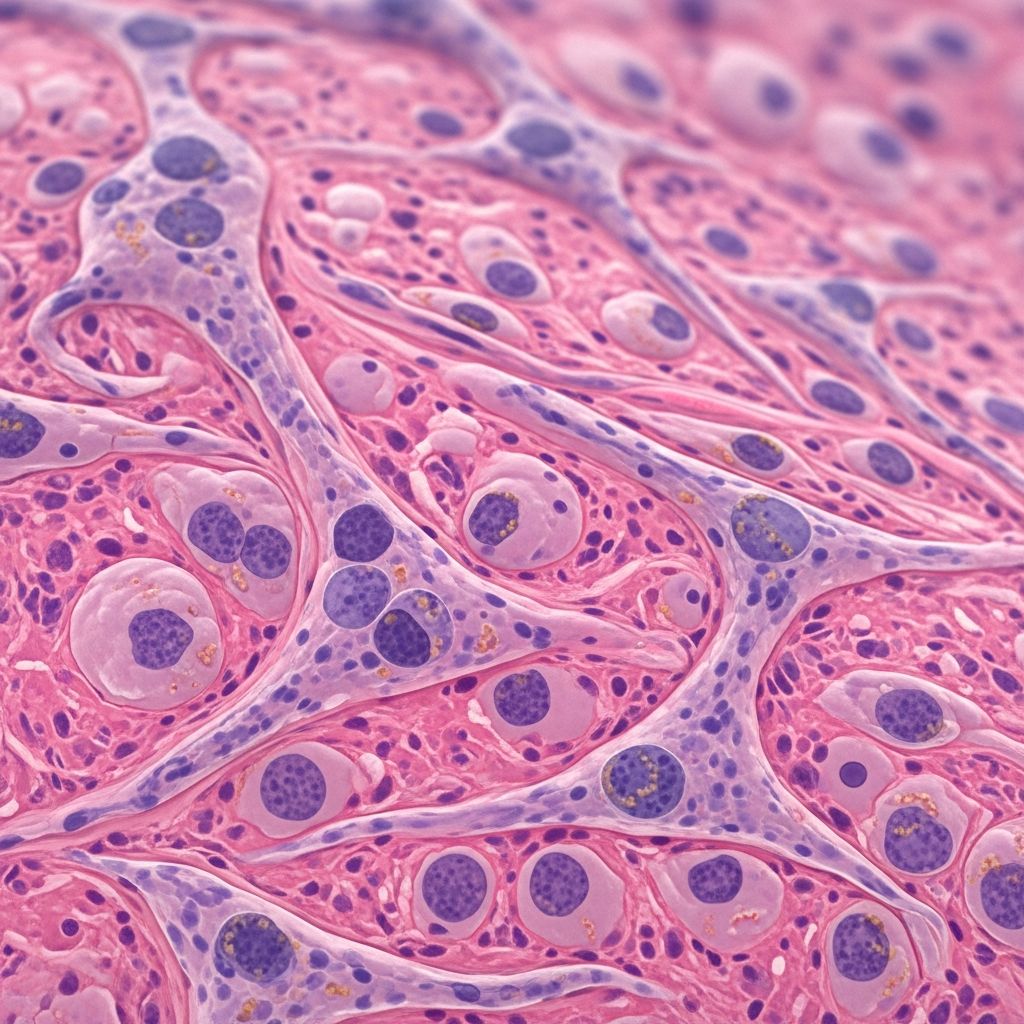
Spindle Cell Melanoma: Understanding a Rare Melanoma Variant
Spindle cell melanoma is a rare histological variant of melanoma characterized by the presence of spindle-shaped melanocytes. This distinctive form of skin cancer presents unique diagnostic challenges due to its atypical presentation and potential confusion with other spindle cell tumors. Understanding its clinical features, pathological characteristics, and management strategies is essential for accurate diagnosis and appropriate treatment.
Introduction to Spindle Cell Melanoma
Spindle cell melanoma represents a specialized histological subtype within the broader melanoma family. Unlike more common melanoma variants dominated by epithelioid cells, this form features elongated, spindle-shaped melanocytic cells that create distinctive microscopic patterns. The condition often presents diagnostic difficulties because its microscopic appearance can mimic other skin and soft tissue malignancies with similar spindle cell morphologies.
Desmoplastic melanoma is recognized as a variant of spindle cell melanoma where varying proportions of spindle cells and desmoplastic cells are present in the histology. However, recent research suggests that desmoplastic melanoma and spindle cell melanoma may represent two distinct types of melanoma, as differences in staining patterns, genetic mutations, and clinical manifestations have been identified.
Epidemiology and Demographics
The actual incidence of spindle cell melanoma remains uncertain due to its rarity and diagnostic challenges. Studies have suggested that between 1% and 14% of all melanomas represent the spindle cell variant, including desmoplastic melanoma. This wide range reflects diagnostic variability and the difficulty in consistently identifying and classifying this subtype across different pathology laboratories.
An important epidemiological association exists between spindle cell melanoma (including desmoplastic melanoma) and lentigo maligna in sun-exposed areas. This relationship suggests that chronic solar exposure may be a contributing factor in the development of certain spindle cell melanomas, particularly in older individuals with significant cumulative sun damage.
Prognostic data indicates that worse outcomes are observed in Caucasian men aged over 66 years, particularly when spindle cell melanomas present with advanced disease. The majority of cases present with advanced disease at the time of diagnosis, contributing to the challenges in managing this condition.
Causes and Risk Factors
While specific etiological factors for spindle cell melanoma require further investigation, the association with lentigo maligna suggests that chronic ultraviolet radiation exposure is a significant risk factor. Like other melanoma variants, spindle cell melanoma likely results from the malignant transformation of melanocytic stem cells that have undergone genetic changes.
The relationship between spindle cell melanoma and desmoplastic variants in sun-exposed areas of the head and neck indicates that cumulative solar damage contributes to disease development in these locations. However, spindle cell melanomas can also occur in non-sun-exposed areas, suggesting that additional genetic and environmental factors may be involved in pathogenesis.
Clinical Features and Presentation
Spindle cell melanoma frequently presents as a non-specific amelanotic (non-pigmented) nodule on the patient’s trunk, head, or neck. This presentation is deceptively unremarkable, often resembling benign skin lesions or other malignancies, which contributes to diagnostic delays.
Key clinical characteristics include:
- Non-pigmented or minimally pigmented appearance
- Nodular morphology with poorly defined borders
- Location on sun-exposed areas, particularly the head and neck
- Slow growth pattern in some cases
- Potential to resemble scar tissue
- May present as widespread melanoma metastases at initial presentation
Related Stories



The non-specific features of spindle cell melanoma frequently lead to diagnostic delays because the condition is often not suspected clinically. Patients and clinicians may initially attribute the lesion to benign causes or other malignancies, resulting in postponed diagnosis and potentially advanced disease at presentation.
Microscopic Features and Histopathology
Under microscopy, spindle cell melanoma displays distinctive characteristics that differentiate it from other melanoma variants and mimics. The diagnostic features include the presence of spindle-shaped tumor cells within the dermis and subcutis, often surrounded by mature collagen bundles. The relative proportion of tumor cells to surrounding stroma varies considerably among cases.
In cases with abundant tumor cells, the lesion may be reported specifically as spindle-cell melanoma, whereas lesions with lower cellularity and more prominent stromal involvement may be classified as desmoplastic melanoma. These tumors are usually deeply infiltrative, and accurate identification of the depth of invasion often relies on special stains such as Melan-A and other immunohistochemical markers.
Scattered lymphocytes and plasma cells within the tumor may provide a diagnostic clue to the diagnosis. Less cellular variants may be mistaken for dermatofibroma or other benign fibrohistiocytic lesions, emphasizing the importance of immunohistochemistry in establishing correct diagnosis.
Diagnosis and Diagnostic Methods
A combination of histological clues and immunohistochemistry markers is required to diagnose spindle cell melanoma. The diagnosis is generally made on a biopsy of the lesion, though it can commonly be mistaken for another tumor histologically, necessitating careful pathological evaluation.
Immunohistochemical staining markers useful in diagnosis include:
- S100 antigen (positive in melanoma)
- HMB-45 (helpful in identifying melanocytic differentiation)
- Melan-A (useful to delineate the lesion and illustrate follicular invasion)
- p75 (additional marker for melanocytic origin)
Special stains may be used to differentiate spindle cell melanoma from other spindle cell tumors, particularly when morphologic features alone are ambiguous. The combination of morphologic and immunophenotypic features, along with clinical context, enables accurate diagnosis and distinction from mimickers.
Differential Diagnoses
Spindle cell melanoma can be easily confused with other spindle cell tumors, creating diagnostic challenges that may delay treatment. Several conditions should be considered in the differential diagnosis:
Reed Naevus
Reed naevus (also called a pigmented spindle-cell naevus) is a melanocytic naevus with a largely spindle-cell appearance under microscopy. Differentiation from spindle cell melanoma is based on architectural features: Reed naevi display symmetrical architecture with good lateral demarcation, epidermal hyperplasia, and uniform nests of cells. These benign lesions lack the cytologic atypia and infiltrative behavior characteristic of melanoma.
Cutaneous Clear Cell Sarcoma
The differentiation of cutaneous clear cell sarcoma from spindle cell melanoma is largely histological, as both may stain positively for similar indicators including S100, HMB-45, and Melan-A. However, cutaneous clear-cell sarcoma tends to show uniform patterns of spindle-cell fascicles (bundles) under microscopy, present throughout the entire tumor and encased by fibrous septa. The stroma tends to be hyalinised, sclerotic, and reticulated, distinguishing it from spindle cell melanoma.
Leiomyosarcoma
Leiomyosarcoma pathology may be indistinguishable morphologically from melanoma. Immunohistochemical differentiation is crucial, as leiomyosarcomas express smooth muscle markers (actin, desmin) rather than melanocytic markers, enabling proper classification and appropriate treatment planning.
Atypical Fibroxanthoma
Atypical fibroxanthoma can resemble spindle cell melanoma histologically but differs immunophenotypically. The markers S100, p75, and HMB-45 are negative after staining in atypical fibroxanthoma, clearly distinguishing it from melanoma.
Desmoplastic Melanoma Distinction
While desmoplastic melanoma was historically described as a variant of spindle cell melanoma in 1971, recent studies suggest they represent two distinct types of melanoma with differences in staining patterns, genetic mutations, and clinical manifestations. This reclassification has implications for prognosis and treatment planning.
Complications and Prognosis
Metastasis represents the major complication of spindle cell melanoma. The tendency for nodal involvement is relatively low compared to some other melanoma variants; however, the majority of spindle cell melanomas present with advanced disease, indicating that distant metastases may already be present at diagnosis.
Prognostic factors include:
- Advanced disease with nodal and distal metastasis is associated with worse outcomes
- Higher grades of tumors have been associated with poorer disease-specific survival and overall survival
- Worse prognosis observed in Caucasian men aged over 66 years
- Delays in diagnosis due to atypical presentation contribute to advanced stage at presentation
The advanced stage at presentation significantly impacts prognosis, as does the degree of tumor differentiation and the presence of metastatic disease. These factors underscore the importance of clinical suspicion and accurate diagnosis to enable early treatment intervention.
Treatment and Management
The treatment for spindle cell melanoma is similar to that for other forms of melanoma, with surgical excision as the first step in management. The extent of surgical margins and the need for additional interventions depend on tumor characteristics including thickness, location, and stage.
Additional treatment considerations include:
- Sentinel node biopsy for tumors with high-risk features to assess for lymph node involvement
- Adjuvant systemic therapies for advanced disease
- Radiation therapy for patients with brain metastases, painful bone metastases, or problematic skin and soft tissue metastases unresponsive to systemic therapy
- Close clinical and radiological surveillance following treatment
Management must be individualized based on tumor staging, patient factors, and overall health status. The advanced disease presentation common in spindle cell melanoma often necessitates systemic therapy in addition to surgical management.
Clinical Outcomes
The outcomes for spindle cell melanoma are significantly influenced by stage at presentation and tumor characteristics. The predominance of advanced disease at diagnosis creates challenges for achieving long-term disease control. While the nodal involvement rate tends to be lower than in other melanoma subtypes, the frequency of distant metastases at presentation results in overall poor outcomes.
Further studies are needed to clarify the clinical manifestations, risk factors, treatment management, and prognosis of spindle cell melanoma. The rarity of this variant and its diagnostic challenges have limited the accumulation of large patient cohorts necessary for robust prognostic and treatment outcome analysis.
Key Diagnostic Considerations
Recognition of spindle cell melanoma requires high clinical suspicion, particularly when evaluating non-specific nodular lesions in sun-exposed areas of the head and neck. The amelanotic presentation and lack of pigmentation further reduce clinical suspicion, contributing to diagnostic delays.
Pathologists must maintain awareness of this diagnostic entity and employ appropriate immunohistochemical staining when spindle cell morphology is identified, particularly in older patients with sun-damaged skin. The combination of morphologic features with immunophenotypic confirmation enables accurate diagnosis and distinction from numerous mimickers.
Frequently Asked Questions
Q: How common is spindle cell melanoma?
A: Spindle cell melanoma is rare, accounting for between 1% and 14% of all melanomas based on available studies. However, the actual incidence remains uncertain due to diagnostic variability and the difficulty in consistently identifying this subtype.
Q: What does spindle cell melanoma look like clinically?
A: Spindle cell melanoma typically presents as a non-pigmented nodule on the trunk, head, or neck. It may resemble scar tissue or other benign skin lesions, contributing to diagnostic delays. Some cases may present with widespread metastases at the time of initial presentation.
Q: How is spindle cell melanoma diagnosed?
A: Diagnosis requires a combination of histological features and immunohistochemistry markers including S100, HMB-45, and Melan-A. A skin biopsy is necessary to establish diagnosis, though the condition can be mistaken for other tumors histologically.
Q: What is the relationship between spindle cell melanoma and desmoplastic melanoma?
A: While desmoplastic melanoma was historically considered a variant of spindle cell melanoma, recent studies suggest they represent distinct melanoma types with differences in staining patterns, genetic mutations, and clinical manifestations.
Q: What is the prognosis for spindle cell melanoma?
A: Prognosis is generally poor due to the advanced disease stage at presentation in most cases. Worse outcomes are associated with higher tumor grades, nodal involvement, distant metastases, and age over 66 years in Caucasian men.
Q: How is spindle cell melanoma treated?
A: Surgical excision is the primary treatment approach, similar to other melanoma variants. Additional therapies may include sentinel node biopsy, adjuvant systemic therapy, and radiation therapy depending on tumor stage and clinical presentation.
Q: What conditions can mimic spindle cell melanoma?
A: Several conditions can resemble spindle cell melanoma, including Reed naevus, cutaneous clear cell sarcoma, leiomyosarcoma, and atypical fibroxanthoma. Careful histological and immunohistochemical evaluation is essential for accurate differentiation.
References
- Spindle Cell Melanoma — DermNet NZ. 2020. https://dermnetnz.org/topics/spindle-cell-melanoma
- Melanoma Pathology — DermNet NZ. 2020. https://dermnetnz.org/topics/melanoma-pathology
- Melanoma Skin Cancer: Images, Diagnosis, and Treatment — DermNet NZ. 2020. https://dermnetnz.org/topics/melanoma
- Malignant Melanoma — NCBI Bookshelf. StatPearls Publishing. https://www.ncbi.nlm.nih.gov/books/NBK470409/
Similar Articles








Read full bio of medha deb