Spine: Anatomy, Function, Parts & Disorders
Complete guide to spine structure, function, segments, and common spinal disorders explained.
Understanding Your Spine: Structure and Function
Your spine, also known as the backbone, is one of the most important structures in your body. It is a complex arrangement of small bones called vertebrae, along with disks, joints, ligaments, muscles, nerves, and your spinal cord. Together, these components create a sophisticated system that supports your entire body weight, protects your spinal cord and nerves, and enables you to walk, twist, bend, and move in countless ways. Understanding the anatomy and function of your spine is essential for maintaining back health and preventing injury.
The Basic Structure of Your Spine
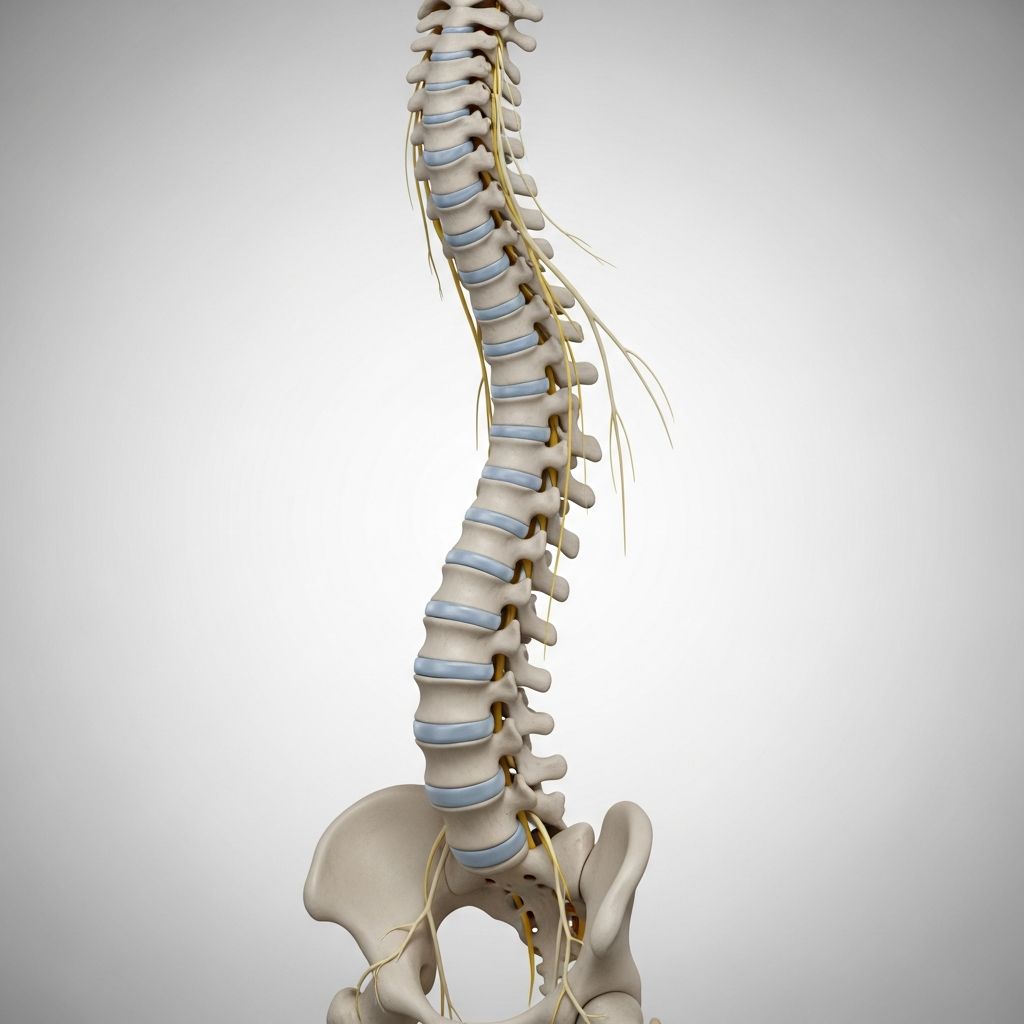
Your spine consists of 33 vertebrae stacked one on top of another, similar to building blocks. These bones are separated by cushioning pads called intervertebral disks that absorb shock and allow for movement. The vertebrae are held together by ligaments, fibrous tissues that connect bone to bone and maintain spinal stability. Supporting muscles run along the sides of your spine and help you move while providing additional support.
A healthy spine has three natural curves that form an S-shape when viewed from the side. These curves are not defects or abnormalities; rather, they are essential features that function as shock absorbers. By distributing your body’s weight more evenly, these curves protect your spine from injury and allow it to withstand tremendous amounts of stress and pressure during daily activities.
The Five Segments of Your Spine
Your spine is divided into five distinct regions, each serving different functions and containing different numbers of vertebrae. Starting from the top and moving downward toward your tailbone, here are the five segments:
Cervical Spine (Neck)
The cervical spine comprises the first seven vertebrae, labeled C1 through C7. Located at the top of your spine, these vertebrae support the weight of your head and allow for a wide range of head movement. The first vertebra, called the atlas (C1), is ring-shaped and forms the connection point between your head and spine. The second vertebra, the axis (C2), allows your atlas to pivot, enabling the side-to-side rotation of your head as in shaking your head “no.” The cervical spine creates an inward C-shaped curve called a lordotic curve, which helps support your head’s weight while maintaining proper alignment.
Thoracic Spine (Mid-Back)
The thoracic spine is the longest section of your spine, consisting of 12 vertebrae labeled T1 through T12. Located in the middle of your back, starting at the base of your neck and ending at the bottom of your ribs, the thoracic spine connects directly to your rib cage. This connection provides additional stability and protection for vital organs within your chest, including your heart and lungs. The thoracic spine is naturally less mobile than other regions due to its attachment to the rib cage, which limits the range of motion to primarily rotation and some flexion.
Lumbar Spine (Lower Back)
Related Stories



Your lumbar spine consists of five large vertebrae labeled L1 through L5. Located in your lower back, this region is the most common site of back problems. The lumbar spine bears most of your body’s weight, especially when you lift, carry, or bend forward. It also experiences the most stress from daily activities. Like the cervical spine, the lumbar spine features an inward-curving lordotic curve. Despite its strength, the lumbar spine is vulnerable to injury because it handles so much of your body’s weight and movement demands.
Sacrum
Below the lumbar spine is a large, triangular bone called the sacrum. The sacrum is composed of five vertebrae (S1 through S5) that fused together during your development in the womb. This fusion means the sacral vertebrae no longer move independently. The sacrum forms the base of your spine and connects to your hip bones, creating a ring structure called the pelvic girdle. This connection is crucial for transferring the weight of your upper body to your legs and pelvis.
Coccyx (Tailbone)
At the very bottom of your spine is a small bone called the coccyx, commonly known as the tailbone. This structure is formed by four fused vertebrae that developed into a single bone. Though small and seemingly insignificant, the coccyx serves important functions as an attachment point for pelvic floor muscles and various ligaments. Despite its size, the coccyx can be a source of discomfort if injured or irritated.
Key Components of Spinal Anatomy
Vertebrae: The Building Blocks
Vertebrae are the individual bones that stack to form your spinal column. Most vertebrae can move to allow a range of motion, though the sacral and coccygeal vertebrae are fused and remain stationary. Each vertebra has a thick, rounded front portion called the body that bears most of your spine’s weight. Behind the body, vertebrae form a ring that creates the spinal canal—a tunnel that houses and protects your spinal cord and nerve roots from injury.
Intervertebral Disks
Intervertebral disks are flat, round cushioning pads that sit between adjacent vertebrae. These disks serve two critical functions: they act as shock absorbers, protecting your vertebrae from impact and stress, and they provide flexibility by allowing your spine to bend and flex. Each disk consists of two main parts. The outer layer, called the annulus fibrosus, is made of tough, fibrous tissue that holds the disk in place. The inner core, known as the nucleus pulposus, is a soft, gel-like substance that absorbs shock. When a disk becomes damaged or ruptures, some of the nucleus pulposus may leak through a tear in the annulus, potentially causing pain by putting pressure on nearby nerves. This condition is known as a herniated or bulging disk.
Facet Joints
Facet joints are specialized joints that connect adjacent vertebrae, allowing them to move against each other while maintaining stability. Each vertebra has two sets of facet joints: one pair facing upward to connect with the vertebra above, and another pair facing downward to connect with the vertebra below. These joints are lined with cartilage, a slippery connective tissue that enables smooth movement. Facet joints allow you to twist, bend forward and backward, and move side to side. However, these joints can develop arthritis over time, which may cause back or neck pain.
The Spinal Cord and Nerve Roots
Running through the center of your spinal column is your spinal cord, a vital column of nerve tissue that extends from your brain through the spinal canal to your lower back. The spinal cord carries signals between your brain and the rest of your body, enabling all movement and sensation. As the spinal cord travels through the spine, it branches into 31 pairs of nerve roots. These nerve roots exit the spinal cord through small openings called neural foramina, which are located between the vertebrae on both sides of the spine. Once they exit, these nerves travel throughout your body to control movement, sensation, and organ function.
Ligaments and Soft Tissues
Your spine is surrounded by various soft tissues that play crucial roles in support and movement. Ligaments are fibrous bands of tissue that connect bone to bone, holding your vertebrae together and maintaining spinal stability. Tendons connect muscles to bone and facilitate movement. Muscles that attach to and surround your spine provide support, enable movement, and help protect the spine from injury. These soft tissues work together to create a stable yet flexible structure that can accommodate the demands of daily life.
How Nerve Distribution Works
The 31 pairs of spinal nerves are distributed throughout the spinal column, with specific nerve roots corresponding to different areas of the body. The cervical nerves control sensation and movement in the upper chest and arms. The thoracic nerves manage the chest and abdominal area. The lumbar nerves control the legs, bowel, and bladder. This segmental organization means that damage to a specific area of the spine can result in dysfunction in the corresponding body region. For example, an injury to the lumbar spine may affect leg movement or bladder control, while cervical spine damage could impact arm function.
Common Spinal Disorders and Conditions
Because your spine is so complex and bears so much of your body’s weight and stress, it is susceptible to various disorders and conditions. Common spinal problems include herniated disks, where the nucleus pulposus leaks through the annulus and puts pressure on nerves; spinal stenosis, a narrowing of the spinal canal that can compress nerves; spondylosis, which refers to age-related wear and tear on the spine; and facet joint arthritis, which can cause pain and stiffness. Many of these conditions develop gradually over time due to wear and tear, poor posture, repetitive strain, or injury.
Maintaining Spine Health
Keeping your spine healthy is essential for maintaining mobility and quality of life. Regular exercise, particularly activities that strengthen the core muscles that support your spine, can help prevent back injuries and pain. Maintaining proper posture while sitting, standing, and lifting helps distribute weight evenly along your spine. Avoiding smoking, maintaining a healthy weight, and managing stress all contribute to spinal health. If you experience persistent back or neck pain, it is important to consult with a healthcare provider for proper evaluation and treatment.
Frequently Asked Questions
Q: How many bones make up the spine?
A: The spine consists of 33 vertebrae. Of these, 24 are mobile vertebrae distributed across the cervical, thoracic, and lumbar regions. The remaining nine vertebrae (five sacral and four coccygeal) are fused together and form the sacrum and coccyx, respectively.
Q: What is the primary function of the spinal cord?
A: The spinal cord is a column of nerves that transmits signals between your brain and the rest of your body. It controls all movement, sensation, and organ function. The spine protects the spinal cord from injury by surrounding it with bone.
Q: Why are the curves in the spine important?
A: The three natural curves in your spine create an S-shape that functions as a shock absorption system. These curves distribute body weight more evenly across the spine, allowing it to withstand significant stress and protecting your vertebrae from injury during daily activities.
Q: What is a herniated disk?
A: A herniated disk occurs when the tough outer layer (annulus) of an intervertebral disk tears, allowing the soft, gel-like center (nucleus pulposus) to leak out. This can put pressure on nearby nerves, causing pain, weakness, or numbness in the affected area.
Q: Can exercises help prevent back pain?
A: Yes, regular exercise that strengthens the core muscles supporting your spine can help prevent back injuries and reduce pain. Additionally, maintaining proper posture and avoiding repetitive strain on your back contribute to spinal health.
Q: What role do intervertebral disks play?
A: Intervertebral disks serve two main functions: they act as shock absorbers to protect your vertebrae from impact and stress, and they provide flexibility by allowing your spine to bend and flex during movement.
References
- Spine: Anatomy, Function, Parts, Segments & Disorders — Cleveland Clinic. 2024. https://my.clevelandclinic.org/health/body/10040-spine-structure-and-function
- The Structure and Function of a Healthy Spine — Cleveland Clinic Abu Dhabi. 2024. https://www.clevelandclinicabudhabi.ae/en/health-hub/health-resource/diseases-and-conditions/the-structure-and-function-of-a-healthy-spine
- Cervical Spine (Neck): What It Is, Anatomy & Disorders — Cleveland Clinic. 2024. https://my.clevelandclinic.org/health/articles/22278-cervical-spine
- Thoracic Spine: What It Is, Function & Anatomy — Cleveland Clinic. 2024. https://my.clevelandclinic.org/health/body/22460-thoracic-spine
- Lumbar Spine: What It Is, Anatomy & Disorders — Cleveland Clinic. 2024. https://my.clevelandclinic.org/health/articles/22396-lumbar-spine
- Spinal Cord: Anatomy, Function & Structure — Cleveland Clinic. 2024. https://my.clevelandclinic.org/health/body/21946-spinal-cord
- Spine Structure and Function — Orthopedic & Sports Medicine. 2024. https://orthosportsmed.com/spine-structure-and-function/
Similar Articles








Read full bio of medha deb