Splinter Haemorrhage: Causes, Diagnosis & Treatment
Understanding splinter haemorrhages: Red-brown lines under nails with diverse causes from trauma to systemic disease.
Introduction to Splinter Haemorrhage
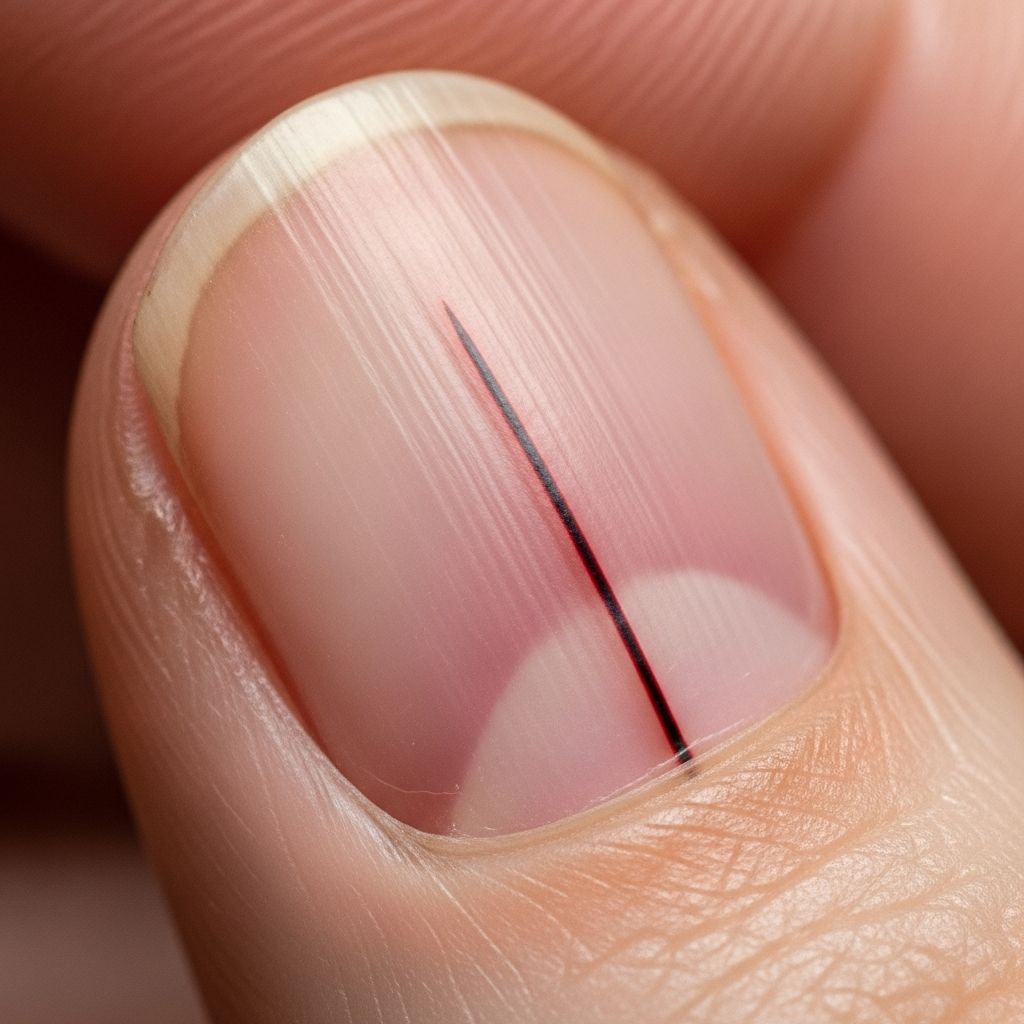
A splinter haemorrhage is a longitudinal red-brown haemorrhage that appears under the nail plate, resembling a wooden splinter when viewed end-on. These haemorrhages are located in the lower part of the nail plate or directly underneath it, creating thin lines that run in the direction of nail growth. The appearance of splinter haemorrhages has made them clinically significant markers that warrant investigation, as they can indicate both benign and serious underlying conditions.
Demographics and Prevalence
Splinter haemorrhages can occur at any age; however, they are significantly more common in older people. While they may appear incidentally in the general population, their presence should prompt careful evaluation, particularly when multiple haemorrhages are present or when they appear in unusual patterns. The prevalence varies depending on the underlying cause, with certain populations at higher risk based on their medical conditions.
Causes of Splinter Haemorrhage
The etiology of splinter haemorrhages is diverse, spanning from minor trauma to serious systemic diseases. Understanding the underlying cause is essential for appropriate management and determining whether further investigation is warranted.
Traumatic Causes
The most common cause of a splinter haemorrhage is trauma. This includes direct injury to the nail, such as nail biting, bumping the nail against hard surfaces, or using implements like canes. Additionally, the application of acrylic nails can cause splinter haemorrhages. The longitudinal nature of these haemorrhages is explained by the orientation of the capillaries in the nail bed, which run vertically along the length of the nail.
Infective Causes
Infective endocarditis represents one of the most clinically significant causes of splinter haemorrhages. Splinter haemorrhages are present in 15–33% of patients with infective endocarditis, appearing in association with Osler nodes and Janeway lesions. These haemorrhages may result from septic emboli in the small vessels of the nail bed and the increased fragility of vessel walls in sepsis. In endocarditis, the haemorrhages typically develop proximally and occur in multiple nails, distinguishing them from traumatic causes.
Other infective causes associated with splinter haemorrhages include various bacterial infections that can seed the nail bed through the bloodstream.
Dermatological Conditions
Splinter haemorrhages are common signs of psoriatic nail disease and nail disease due to lichen planus. These chronic inflammatory conditions of the nail can produce multiple splinter haemorrhages as part of their characteristic presentation. The mechanism involves inflammation and microvascular changes within the nail bed.
Systemic Vasculitis
Splinter haemorrhages may result from microemboli or injury to vessel walls associated with vasculitis, including systemic diseases such as:
- Systemic lupus erythematosus (SLE)
- Rheumatoid arthritis
- Scleroderma
- Antiphospholipid syndrome
Renal Disease and Medication
Splinter haemorrhages are observed in patients with chronic kidney disease on haemodialysis or post-renal transplant, and may be explained by abnormal coagulation. Additionally, certain medications are associated with splinter haemorrhages, requiring careful review of a patient’s pharmaceutical history.
Malignancy
Splinter haemorrhages can also be associated with tumours and underlying malignancy, potentially related to heightened cellular turnover and thrombotic phenomena.
Clinical Features and Presentation
Splinter haemorrhages present as longitudinal 1–3 mm red lines under the nail plate. Initially, they may appear plum-colored but gradually darken to brown or black over a couple of days. The haemorrhages run in the direction of nail growth and are readily visible with the naked eye, though dermatoscopy can aid in diagnosis.
Related Stories



The clinical presentation can vary depending on the underlying cause. In trauma-related cases, the haemorrhages are typically singular and appear distally in the nail. Conversely, in systemic conditions such as endocarditis, multiple haemorrhages may appear proximally across several nails. This distinction in pattern and location can provide valuable diagnostic clues.
Complications
There are no complications of splinter haemorrhages themselves. However, complications arise as a consequence of the underlying disease process. For example, if endocarditis is the underlying cause, the complications relate to the cardiac infection and potential septic emboli to other organs, not the haemorrhages themselves. This distinction is crucial when counseling patients and determining the urgency of further investigation.
Diagnosis
The diagnosis of splinter haemorrhages is made clinically or with the aid of dermatoscopy. A careful history and physical examination are required to determine the underlying cause. The diagnostic approach should include:
- Detailed history of recent nail trauma or injury
- Assessment of associated symptoms such as fever, shortness of breath, or general ill feeling
- Physical examination for signs of systemic disease
- Evaluation for other stigmata of endocarditis if suspected
When endocarditis is suspected based on clinical presentation and splinter haemorrhages, further investigation may include blood cultures, echocardiography, and laboratory studies to assess for infection and systemic disease. The clinical context and presence of other findings guide the extent of investigation required.
Treatment and Management
There is no specific treatment for a splinter haemorrhage itself. Any treatment is targeted at an underlying systemic condition or at discontinuing a causative drug. The management approach depends entirely on identifying and addressing the root cause.
If caused by trauma, a splinter haemorrhage grows out and disappears as the nail plate advances. However, haemorrhages may continue to recur if the underlying cause remains unaddressed. For example:
- Traumatic cause: Avoid further injury; haemorrhages resolve naturally
- Medication-related: Discontinue the causative drug under medical supervision
- Systemic disease: Treat the underlying condition (e.g., antibiotics for endocarditis, immunosuppressants for vasculitis)
- Dermatological condition: Manage the primary nail disease
Outcome and Prognosis
The prognosis of splinter haemorrhages depends entirely on the underlying cause. Traumatic haemorrhages have an excellent prognosis, resolving spontaneously as the nail grows out over several weeks to months. The prognosis for haemorrhages secondary to systemic disease depends on the successful treatment of the underlying condition. Once the causative process is addressed, new haemorrhages typically cease to develop, though existing ones continue to grow out with the nail plate.
Differential Diagnosis and Clinical Significance
While splinter haemorrhages are classically associated with infective endocarditis, it is important to recognize that they are not specific to this condition. In fact, trauma remains the most common cause overall. The historical emphasis on the endocarditis association, dating back to George Blumer’s 1923 description of splinter haemorrhages as “splinters under the nail” in subacute bacterial endocarditis, has sometimes led to overemphasis of this diagnosis.
Even in patients with confirmed infective endocarditis, roughly 1 in 10 patients have splinter haemorrhages, indicating that their absence does not exclude the diagnosis. Conversely, their presence in a patient without other features of endocarditis is more likely attributable to trauma or other benign causes.
Key Clinical Pearls
- Trauma is the most common cause of splinter haemorrhages
- Location matters: traumatic haemorrhages are distal; systemic disease haemorrhages are proximal
- Multiple haemorrhages across several nails suggest systemic disease
- Careful history and examination are essential to identify the underlying cause
- Haemorrhages themselves do not require specific treatment
- Management focuses on the underlying cause, not the haemorrhages
- No complications result directly from splinter haemorrhages
Frequently Asked Questions
Q: Are splinter haemorrhages always a sign of endocarditis?
A: No. While splinter haemorrhages can occur with endocarditis, trauma is the most common cause. Approximately 15–33% of endocarditis patients have splinter haemorrhages, and roughly 1 in 10 endocarditis patients may not have them. Other causes include systemic vasculitis, dermatological conditions, and renal disease.
Q: How long does it take for a splinter haemorrhage to resolve?
A: Splinter haemorrhages grow out naturally with the nail plate, typically resolving over several weeks to months. The exact timeline depends on how far up the nail the haemorrhage is located. New haemorrhages will not form once the underlying cause is addressed.
Q: Can medications cause splinter haemorrhages?
A: Yes, certain medications are associated with splinter haemorrhages. If you develop splinter haemorrhages after starting a new medication, consult your healthcare provider, as discontinuing the drug may be necessary.
Q: Should I be concerned if I have a single splinter haemorrhage after hitting my nail?
A: A single haemorrhage following clear trauma is typically benign and requires no specific treatment. However, if you develop multiple haemorrhages without known trauma, particularly across several nails, further evaluation to exclude systemic disease is warranted.
Q: What diagnostic tests are needed for splinter haemorrhages?
A: Diagnosis is primarily clinical based on history and physical examination. If systemic disease is suspected, additional investigations such as blood cultures (for suspected endocarditis), laboratory studies, and imaging may be warranted based on clinical context.
Q: Can psoriasis cause splinter haemorrhages?
A: Yes, splinter haemorrhages are common signs of psoriatic nail disease. They occur as part of the inflammatory changes affecting the nail bed in psoriasis.
References
- Splinter Haemorrhage — DermNet New Zealand. 2019-02. https://dermnetnz.org/topics/splinter-haemorrhage
- Splinter Hemorrhages — UF Health, University of Florida. Accessed 2026. https://ufhealth.org/conditions-and-treatments/splinter-hemorrhages
- Splinter Hemorrhage: A Case Report and Clinical Review — PubMed Central, National Institutes of Health. 2022-09. https://pmc.ncbi.nlm.nih.gov/articles/PMC9421492/
- Splinter Hemorrhage — Wikipedia. Accessed 2026. https://en.wikipedia.org/wiki/Splinter_hemorrhage
Similar Articles








Read full bio of Sneha Tete