Spondylolysis: Causes, Symptoms, and Treatment
Understanding spondylolysis: A comprehensive guide to this common spinal condition.
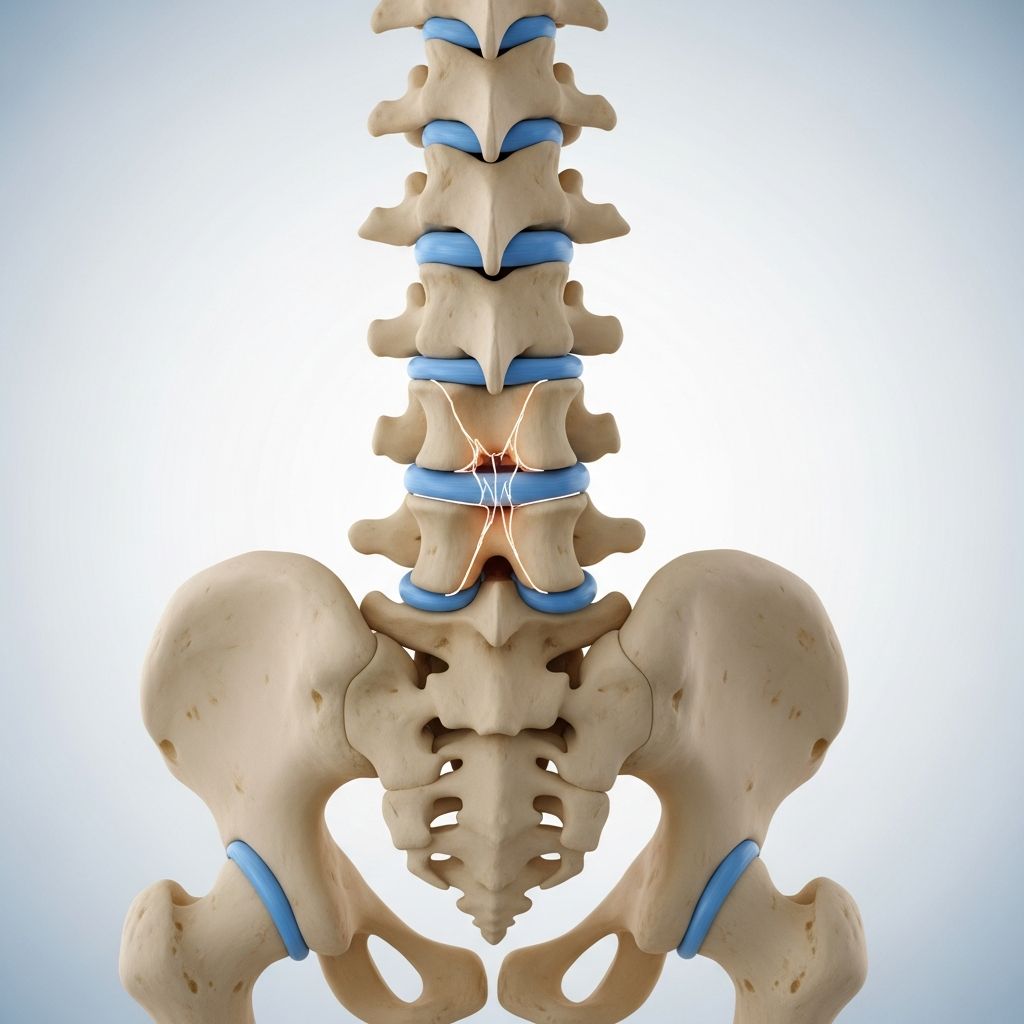
What Is Spondylolysis?
Spondylolysis is a stress fracture or weakness in one of the bony bridges that connect the upper and lower facet joints of a vertebra. The defect specifically occurs in a bone structure called the pars interarticularis, which is a small, thin portion of the vertebra that acts as a critical connector in the spinal column. This condition is sometimes referred to by shortened names such as “pars defect” or “pars fracture.”
The vast majority of spondylolysis cases occur in the lower lumbar vertebrae, particularly at the L5 level (the lowest lumbar vertebra), though it can also develop in the cervical vertebrae in rare instances. Spondylolysis represents one of the most common causes of low back pain in young athletes, accounting for approximately one-half of all pediatric and adolescent back pain in athletic patients.
It is important to distinguish between spondylolysis and spondylosis. Spondylosis is a general term that applies to any age-related breakdown or degeneration in the spine, while spondylolysis is a specific injury involving a pars fracture in the pars interarticularis. Additionally, many individuals with spondylolysis may develop a related condition called spondylolisthesis, in which a vertebra slips out of place.
Causes of Spondylolysis
Spondylolysis typically develops as a result of repetitive stress or acute injury to the spine. The condition is especially common in adolescents who engage in over-training in athletic activities. Several specific factors can contribute to the development of spondylolysis:
- Excessive spinal flexion and extension: Repeated bending and straightening movements of the lower back, particularly those combined with rotation, place significant stress on the pars interarticularis.
- Athletic overuse: Young athletes who participate in sports requiring repetitive hyperextension, rotation, or forceful landings are at increased risk. The pars interarticularis is particularly vulnerable to fracture during spinal hyperextension, especially when combined with rotational movements or when experiencing force during landing.
- Growth spurts: Adolescents experiencing rapid bone growth may be more susceptible to developing stress fractures in the spine.
- Genetic factors: Some individuals are born with naturally thinner vertebrae, which increases their predisposition to developing pars fractures.
- Acute trauma: Direct injury or significant trauma to the spine can result in acute fractures rather than stress fractures.
The stress fracture most commonly occurs where the concave lumbar spine transitions to the convex sacrum at the L5-S1 junction. Understanding these risk factors is essential for prevention and early intervention, particularly in young athletes.
Classification of Spondylolysis
Spondylolysis can be classified into several distinct categories based on its etiology and characteristics:
- Dysplastic conditions: These involve congenital abnormalities such as an attenuated (thinned) pars interarticularis present from birth.
- Isthmic conditions: These are the most common type and result from stress fractures or acute fractures occurring in the pars interarticularis due to repetitive injury or trauma.
- Degenerative conditions: These are related to segmental instability and alterations of the articular processes due to degeneration of the intervertebral discs.
- Traumatic spondylolysis: This results from acute fractures in various areas of the neural arch, other than the pars interarticularis itself.
- Pathological conditions: These involve various bone diseases, tumors, infections, and their complications.
Related Stories



Symptoms and Clinical Presentation
In the majority of cases, spondylolysis is asymptomatic and identified incidentally during imaging performed for other reasons. However, when symptoms do occur, they can significantly impact daily function and quality of life.
Common Symptoms
The major complaint among symptomatic individuals is focal low back pain, which frequently radiates into the buttock or proximal lower limb. Additional symptoms may include:
- Unilateral low back pain (pain on one side of the lower back)
- Pain that radiates into the buttocks or legs
- Pain that worsens after strenuous physical activity or intense athletic activity
- Pain aggravated with lumbar hyperextension (backward bending)
- Muscle spasms or weakness in the affected area
- Tingling, numbness, or stiffness in the back
- A “pins and needles” sensation in a leg, with or without numbness or weakness
Onset and Severity
The onset of pain in spondylolysis can be either acute or gradual, typically following an intense athletic activity involving lumbar spinal rotation or extension. Some patients may also report a recent or old history of local trauma. The pain is often intense and restricts everyday activities and participation in sports. Symptoms typically worsen acutely after a particular stressful event or activity.
Physical Examination Findings
During a physical examination, healthcare providers may identify several clinical signs:
- Pain on completion of the stork test (standing on one leg with the knee bent, which places the spine in hyperextension and rotation)
- Excessive lordotic posture (increased inward curvature of the lower spine)
- Unilateral tenderness on palpation (tenderness on one side when the spine is touched)
Diagnosis of Spondylolysis
Prompt diagnosis of symptomatic spondylolysis is very important so that the disease can be treated properly. Diagnosis typically involves a combination of clinical evaluation and imaging studies.
Clinical Assessment
Healthcare providers begin by conducting a thorough physical examination and discussing the patient’s symptoms, including when the pain started, what activities make it worse, and how it affects daily functioning. A detailed history of athletic participation and any recent injuries is also obtained.
Imaging Studies
Various imaging modalities can be used to identify spondylolysis:
- X-rays: Plain radiographs can often detect the characteristic “Scottie dog fracture” appearance visible on diagnostic imaging, which is a classic finding in spondylolysis.
- Computed Tomography (CT) scans: CT imaging provides detailed cross-sectional views of the vertebrae and can clearly show the pars defect.
- Magnetic Resonance Imaging (MRI): MRI is particularly useful for evaluating soft tissue involvement and can detect early stress reactions before a complete fracture develops.
- Bone scans: Nuclear medicine imaging can identify areas of increased bone activity associated with stress fractures.
The diagnostic approach and treatment of spondylolysis should be carried out on an individual basis after taking into consideration the patient’s clinical status and the results from all diagnostic methods.
Potential Complications
While many cases of spondylolysis resolve successfully with conservative treatment, certain complications can develop if the condition is not properly managed or progresses untreated.
Spondylolisthesis
One of the most significant potential complications of spondylolysis is the development of spondylolisthesis. A significant proportion of individuals with bilateral spondylolysis will develop spondylolisthesis, with approximately 50-81% of people suffering from spondylolysis having associated spondylolisthesis. Spondylolisthesis occurs when the front part of a vertebra slides away from the back part, and in severe cases, the complete bilateral fractures of the pars interarticularis can result in the anterior slippage of the vertebra. When a slipped vertebra presses on a nerve, patients may develop shooting pain in the legs, a condition known as sciatica.
Chronic Pain and Disability
In some cases, untreated or inadequately managed spondylolysis can lead to chronic (long-lasting) back pain and loss in flexibility. This can significantly impact quality of life and functional capacity, particularly in young athletes seeking to return to their sports.
Neurological Complications
When slippage occurs and neural structures become compressed, patients may experience radiating pain, numbness, weakness, or tingling sensations in the legs.
Treatment Options
The management approach for spondylolysis depends on the severity of the condition, the patient’s symptoms, and their functional goals. Most cases are managed conservatively with success.
Conservative Treatment
Conservative management is the first-line treatment approach for most patients with spondylolysis. The management guidelines have remained largely unchanged since earlier recommendations. Conservative treatment strategies include:
- Rest and activity modification: Reducing or temporarily stopping activities that aggravate symptoms, particularly those involving spinal hyperextension and rotation.
- Physical therapy: Structured exercise programs that focus on strengthening the core muscles, improving flexibility, and stabilizing the spine. Physical therapy is typically the cornerstone of conservative management.
- Non-steroidal anti-inflammatory medications: Over-the-counter or prescription NSAIDs can help manage pain and inflammation.
- Bracing or immobilization: Temporary use of a back brace may be recommended to reduce stress on the affected vertebra while healing occurs.
- Gradual return to activity: As symptoms improve and healing progresses, patients gradually resume their normal activities and sports participation.
Pars fractures involved in spondylolysis usually heal over time with appropriate conservative management.
Surgical Treatment
Surgical treatment is reserved only for symptomatic cases where all conservative methods have failed to show any effect. Approximately 9-15% of cases of symptomatic spondylolysis undergo surgery.
Surgical Indications
The main indications for surgical intervention include:
- Intractable pain that does not respond to conservative management
- Progressive slip indicating that spondylolisthesis is worsening
- Development of neurological deficits such as weakness or nerve compression symptoms
- Segmental spine instability that compromises function
Surgical Procedures
Surgical procedures typically attempt a direct repair of the pars interarticularis, which is sometimes accompanied by a fusion procedure. Specific surgical techniques that preserve segmental motion by repairing the isthmic defect include:
- Translaminar screw fixation
- Cerclage wiring loop
- Pendiculolaminar hook screws
Emerging Therapies
The introduction of bone growth stimulators in the management of challenging cases is promising for the future of spondylolysis treatment. These devices use electrical or ultrasonic stimulation to promote bone healing and may offer new options for patients with difficult-to-heal fractures.
Recovery and Prognosis
Most people with spondylolysis are able to return to sports and activities as soon as their vertebrae heal and their pain goes away. The prognosis for spondylolysis is generally favorable, particularly when the condition is diagnosed and treated promptly.
The time required for healing varies among individuals but typically ranges from several weeks to several months with appropriate conservative management. Compliance with physical therapy recommendations and gradual return-to-activity protocols significantly improves outcomes and reduces the risk of recurrence or progression to spondylolisthesis.
Predicting risk factors for progression of the slip to spondylolisthesis has proven to be difficult, highlighting the importance of individualized treatment planning and close follow-up.
Prevention Strategies
Several strategies can help reduce the risk of developing spondylolysis, particularly in young athletes:
- Proper training techniques: Athletes should learn and maintain correct form during sport-specific movements to minimize excessive spinal stress.
- Gradual progression: Training intensity and volume should increase gradually rather than suddenly, allowing the spine time to adapt.
- Core strengthening: Regular exercises to strengthen the abdominal and back muscles support and stabilize the spine.
- Flexibility training: Maintaining adequate flexibility in the hips, hamstrings, and lower back reduces compensatory stress on the spine.
- Adequate rest and recovery: Sufficient rest between training sessions and competition allows tissues to recover and repair.
- Cross-training: Participating in varied activities reduces repetitive stress on specific spinal structures.
Frequently Asked Questions
Q: Is spondylolysis the same as spondylosis?
A: No. Spondylolysis is a specific injury involving a pars fracture in the pars interarticularis, while spondylosis is a general term that applies to any age-related breakdown or degeneration in the spine affecting people of any age.
Q: Can spondylolysis heal without surgery?
A: Yes. Most cases of spondylolysis heal successfully with conservative treatment including rest, physical therapy, and activity modification. Only approximately 9-15% of symptomatic cases require surgery.
Q: How long does it take to recover from spondylolysis?
A: Recovery time varies, but typically ranges from several weeks to several months with appropriate conservative management. Most people can return to normal activities and sports once their vertebrae heal and pain resolves.
Q: Is spondylolysis common in young athletes?
A: Yes. Spondylolysis is the most common cause of low back pain in young athletes and accounts for approximately half of all pediatric and adolescent back pain in athletic patients.
Q: What should I do if I suspect I have spondylolysis?
A: Visit a healthcare provider if you experience lower back pain that lasts more than a few days or is severe enough to affect your daily routine. They will diagnose the cause of your pain and recommend appropriate treatments.
References
- Spondylolysis: A review and reappraisal — National Institutes of Health, National Center for Biotechnology Information. 2010. https://pmc.ncbi.nlm.nih.gov/articles/PMC2843565/
- Spondylolysis and Spondylolisthesis — American Academy of Orthopaedic Surgeons (AAOS). 2024. https://orthoinfo.aaos.org/en/diseases–conditions/spondylolysis-and-spondylolisthesis/
- Spondylolysis: Causes, Treatment & Prevention — Cleveland Clinic. 2024. https://my.clevelandclinic.org/health/diseases/10303-spondylolysis
- Spondylolysis (Pars Stress Fracture of the Spine) — Hospital for Special Surgery (HSS). 2024. https://www.hss.edu/health-library/conditions-and-treatments/list/spondylolysis-pars-fracture
- Spondylolysis — Nemours KidsHealth. 2024. https://kidshealth.org/en/parents/spondylolysis.html
- Spondylolysis | Conditions & Treatments — University of Rochester Medical Center (URMC). 2024. https://www.urmc.rochester.edu/conditions-and-treatments/spondylolysis
Similar Articles








Read full bio of Sneha Tete