Spondylolysis: Causes, Symptoms & Treatment
Understanding spondylolysis: A stress fracture of the spine affecting athletes and active individuals.
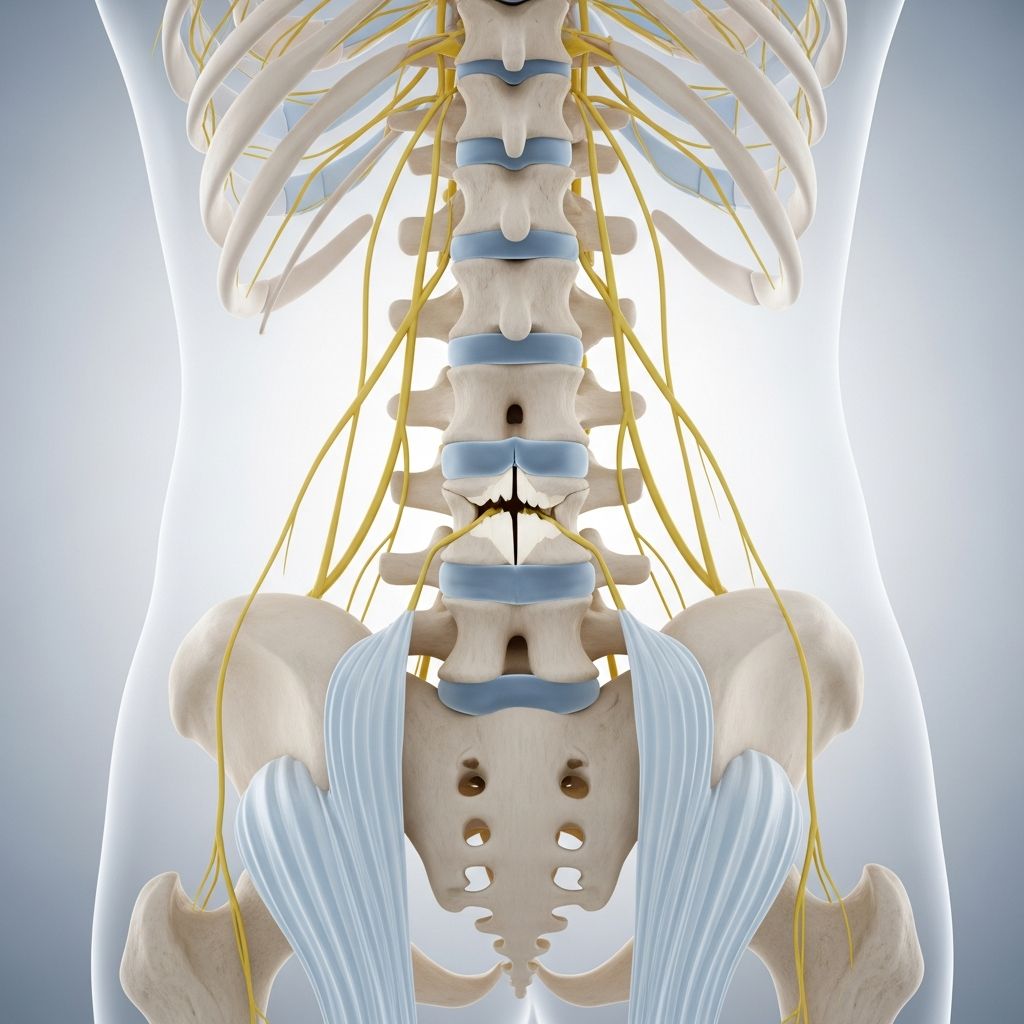
What Is Spondylolysis?
Spondylolysis is a specific type of stress fracture or crack that develops in the vertebral bones of your spine. The condition occurs in the pars interarticularis, which is a thin section of bone that connects the upper and lower facet joints of a vertebra. This stress fracture is particularly common in young athletes and individuals who engage in repetitive spinal movements or sustained physical activities.
The condition represents a breakdown of bone integrity due to repetitive stress rather than a sudden traumatic injury. Many people with spondylolysis are unaware they have the condition until it causes significant pain or discomfort. In some cases, if left untreated, spondylolysis can progress to a more serious condition called spondylolisthesis, where the weakened vertebra begins to slip out of place onto the vertebra below it.
Causes of Spondylolysis
Spondylolysis develops through various mechanisms, with repetitive stress being the primary cause. Understanding the underlying causes can help you take preventative measures and modify your activities appropriately.
Repetitive Stress and Overuse
The most common cause of spondylolysis is repetitive stress or overuse of the spine. Activities that involve hyperextension of the back—arching the spine backward—place significant stress on the pars interarticularis. Young athletes who participate in sports requiring repetitive spinal movements are at heightened risk. These activities include gymnastics, football, weightlifting, diving, and volleyball. The constant strain on the pars interarticularis during these activities can gradually lead to the development of stress fractures.
Age and Development Factors
Spondylolysis is particularly common in growing adolescents and young adults whose bones are still developing. The pars interarticularis may be more vulnerable to fracture during growth spurts when bone density and strength are still being established. This is why the condition frequently affects young athletes during their teenage years and early twenties.
Genetic Predisposition
Research suggests that some individuals may have a genetic predisposition to developing spondylolysis. Certain structural variations in the spine or differences in bone composition may make some people more susceptible to stress fractures in the pars interarticularis. If family members have experienced spondylolysis, your risk may be higher.
Biomechanical Factors
Poor posture, muscle imbalances, and inadequate core strength can contribute to the development of spondylolysis. When the supporting muscles around the spine are weak or fatigued, the pars interarticularis must bear greater stress. Additionally, biomechanical abnormalities in the spine or lower extremities can increase the load on the affected area.
Symptoms of Spondylolysis
The symptoms of spondylolysis vary widely among individuals, ranging from no symptoms at all to severe, debilitating pain. Some people discover they have the condition incidentally on imaging studies performed for other reasons.
Common Symptoms
The primary symptom is lower back pain, which typically worsens with physical activity, particularly activities that involve spinal extension or hyperextension. The pain may be located on one side of the spine or centrally located. Many athletes report that the pain develops gradually over weeks or months rather than suddenly. The discomfort often improves with rest and worsens with activity, making it difficult to participate in sports or maintain normal physical routines.
Related Stories



Associated Symptoms
In addition to pain, individuals with spondylolysis may experience muscle tightness or stiffness in the lower back. Some people report radiating pain into the buttocks or upper thighs, though true nerve compression is less common with spondylolysis alone. Muscle weakness or fatigue in the affected area may also occur due to pain-related muscle inhibition. If spondylolysis progresses to spondylolisthesis, symptoms may include numbness, tingling, or weakness in the legs if nerve compression develops.
Risk Factors
Certain factors significantly increase your risk of developing spondylolysis:
- Participation in sports involving repetitive spinal extension or hyperextension
- Young age, particularly during adolescence and early adulthood
- Male gender, though the condition affects both males and females
- Increased training intensity or sudden changes in activity level
- Poor core muscle strength and flexibility
- Previous history of back injury or trauma
- Family history of spondylolysis or other spinal conditions
- Anatomical variations in spinal structure
Diagnosis of Spondylolysis
Accurate diagnosis of spondylolysis requires a combination of clinical examination and imaging studies. Your healthcare provider will begin with a thorough history and physical examination before proceeding to specialized imaging.
Clinical Examination
During the physical examination, your provider will assess your range of motion, muscle strength, and reflexes. They may perform specific tests to reproduce or exacerbate your symptoms, such as extension movements of the spine. Palpation of the spine may reveal tenderness over the affected area. Your healthcare provider will also ask detailed questions about your symptoms, activities, and when the pain began.
Imaging Studies
Several imaging modalities can detect spondylolysis and help determine the severity and stage of the condition:
X-rays
Plain radiographs are often the first imaging study performed. Standard views may not always clearly show the pars interarticularis defect, but oblique views are specifically designed to visualize this area. X-rays can reveal the presence of a stress fracture and help assess for associated spondylolisthesis.
Computed Tomography (CT) Scans
CT imaging provides superior detail of the bony structures and can clearly visualize the pars interarticularis defect. This imaging modality is particularly useful for assessing the exact location and extent of the fracture and determining the stage of the lesion. CT scans help guide surgical planning if conservative treatment fails.
Magnetic Resonance Imaging (MRI)
MRI is excellent for evaluating the soft tissues surrounding the spine, including muscles, ligaments, and nerve roots. While MRI may not show the bony defect as clearly as CT, it can reveal edema or early signs of stress injury before a fracture is visible on other imaging. MRI is particularly valuable for assessing nerve compression or other associated pathology.
Bone Scans
Nuclear medicine bone scans can identify areas of increased bone turnover associated with stress fractures. This imaging can detect spondylolysis earlier than other modalities and may be useful for differentiating active from chronic lesions.
Treatment Options
Treatment for spondylolysis depends on various factors, including symptom severity, the stage of the lesion, age, and activity level. A staged approach starting with conservative treatments is the standard management strategy.
Conservative Treatment
Conservative management is the first-line treatment for most cases of spondylolysis and has a high success rate, particularly in early-stage lesions. The goal of conservative treatment is to reduce pain, allow the fracture to heal, and restore normal function.
Activity Modification
Temporarily reducing or eliminating activities that aggravate symptoms is essential for healing. This may mean taking a break from organized sports, though maintaining some level of low-impact activity is often beneficial. Your healthcare provider can guide you on appropriate activity levels during recovery.
Bracing
A spinal brace or corset may be recommended to limit excessive motion at the fracture site and reduce stress on the pars interarticularis. Bracing is typically worn for several weeks to months to provide support during the healing phase. The duration of bracing depends on symptom severity and healing progress.
Physical Therapy and Rehabilitation
A comprehensive rehabilitation program is crucial for successful recovery. Physical therapy typically focuses on:
- Core strengthening exercises to stabilize the spine
- Hamstring stretching and flexibility work
- Gradual progression of activities
- Postural training and body mechanics instruction
- Muscle endurance training
Pain Management
Over-the-counter nonsteroidal anti-inflammatory medications (NSAIDs) can help reduce pain and inflammation. Your healthcare provider may recommend specific medications and dosing schedules. Ice application to the affected area may also provide temporary relief during acute pain episodes.
Surgical Treatment
Surgery is considered when conservative treatment fails to provide symptom relief after an adequate trial period, typically 6 to 12 months. Surgery may also be necessary if spondylolysis progresses to spondylolisthesis with nerve compression or significant instability.
Direct Pars Repair
Direct pars repair techniques aim to stabilize the fracture while preserving spinal motion. These procedures use specialized screws, hooks, or cables to compress and stabilize the defect. Common techniques include Buck’s cortical screw technique and the Morscher hook-screw method. Direct repair can preserve motion segments and may be particularly beneficial in younger patients.
Spinal Fusion
Spinal fusion involves joining two vertebrae together to eliminate movement at the affected level. This procedure is typically recommended when there is significant spondylolisthesis, concurrent degenerative disc disease, or multiple levels of involvement. Fusion provides stability but sacrifices motion at that spinal level.
Decompressive Laminectomy
If nerve compression is present, a portion of the vertebral bone may be removed to relieve pressure on the nerves. This procedure is often combined with spinal fusion to provide stability after bone removal.
Treatment Success Rates
Conservative treatment has an excellent success rate, with approximately 84% of patients experiencing significant improvement within one year of initiating appropriate therapy. Patients with unilateral lesions tend to have higher healing rates than those with bilateral involvement. Younger patients generally demonstrate better healing potential than older individuals.
For patients requiring surgical intervention, success rates vary based on the procedure performed. Direct pars repair techniques have shown healing rates ranging from 85% to 100%, with most patients returning to sports and normal activities. Spinal fusion is successful in relieving symptoms in 85% to 90% of patients with severe spondylolisthesis or significant nerve compression.
Frequently Asked Questions
Q: Can spondylolysis heal completely?
A: Yes, spondylolysis can heal completely, especially when diagnosed early and treated appropriately with conservative management. Young athletes with unilateral lesions have the highest healing potential. However, some chronic lesions may not achieve bony union but can remain pain-free with appropriate management.
Q: How long does recovery from spondylolysis typically take?
A: Recovery timelines vary, but most patients see significant improvement within 6 to 12 weeks of starting conservative treatment. Complete healing and return to sports may take 3 to 6 months or longer, depending on lesion severity and individual healing capacity.
Q: Can I return to sports after spondylolysis?
A: Yes, most patients successfully return to their sport after appropriate treatment. The timeline depends on healing progress and may require graduated return-to-play protocols. Your healthcare provider will guide you through a safe progression back to full activity.
Q: Is spondylolysis permanent?
A: Spondylolysis may not always result in complete bony healing, but many patients achieve pain relief and normal function. Some individuals remain asymptomatic despite not achieving complete bony union, particularly if they maintain appropriate activity levels and core strength.
Q: What exercises help with spondylolysis?
A: Core strengthening and hamstring stretching exercises are most beneficial. Your physical therapist can develop a personalized program that gradually progresses as healing occurs. Avoid hyperextension exercises initially, and focus on stabilization and flexibility work.
References
- Lumbar spondylolysis – Current concepts review — National Center for Biotechnology Information (NCBI). 2021. https://pmc.ncbi.nlm.nih.gov/articles/PMC8358467/
- Indirect pars repair for pediatric isthmic spondylolysis: a case series — AME Medical Journal. 2020. https://jss.amegroups.org/article/view/3876/html
- Spondylolisthesis: Causes & Diagnosis — Cleveland Clinic Abu Dhabi. 2024. https://www.clevelandclinicabudhabi.ae/en/health-hub/health-resource/diseases-and-conditions/spondylolisthesis
- Lower Back Pain: Causes, Symptoms & Treatment — Cleveland Clinic. 2024. https://my.clevelandclinic.org/health/diseases/7936-lower-back-pain
- Cervical Spondylosis: What It Is, Symptoms & Treatment — Cleveland Clinic. 2024. https://my.clevelandclinic.org/health/diseases/17685-cervical-spondylosis
- Spondylolysis: What You Need to Know — HealthCentral. 2024. https://www.healthcentral.com/condition/spondylosis/spondylolysis-need-to-know
Similar Articles








Read full bio of medha deb