Sprained Ankle Vs. Broken Ankle: Key Differences & Treatment
Learn to distinguish between a sprained ankle and a broken ankle based on symptoms, diagnosis, treatment, and recovery for proper care.
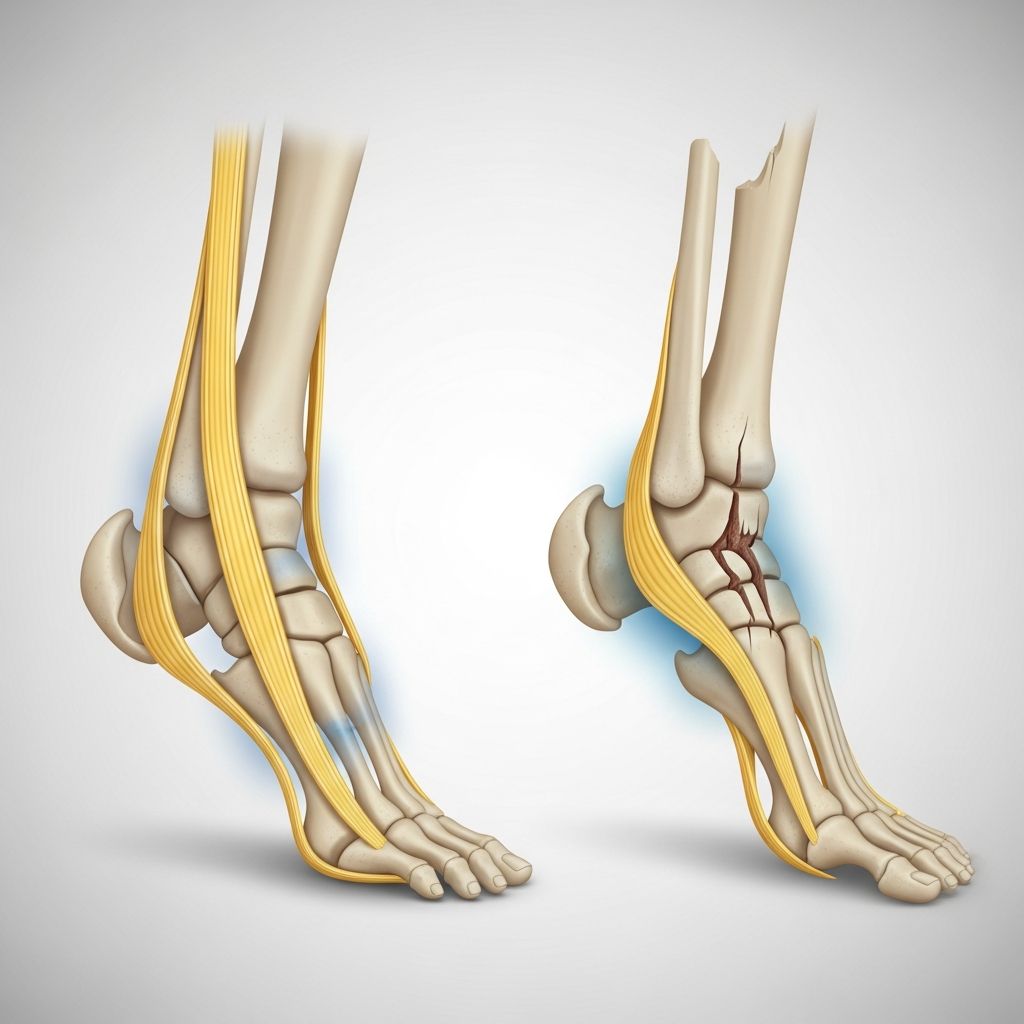
Ankle injuries are common, but distinguishing a
sprained ankle
from abroken ankle
(fracture) is crucial for appropriate treatment. A sprain involves stretched or torn ligaments, while a fracture means one or more ankle bones are broken. Both cause pain and swelling, but severity and symptoms differ significantly.What Is a Sprained Ankle?
A
sprained ankle
occurs when ligaments—tough bands connecting bones in the joint—are overstretched or torn, often from twisting or rolling the foot. This injury affects soft tissues without bone damage.Sprains are graded by severity:
- Grade 1: Mild stretching with minimal tearing; minor pain and swelling.
- Grade 2: Partial tear; moderate pain, swelling, bruising, and instability.
- Grade 3: Complete tear; severe pain, swelling, instability, and inability to bear weight.
Common causes include sports, uneven surfaces, or missteps. The outer ligaments are most affected.
What Is a Broken Ankle?
A
broken ankle
, or ankle fracture, involves a crack or break in one or more of the three main ankle bones: tibia, fibula, or talus. It results from high-impact trauma like falls, twists, or direct blows.Fracture types include:
- Stable: Bone fragments aligned, less displacement.
- Unstable: Misaligned fragments, often requiring surgery.
- Compound: Bone pierces skin, risking infection.
These injuries disrupt joint stability more severely than sprains.
Sprained Ankle vs. Broken Ankle Symptoms
Both injuries share pain, swelling, and bruising, but key differences help differentiate them.
| Symptom | Sprained Ankle | Broken Ankle |
|---|---|---|
| Pain | Mild to moderate, worsens with movement; popping sensation possible | Sharp, intense, immediate; throbbing, severe even at rest |
| Swelling & Bruising | Localized, develops gradually | Extensive, rapid, may spread to foot/toes |
| Deformity | None; ankle shape intact despite puffiness | Visible misalignment, bump, or abnormal angle |
| Weight-Bearing | Painful but possible (hobbling) | Impossible; excruciating pain |
| Other Sensations | Tenderness, instability ("giving way") | Numbness, tingling, cracking sound |
Pain location also clues in: sprain pain is soft-tissue focused (outer ankle), fracture along bones.
How to Tell If Your Ankle Is Sprained or Broken
Self-assessment is limited; err on caution:
- Check for deformity or open wounds—seek emergency care.
- Test gentle movement: limited ROM in sprains, none in fractures.
- Attempt weight-bearing: if impossible, suspect fracture.
- Monitor sounds: pop (sprain) vs. crack/snap (fracture).
Visible signs like rapid severe swelling or bruising favor fracture. Always consult a professional.
When to See a Doctor
Seek immediate care if:
- Can’t bear weight after 30 minutes.
- Deformity, numbness, or pale/cold foot.
- Severe pain unresponsive to RICE (Rest, Ice, Compression, Elevation).
- Injury from high impact or fall.
For mild symptoms, monitor 24-48 hours; persistent issues warrant evaluation.
Related Stories



Diagnosis
Diagnosis starts with physical exam: checking tenderness, swelling, ROM, and stability.
Imaging confirms:
- X-rays: Primary for fractures; detects bone breaks.
- CT/MRI: For complex fractures or soft-tissue detail.
Sprains may not need imaging unless severe.
Treatment
Sprained Ankle Treatment
Conservative care:
- RICE: Rest (crutches), Ice (20 min/hour), Compression bandage, Elevate above heart.
- Pain relief: NSAIDs like ibuprofen.
- Immobilization: Brace or boot for 2-6 weeks.
- Rehab: Physical therapy for strength, balance.
Severe cases may need surgery.
Broken Ankle Treatment
More intensive:
- Immobilization: Cast/boot 6-8 weeks; non-weight-bearing crutches.
- Surgery: ORIF (plates/screws) for unstable/displaced fractures.
- Pain management, elevation.
- Follow-up imaging.
Recovery Time
| Injury | Mild | Moderate | Severe |
|---|---|---|---|
| Sprain | 1-2 weeks | 4-6 weeks | 8-12 weeks |
| Fracture | 6 weeks | 8-12 weeks | 3-6 months (surgery) |
Sprains recover faster sans bone healing; fractures need union time. PT accelerates both. Full activity: gradual.
Prevention Tips
- Wear supportive shoes, ankle braces in sports.
- Strengthen ankles: balance exercises, calf raises.
- Warm-up, stretch; avoid uneven terrain.
- Treat prior injuries fully.
Frequently Asked Questions (FAQs)
Can you walk on a sprained ankle?
Yes, often painfully; use crutches if unstable. Avoid if severe.
Can a sprained ankle turn into a fracture?
No, sprains affect ligaments, fractures bones. But untreated sprains risk chronic issues.
How long for a broken ankle to heal?
6-12 weeks typically; up to 6 months for complex cases with rehab.
Is tingling a sign of fracture?
Yes, indicates nerve/bone involvement; sprains rarely cause it.
Does a sprain show on X-ray?
No, X-rays detect bone issues; sprains diagnosed clinically.
References
- Sprained vs. Broken Ankle: Know the Difference — Pinnacle Orthopaedics. 2023. https://www.pinnacle-ortho.com/difference-sprained-broken-ankle
- How to Tell the Difference Between a Sprained Ankle vs Broken Ankle — SportsMed Texas. 2024. https://sportsmedtexas.com/blog/sprained-ankle-vs-broken-ankle
- Sprained Ankle vs Broken Ankle: How to Tell the Difference — Ortho Toc. 2023. https://orthotoc.com/sprained-ankle-vs-broken-ankle/
- Sprained Ankle vs. Broken Ankle: 6 Ways to Tell the Difference — All Sports Physical Therapy. 2024. https://allsports-physicaltherapy.com/patient-resources/blog/sprained-ankle-vs-broken-ankle-6-ways-to-tell-the-difference
- Difference Between Ankle Sprain and Fracture — Dr. Gary Driver. 2023. https://www.drgarydriver.com/blog/difference-between-ankle-sprain-and-fracture-49413/
- Ankle Sprain vs. Ankle Fracture – What’s the Difference? — Advanced Ortho and Spine. 2024. https://advancedorthoandspine.com/orthopaedics/ankle-sprain-vs-ankle-fracture-whats-the-difference/
- Ankle Sprain Versus Ankle Fracture: What’s the Difference? — Hospital for Special Surgery (HSS). 2025. https://www.hss.edu/health-library/move-better/ankle-sprain-versus-fracture
Similar Articles








Read full bio of medha deb