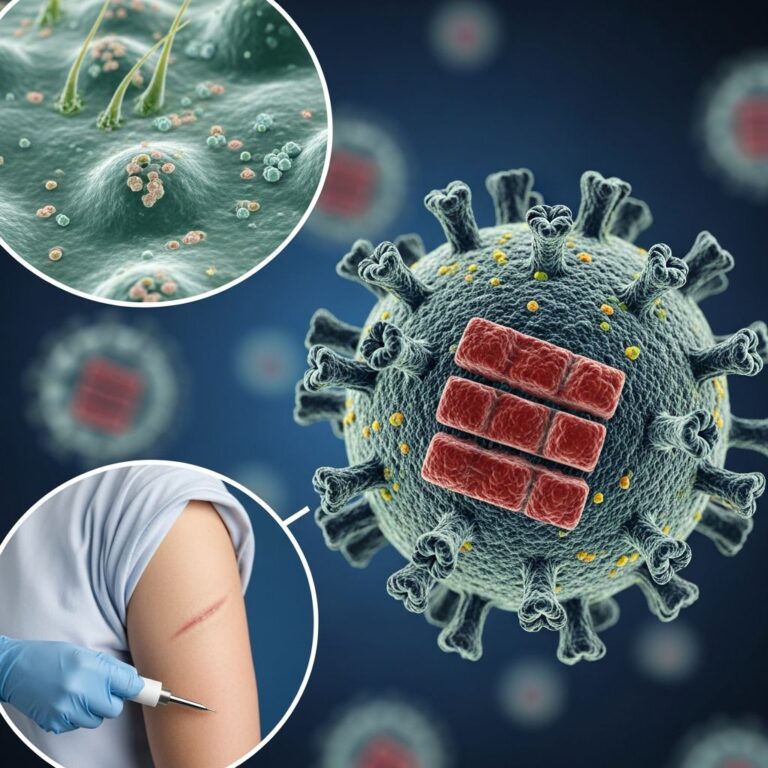
Squamous Cell Carcinoma on the Face: Images
Explore detailed images and descriptions of squamous cell carcinoma on the face, aiding in early recognition and diagnosis of this common skin cancer.
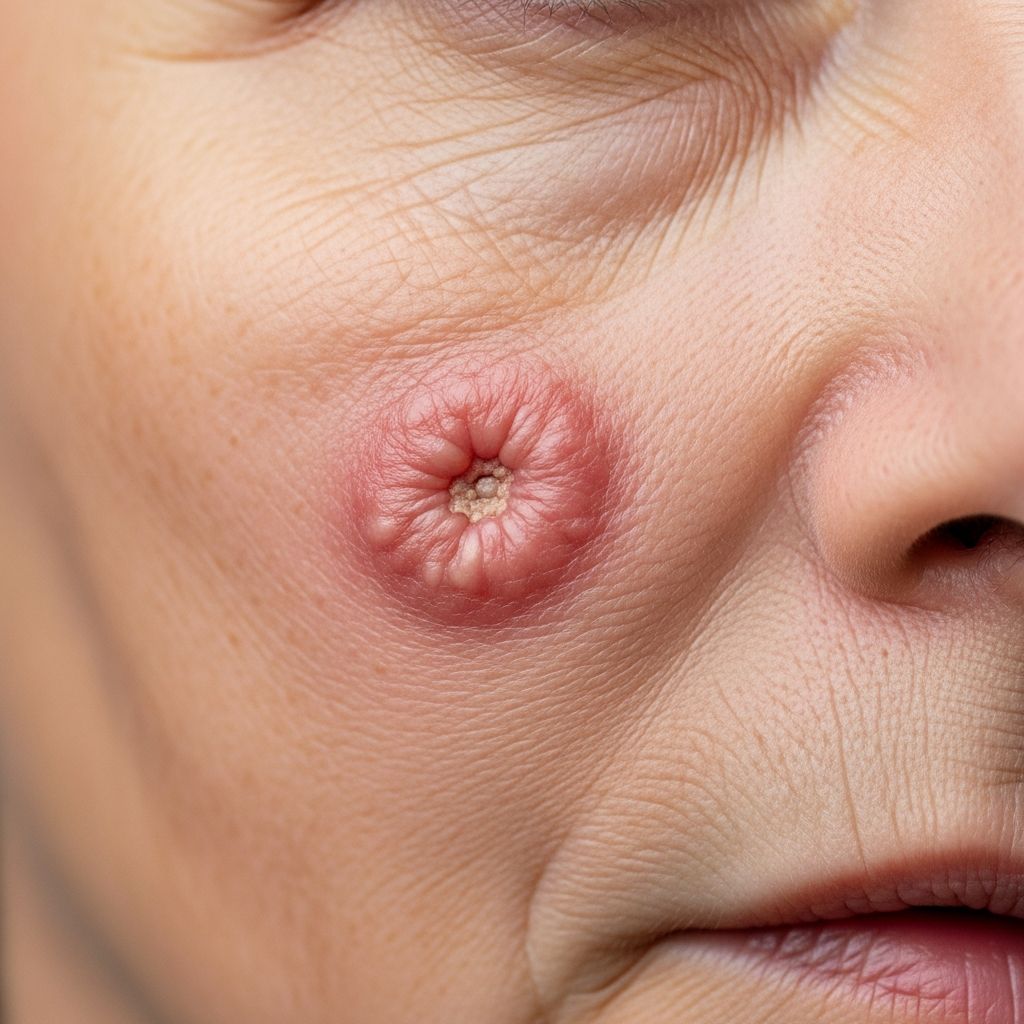
Squamous cell carcinoma (SCC) is the second most common form of skin cancer, frequently appearing on the face due to chronic sun exposure. This article presents a curated gallery of clinical images showcasing various presentations of facial SCC, from early precancerous lesions to advanced invasive tumours. Recognizing these features is crucial for timely diagnosis and treatment, as early intervention yields excellent outcomes.
What is squamous cell carcinoma?
Squamous cell carcinoma originates from squamous cells, which form the outermost layer of the epidermis. On the face, it often develops in sun-damaged skin, presenting as persistent, evolving lesions. Unlike basal cell carcinoma, SCC has a higher potential for metastasis if neglected, though most facial cases are localized and curable. Common sites include the nose, cheeks, forehead, ears, and lips, where UV radiation accumulates over time.
Who gets squamous cell carcinoma on the face?
Facial SCC predominantly affects older adults with fair skin, particularly those with a history of intense sun exposure. Risk factors include:
- Prolonged outdoor work or recreation without protection.
- Fair skin that burns easily, light eyes, or blonde/red hair.
- Previous skin cancers or precancerous actinic keratoses.
- Immunosuppression from organ transplants, HIV, or medications.
- Chronic skin injuries, scars, or ulcers.
- Exposure to arsenic, radiation, or HPV infection.
Men are affected more than women, and incidence rises with age over 50. In darker skin types, lesions may appear on less sun-exposed areas but remain linked to cumulative UV damage.
Clinical appearance of squamous cell carcinoma on the face
Facial SCC exhibits diverse morphologies, often evolving from actinic keratosis (a rough, scaly precancerous patch). Key features include persistent growth, crusting, bleeding, or ulceration. Images below illustrate common variants.
Early / Pre-invasive squamous cell carcinoma
These are squamous cell carcinoma in situ (Bowen’s disease), confined to the epidermis without dermal invasion. On the face, they appear as:
- Sharply demarcated, erythematous (red) scaly plaques, often on the forehead or cheeks.
- Slow-growing patches resembling eczema or psoriasis, resistant to topical treatments.
- Image description: A 1-2 cm red, crusted plaque on the temple with irregular borders, showing minimal elevation (similar to actinic keratosis progression).
Invasive squamous cell carcinoma
Once invading the dermis, SCC forms nodules or tumours. Facial presentations include:
- Firm, red nodules with a pearly or keratotic surface on the nose or cheek.
- Ulcerated sores with rolled edges, prone to bleeding on minor trauma.
- Wart-like verrucous growths on lips or ears.
| Variant | Location | Key Features | Image Description |
|---|---|---|---|
| Scaly patch | Cheek/Forehead | Red, rough, persistent >6 weeks | Flat, hyperkeratotic plaque 2cm diameter, slight induration |
| Nodular | Nose/Ear | Firm red bump, may ulcerate | Elevated 1cm nodule with central crust |
| Ulcerative | Lip/Temple | Non-healing sore, tender | Crateriform ulcer 1.5cm with heaped edges |
| Verrucous | Lower lip | Warty, hyperkeratotic | Exophytic growth resembling horn |
Related Stories



Advanced / Aggressive squamous cell carcinoma
Neglected facial SCC can become deeply invasive, eroding cartilage or bone. Features:
- Large, fungating masses with necrosis on the nose or periorbital area.
- Fixed lesions with lymphadenopathy indicating metastasis.
- Image description: A 4cm destructive tumour on the ala nasi, with surrounding telangiectasia and ulceration exposing cartilage.
Squamous cell carcinoma on scars and chronic ulcers
Marjolin’s ulcer describes SCC arising in old scars or ulcers, common on the face from burns or radiodermatitis. It appears as a rapidly growing nodule within atrophic scar tissue.
Differential diagnosis
Conditions mimicking facial SCC include:
- Actinic keratosis: Precursor; smaller, less indurated.
- Basal cell carcinoma: Pearly rolled edges, telangiectasia.
- Keratoacanthoma: Rapid dome-shaped crater, self-resolves.
- Seborrhoeic keratosis: Stuck-on waxy appearance.
- Amelanotic melanoma: Vascular, asymmetrical.
Squamous cell carcinoma pathology
Histopathology confirms diagnosis via biopsy. Features include atypical keratinocytes with full-thickness epidermal dysplasia, invasion into dermis, keratin pearls, and desmoplastic stroma. Grading assesses differentiation: well, moderate, or poor. Immunohistochemistry (e.g., p63, CK5/6) aids distinction from mimics.
Treatment of facial squamous cell carcinoma
Treatment depends on size, depth, site, and patient factors. Options:
- Excision: Gold standard; 4-6mm margins for low-risk.
- Mohs micrographic surgery: Ideal for face to preserve tissue.
- Curettage & electrocautery: Low-risk superficial lesions.
- Cryotherapy/Radiotherapy: Non-surgical candidates.
- Topical therapies: 5-FU or imiquimod for in situ.
High-risk cases (e.g., perineural invasion) may require sentinel node biopsy or adjuvant therapy.
What is the outcome for facial squamous cell carcinoma?
Cure rates exceed 95% for early facial SCC treated appropriately. Recurrence risk is 5-10% on the face due to field cancerization. Metastasis (2-5%) occurs to nodes; 5-year survival >90%. Regular follow-up every 3-6 months is essential.
Prevention of squamous cell carcinoma
Primary prevention targets UV exposure:
- Sunscreen SPF 50+ daily, reapplied every 2 hours.
- Hats, UPF clothing, shade-seeking.
- Avoid tanning beds; self-exams monthly.
- Treat actinic keratoses promptly.
Frequently asked questions: squamous cell carcinoma on the face
What does squamous cell carcinoma on the face look like?
It appears as scaly red patches, firm nodules, non-healing sores, or warty growths, often on sun-exposed areas like nose, cheeks, and lips.
How is squamous cell carcinoma on the face diagnosed?
Diagnosis involves clinical exam, dermoscopy, and skin biopsy for histopathology confirmation.
Is squamous cell carcinoma on the face dangerous?
Most are curable if early; untreated, it can invade locally or metastasize (rare on face, <5%).
Can squamous cell carcinoma on the face be cured?
Yes, >95% cure rate with excision or Mohs surgery for early lesions.
What causes squamous cell carcinoma on the face?
Mainly cumulative UV exposure; also immunosuppression, scars, HPV.
References
- Squamous Cell Carcinoma – Symptoms and Causes — Penn Medicine. 2024. https://www.pennmedicine.org/conditions/squamous-cell-carcinoma
- Squamous Cell Carcinoma Symptoms — Moffitt Cancer Center. 2024. https://www.moffitt.org/cancers/squamous-cell-carcinoma/symptoms/
- Squamous cell carcinoma of the skin – Symptoms and causes — Mayo Clinic. 2025-07-26. https://www.mayoclinic.org/diseases-conditions/squamous-cell-carcinoma/symptoms-causes/syc-20352480
- Squamous Cell Carcinoma Symptoms and Treatments — South Jersey Peninsula Physicians. 2024. https://www.sjpp.org/dermatology/conditions/skin-cancer/squamous-cell-carcinoma/
- Squamous cell skin cancer — MedlinePlus, U.S. National Library of Medicine. 2024. https://medlineplus.gov/ency/article/000829.htm
- Squamous Cell Carcinoma Warning Signs and Images — Skin Cancer Foundation. 2024. https://www.skincancer.org/skin-cancer-information/squamous-cell-carcinoma/scc-warning-signs-and-images/
Similar Articles








Read full bio of Sneha Tete