Squamous Intraepithelial Lesion: A Comprehensive Guide
Understanding SIL: Precancerous lesions linked to HPV in anogenital mucosa, classified as LSIL or HSIL.
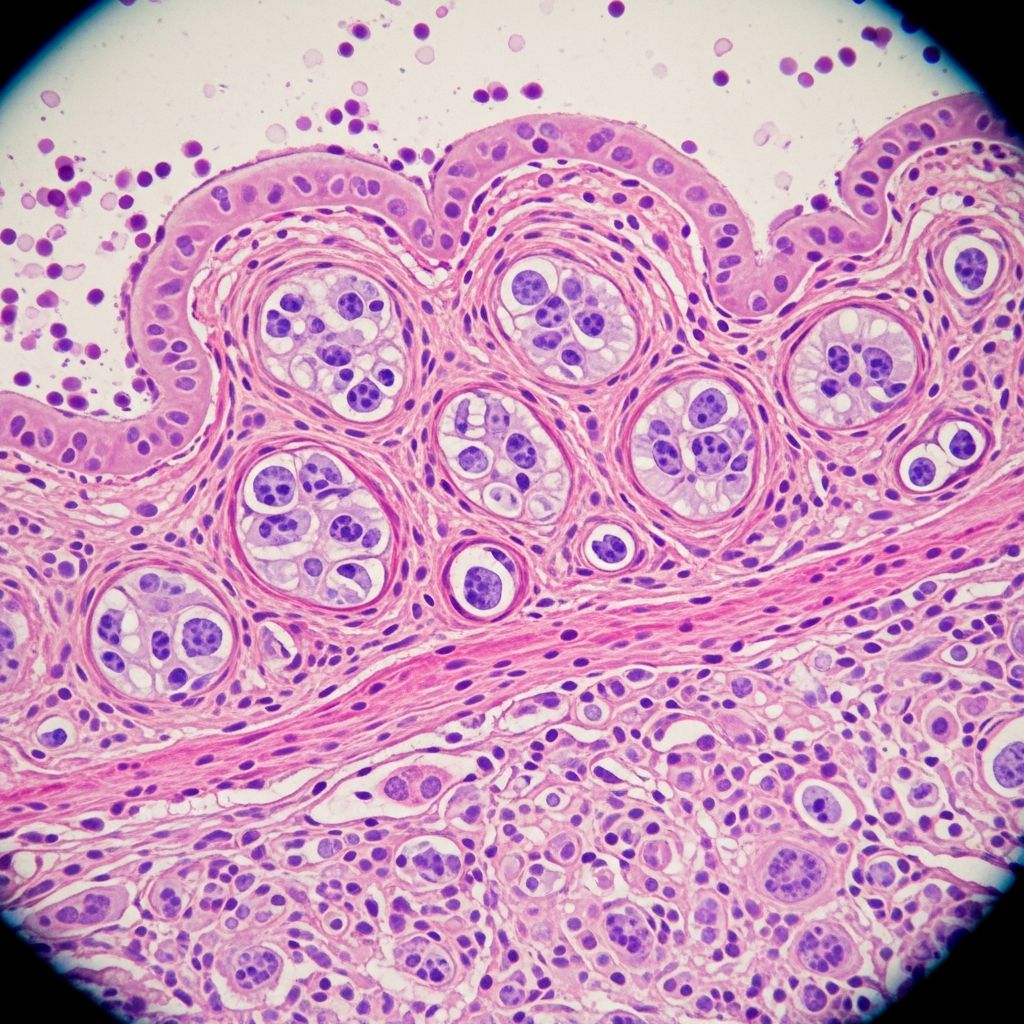
Squamous intraepithelial lesion (SIL) is the preferred term for superficial non-invasive mucosal neoplasias in the anogenital region linked to human papillomavirus (HPV) infection. These lesions are classified as low-grade (LSIL) or high-grade (HSIL), reflecting their potential to progress to invasive cancer if untreated.
What is squamous intraepithelial lesion?
SIL describes abnormal growths of squamous cells on the surface epithelium of organs like the cervix, vagina, vulva, anus, penis, or oropharynx. These flat, scale-like cells undergo dysplasia confined to the epithelial layer, without basement membrane invasion. Most cases stem from persistent high-risk HPV types, particularly 16 and 18.
LSIL corresponds to mild dysplasia or cervical intraepithelial neoplasia grade 1 (CIN1), often transient. HSIL includes moderate to severe dysplasia (CIN2/3) or carcinoma in situ, posing higher cancer risk. Early detection via screening prevents progression.
Who gets squamous intraepithelial lesion?
SIL primarily affects sexually active individuals exposed to HPV. Risk factors include:
- Multiple sexual partners
- Early sexual debut
- Immunosuppression (e.g., HIV, transplant patients)
- Smoking
- High-risk HPV infection
Women aged 25-35 are commonly screened for cervical SIL, but lesions occur across genders in anogenital sites. HPV vaccination reduces incidence.
What causes squamous intraepithelial lesion?
Over 90% of SILs result from oncogenic HPV subtypes integrating into host DNA, disrupting cell cycle regulators like p53 and Rb. Low-risk HPV (6,11) causes benign warts, while high-risk types drive neoplasia.
Viral oncoproteins E6 and E7 promote proliferation and inhibit apoptosis. Persistent infection, not transient, leads to cumulative genetic changes enabling dysplasia.
What are the clinical features of squamous intraepithelial lesion?
SIL is often asymptomatic, detected via screening. Visible lesions may appear as:
- LSIL: Flat acetowhite patches, fine mosaicism, or thin punctuation on colposcopy with acetic acid.
- HSIL: Dense acetowhite epithelium, coarse mosaicism, cuffed crypt openings, or irregular vessels.
Symptoms, if present, include postcoital bleeding, discharge, or pruritus in vulvar/anal sites. Oropharyngeal HSIL may present as leukoplakia.
How is squamous intraepithelial lesion diagnosed?
Diagnosis combines cytologic, histologic, and molecular tests:
- Pap smear/HPV testing: LSIL shows koilocytes; HSIL exhibits hyperchromatic crowded groups (HCG).
- Colposcopy: Magnifies cervical/vulvar changes post-acetic acid/iodine application.
- Biopsy: Gold standard, confirming dysplasia grade via p16 immunostaining for HPV attribution.
| Test | LSIL Features | HSIL Features |
|---|---|---|
| Cytology | Koilocytosis, mild atypia | Hyperchromasia, high N/C ratio |
| Colposcopy | Fine patterns | Coarse mosaicism, vessels |
| Histology | CIN1 | CIN2/3, full-thickness atypia |
What is the treatment of squamous intraepithelial lesion?
Management is grade-specific:
- LSIL: Observation with repeat cytology/HPV testing in 12 months; 70-90% regress spontaneously.
- HSIL: Excisional (LEEP, cone biopsy) or ablative (cryotherapy, laser) therapy removes lesions. Hysterectomy for multifocal disease.
Anal/oropharyngeal HSIL may require high-resolution anoscopy and topical imiquimod.
What is the outcome for squamous intraepithelial lesion?
LSIL regresses in most cases within 2 years. Untreated HSIL progresses to invasion in 12-30% over 10 years, but treatment cures >95%. Post-treatment surveillance detects recurrence.
Related Stories



How can squamous intraepithelial lesion be prevented?
Prevention strategies include:
- HPV vaccination (Gardasil 9) before sexual debut
- Regular cervical screening from age 25
- Condom use, partner limitation
- Smoking cessation
Screening guidelines: Pap every 3 years or HPV co-testing every 5 years.
Frequently Asked Questions
Is SIL cancer?
No, SIL is precancerous. HSIL has higher progression risk but is treatable if caught early.
Does LSIL need treatment?
Often not; monitoring suffices as most resolve. Biopsy if persistent.
Can HPV vaccines prevent SIL?
Yes, vaccines prevent HPV-related SIL by 90%+ in vaccinated populations.
What if I have HSIL?
Seek colposcopy and biopsy promptly. Excision prevents cancer.
How common is SIL?
LSIL in ~2% of Pap smears; HSIL rarer but significant.
References
- Squamous Intraepithelial Lesion (SIL) — Yale Medicine. 2023. https://www.yalemedicine.org/clinical-keywords/squamous-intraepithelial-lesion
- Definition of squamous intraepithelial lesion — National Cancer Institute. 2024-01-15. https://www.cancer.gov/publications/dictionaries/cancer-terms/def/squamous-intraepithelial-lesion
- Squamous Intraepithelial Lesion (SIL): Causes & Treatment — Cleveland Clinic. 2023-11-20. https://my.clevelandclinic.org/health/diseases/22042-squamous-intraepithelial-lesion-sil
- Squamous intraepithelial lesions (SIL: LSIL, HSIL, ASCUS, ASC-H) — PMC (NCBI). 2021-07-20. https://pmc.ncbi.nlm.nih.gov/articles/PMC8326095/
- Squamous Intraepithelial Lesions and Invasive — YouTube (Medical Overview). 2022. https://www.youtube.com/watch?v=lTx7gxXc3w0
- Squamous intraepithelial lesion — DermNet NZ. 2015 (Updated 2024). https://dermnetnz.org/topics/squamous-intraepithelial-lesion
Similar Articles








Read full bio of medha deb