St. John’s Wort: 5 Evidence-Based Uses And Safety Tips
Explore the therapeutic potential of St. John's Wort, from mood enhancement to skin care, backed by scientific insights and practical advice.
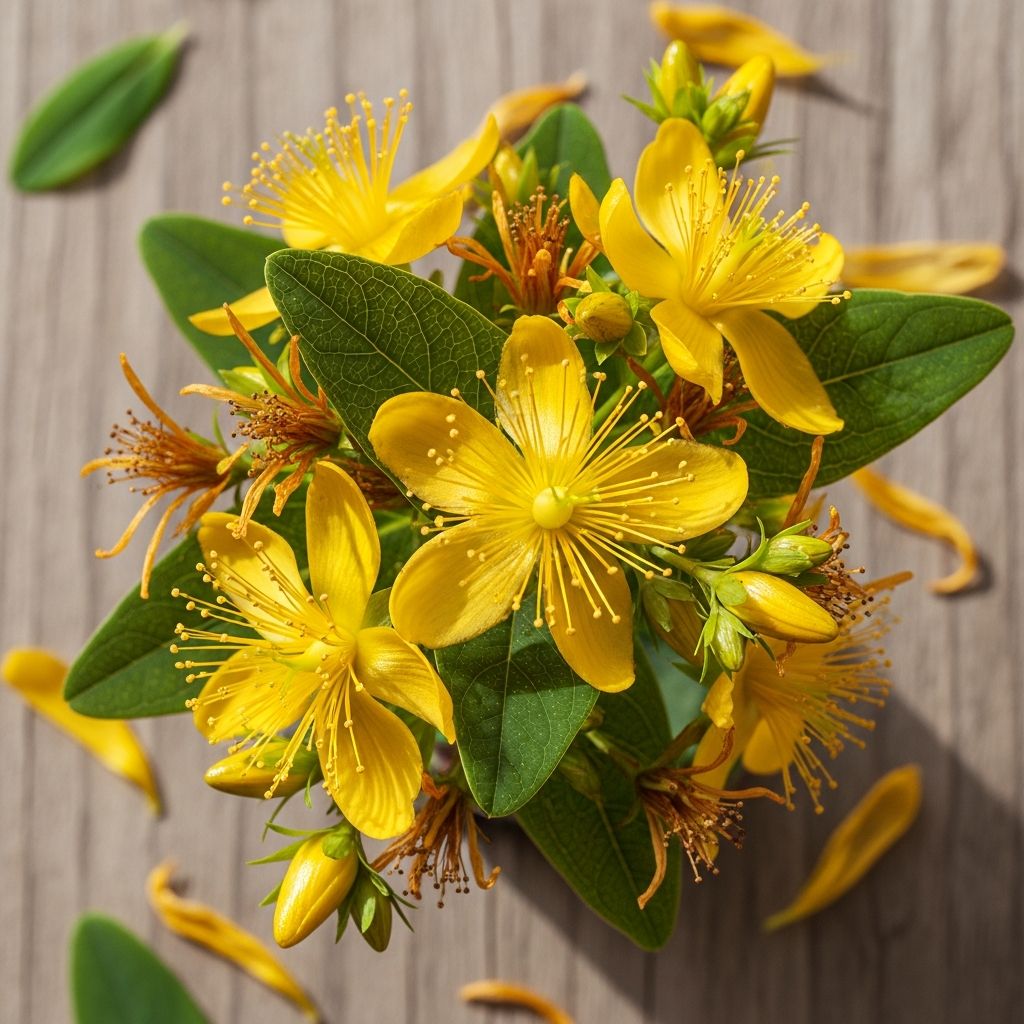
St. John’s Wort (Hypericum perforatum) is a flowering plant with a long history in traditional medicine, now widely studied for its role in supporting emotional well-being and other health concerns. This perennial herb, native to Europe, West Asia, and North Africa, has spread globally and is valued for active compounds like hypericin and hyperforin that influence brain chemistry and inflammation.
Historical Background and Traditional Applications
Humans have utilized St. John’s Wort for centuries, dating back to ancient Greek and Roman times where it addressed headaches, nerve issues, and wounds. Native American communities applied it for snakebites, diarrhea, and injuries. In medieval Europe, it was linked to St. John the Baptist, with its red sap symbolizing blood. Today, it remains a staple in European herbal medicine for emotional health.
Traditionally, preparations included teas, oils, and tinctures for conditions like sciatica, rheumatism, and menstrual discomfort. Its name derives from blooming around June 24, St. John’s Day, highlighting its cultural significance.
Active Compounds Driving Its Effects
The herb’s efficacy stems from bioactive elements such as hyperforin, hypericin, and flavonoids including quercetin and rutin. Hyperforin modulates neurotransmitters like serotonin, dopamine, and norepinephrine, mimicking antidepressant mechanisms. Hypericin contributes antiviral and anti-inflammatory actions. These compounds support standardized extracts used in supplements.
- Hyperforin: Primary mood regulator, inhibits neurotransmitter reuptake.
- Hypericin: Aids in light-activated antiviral effects.
- Flavonoids: Provide antioxidant and anti-inflammatory benefits.
Primary Health Benefits Supported by Research
Supporting Mood in Mild to Moderate Depression
St. John’s Wort is most recognized for alleviating mild to moderate depressive symptoms, often matching selective serotonin reuptake inhibitors (SSRIs) like fluoxetine or paroxetine in efficacy but with potentially milder side effects. Meta-analyses confirm its superiority over placebo and equivalence to pharmaceuticals for this use.
For seasonal affective disorder (SAD), it counters winter mood dips by boosting key brain chemicals. Patients report improved energy and outlook without common SSRI drawbacks like sexual dysfunction.
Addressing Anxiety and Sleep Challenges
Beyond depression, the herb helps manage anxiety, nervous tension, and insomnia. It promotes calm without sedation, nourishing the nervous system over time as a trophorestorative. Clinical data support its use for stress-related fatigue and emotional distress tied to physical symptoms.
Relief for Women’s Health Issues
Women benefit from its modulation of hormonal mood swings. Studies show reductions in premenstrual syndrome (PMS) symptoms like irritability and fatigue, and menopausal vasomotor issues such as hot flashes. It offers a natural option versus hormone therapies.
Skin and Wound Care Applications
Topically, St. John’s Wort-infused oils soothe minor burns, bruises, eczema, and hemorrhoids due to anti-inflammatory and vulnerary (wound-healing) properties. It accelerates tissue repair and reduces neuropathic pain.
Related Stories



Other Emerging Uses
Preliminary evidence suggests antiviral activity against herpes and HIV, plus anti-inflammatory support for muscle soreness and joint issues. Lab studies indicate neuroprotective potential, though human trials are limited. It may enhance clopidogrel’s effects post-heart procedures, but more research is needed.
How to Use St. John’s Wort Safely
Oral Forms and Dosage Guidelines
Standardized extracts (0.3% hypericin or 3-5% hyperforin) are recommended at 300 mg three times daily for mood support. Start low to assess tolerance. Teas (2-4 grams dried herb daily) suit milder needs, while tinctures vary by concentration.
| Form | Typical Dosage | Best For |
|---|---|---|
| Capsules/Tablets | 300 mg, 3x/day | Depression, anxiety |
| Tea | 2-4 g dried herb/day | Mild symptoms |
| Oil (topical) | Apply 2-3x/day | Skin issues, pain |
| Tincture | 1-2 mL, 3x/day | General wellness |
Effects may take 4-6 weeks. Consult professionals for children, ADHD use shows mixed results.
Topical Preparations
Infuse flowers in carrier oils for massages on sore muscles or irritated skin. Avoid sun exposure post-application due to photosensitivity.
Potential Side Effects and Safety Notes
Common mild effects include gastrointestinal upset, dizziness, fatigue, and dry mouth. Photosensitivity is notable, increasing sunburn risk—use sunscreen. Rare severe reactions involve serotonin syndrome if overdosed.
Not for bipolar disorder, as it may trigger mania. Avoid in severe depression; seek medical care. Pregnancy, breastfeeding, and children under 6 require caution due to insufficient data.
Critical Drug Interactions
St. John’s Wort induces liver enzymes (CYP3A4), accelerating metabolism of many drugs, reducing efficacy:
- Antidepressants/SSRIs: Risk of serotonin syndrome.
- Birth control: Decreased effectiveness.
- Blood thinners (warfarin): Altered anticoagulation.
- Immunosuppressants, chemotherapy: Reduced levels, dangerous for transplant/cancer patients.
- Protease inhibitors (HIV), digoxin: Lowered concentrations.
Disclose use to healthcare providers; taper off interacting meds first.
Quality Considerations When Selecting Products
Choose third-party tested supplements from reputable brands ensuring standardization. Look for USP or NSF certification. Europe regulates it as medicine; US treats as supplement—verify labels. Store away from light to preserve potency.
Common Questions About St. John’s Wort
Can St. John’s Wort replace prescription antidepressants?
It matches efficacy for mild-moderate cases but consult a doctor for switching, especially with interactions.
How long until I notice benefits?
Typically 4-6 weeks of consistent use.
Is it safe for long-term use?
Up to a year in studies, but monitor with professional guidance.
Does it cause weight gain?
No, unlike some pharmaceuticals.
Can I combine it with other herbs?
Yes, with calming ones like passionflower, but check interactions.
Final Thoughts on Integrating St. John’s Wort
This versatile herb offers evidence-based support for mood, women’s health, and minor injuries, but demands respect for its potency and interactions. Pair with lifestyle measures like exercise and therapy for optimal results. Always prioritize professional advice for personalized use.
References
- St. John’s Wort: An Ancient Herb with Modern Benefits — Hawthorn Center. 2023. https://www.hawthorncenter.com/st-johns-wort-an-ancient-herb-with-modern-benefits/
- St. John’s Wort — Memorial Sloan Kettering Cancer Center. 2024-02-15. https://www.mskcc.org/cancer-care/integrative-medicine/herbs/st-john-wort
- St. John’s Wort — UR Medicine, University of Rochester. 2023. https://www.urmc.rochester.edu/encyclopedia/content?contenttypeid=19&contentid=StJohnsWort
- St. John’s Wort Benefits: Herbal Sunshine for Mood & Wellness — WishGarden Herbs. 2024. https://www.wishgardenherbs.com/blogs/wishgarden/herb-of-the-month-st-john-s-wort
- St. John’s Wort – Uses, Side Effects, and More — WebMD. 2025-01-10. https://www.webmd.com/vitamins/ai/ingredientmono-329/st-johns-wort
- St. John’s Wort: The Benefits and the Dangers — Healthline. 2023-08-06. https://www.healthline.com/health-news/is-st-johns-wort-safe-080615
- Medical Attributes of St. John’s Wort (Hypericum perforatum) — NCBI Bookshelf. 2010. https://www.ncbi.nlm.nih.gov/books/NBK92750/
Similar Articles








Read full bio of medha deb