Stages Of A Cold: 3-Step Timeline And Symptoms
Understanding cold progression: Early, active, and late stages explained.
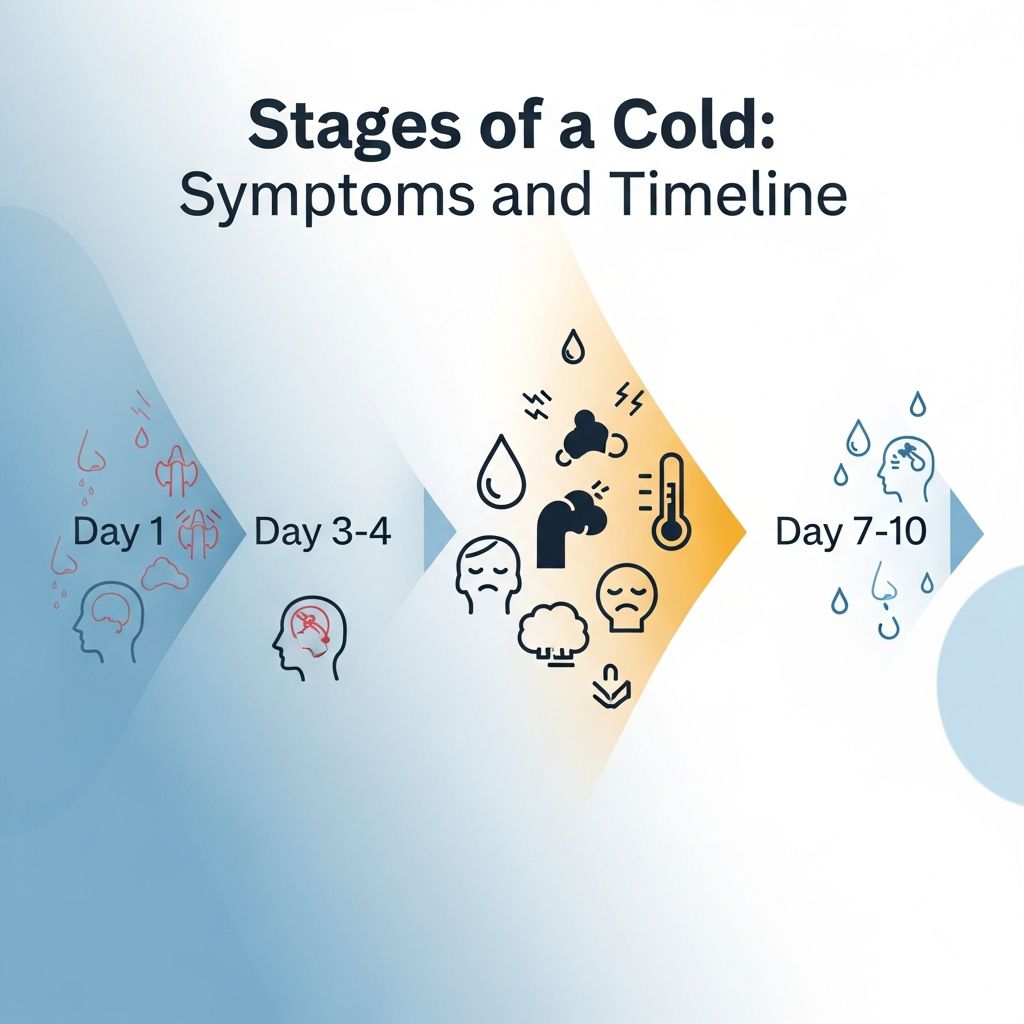
The common cold is one of the most prevalent respiratory infections, affecting millions of people each year. Understanding how a cold progresses through distinct stages can help you manage symptoms effectively and know when to seek medical attention. Cold symptoms typically appear in stages, with each phase presenting its own characteristic symptoms and duration.
Understanding the Three Stages of a Cold
The common cold progresses through three primary stages: early, active, and late. Each stage has distinct characteristics and typical timelines that most people experience when fighting off a cold virus. By recognizing which stage you’re in, you can better manage your symptoms and understand what to expect in the coming days.
Stage 1: The Early Stage (Days 1 to 3)
The early stage of a cold typically begins within one to three days of exposure to the cold virus. This is when you’ll first notice that something is wrong, though symptoms are usually mild and can be easily overlooked or attributed to other causes.
Initial Symptoms
During the early stage, you may experience a tickle in your throat as one of the first signs of infection. In fact, approximately half of all people with colds report a tickly or sore throat as their initial symptom. Other common symptoms during this early phase include:
- Scratchy or sore throat
- Mild fatigue
- Slight congestion
- Sneezing
- Runny nose
- Low-grade fever in children (less common in adults)
The symptoms during this stage are typically mild and manageable, which is why many people don’t immediately realize they have a cold. Some individuals may even continue their normal activities without significant disruption.
Contagiousness in the Early Stage
An important point to understand is that you can be contagious even before symptoms appear. In fact, you may spread a cold a day or two before you experience any symptoms yourself. This means the early stage of your own cold may coincide with a period when you’ve already been spreading the virus to others.
Stage 2: The Active Stage (Days 4 to 7)
The active stage is when cold symptoms typically worsen and reach their peak intensity. This is usually the most uncomfortable period of your cold, though it’s also when your body is working hardest to fight the infection.
Escalating Symptoms
During the active stage, you may experience all the symptoms from stage one, but they become more pronounced and bothersome. Your body’s immune response is in full force, which intensifies many of the uncomfortable sensations. Typical active stage symptoms include:
- Severe sore throat
- Thick nasal congestion
- Copious nasal discharge
- Persistent cough
- Fatigue and body aches
- Headache
- Possible low-grade fever in children
- Decreased appetite
Related Stories



The active stage is typically the most symptomatic period, and this is when most people feel their worst. You may find it difficult to sleep comfortably, concentrate on work or school tasks, or engage in regular activities.
Peak Contagiousness
Your highest level of contagiousness occurs during the active stage. You’re most contagious when your symptoms are at their worst, which is usually the first three days you feel sick. This makes the active stage particularly important for isolation measures if you want to prevent spreading your cold to others.
Managing Active Stage Symptoms
During this challenging phase, over-the-counter medications can help reduce symptoms and keep you comfortable. Rest is particularly important during this stage, as your body needs energy to fight the infection. Staying hydrated and avoiding strenuous activity can help your immune system focus on fighting the virus.
Stage 3: The Late Stage (Days 8 and Beyond)
The late stage is when colds usually begin to wind down. Most people start feeling better during this phase, though recovery timelines can vary significantly from person to person.
Recovery and Lingering Symptoms
During the late stage, most of your acute symptoms will begin to resolve. You may experience some improvement in congestion, throat soreness, and general malaise. However, some symptoms can persist well into this stage or even beyond typical cold recovery timelines.
One particularly common lingering symptom is a nagging cough. Some people develop a persistent cough that can last up to two months after a respiratory infection, even though other cold symptoms have resolved. This is because the respiratory tract needs time to fully heal and return to normal.
When to Seek Medical Attention
If your symptoms get worse and your fever returns during this stage, or if symptoms persist beyond 10 days, it’s important to contact a healthcare provider. You may have developed another infection or a complication such as bronchitis, sinusitis, or pneumonia.
Cold Duration and Recovery Timeline
Most colds go away on their own within seven to 10 days and don’t turn into anything more serious. However, this timeline is not absolute, and some people may recover faster while others need more time. The duration can depend on various factors including:
- Your overall health and immune function
- Age (children often have longer or more frequent colds)
- Type of cold virus
- How well you’re managing symptoms and supporting your recovery
- Whether complications develop
Understanding Cold Incubation Period
The incubation period is the time between when you’re infected with a cold virus and when your symptoms first appear. Understanding this timeline is important for recognizing when you may have been exposed. The common cold incubation period is typically between 12 hours and three days after exposure to the virus.
Contagiousness Duration
It’s crucial to understand that contagiousness extends beyond when you’re actively feeling sick. You can be contagious for up to two weeks, even after your acute symptoms have resolved. However, your highest risk of transmitting the cold to others occurs during the active stage when symptoms are most severe.
Cold in Babies and Young Children
The common cold in children and babies occurs more frequently than in adults because they haven’t been exposed to as many viruses yet. Their immune systems are still developing and must learn how to recognize and fight new germs.
Cold Frequency in Children
Babies experience colds frequently during their early years. Before turning 2 years old, a baby can get as many as eight to 10 colds a year. This high frequency is completely normal and actually helps their immune systems develop and become stronger. By the time you become an adult, you’ve had many colds, making it easier for your immune system to identify and attack similar viruses quickly.
Managing Colds in Young Children
If your child has a cold, they can usually continue their normal activities if they seem well enough to do so. However, if they have a fever or complications, it’s best to keep them at home to prevent spreading the illness and to allow their body adequate rest for recovery.
Cold Treatment and Recovery Support
There is no cure for a cold. You have to let it run its course while supporting your body’s natural healing processes. Common cold treatment includes over-the-counter medications to help reduce your symptoms and keep you comfortable until you recover. Most people recover quickly from a cold, and it doesn’t typically lead to anything more serious.
Recovery Strategies
- Get plenty of rest to allow your immune system to focus on fighting infection
- Stay well-hydrated by drinking water, herbal teas, and warm liquids
- Use over-the-counter medications to manage aches, fever, and congestion
- Avoid being around others to prevent spreading your cold
- Use a humidifier to ease congestion and soothe irritated airways
- Gargle with salt water to soothe a sore throat
When to Seek Professional Medical Help
If you don’t feel better in 10 days, see a healthcare provider to rule out complications or other conditions. Additionally, if your symptoms get worse during the late stage, your fever returns, or you develop symptoms that concern you, contact your healthcare provider promptly.
Frequently Asked Questions
Q: How long is the average cold?
A: Most colds go away on their own within seven to 10 days, though lingering symptoms like cough can persist longer.
Q: When am I most contagious with a cold?
A: You’re most contagious when your symptoms are at their worst, which is usually the first three days you feel sick, though you can spread the virus for up to two weeks.
Q: Can I catch a cold in warm months?
A: You can catch a cold any time of year, though it’s more likely during colder months when people spend more time indoors in closer contact with each other.
Q: Is there a cure for the common cold?
A: No, there is no cure for a cold. Treatment focuses on managing symptoms while your body fights off the virus naturally.
Q: How soon after exposure do cold symptoms appear?
A: The common cold incubation period is between 12 hours and three days after exposure to the virus.
References
- Common Cold (Rhinovirus): Symptoms, Causes & Treatment — Cleveland Clinic. 2023-02-07. https://my.clevelandclinic.org/health/diseases/12342-common-cold
Similar Articles








Read full bio of Sneha Tete