Understanding the Four Stages of Heart Failure
Learn about the four progressive stages of heart failure and what they mean for your health.
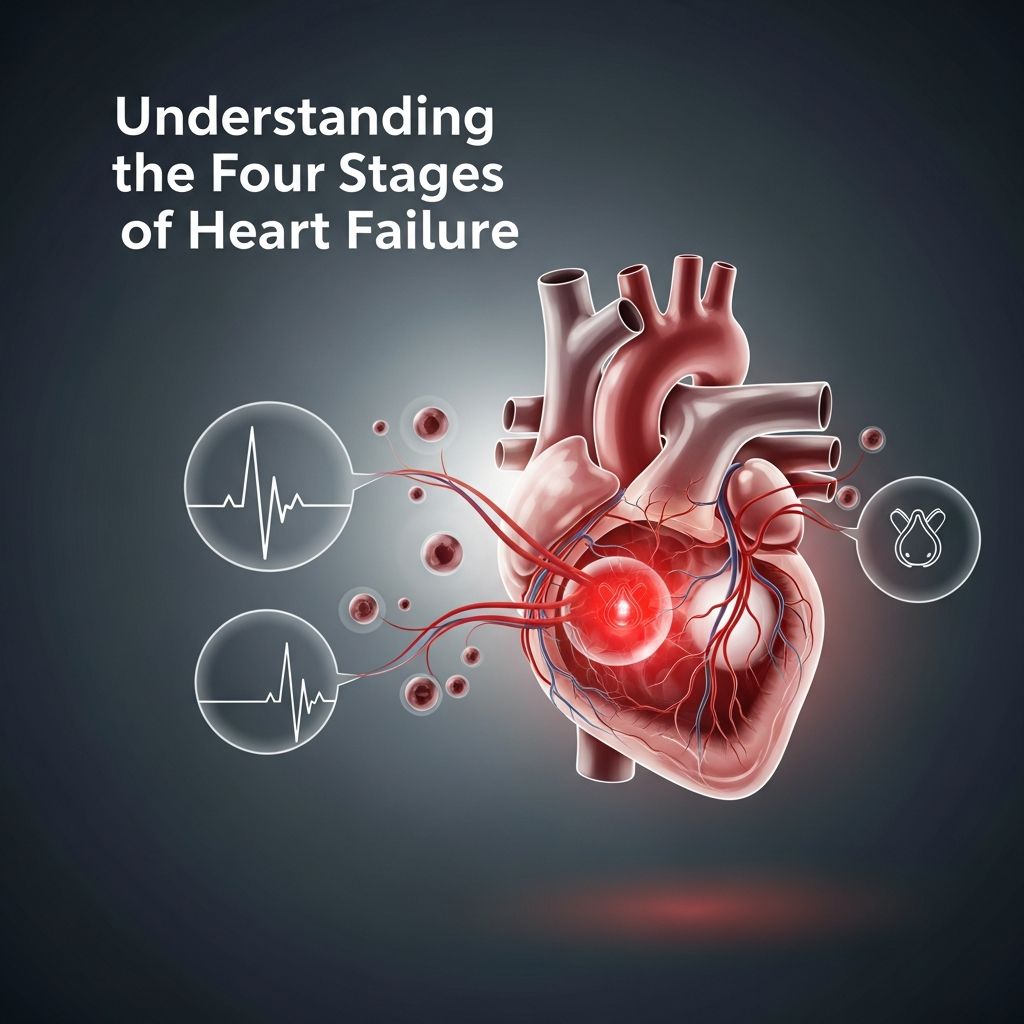
Heart failure is a serious medical condition that affects millions of people worldwide. Rather than occurring suddenly, heart failure typically develops gradually over time. To help patients and healthcare providers better understand this progression, medical professionals have established a classification system that divides heart failure into four distinct stages. Each stage represents a different level of risk and severity, and understanding these stages is crucial for managing the condition effectively and improving long-term health outcomes.
The four stages of heart failure—labeled A, B, C, and D—were established by the American Heart Association and the American College of Cardiology to provide a clear framework for diagnosis and treatment planning. This system helps healthcare professionals identify individuals at risk, detect the condition early, and implement appropriate interventions before symptoms become severe.
What is Heart Failure?
Before exploring the stages, it is important to understand what heart failure actually is. Heart failure is not a disease itself but rather a condition in which the heart cannot pump blood effectively to meet the body’s demands. This can occur due to structural damage, weakened muscles, or functional problems that prevent the heart from working efficiently. When the heart cannot pump blood adequately, fluid can accumulate in the lungs, liver, and other tissues, causing a variety of symptoms and complications.
The condition can develop in either the left or right side of the heart, or both. Left-sided heart failure often leads to fluid buildup in the lungs, while right-sided heart failure typically causes fluid accumulation in the body’s tissues. Understanding where the problem originates helps healthcare providers tailor treatment to your specific needs.
Stage A: At High Risk for Heart Failure
Stage A represents the earliest phase in the heart failure continuum. At this stage, individuals have not yet developed heart failure, but they have conditions or risk factors that significantly increase their likelihood of developing the disease in the future. Essentially, Stage A patients are at high risk but do not yet show any symptoms or structural problems with their heart.
Common risk factors that place someone in Stage A include:
- Hypertension (high blood pressure)
- Coronary artery disease
- Diabetes mellitus
- Obesity
- Exposure to cardiotoxic substances or medications
- Genetic variants associated with cardiomyopathy
- Family history of cardiomyopathy or heart failure
The primary goal at Stage A is prevention. Healthcare providers work with patients to manage risk factors through lifestyle modifications and, when appropriate, medications. Controlling blood pressure, managing diabetes, maintaining a healthy weight, avoiding harmful substances, and engaging in regular physical activity are essential strategies for preventing progression to later stages.
Stage B: Pre-Heart Failure
Stage B patients are considered to have “pre-heart failure.” While they do not currently experience symptoms of heart failure, they have structural or functional changes in the heart that indicate the disease process has begun. These individuals may have left ventricular hypertrophy (thickened heart muscle), reduced ejection fraction, or other evidence of cardiac dysfunction detected through imaging tests like echocardiograms.
Related Stories



Key characteristics of Stage B include:
- Structural heart disease visible on diagnostic imaging
- Increased ventricular filling pressures indicating stress on the heart
- No current or previous heart failure symptoms
- Possible risk factors for disease progression
Patients at Stage B may notice that ordinary physical activities are becoming more difficult or cause unusual fatigue or shortness of breath. Healthcare providers typically recommend aggressive management of this stage, including lifestyle modifications and medications designed to slow or prevent further deterioration. Medications such as angiotensin-converting enzyme (ACE) inhibitors or beta-blockers may be prescribed to help protect heart function and prevent progression to symptomatic stages.
Stage C: Symptomatic Heart Failure
Stage C represents the point at which heart failure becomes clinically apparent with actual symptoms. Patients at this stage have structural heart disease and present with current or previous symptoms of heart failure. This is the stage where people first experience the concrete manifestations of the condition that impact their daily lives.
Common symptoms of Stage C heart failure include:
- Shortness of breath, especially during physical activity or when lying flat
- Fatigue and weakness, particularly after exertion
- Difficulty exercising or reduced exercise tolerance
- Swelling in the legs, ankles, or abdomen
- Sudden weight gain (typically more than 2-3 pounds in a day)
- Persistent coughing or wheezing
- Irregular heartbeat or palpitations
- Reduced appetite
The specific symptoms experienced depend on whether the heart failure primarily affects the left or right side. Left-sided heart failure often causes pulmonary congestion with shortness of breath and coughing, while right-sided heart failure typically produces peripheral edema and abdominal bloating.
Treatment at Stage C becomes more intensive and typically involves multiple medications, lifestyle changes, and close medical monitoring. Diuretics may be prescribed to remove excess fluid, while other medications help improve heart function and reduce symptoms. Regular follow-up appointments and diagnostic testing become increasingly important to monitor disease progression and adjust treatment as needed.
Stage D: Advanced Heart Failure
Stage D represents advanced or end-stage heart failure. Patients at this stage experience severe symptoms that significantly interfere with daily activities and require repeated emergency department visits or hospitalizations despite optimal treatment efforts. At this critical stage, heart failure is considered systemic, affecting multiple organ systems throughout the body.
Characteristics of Stage D heart failure include:
- Severe limitations in physical activity; some patients cannot walk even one block without significant dyspnea
- Symptoms present even at rest
- Repeated hospitalizations and emergency room visits
- Symptoms that do not improve with standard medical therapy
- Significant impact on quality of life and functional capacity
The prognosis for Stage D heart failure is serious, with approximately 89% of patients requiring intensive management and many ultimately requiring palliative or end-of-life care. Healthcare teams at this stage may discuss advanced treatment options including mechanical assist devices, heart transplantation (for eligible candidates), continuous inotropic support, or hospice and palliative care to focus on comfort and quality of life.
Heart Failure Classification Systems
For patients with Stage C or Stage D heart failure, healthcare providers use an additional classification system to better understand symptom severity and guide treatment decisions. The most commonly used system is the New York Heart Association (NYHA) Functional Classification, which categorizes patients into one of four classes based on how their symptoms limit physical activity.
NYHA Functional Classification
| Class | Functional Capacity | Symptoms |
|---|---|---|
| Class I | No limitation of physical activity | Ordinary physical activity does not cause undue fatigue, palpitation, or shortness of breath |
| Class II | Slight limitation of physical activity | Comfortable at rest; ordinary activity results in fatigue, palpitation, shortness of breath, or chest pain |
| Class III | Marked limitation of physical activity | Comfortable at rest; less than ordinary activity causes fatigue, palpitation, shortness of breath, or chest pain |
| Class IV | Symptoms at rest | Symptoms of heart failure present even at rest; any physical activity causes further discomfort |
Your healthcare provider will assign a baseline NYHA classification when you are first diagnosed with Stage C or D heart failure. As you receive treatment, this classification may improve, indicating that your therapy is working effectively. Regular reassessment allows your care team to measure treatment response and make adjustments as needed.
Recognizing Signs of Worsening Heart Failure
Understanding when heart failure is worsening is crucial for timely intervention. As the condition progresses, symptoms that initially occurred only during strenuous activity begin to appear with minimal exertion, and eventually at rest. Warning signs that heart failure may be deteriorating include:
- Increased shortness of breath, particularly at night or when lying down
- Awakening at night gasping for air
- Rapid or irregular heartbeat
- Sudden unexplained weight gain
- Increased swelling in legs, ankles, or abdomen
- Persistent coughing, especially when producing pink or blood-tinged sputum
- Loss of appetite or nausea
- Increased fatigue or weakness
- Difficulty concentrating or confusion
- Need to urinate more frequently, especially at night
If you experience any of these warning signs, contact your healthcare provider immediately. Early intervention can often prevent hospitalization and slow disease progression.
Living Well With Heart Failure
An important message for patients is that a heart failure diagnosis does not mean the end of an active, fulfilling life. Many people with heart failure at all stages continue to engage in meaningful activities, maintain relationships, and enjoy quality time with loved ones. The key is working closely with your healthcare team to manage your condition effectively.
Strategies for living well with heart failure include:
- Taking medications exactly as prescribed
- Maintaining a heart-healthy diet low in sodium and saturated fats
- Monitoring weight and reporting sudden changes
- Engaging in regular, appropriate physical activity as recommended by your doctor
- Managing stress through relaxation techniques and counseling if needed
- Limiting alcohol consumption
- Attending all scheduled medical appointments
- Learning about your condition and staying informed
- Seeking support from family, friends, or support groups
How Quickly Does Heart Failure Progress?
The rate at which heart failure progresses varies significantly from person to person and is difficult to predict with certainty. Some individuals may experience stable symptoms for months or even years before any deterioration occurs. Others may notice gradual decline over time, while some patients experience rapid progression. This variability underscores the importance of individualized assessment, regular monitoring, and personalized treatment plans tailored to each patient’s specific situation and needs.
Frequently Asked Questions
Q: Can heart failure be cured?
A: While heart failure cannot be completely cured in most cases, it can be effectively managed with appropriate treatment, lifestyle modifications, and medical care. Many patients achieve significant symptom improvement and stabilization of their condition with proper management.
Q: What is the difference between heart failure stages and NYHA classes?
A: Stages (A through D) describe the structural and clinical progression of heart failure and are used for all patients. NYHA classes (I through IV) measure symptom severity and functional limitation and are only assigned to patients with Stage C or D heart failure to guide treatment decisions.
Q: Can someone move backwards through the stages?
A: Once structural heart damage has occurred (Stage B or beyond), reversing to an earlier stage is unlikely. However, NYHA classification can improve with effective treatment, indicating better symptom control and functional capacity.
Q: What medications are typically used to treat heart failure?
A: Common heart failure medications include ACE inhibitors or ARBs, beta-blockers, diuretics, aldosterone antagonists, and newer agents like SGLT2 inhibitors. Your specific medication regimen will depend on your stage, classification, and individual medical needs.
Q: Is exercise safe for people with heart failure?
A: Appropriate, supervised physical activity can be beneficial for many heart failure patients and may improve symptoms and outcomes. However, the type and intensity of exercise should be determined by your healthcare provider based on your specific stage and functional capacity.
References
- Classes and Stages of Heart Failure — American Heart Association. 2022. https://www.heart.org/en/health-topics/heart-failure/what-is-heart-failure/classes-of-heart-failure
- Congestive Heart Failure Symptoms, Stages, & Classification — The Cardiology Advisor. 2023. https://www.thecardiologyadvisor.com/features/congestive-heart-failure-symptoms-stages-classification/
- What Are the 4 Stages of Congestive Heart Failure? — Everlywell. 2024. https://www.everlywell.com/blog/heart-health/what-are-the-4-stages-of-congestive-heart-failure/
- 2022 AHA/ACC/HFSA Guideline for the Management of Heart Failure — Circulation. 2022;145:e895-e1032. DOI: 10.1161/CIR.0000000000001063
Similar Articles








Read full bio of medha deb