Stapedectomy: Hearing Loss Surgery & Recovery
Restore your hearing with stapedectomy surgery: Definition, procedure, recovery, and FAQ.
What Is Stapedectomy?
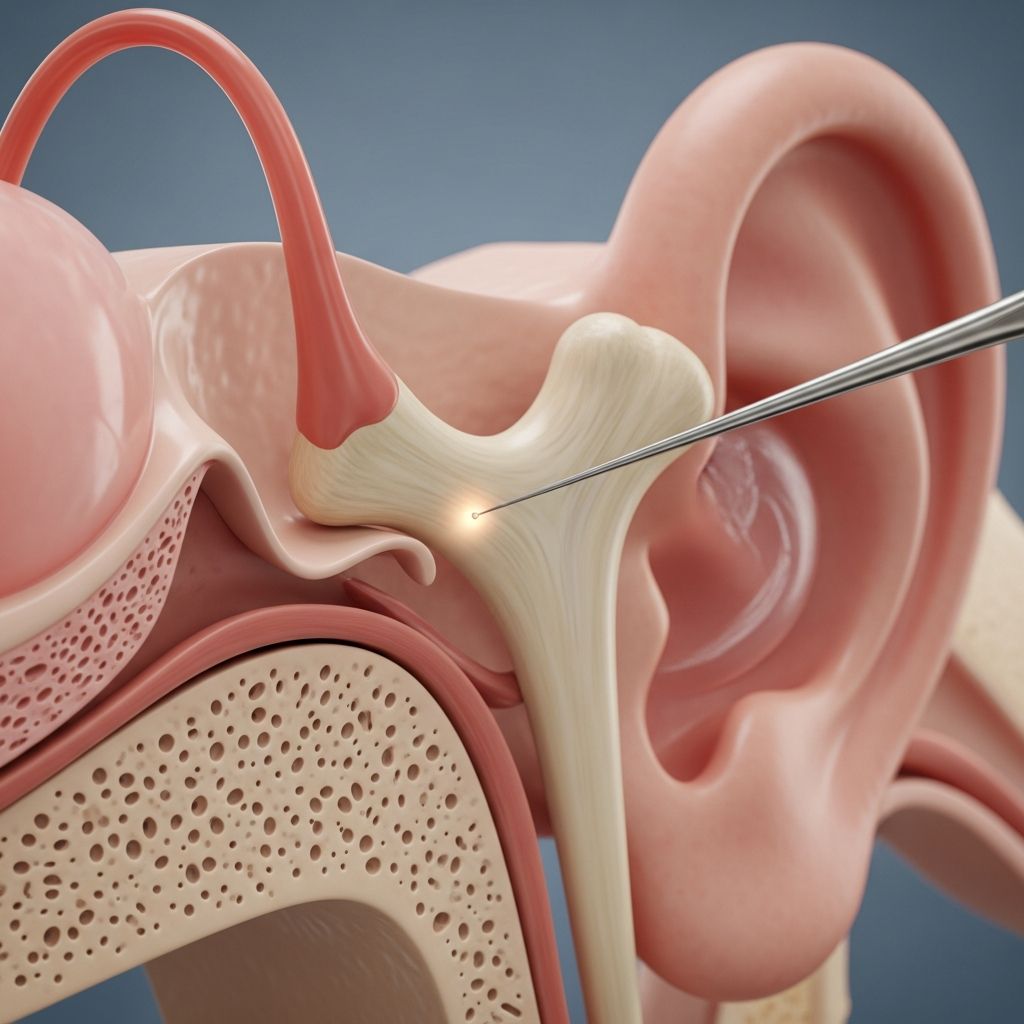
Stapedectomy is a surgical procedure designed to restore hearing in patients suffering from otosclerosis, a condition that causes progressive hearing loss. During this minimally invasive surgery, an otolaryngologist (ear, nose, and throat specialist) removes a tiny U-shaped bone called the stapes, which has become fixed and immobile due to abnormal bone growth. The surgeon then replaces this damaged bone with a small artificial prosthetic device, allowing sound waves to travel properly from your middle ear to your inner ear.
The stapes is one of three incredibly small bones in your middle ear that work together to transmit sound waves. When otosclerosis develops, the stapes fuses with surrounding bone tissue, losing the flexibility needed to vibrate and conduct sound effectively. By replacing this fixed bone with a functional prosthesis, stapedectomy restores the natural pathway for sound transmission and significantly improves hearing in most patients.
Why You Might Need a Stapedectomy
The primary reason for undergoing stapedectomy is to treat hearing loss caused by otosclerosis. This hereditary condition causes abnormal bone growth around the stapes, gradually making it immobile and unable to transmit sound waves to the inner ear. As otosclerosis progresses, patients typically notice they cannot hear people whispering or speaking softly, and communication becomes increasingly difficult.
You may be a candidate for stapedectomy if you have:
- Confirmed diagnosis of otosclerosis causing conductive or mixed hearing loss
- Progressive hearing loss despite hearing aid use or medical treatment
- Hearing loss that significantly impacts your quality of life and daily functioning
- Advanced stages of otosclerosis affecting one or both ears
- Overall good health and realistic expectations about surgical outcomes
While hearing aids can provide temporary relief, stapedectomy offers a more permanent solution by restoring the mechanical pathway for sound conduction. An otolaryngologist can help determine whether you are an ideal candidate based on the severity of your hearing loss and overall ear health.
Preparation for Stapedectomy Surgery
Before undergoing stapedectomy, your healthcare provider will conduct a thorough evaluation to ensure you are prepared for the procedure and to establish baseline measurements of your hearing.
Pre-Operative Evaluation Steps:
- Medical History: Your doctor will review your complete medical history, including the age when hearing loss began, how quickly it has progressed, any family history of otosclerosis, and any previous ear treatments you have received
- Physical Examination: A comprehensive ear examination using an otoscope will be performed to rule out other causes of hearing loss, such as ear infections or eardrum perforations
- Hearing Tests: Audiological testing will measure your current hearing levels and help predict potential improvements from surgery
- Imaging Studies: In some cases, CT scans may be ordered to assess the extent of bone fixation
- Pre-Surgery Instructions: Your surgeon will provide specific guidelines about fasting, medications to avoid, and what to bring on surgery day
Understanding the Stapedectomy Procedure
Stapedectomy is typically performed as an outpatient procedure, meaning you can usually go home the same day. The surgery generally lasts between 90 minutes to 2 hours, depending on the complexity of your individual case and the surgeon’s approach.
The Surgical Process:
The surgeon gains access to your middle ear through your ear canal without making any external incisions. Using an operating microscope for precision, the surgeon carefully removes the fixed stapes bone and replaces it with a prosthetic device. This prosthesis allows sound waves to bypass the damaged bone and travel effectively to your inner ear.
The procedure is performed under local anesthesia with sedation or general anesthesia, depending on your comfort level and your surgeon’s recommendation. The use of specialized microsurgical equipment is essential to ensure precision and minimize complications during this delicate procedure.
Related Stories



Classification: Stapedectomy is not considered a major surgery in the traditional sense, as it does not require general anesthesia with breathing support. This classification means the procedure carries fewer overall risks compared to major surgical interventions.
Types of Stapes Replacement Procedures
Your surgeon may recommend different approaches based on your specific situation:
- Stapedectomy: Complete removal of the stapes bone and replacement with a prosthetic device
- Stapedotomy: A less invasive alternative where a small hole is created in the stapes footplate, and a piston-like prosthesis is inserted. This technique may be used in certain clinical situations to minimize tissue disruption
Recovery After Stapedectomy Surgery
Understanding the recovery process helps you prepare mentally and physically for the post-operative period. Recovery following stapedectomy is crucial for achieving optimal results and preventing complications.
Immediate Post-Operative Care:
After surgery, you will be monitored in the recovery area for several hours as the anesthesia wears off. Most patients experience only mild pain or discomfort, which can be managed with over-the-counter pain medications or prescribed analgesics. You will be discharged once you have fully recovered from anesthesia.
Recovery Timeline:
- First Few Days: Rest is essential during the initial recovery period. Most people’s ears heal completely within about six weeks
- One Week: Most patients can return to normal routines and light activities within about one week
- Strenuous Activities: If your job involves strenuous activity or heavy lifting, you may need additional time off work—typically two to three weeks
- Activity Restrictions: You must avoid strenuous exercise, heavy lifting, and bending down for at least the first week to prevent complications and promote proper healing
Important Post-Recovery Guidelines:
- Keep your ear dry; avoid getting water in your ear canal during bathing or showering
- Follow all post-operative instructions provided by your surgeon
- Attend all scheduled follow-up appointments
- Avoid sudden pressure changes; commercial air travel is generally safe beyond two weeks after surgery when the tissue seal over the oval window has healed
- Take prescribed antibiotics as directed to prevent infection
Follow-Up Appointments and Hearing Restoration
Regular follow-up visits with your surgeon are paramount for monitoring your healing progress and assessing hearing improvements.
Follow-Up Schedule:
- One Week After Surgery: Your surgeon will check for vertigo or signs of infection
- Four to Six Weeks After Surgery: Formal hearing tests will be performed to measure your hearing improvement and assess the success of the procedure
Most patients notice gradual improvement in their hearing over the weeks following surgery. The prosthetic device allows sound waves to reach your inner ear, resulting in significantly better hearing in the majority of cases.
Potential Risks and Complications
As with any surgical procedure, stapedectomy carries potential risks and complications. While the procedure is generally safe and successful in 80-90% of patients with otosclerosis, it is important to understand possible outcomes.
Common Post-Operative Side Effects:
- Mild to moderate dizziness or vertigo (usually temporary)
- Mild pain or discomfort
- Temporary taste changes
- Minor bleeding or drainage from the ear
Potential Complications:
- Hearing Improvement Failure: The most common complication is hearing that does not improve after surgery, or in rare instances, additional hearing loss
- Infection: Any surgical procedure carries a risk of infection, which may require further intervention and antibiotic treatment
- Prosthesis Displacement: The artificial device may become displaced, requiring additional surgery to reposition or replace it
- Vertigo: Persistent dizziness may occur in some patients but usually resolves with time
- Tinnitus: Ringing in the ear may develop or worsen in some cases
- Facial Nerve Injury: Though rare, injury to the facial nerve can occur
When to Contact Your Healthcare Provider
Seek immediate medical attention if you experience any of the following symptoms after your stapedectomy:
- Severe pain not relieved by prescribed medication
- Signs of infection, including fever, increasing redness, or drainage with foul odor
- Persistent or worsening dizziness or vertigo
- Sudden hearing loss or significant deterioration
- Facial weakness or drooping
- Persistent nausea or vomiting
Frequently Asked Questions About Stapedectomy
Q: How long does stapedectomy surgery take?
A: Stapedectomy typically takes between 90 minutes to 2 hours, depending on the complexity of your individual case and your surgeon’s experience.
Q: Is stapedectomy painful?
A: Most patients experience only mild pain or discomfort after surgery, which can be easily managed with over-the-counter or prescribed pain medications.
Q: How soon can I hear improvement after stapedectomy?
A: While some patients notice immediate improvement, hearing typically continues to improve gradually over the weeks following surgery as your ear heals and swelling decreases. Formal hearing tests at four to six weeks will provide a clearer picture of improvement.
Q: Can stapedectomy be performed on both ears?
A: If otosclerosis affects both ears, surgeons typically repair one ear at a time, waiting several months to allow the first ear to heal before operating on the second ear.
Q: When can I return to normal activities after stapedectomy?
A: Most people can return to normal routines within one week. However, those with physically demanding jobs may need two to three weeks off work. Strenuous activities should be avoided for at least the first week.
Q: Is stapedectomy a major surgery?
A: No, stapedectomy is not classified as major surgery because it does not require general anesthesia with breathing support, reducing overall surgical risks.
Q: What is the success rate of stapedectomy?
A: Stapedectomy has a success rate of 80-90% in patients with otosclerosis, making it a highly effective treatment for hearing restoration.
Q: Is it safe to fly after stapedectomy?
A: Commercial air travel is generally safe beyond two weeks after surgery, once the tissue seal over the oval window has adequately healed.
Why Choose Stapedectomy for Hearing Restoration
Stapedectomy offers a permanent solution for hearing loss caused by otosclerosis, restoring your ability to communicate effectively and participate fully in life. Unlike hearing aids, which provide temporary assistance, stapedectomy addresses the underlying mechanical problem by restoring the natural pathway for sound transmission.
For individuals with otosclerosis experiencing progressive hearing loss, stapedectomy represents one of the most effective and proven surgical treatments available. Your otolaryngologist can help determine whether this procedure is the right solution for your specific hearing problem and overall health status.
References
- Stapedectomy: Definition, Surgery, Procedure & Recovery — Cleveland Clinic. 2022-02-04. https://my.clevelandclinic.org/health/treatments/22382-stapedectomy
- Otosclerosis: Symptoms, Causes & Treatment — Cleveland Clinic. https://my.clevelandclinic.org/health/diseases/22033-otosclerosis
- Flight After Stapes Surgery: An Evidence-Based Recommendation — Journal of Otology & Neurotology, PubMed. 2023. https://pubmed.ncbi.nlm.nih.gov/37476535/
- Stapedectomy Surgery in Nigeria — SURJEN Healthcare. https://www.surjen.com/surgery-detail/stapedectomy
- Get Otosclerosis Care — Cleveland Clinic. https://my.clevelandclinic.org/services/otosclerosis-treatment
- Stapedectomy — Britannica. https://www.britannica.com/science/stapedectomy
Similar Articles








Read full bio of Sneha Tete