Staphylococcal Scalded Skin Syndrome: Diagnosis And Treatment
Rare toxin-mediated skin disorder causing widespread blistering and peeling, primarily in young children.
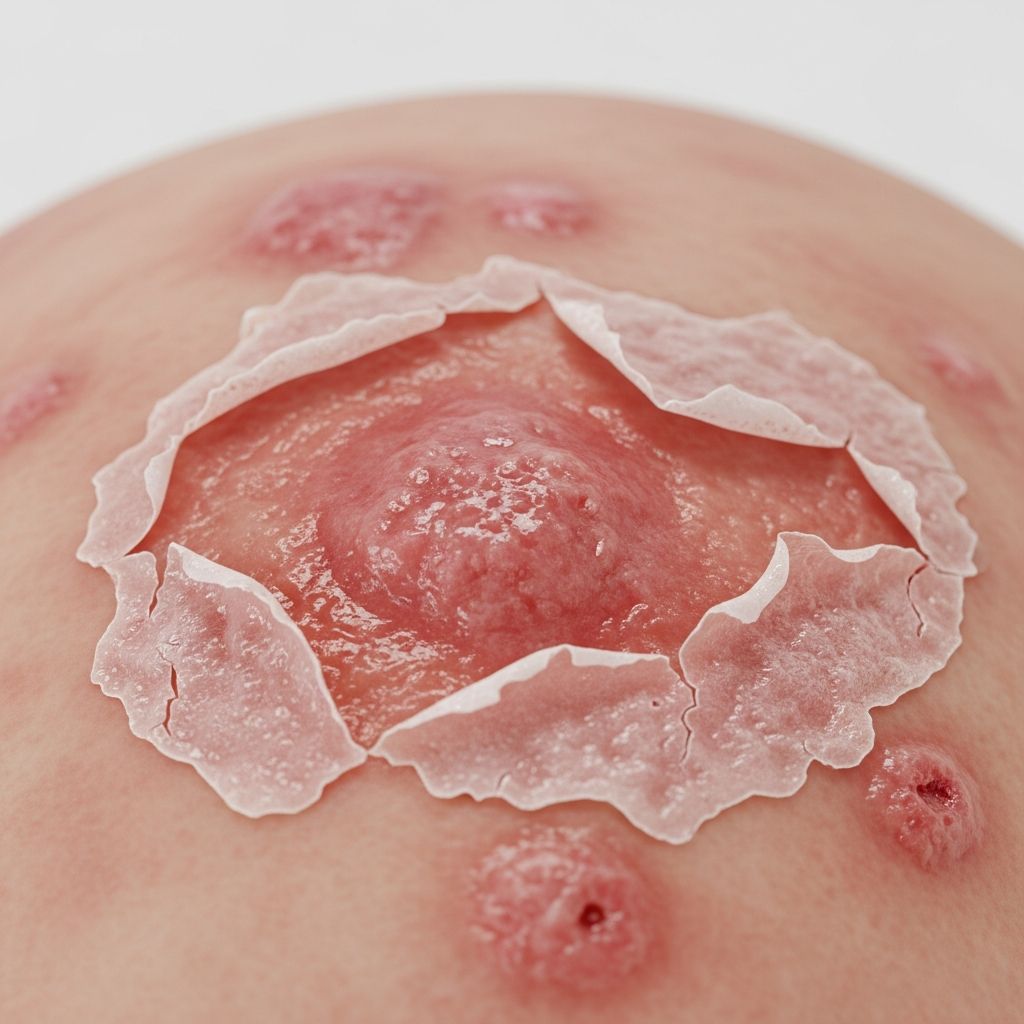
Staphylococcal scalded skin syndrome (SSSS) is a rare, potentially life-threatening skin condition characterised by widespread erythema, superficial blistering (bullae) and desquamation (skin peeling) due to a toxin produced by certain strains of Staphylococcus aureus. It primarily affects children under the age of 5 years, particularly neonates, but can occasionally occur in adults with renal failure or immunosuppression.
What is staphylococcal scalded skin syndrome?
Staphylococcal scalded skin syndrome (SSSS), also known as Ritter disease or pemphigus neonatorum, arises from a toxin-mediated epidermolysis rather than direct bacterial invasion of the skin. Specific strains of Staphylococcus aureus, typically phage group II (types 3A, 3B, 55, or 71), produce exfoliative toxins (ET-A and ET-B), which are serine proteases that cleave desmoglein-1 (Dsg1), a desmosomal adhesion protein in the superficial epidermis.
This cleavage disrupts cell-to-cell adhesion in the granular layer of the epidermis (stratum granulosum), leading to intraepidermal cleavage above the basal keratinocytes. The result is widespread tenderness, wrinkling, flaccid bullae, and desquamation resembling a scald burn. Importantly, mucosal surfaces are spared because desmoglein-1 is absent from mucosal epithelium.
SSSS is distinct from bullous impetigo, which is a localised form caused by the same toxins but confined to the site of infection. In SSSS, the toxins disseminate haematogenously from a distant focus, affecting the entire skin surface.
Who gets staphylococcal scalded skin syndrome?
SSSS predominantly affects young children, with over 95% of cases occurring in those under 5 years old. Neonates and infants under 6 months are at highest risk due to immature renal clearance of toxins, lack of protective antibodies, and close contact in nurseries.
- Children: Highest incidence in newborns (Ritter disease) and preschool-aged children.
- Adults: Rare; associated with immunosuppression, chronic renal failure, or haemodialysis.
Risk factors include:
- Young age (< 5 years)
- Immunosuppression (e.g., malignancy, HIV)
- Renal impairment
- Prolonged hospitalisation or nursery exposure
- Underlying skin barrier defects
Outbreaks have been reported in neonatal intensive care units and paediatric wards.
What causes staphylococcal scalded skin syndrome?
SSSS is caused by exfoliative toxins (exfoliatins) from toxin-producing S. aureus strains. The primary infection site is often remote from the skin rash:
- In neonates: Umbilicus, diaper area, conjunctiva.
- In older children: Pharyngitis, otitis media, impetigo, or skin wounds.
Toxins enter the bloodstream, travel to the skin, and specifically target desmoglein-1 in the superficial epidermis, causing acantholysis (loss of cohesion) without deeper dermal involvement. This contrasts with toxic epidermal necrolysis (TEN), which affects desmoglein-3 and deeper layers.
Localised toxin release causes bullous impetigo; systemic spread leads to generalised SSSS.
What are the clinical features of staphylococcal scalded skin syndrome?
Related Stories



Prodrome
The illness begins with non-specific systemic symptoms: fever, irritability, malaise, and poor feeding (in infants). This lasts 24–48 hours.
Generalised eruption
A tender, blanchable
erythroderma
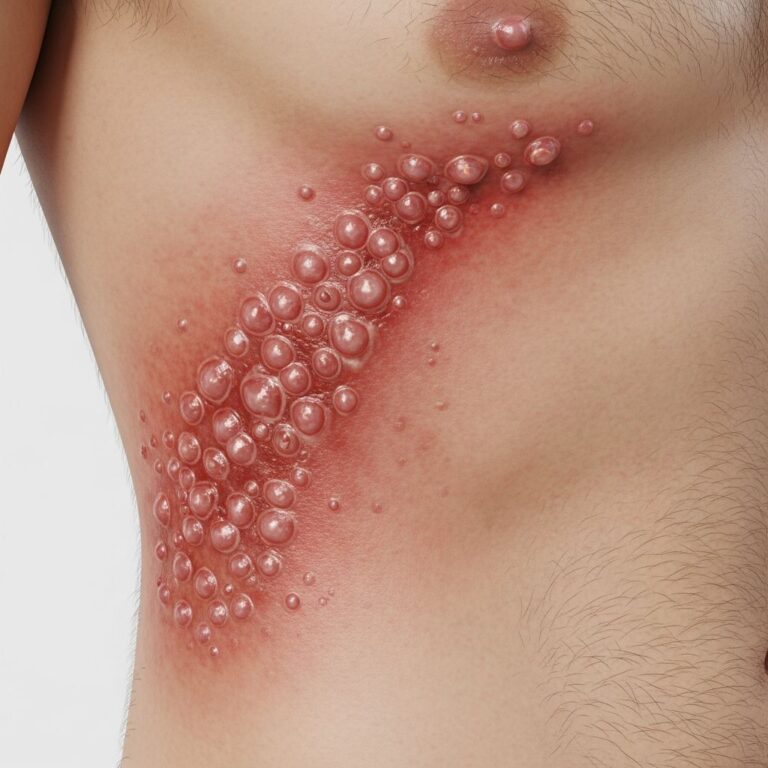
(diffuse redness) develops, often starting on the face, neck, axillae, and groin (flexural areas). The skin feels sunburn-like tender with a wrinkled, tissue-paper appearance (positive Nikolsky sign: epidermis shears with gentle pressure). Large, flaccidbullae
form and rupture easily, leaving denuded, moist, red erosions resembling scald burns.Characteristic features
- Circumoral erythema and periorificial peeling: Redness around mouth/eyes with radial skin peeling.
- Flexural accentuation: Crusting and fissuring in body folds.
- Generalised desquamation: Sheets of epidermis slough off within 36–72 hours, exposing scalded dermis.
- Mucosal sparing: No oral/genital involvement (key differentiator from SJS/TEN).
Skin findings progress from erythema → bullae → desquamation → re-epithelialisation (5–7 days with treatment).
Systemic features
High fever, dehydration, tachycardia, and hypotension from fluid loss through denuded skin. Severe cases risk sepsis, electrolyte imbalance, and secondary infection.
Diagnosis of staphylococcal scalded skin syndrome
Diagnosis is primarily clinical, supported by characteristic history, Nikolsky sign, and progression.
Investigations
- Culture: Swab primary site (e.g., throat, nose, wounds) for toxin-producing S. aureus. Blood cultures usually negative.
- Skin biopsy: Confirms diagnosis: superficial split in granular layer, sparse inflammatory infiltrate (vs. full-thickness necrosis in TEN).
- Freeze-squeeze test: Blister fluid squeezed from induced Nikolsky site shows few inflammatory cells.
- Tzanck smear: Acantholytic cells.
Differential diagnosis includes:
| Condition | Key Differentiators from SSSS |
|---|---|
| Toxic epidermal necrolysis (TEN)/SJS | Mucosal involvement, deeper necrosis, drug history, full-thickness epidermal death on biopsy. |
| Bullous mastocytosis | Darier’s sign positive, mast cell infiltrates, recurrent episodes. |
| Bullous impetigo | Localised to infection site only. |
| Kawasaki disease | Mucosal changes, conjunctivitis, coronary aneurysms. |
| Scarlet fever | Pastiae lines, strawberry tongue, no bullae. |
Treatment of staphylococcal scalded skin syndrome
Prompt systemic antibiotics targeting S. aureus are essential. Hospitalisation is required for severe cases.
Antibiotics
- First-line (IV): Anti-staphylococcal penicillins (e.g., nafcillin, oxacillin) or cephalosporins (e.g., cefazolin).
- MRSA coverage: Vancomycin, clindamycin, or linezolid if suspected.
- Duration: 7–10 days; switch to oral once stable (e.g., flucloxacillin, cephalexin).
Supportive care
- Fluid/electrolyte replacement.
- Pain management (opioids if needed).
- Wound care: Non-adherent dressings, emollients; avoid trauma.
- Nutritional support; isolation to prevent spread.
- Burn unit/ICU for extensive >30% body surface area involvement.
Toxin production ceases within 24 hours of antibiotics, halting progression.
Complications of staphylococcal scalded skin syndrome
With early treatment, prognosis is excellent; recovery without scarring in 5–14 days. Complications include:
- Dehydration and electrolyte imbalance
- Bacterial sepsis
- Cellulitis superinfection
- Pneumonia
- Recurrence if source not eradicated
- Rare mortality (1–5% in children; higher in neonates/adults)
Mortality approaches 100% without antibiotics.
Prevention of staphylococcal scalded skin syndrome
- Strict hand hygiene in nurseries/hospitals.
- Screening/treating S. aureus carriers among staff/children.
- Contact precautions for cases.
- Prophylactic intranasal mupirocin for outbreaks (controversial).
- Early treatment of impetigo/pharyngitis.
Frequently asked questions about staphylococcal scalded skin syndrome
Is staphylococcal scalded skin syndrome contagious?
Yes, the causative S. aureus bacteria spread via contact. The toxin itself is not contagious, but infected individuals require isolation.
Does SSSS leave scars?
No, as it is superficial; epidermis regenerates fully without scarring if treated promptly.
Can adults get SSSS?
Rarely; usually in immunocompromised or renal failure patients.
How long does recovery take?
5–14 days with antibiotics; new skin forms completely.
Is SSSS the same as a staph skin infection?
No; SSSS is toxin-mediated, not direct invasion.
References
- Staphylococcal Scalded Skin Syndrome — St. Louis Children’s Hospital. 2023. https://www.stlouischildrens.org/conditions-treatments/staphylococcal-scalded-skin-syndrome
- Staphylococcal Scalded Skin Syndrome — National Organization for Rare Disorders (NORD). 2024-05-15. https://rarediseases.org/rare-diseases/staphylococcal-scalded-skin-syndrome/
- Staphylococcal Scalded Skin Syndrome — Merck Manual Professional Edition. 2025. https://www.merckmanuals.com/professional/dermatologic-disorders/bacterial-skin-infections/staphylococcal-scalded-skin-syndrome
- Staphylococcal Scalded Skin Syndrome (SSSS) — Cleveland Clinic. 2024. https://my.clevelandclinic.org/health/diseases/staph-scalded-skin-syndrome
- Staphylococcal Scalded Skin Syndrome (SSSS) — DermNet NZ. 2025. https://dermnetnz.org/topics/staphylococcal-scalded-skin-syndrome
- Staphylococcal Scalded Skin Syndrome — StatPearls, NCBI Bookshelf. 2024-07-01. https://www.ncbi.nlm.nih.gov/books/NBK448135/
Similar Articles








Read full bio of medha deb