Staring Spells: When It’s More Than Daydreaming
Understanding the difference between normal daydreaming and seizure-related staring spells in children.
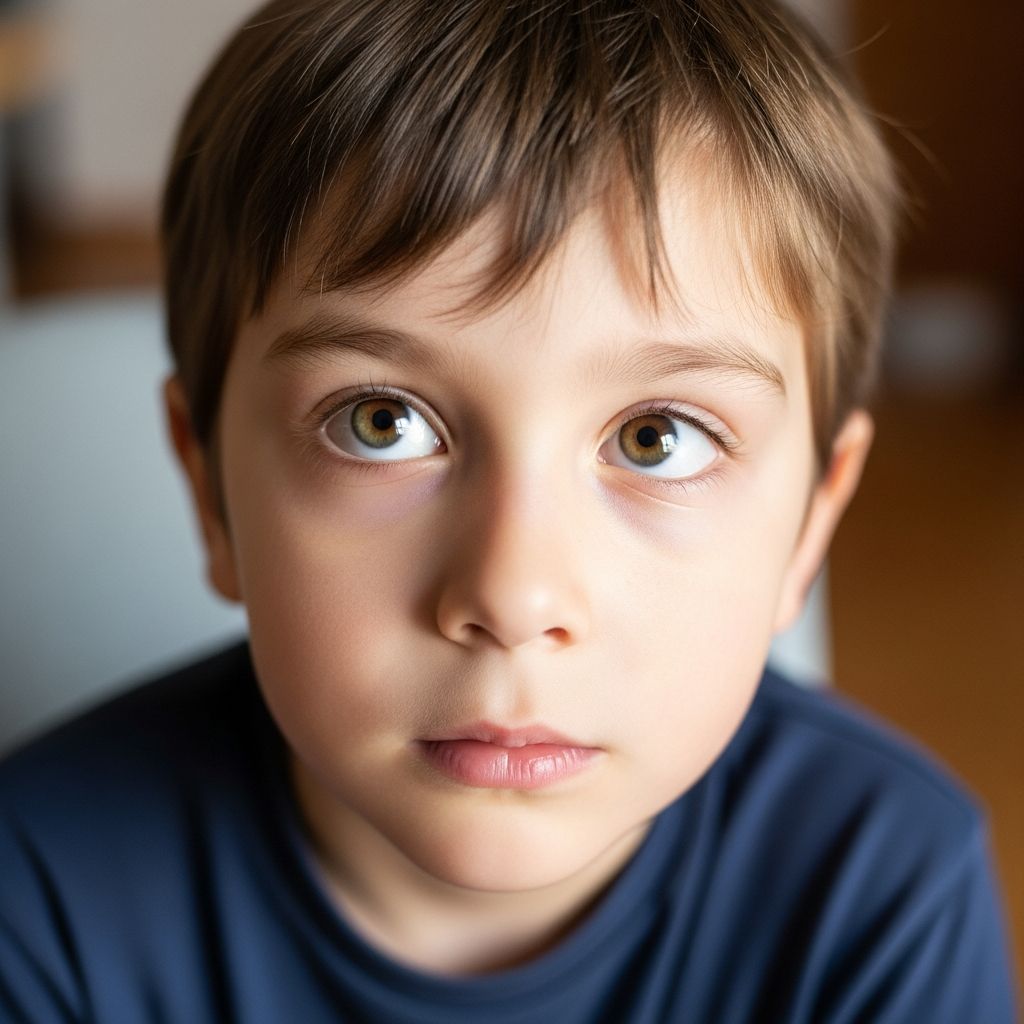
Staring spells are a common concern for parents and educators, often prompting worry about whether a child is simply daydreaming or experiencing something more serious. While most episodes of a child appearing to “zone out” are indeed harmless moments of inattention, some staring spells can indicate an underlying neurological condition that requires medical evaluation and treatment. Understanding the distinction between normal daydreaming and potentially problematic staring spells is crucial for parents, teachers, and caregivers.
Understanding Staring Spells and Their Causes
Staring spells can originate from various causes, ranging from completely benign to medically significant. In many cases, what appears to be a staring spell is simply the child’s mind wandering or being distracted by internal thoughts or external stimuli. However, staring spells can also be symptomatic of seizure disorders, particularly absence seizures, which are a type of generalized onset nonmotor seizure characterized by unresponsiveness and blank staring.
The challenge for parents and healthcare providers lies in distinguishing between innocent daydreaming and potentially concerning episodes that warrant medical investigation. A staring spell that lasts only a few seconds and from which a child can be easily redirected is typically harmless. However, recurring episodes that cannot be interrupted, that occur multiple times throughout the day, or that are accompanied by unusual physical behaviors may indicate a seizure disorder.
Characteristics of Normal Daydreaming
Normal daydreaming is a common and healthy part of childhood development. When a child is daydreaming, they typically:
– Can be easily redirected by calling their name or gentle physical touch- Maintain some level of environmental awareness- Show gradual onset and offset of the inattentive state- Experience no confusion or disorientation upon returning to awareness- Have episodes that are typically longer in duration (seconds to minutes)- Do not follow any regular pattern of occurrence- Show no associated physical symptoms or automatisms
Daydreaming is a normal cognitive process that allows children to process information, develop creativity, and engage in imaginative thinking. Most parents will recognize these moments when their child appears to be “lost in thought” but can snap back to attention when engaged.
Absence Seizures: Clinical Presentation
Absence seizures, formerly known as petit mal seizures, present quite differently from normal daydreaming. These seizures are classified as a type of generalized onset nonmotor seizure and are characterized by sudden, brief episodes of unconsciousness or unresponsiveness. Family members and teachers typically describe brief spells in which the child has complete loss of awareness, is unresponsive, and shows behavioral arrest. Bystanders often describe the patient during these spells as having “a blank stare.”
Episodes of absence seizures frequently occur, often 10 to 30 times throughout the day. Most children completely stop their activity during an absence seizure, but some may continue activities more slowly or unusually. Some children experience 3-Hz regular eyelid fluttering during the episodes. Clinical presentation can vary in the same individual, making diagnosis sometimes challenging.
Related Stories



A simple absence seizure causes a vacant stare, which may be mistaken for a brief lapse in attention, but typically lasts about 10 seconds, though it may extend to 30 seconds. Importantly, there is no confusion, headache, or drowsiness after the seizure ends—the child simply returns to normal activity.
Key Distinguishing Features Between Daydreaming and Absence Seizures
| Feature | Normal Daydreaming | Absence Seizure |
|---|---|---|
| Duration | Seconds to minutes | 3-30 seconds |
| Frequency | Occasional | Multiple times daily (10-30+ times) |
| Interruption | Can be easily interrupted | Cannot be interrupted |
| Physical symptoms | None typical | May include eyelid fluttering, lip smacking, finger rubbing |
| Post-event confusion | None | None (immediate return to normal) |
| Memory of event | Partial awareness | Complete loss of memory |
| Pattern | Irregular | Often follows a regular pattern |
Symptoms and Physical Manifestations
When identifying potential absence seizures, several specific symptoms and physical behaviors may be present. These include:
– A sudden stop in activity without falling- Lip smacking or chewing motions- Eyelid flutters or blinking- Finger rubbing or small movements of both hands- Vacant or blank stare into space- Unresponsiveness to stimuli- Complete behavioral arrest with sudden cessation of speech or activity
Atypical absence seizures present with additional complexity. These seizures cause staring and unawareness along with other physical behaviors like blinking and moving the arms, and they usually last longer than typical absence seizures. Atypical absence seizures more often affect children who have learning disabilities and severe epilepsy.
The Importance of Careful Observation and History
When a child presents with staring spells, healthcare providers and caregivers should gather detailed information about the episodes. Important questions to ask include:
– How long do the staring spells last?- How frequently do they occur?- Can the child be snapped back to attention during the spell?- Are there any physical movements or automatisms associated with the episodes?- Does the child remember what happened during the spell?- Did the episode start abruptly or gradually?- Is there any lip smacking, eyelid fluttering, or other repetitive movements?- Has there been any recent head injury or illness?- Are there any family members with seizure disorders?
The accuracy of this history is critical because research shows that most staring spells are nonepileptic in nature. A retrospective chart review performed in a tertiary care epilepsy center showed that among 276 patients in the epilepsy monitoring unit, only 11% were deemed to have seizures. This emphasizes the importance of not prematurely labeling staring spells as seizures without proper evaluation.
Diagnostic Evaluation
Episodes of behavioral arrest should be called “staring spells” until an electroencephalogram (EEG) evaluation is performed. An electroencephalogram is a test most often used to diagnose absence seizures, as it records the brain’s electrical activity and spots any problems that might indicate an absence seizure. Sometimes the EEG is recorded over a few days (long-term EEG) and may include video at the same time to capture the actual episodes.
Patients can only be diagnosed with absence epilepsy if they have characteristic seizure semiology and EEG findings. The study of video-EEG monitoring found that nonepileptic staring spells were often characterized by arrest of all activity, vague facial expressions, and vision fixed on one point without blinking, with episodes lasting between 3 and 74 seconds.
Differential Diagnosis Considerations
The differential diagnosis for staring spells is broad and includes absence epilepsy, focal seizures with alteration of awareness, and nonepileptic paroxysmal events. Focal epilepsy with alteration of awareness (previously called complex partial epilepsy) can also present with behavioral arrest and automatisms; however, these seizures are usually less frequent than absence seizures.
Healthcare providers may use a pretest probability tool to help determine the likelihood of seizures in children presenting with staring spells. This tool accounts for patient variables such as results of previous EEG, previous use of antiseizure medications or treatments for psychiatric conditions, and duration of the spells.
Age of Onset and Affected Populations
Absence seizures are generally seen in children aged 5 to 15 years and occur in multiple genetic generalized epilepsies, including childhood absence epilepsy (CAE), juvenile absence epilepsy (JAE), and juvenile myoclonic epilepsy (JME). However, absence seizures are not exclusively a childhood condition and can also happen in adults. Absence seizures are common in children but can affect individuals across the lifespan.
When to Seek Medical Attention
Parents and caregivers should seek medical evaluation if a child exhibits:
– Frequent, recurring staring spells (multiple times per day)- Episodes that cannot be interrupted by calling the child’s name or gentle touch- Associated physical symptoms such as repetitive movements, eyelid fluttering, or lip smacking- Sudden, abrupt onset and offset of staring episodes- Loss of memory for events that occur during the staring spell- Episodes that occur in a regular, predictable pattern- Any family history of seizure disorders or epilepsy- Staring spells that begin with a sudden pause in speech or activity mid-sentence
Children with absence seizures captured on EEG and children with spells suspicious for seizure with abnormalities on EEG should be referred to a neurologist for further evaluation and treatment. Children with normal EEGs but events suspicious for seizure also warrant further evaluation, as long-term EEG monitoring may be necessary to better characterize the events.
Treatment and Management
If absence seizures are diagnosed, antiseizure medications are the primary treatment approach. Healthcare providers will review symptoms and make medication recommendations specific to each individual’s needs. The choice of medication depends on factors such as the type of absence seizure, the individual’s medical history, and potential side effects.
Frequently Asked Questions
Q: Could my child’s staring spell be a sign of absence seizure?
A: While staring spells can indicate absence seizures, most staring episodes in children are simply daydreaming or inattention. However, if staring spells occur frequently (multiple times daily), cannot be interrupted, or are accompanied by physical movements like eyelid fluttering or lip smacking, medical evaluation is recommended.
Q: How long does an absence seizure typically last?
A: Typical absence seizures usually last 10-30 seconds, while atypical absence seizures may last longer, sometimes up to 20 seconds or more. In contrast, normal daydreaming episodes can last from seconds to several minutes.
Q: Can staring spells be interrupted?
A: Normal daydreaming can be easily interrupted by calling the child’s name or gentle physical touch. However, absence seizures cannot be interrupted during the episode, and the child will have no memory of what occurred.
Q: What tests are used to diagnose absence seizures?
A: An electroencephalogram (EEG) is the primary diagnostic tool for absence seizures. It records the brain’s electrical activity and can reveal patterns characteristic of seizure activity. Long-term EEG monitoring with video recording may sometimes be necessary for accurate diagnosis.
Q: Are absence seizures dangerous?
A: Absence seizures themselves are not typically dangerous like convulsive seizures, but they do result in loss of consciousness and awareness. The main concern is the frequency of episodes and their impact on learning and daily functioning. Proper diagnosis and treatment are important.
Q: Can absence seizures be cured?
A: Absence seizures are typically managed with antiseizure medications rather than cured. With appropriate treatment, many children experience significant reduction in seizure frequency. Some children may outgrow absence seizures over time.
Conclusion
While most staring spells in children are harmless moments of daydreaming or inattention, caregivers and educators should remain vigilant for episodes that suggest a potential neurological condition. The key to appropriate management is careful observation, accurate history-taking, and timely medical evaluation when necessary. If staring spells are frequent, cannot be interrupted, or are accompanied by physical symptoms, seeking evaluation from a healthcare provider or neurologist is essential. An EEG can definitively distinguish between normal daydreaming and seizure-related staring spells, allowing for appropriate diagnosis and treatment planning. By understanding the differences between normal and concerning staring spells, parents and educators can ensure that children receive appropriate medical attention and support.
References
- Absence Seizure – StatPearls — National Center for Biotechnology Information (NCBI) Bookshelf, National Institutes of Health. 2024. https://www.ncbi.nlm.nih.gov/books/NBK499867/
- Absence Seizure: Symptoms and Causes — Mayo Clinic. 2024. https://www.mayoclinic.org/diseases-conditions/petit-mal-seizure/symptoms-causes/syc-20359683
- Seizures – Symptoms and Causes — Penn Medicine, University of Pennsylvania. 2024. https://www.pennmedicine.org/conditions/seizures
- Absence Seizure: What It Is, Triggers, Symptoms & Treatment — Cleveland Clinic. 2024. https://my.clevelandclinic.org/health/diseases/22194-absence-seizures
- Absence Seizures — University of Rochester Medical Center. 2024. https://www.urmc.rochester.edu/encyclopedia/content?ContentTypeID=134&ContentID=16
- Absence Seizures | Symptoms & Risks — Epilepsy Foundation. 2024. https://www.epilepsy.com/what-is-epilepsy/seizure-types/absence-seizures
- Staring Spells – Primary Steps for Primary Care — Arcuate. 2024. https://www.arcuate.org/staring-spells/
Similar Articles








Read full bio of medha deb